

Every election year, Ghanaians go to the polls to choose a president and members of parliament. Between elections, the government makes decisions that affect daily life: building roads, hiring teachers, setting taxes, borrowing money, and managing public services. Yet many citizens have only a vague idea of how the machinery of government actually operates.
This is not a failure of ordinary people. The structure of government is often explained in legal or academic language that feels distant from everyday concerns. But understanding how power is organised, who is responsible for what, and how citizens can hold leaders accountable is essential for any functioning democracy.
This article explains how Ghana’s government works, from the presidency to the local assembly, in plain language. It focuses on the structures and processes established by the 1992 Constitution, which remains the foundation of Ghana’s Fourth Republic.
Quick Facts
-
Ghana is a constitutional republic with a presidential system of government.
-
The 1992 Constitution is the supreme law of the land and establishes the framework for all government institutions.
-
Government power is divided among three branches: the Executive, the Legislature, and the Judiciary.
-
The President is both head of state and head of government, elected every four years.
-
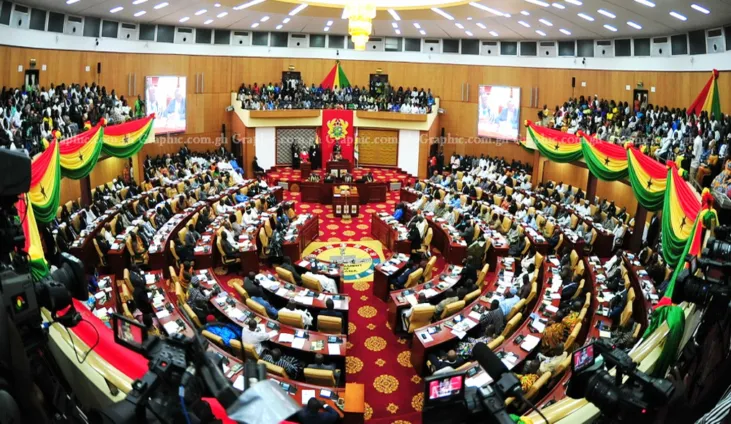
Parliament is the law-making body, made up of Members of Parliament elected from constituencies across the country.
-
The Judiciary interprets the law and is headed by the Chief Justice.
-
Local government is delivered through Metropolitan, Municipal, and District Assemblies.
The Foundation: The 1992 Constitution
Ghana’s current system of government is based on the 1992 Constitution, which came into force on 7 January 1993. It marked the beginning of the Fourth Republic, following periods of military and civilian rule since independence in 1957.
The Constitution is the supreme law of Ghana. Every other law, every government action, and every exercise of public power must be consistent with it. If a law passed by Parliament conflicts with the Constitution, the Supreme Court can declare it unconstitutional.
The Constitution establishes the basic structure of government, sets out fundamental human rights, defines citizenship, and creates the institutions through which power is exercised. It also provides mechanisms for amendment, though some provisions are entrenched and harder to change than others.
For ordinary citizens, the Constitution matters because it is the source of their rights and the framework that limits what the government can do.
The Three Branches of Government
Ghana’s government is built on the principle of separation of powers. Power is divided among three branches so that no single person or institution becomes too powerful. Each branch has distinct responsibilities and can check the others.
The Executive
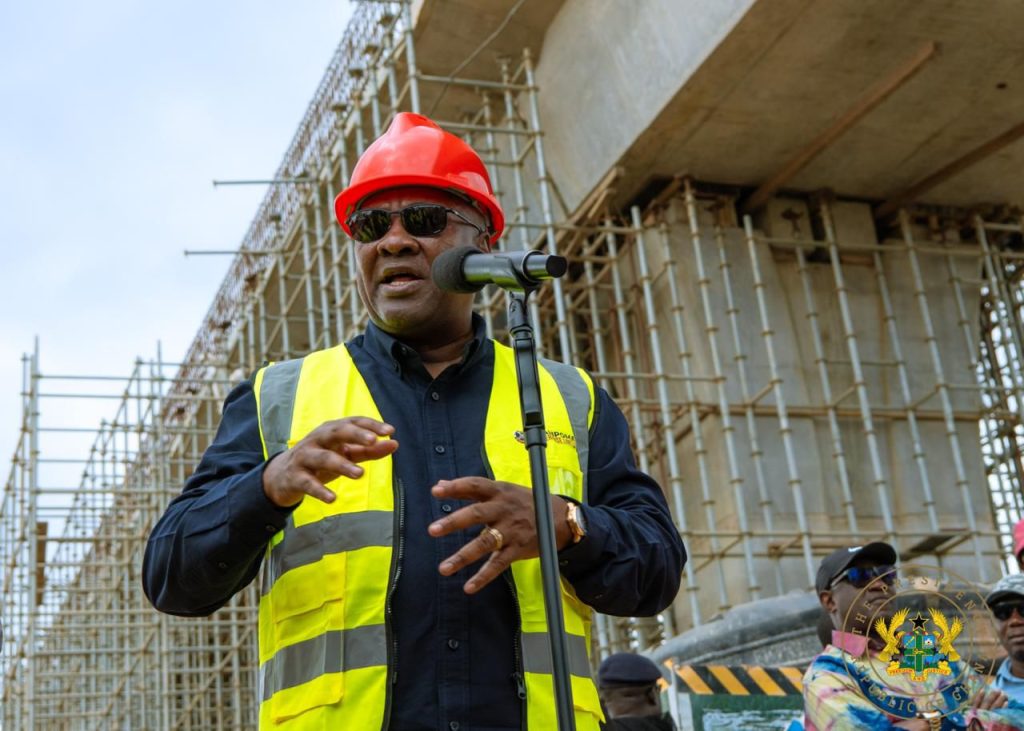
The Executive branch is responsible for implementing and enforcing laws. It is headed by the President, who is both head of state and head of government. The President is assisted by the Vice President, Ministers of State, and the broader public service.
The Executive includes:
-
The Cabinet
-
Ministries
-
Departments and agencies
-
The security services
-
The civil service
The President is elected directly by Ghanaians every four years. To win, a candidate must receive more than 50% of valid votes cast. If no candidate crosses this threshold in the first round, a run-off is held between the top two candidates.
The President appoints ministers, with prior approval from Parliament. Ministers head the various ministries, such as Finance, Health, Education, and Defence. The President also appoints the heads of many public institutions, though some appointments require parliamentary approval.
The President has significant powers, including the power to sign bills into law, declare a state of emergency, and command the armed forces. But these powers are not unlimited. The Constitution and the other branches of government constrain them.
The Legislature
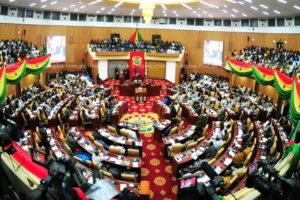
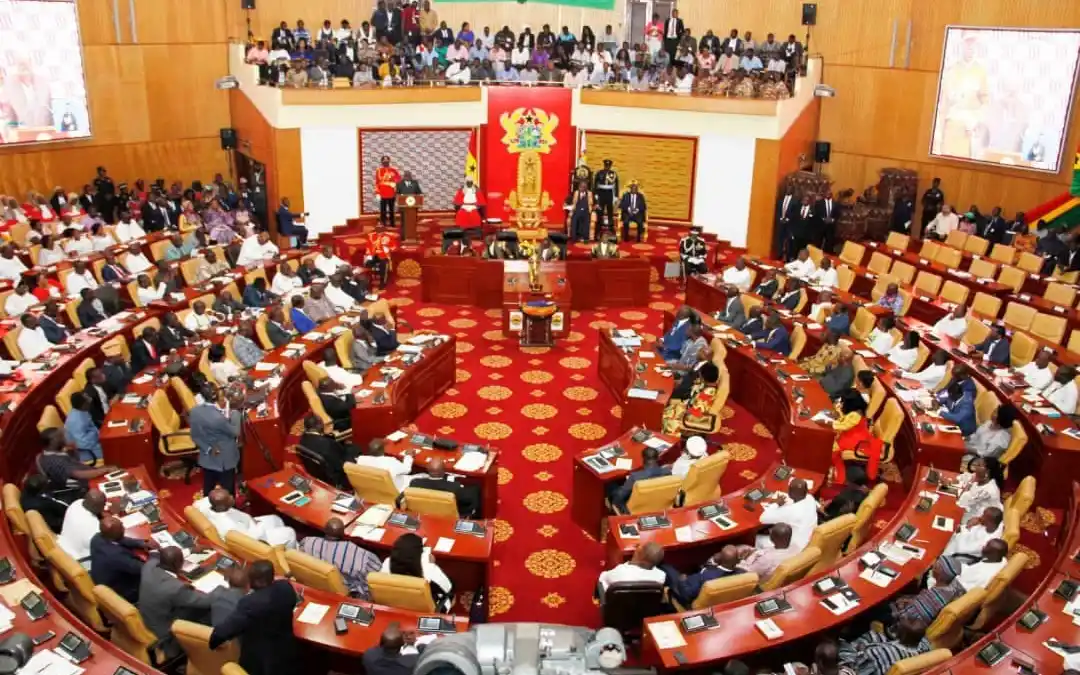
The Legislature, or Parliament, is responsible for making laws. It is made up of Members of Parliament, each elected from a single-member constituency. The number of constituencies has grown over time and is determined by the Electoral Commission.
Parliament performs several functions:
-
It passes laws
-
It approves government budgets and financial measures
-
It approves certain presidential appointments
-
It ratifies international treaties
-
It holds the Executive accountable through questions, debates, and committees
-
It represents the interests of constituents
Parliament can also remove the President through impeachment, though the process is complex and requires substantial support.
The Speaker of Parliament presides over proceedings. The Speaker is elected by Members of Parliament and may be from outside Parliament. The current constitutional arrangement allows the Speaker to be chosen from among MPs or from outside.
The law-making process begins with a bill, which may be introduced by a minister or a private member. The bill goes through several readings, is debated, and may be amended. If passed, it is sent to the President for assent. Once assented to, it becomes law.
The Judiciary
The Judiciary interprets the law and administers justice. It is headed by the Chief Justice and consists of the Supreme Court, the Court of Appeal, the High Court, and lower courts.
The Supreme Court is the highest court in Ghana. It has original jurisdiction in cases involving the enforcement of the Constitution and appellate jurisdiction over other matters. The Supreme Court also hears election petitions challenging the validity of presidential elections.
The Judiciary’s independence is protected by the Constitution. Judges have security of tenure and cannot be removed arbitrarily. However, concerns about judicial independence and capacity remain part of public debate.
The courts play a critical role in checking the other branches. They can declare laws unconstitutional, strike down executive actions, and protect fundamental rights. For ordinary citizens, the courts are the ultimate place to seek justice when the government acts unlawfully.
The Presidency in Detail
The President of Ghana is the most visible figure in government. But the presidency is more than one person. It is an institution supported by a large bureaucracy.
The President’s duties include:
-
Appointing ministers and other officials
-
Signing bills into law or refusing assent
-
Representing Ghana internationally
-
Commanding the armed forces
-
Delivering the State of the Nation address
-
Presiding over the Cabinet
-
Granting pardons
-
Declaring states of emergency, subject to parliamentary approval
The President is also the chairperson of the National Security Council and plays a central role in foreign policy.
A President may serve a maximum of two four-year terms. This term limit is entrenched in the Constitution and cannot be changed without a referendum.
If the President is unable to perform the functions of office, the Vice President acts. If both the President and Vice President are unable, the Speaker of Parliament acts, and elections must be held within three months.
The Vice President
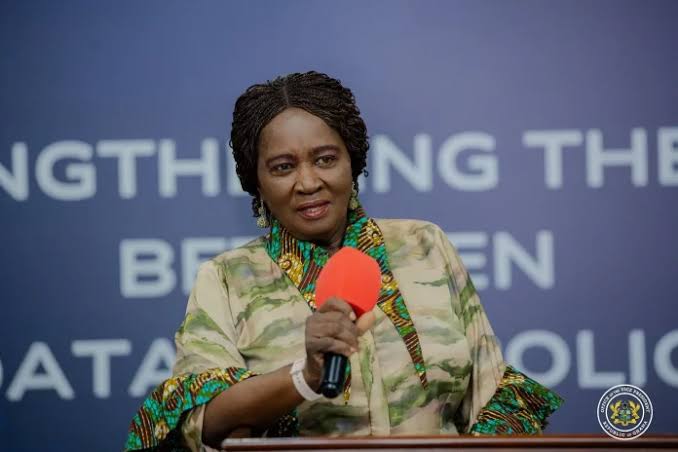
The Vice President is elected on the same ticket as the President. The Vice President’s main constitutional role is to step in when the President is unable to serve. In practice, Vice Presidents often take on specific portfolios assigned by the President.
The Vice President also chairs certain councils and committees, such as the Economic Management Team in some administrations, though these arrangements vary depending on the President.
The Cabinet
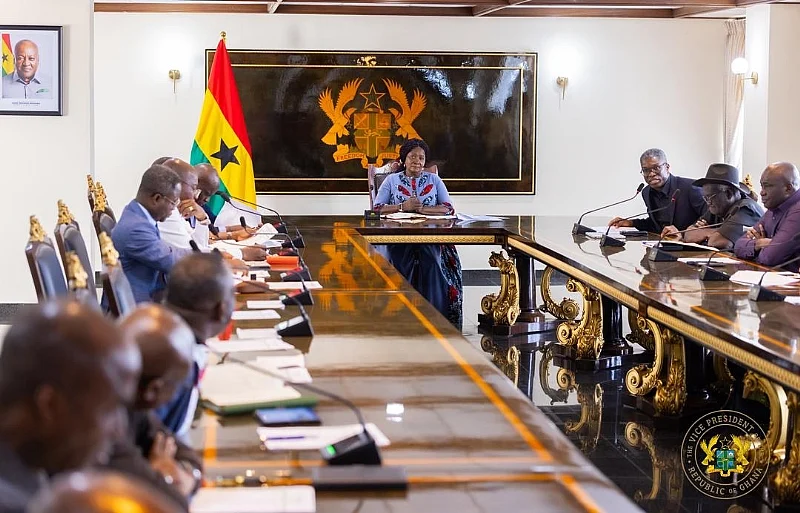
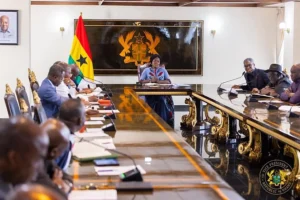
The Cabinet is the body of senior ministers that advises the President and coordinates government policy. It includes the President, the Vice President, and ministers appointed by the President and approved by Parliament.
The Cabinet meets regularly to discuss major policy issues, review government performance, and make decisions that guide the work of ministries. Cabinet decisions are implemented by the ministries and agencies under the direction of ministers.
Not all ministers are members of the Cabinet. There are Ministers of State, deputy ministers, and regional ministers who may not sit in Cabinet but still play important roles.
Parliament in Detail
Parliament is the heart of legislative power in Ghana. Its work is essential to democratic governance, even if it is often overshadowed in public attention by the presidency.
How Members of Parliament Are Elected
Members of Parliament are elected from constituencies. Each constituency elects one MP through a first-past-the-post system: the candidate with the most votes wins, even if they do not get more than 50%.
The Electoral Commission is responsible for demarcating constituencies, registering voters, and conducting elections.
What Parliament Does
Parliament’s core function is law-making. Bills go through several stages, including first reading, second reading, committee stage, and third reading. Committees examine bills in detail, hold public hearings, and make recommendations.
Parliament also exercises financial oversight. The government cannot spend public money without parliamentary approval. The annual budget must be presented to Parliament, debated, and passed. Parliament also approves borrowing and tax measures.
Parliament holds the Executive accountable through:
-
Questions to ministers
-
Debates on policy
-
Committee investigations
-
Votes of censure
-
Approval of appointments
These mechanisms do not always work as intended, but they provide a framework for accountability.
The Speaker
The Speaker of Parliament presides over sittings, maintains order, and represents Parliament. The Speaker is elected by MPs and must be impartial in the performance of the role. The Speaker also acts as President when both the President and Vice President are unable.
The Court System
Ghana’s judiciary is structured as a hierarchy, with the Supreme Court at the top.
The Supreme Court
The Supreme Court is the final court of appeal and the guardian of the Constitution. It has exclusive jurisdiction in cases involving the interpretation and enforcement of the Constitution. It also hears presidential election petitions.
The Supreme Court consists of the Chief Justice and other justices. The Chief Justice is appointed by the President, subject to parliamentary approval.
The Court of Appeal
The Court of Appeal hears appeals from the High Court and other lower courts. It sits in divisions and handles a wide range of civil and criminal matters.
The High Court
The High Court has broad jurisdiction, including serious criminal cases, major civil disputes, and human rights matters. It also supervises lower courts.
Lower Courts
Below the High Court are circuit courts, district courts, and specialised courts. These handle the bulk of everyday cases, including criminal trials, family matters, and small claims.
Judicial Independence
The Constitution protects judges from arbitrary removal. Judges can only be removed for stated misconduct or inability, following a process involving the Judicial Council and the President.
In practice, the judiciary faces challenges including resource constraints, case backlogs, and occasional allegations of corruption. These issues affect access to justice for ordinary citizens.
Local Government
Local government is the level of government closest to the people. The Constitution provides for a system of local government and administration, and Parliament has enacted laws to give effect to this.
Ghana is divided into Metropolitan, Municipal, and District Assemblies. Each assembly is responsible for local development, sanitation, markets, basic infrastructure, and some aspects of education and health.
Assemblies are made up of elected members and government appointees. Assembly members are elected through non-partisan local elections. The Chief Executive of each assembly — the Metropolitan, Municipal, or District Chief Executive — is appointed by the President, subject to approval by the assembly.
Local government is important because it delivers services that people use daily: waste collection, local roads, markets, building permits, and environmental health services. The effectiveness of local government varies widely across the country.
The Electoral Commission
The Electoral Commission is an independent constitutional body responsible for elections. Its duties include:
-
Registering voters
-
Demarcating constituency boundaries
-
Conducting presidential, parliamentary, and local elections
-
Declaring election results
-
Educating voters
The Commission’s independence is critical to electoral integrity. It is appointed through a process that involves the President and Parliament, but once appointed, its members are expected to act impartially.
Other Important Institutions
The Commission on Human Rights and Administrative Justice (CHRAJ)
CHRAJ investigates human rights violations, administrative injustice, and corruption. It is an important avenue for ordinary citizens to seek redress against the state or public officials.
The Auditor-General
The Auditor-General audits public accounts and reports to Parliament. The Auditor-General’s reports are a key tool for financial accountability, although follow-up on findings is often weak.
The National Commission for Civic Education (NCCE)
The NCCE is responsible for civic education, helping citizens understand their rights and responsibilities.
The Attorney-General
The Attorney-General is the principal legal adviser to the government and is also the Minister of Justice. The Attorney-General’s office handles the prosecution of criminal cases and represents the state in legal matters.
The Bank of Ghana
The Bank of Ghana is the central bank. It is responsible for monetary policy, issuing currency, and supervising banks. Its Governor is appointed by the President with parliamentary approval.
How a Bill Becomes Law
Understanding the law-making process helps citizens follow policy debates and influence outcomes.
-
A bill is drafted and introduced in Parliament.
-
The bill undergoes its first reading, where it is formally presented.
-
The bill is referred to a committee for detailed examination.
-
The committee holds hearings, considers amendments, and reports to Parliament.
-
The bill undergoes a second reading, where it is debated in full.
-
The bill may be amended during the committee stage or consideration stage.
-
The bill is sent to the President for assent.
-
If the President refuses to assent, Parliament may override the refusal under certain conditions, or the bill may lapse.
-
Once assented to, the bill becomes law and is published in the Gazette.
The process can be slow, and many bills are never passed. But it is the formal way laws are made in Ghana.
How Citizens Can Participate
Government is not something that happens only in Accra. Citizens participate in many ways:
-
Standing for office
-
Attending assembly meetings
-
Contacting their MP
-
Writing to government agencies
-
Joining community organisations
-
Participating in public consultations
-
Using the courts to enforce rights
-
Monitoring government performance
-
Using the media to raise issues
Democracy depends on active citizenship. The Constitution provides the framework, but it is up to citizens to make it work.
Common Misconceptions
“The President can do anything”
No. The President’s powers are limited by the Constitution, Parliament, and the courts. The President cannot make laws, spend money without approval, or act outside the law without consequences.
“Parliament is just a rubber stamp”
Parliament has real powers, including the power to approve budgets, pass laws, and hold ministers accountable. Its effectiveness depends on the political will of its members.
“The courts are separate from politics”
The courts are formally independent, but they operate in a political environment. Appointments are made by political actors, and the courts often decide politically sensitive cases. Judicial independence is a principle to be defended, not assumed.
“Local government doesn’t matter”
Local government delivers services that affect daily life: sanitation, markets, local roads, and permits. It is often the most visible level of government.
“Only elections matter”
Elections are important, but governance happens between elections. Accountability requires ongoing engagement, not just voting every four years.
Frequently Asked Questions
How long is a President’s term in Ghana?
A President serves a four-year term and may be re-elected once, for a maximum of two terms.
How are MPs elected?
Members of Parliament are elected from single-member constituencies using a first-past-the-post system. The candidate with the most votes wins.
Who appoints judges?
Judges are appointed by the President, usually on the advice of the Judicial Council and with the approval of Parliament.
What is the difference between Parliament and the Executive?
The Executive implements policy and administers government. Parliament makes laws and holds the Executive accountable. The Judiciary interprets the law.
Can the President be removed from office?
Yes, through impeachment. The process begins in Parliament and requires a specified majority. Grounds include constitutional violations and serious misconduct.
What does the Electoral Commission do?
The Electoral Commission registers voters, demarcates constituencies, conducts elections, and declares results.
How can I raise an issue with my local assembly?
Attend assembly meetings, contact your assembly member, or write to the district office. Local assemblies are required to engage with citizens.
What is the role of the Supreme Court?
The Supreme Court is the highest court. It interprets the Constitution, hears election petitions, and serves as the final court of appeal.
What to Remember
Ghana’s government is a complex system designed to prevent any one person or institution from becoming too powerful. The Constitution divides power among the Executive, Legislature, and Judiciary, and creates additional bodies to promote accountability.
Understanding this system is not an academic exercise. It is the foundation of citizenship. When you know who is responsible for what, you know where to go when things go wrong. When you understand how laws are made, you can influence them. When you understand checks and balances, you can defend them.
The government works best when citizens understand it and participate in it. That is what the architects of the Fourth Republic hoped for, and it remains the challenge of every generation.
Source: The Accra Daily Mail

Samuel Kwame Boadu is a Ghanaian media entrepreneur and storyteller with a passion for amplifying urban voices and uncovering everyday truths. He is the Editor-in-Chief and Founder of The Accra Daily Mail, a dynamic digital platform dedicated to capturing the pulse of Ghana’s capital—its people, culture, challenges, business, sports and innovations.