









Quick Facts
-
Inflation has fallen, but prices have not. Ghana’s inflation rate dropped to 3.3% in February 2026, yet a 50kg bag of imported rice still costs over GH¢1,400 .
-
Rent remains the biggest barrier. Landlords routinely demand one to two years’ rent upfront, forcing tenants into debt before they even move in .
-
Transport is the second squeeze. Evening commuters from Dome to Circle can pay GH¢50 instead of the approved GH¢35, eating into monthly budgets .
-
Modest living costs GH¢4,000–8,000 monthly. The average formal salary of GH¢3,800–5,000 does not cover it .
-
Services are driving inflation now. While goods inflation fell to 1.7%, services inflation surged to 7.2%, with housing and utilities contributing 40.6% of total inflation .
The New Budget Arithmetic: When Stabilisation Does Not Mean Relief
The headlines say the economy is stabilising. Inflation has fallen from over 23% in early 2025 to single digits by 2026. The cedi has strengthened. The government says the worst is over.
But for residents of Accra, the budget has not become easier. It has become more complex. The prices that were pushed up during the crisis years have not come down. They have simply stopped rising as fast. A 50kg bag of premium imported rice cost between GH¢1,445 and GH¢1,511 in early 2026 . A king-size mattress costs GH¢4,990 to GH¢5,540 . These are not luxury items. They are household necessities. And GH¢1,000, once a meaningful sum, no longer covers them.
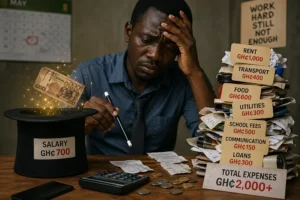
The result is a fundamental shift in how Accra residents plan their money. Budgeting is no longer about allocating surplus. It is about managing scarcity.
The Rent Advance: The Lump Sum That Breaks the Budget
Housing is the first line item, and it is the one that destroys the rest of the budget before it begins.

Under Ghana’s Rent Act of 1963, landlords are legally barred from demanding more than six months’ rent in advance. In practice, the law exists on paper. Across Accra, prospective tenants routinely face demands for two years’ rent upfront—sometimes more .
For a modest one-bedroom apartment at GH¢1,000 monthly, a two-year advance means producing GH¢24,000 before receiving the keys. That is more than two years’ income for a minimum-wage worker earning roughly GH¢588 monthly .
The consequence is not simply that people cannot save. It is that they enter every lease already in debt. Many borrow at high interest, sell assets, or rely on family remittances. The period that follows—the months they have already paid for—is spent repaying the loan, not building a financial buffer.

One retail worker described the cycle plainly: “For two years I was paying the bank, not building a future” .
This advance-rent system has reshaped Accra’s geography. Families pushed to peri-urban areas where rent is marginally lower find themselves in places with poor roads, weak transport links, and fewer schools and clinics. They save on rent and pay with time, safety, and access .
Transport: The Invisible Surcharge
The second major shift is in transport, and it is changing how workers calculate the cost of simply getting home.

For commuters travelling from Dome to Circle, the approved daytime fare is GH¢35. But during evening peak hours, the fare often rises to GH¢50. Over a 22-working-day month, that adds up to GH¢1,870 on transport alone—for a worker earning GH¢2,500 monthly .
The alternative is to wait in long queues at crowded terminals, often for hours. Many workers choose the higher fare because the cost of waiting—lost rest, safety concerns, exposure to the elements—is worse .
The arithmetic is brutal. After transport and rent, little remains for food, utilities, or healthcare. For students and informal workers, the squeeze is even tighter. A student commuting from Dome to Circle described paying GH¢20 to GH¢30 during peak periods for a journey that should cost GH¢6.50 .
Transport is not a discretionary expense. It is the cost of accessing work, markets, and services. When it rises, it does not simply reduce savings. It reduces the ability to earn.
The Shift in What “Budgeting” Means
These pressures have changed the way Accra residents think about money.
For higher-income households, budgeting involves choices between competing priorities: dining out less, delaying a purchase, choosing a cheaper school. For low-income earners, budgeting is not a matter of choice. It is a process of elimination.
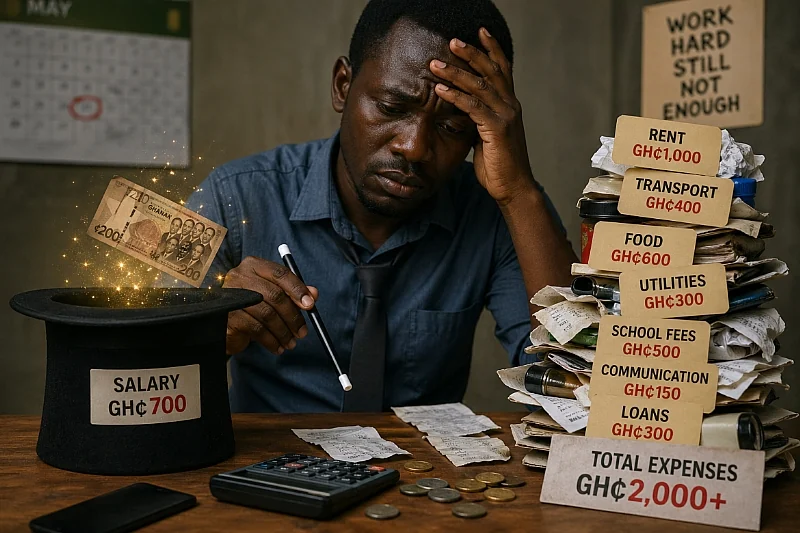
The formal-sector salary range in Accra is estimated at GH¢3,800 to GH¢5,000 monthly . A modest lifestyle—shared accommodation outside prime areas, local food, shared transport—requires GH¢4,000 to GH¢8,000 . The gap is not a margin. It is a structural deficit.
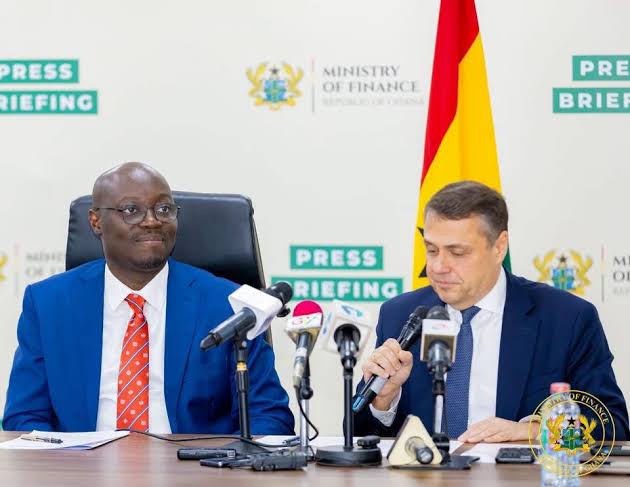
The Ghana Statistical Service has noted that services are now the main driver of inflation. While goods inflation fell to 1.7% in March 2026, services inflation surged to 7.2%. Housing and utilities alone contributed 40.6% of total inflation .
This means the costs that are hardest to cut—rent, utilities, education—are the ones rising fastest. Food and goods, where some relief has been felt, are not enough to offset the pressure.
The Work-After-Work Economy
For many Accra workers, the response to rising costs is not to spend less but to earn more. The end of the working day has become the beginning of a second shift.
The Graphic Online describes a “work-after-work” reality: the challenge of overcrowded transport terminals, long queues, and fare increases that consume a significant portion of monthly income. Workers who cannot afford the higher fares spend hours waiting; those who pay the fares lose the money they might have saved.
Some take on additional work. Others rely on family support. But the structural pressure remains: when the cost of living rises faster than wages, the only way to balance the budget is to find more income or to go without.
What This Means for Ordinary Ghanaians
The improvement in macroeconomic indicators is real. Inflation has fallen. The cedi has stabilised. The government’s fiscal position has improved.
But for the household in Accra, the experience of the economy is not measured by inflation rates. It is measured by whether the money in the envelope covers the month.
The rent advance system forces debt before shelter is secured. Transport costs consume income before work is reached. And the prices of essentials, while no longer rising rapidly, remain at levels set during the crisis.
Budgeting, for many, has become a daily negotiation with scarcity rather than a monthly plan for surplus. The question is not how much to save, but which bill can be delayed.
Frequently Asked Questions
Has the cost of living in Accra actually fallen?
No. Inflation has fallen, meaning prices are rising more slowly. But prices have not returned to pre-crisis levels. A 50kg bag of rice still costs over GH¢1,400, and rent remains high .
What is the biggest expense for Accra residents?
Housing. Rent in Accra can consume 50–80% of an average salary, and landlords typically demand one to two years’ rent upfront .
How much does transport cost a typical commuter?
A worker commuting from Dome to Circle can spend up to GH¢1,870 monthly on transport if paying peak fares, against a salary of GH¢2,500 .
What is a modest monthly budget for a single person in Accra?
Estimates suggest GH¢4,000 to GH¢8,000 for modest living, including shared accommodation, local food, and shared transport.
Why are services becoming more expensive while goods are not?
The Ghana Statistical Service reports that services inflation (7.2%) has outpaced goods inflation (1.7%), with housing, utilities, and education driving the increase.
What is the advance rent law in Ghana?
The Rent Act of 1963 caps advance rent at six months. However, enforcement is weak, and two-year advances are the market norm .
Are wages keeping up with the cost of living?
No. The formal salary range in Accra is GH¢3,800–5,000, while modest living costs GH¢4,000–8,000. The minimum wage is roughly GH¢588 monthly .
What to Remember
The stabilisation of Ghana’s economy has not translated into relief for Accra households. Prices have stopped rising as fast, but they remain high. The rent advance system forces debt before shelter. Transport costs consume income before work. And the services that are hardest to cut—housing, utilities, education—are the ones inflating fastest.
For residents, budgeting has shifted from planning for surplus to managing scarcity. The monthly calculation is not about what to save, but what to postpone. The work-after-work economy, the reliance on family support, and the choice between higher fares and longer waits are all symptoms of the same pressure: income that does not stretch to cover the cost of living.
The macroeconomic indicators matter. But for the household in Accra, the measure of the economy is simpler. It is whether the month ends before the money does.
Source: The Accra Daily Mail

Samuel Kwame Boadu is a Ghanaian media entrepreneur and storyteller with a passion for amplifying urban voices and uncovering everyday truths. He is the Editor-in-Chief and Founder of The Accra Daily Mail, a dynamic digital platform dedicated to capturing the pulse of Ghana’s capital—its people, culture, challenges, business, sports and innovations.