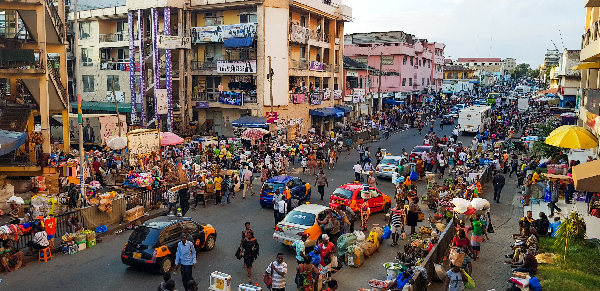

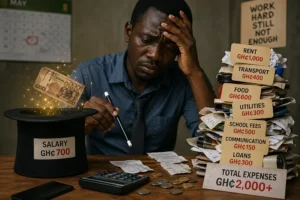








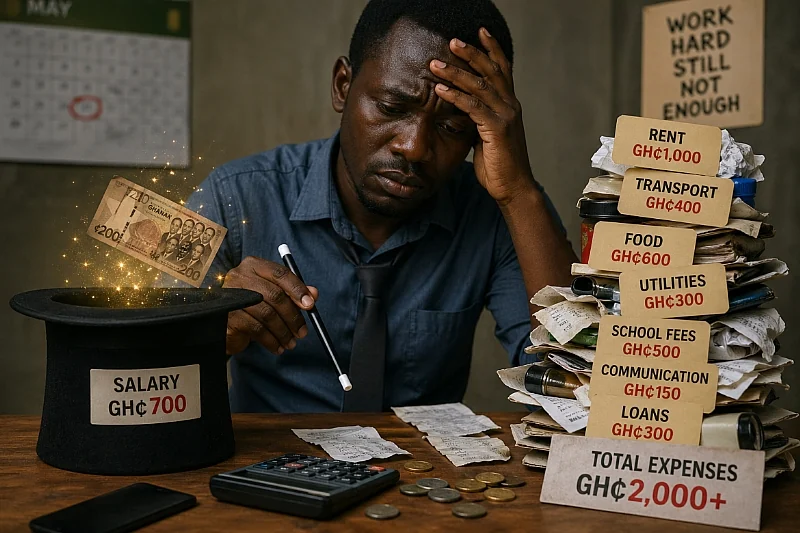

For a single mother earning GH¢1,000 a month in Accra, the arithmetic of saving is not complicated. It is impossible. Her landlord wants GH¢800 monthly—paid two years in advance. That is GH¢19,200 before she gets the keys . She cannot save for one year, let alone two. Every move pushes her further from the city centre, and every lease begins with a debt she spends the next two years repaying.
This is not an isolated story. Across Accra, low-income earners face a structural bind: wages that barely cover survival, housing costs that demand lump sums no ordinary worker can accumulate, and a financial system that offers little incentive to keep money in a bank account. The result is that saving, for many, is not a habit they have failed to develop. It is a luxury they cannot afford.
Quick Facts
-
Only 32.2% of salaried Ghanaian workers can save. 67.8% report that their monthly expenditure exceeds their income .
-
Over 36% of workers earn below GH¢1,000 monthly. 95% earn less than GH¢5,000 .
-
The national daily minimum wage is GH¢21.77, yielding roughly GH¢565 gross per month .
-
Two years’ advance rent is standard in Accra, despite a legal cap of six months under the Rent Act .
-
A modest monthly existence in Accra requires GH¢4,000–8,000, according to cost-of-living estimates .
-
Only 35% of Ghanaian households saved formally, with bank account ownership the single strongest predictor of saving .
The Rent Trap: Why the Biggest Expense Blocks the Smallest Habit
Housing is the first and most brutal barrier. In Accra, landlords routinely demand one to two years’ rent upfront, a practice that is illegal under the Rent Act of 1963 but has become the market norm . For a low-income earner, this demand is not a budgeting challenge. It is a debt sentence.
The consequences cascade. Tenants borrow at high interest, sell assets, or rely on family to raise the lump sum. The period that follows—the “rent-free” months they have already paid for—is spent repaying the loan, not building savings. As one retail worker told The Africa Report: “For two years I was paying the bank, not building a future” .

Agent fees add another 10% of the total advance. And when the lease comes up for renewal, landlords adjust the price upward and demand another two-year lump sum at the new rate. The cycle repeats, and the surplus that might have become savings never materialises .
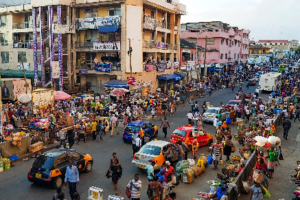
The geography of this trap is also a geography of exclusion. Families pushed to peri-urban areas where rent is marginally lower find themselves in places with poor roads, weak transport links, and fewer schools and clinics. They save on rent and pay with time, safety, and access .
The Pay Gap: When Wages Are Designed for Survival, Not Saving
The second barrier is income itself. A study led by Professor Smart Sarpong of Kumasi Technical University, surveying 4,155 households across eight regions, found that only 32.2% of salaried workers can save. The primary reason cited was inadequate pay .

The distribution is stark. More than 36% of workers earn below GH¢1,000 a month. In the private sector, 15.8% earn below that threshold, compared to 6.6% in the public sector. At the upper end, just 18.1% of private-sector workers earn above GH¢4,000, against 55% of public-sector workers .
Meanwhile, cost-of-living estimates for Accra suggest that a person living modestly—shared accommodation outside prime neighbourhoods, local food, shared transport—needs between GH¢4,000 and GH¢8,000 monthly . The gap between the bottom 36% of earners and the minimum cost of modest living is not a margin. It is a chasm.
For informal workers, the picture is even less secure. Street vendors, casual labourers, and transport workers operate without the protections of formal employment, with incomes that fluctuate and no employer contributions to fall back on. Saving requires a surplus. For many, there is no surplus to allocate.

The Banking Disincentive: When Keeping Money Safe Costs You
Even when a small surplus exists, the financial system offers weak incentives to formalise it. For years, inflation outpaced savings rates so dramatically that keeping money in a bank account meant watching its real value erode. In 2022, average inflation was about 31.5% while savings rates hovered around 5.2%—a real return of negative 26.3% .
That has changed recently. By February 2026, inflation had fallen to 3.3%, while commercial bank savings rates remained around 5%, giving depositors a positive real return of about 1.7 percentage points—the first such gain in years. This is a meaningful shift. But it is also modest, and the memory of years of negative returns lingers.
More fundamentally, access matters more than rates. Research using Ghana Living Standards Survey data found that bank account ownership is the single most important predictor of formal saving, raising the probability of saving by 55.1 percentage points. Education’s effect on saving operates almost entirely through access to a bank account . For low-income earners without accounts, or with accounts that carry maintenance fees and minimum balance requirements, the formal system remains distant.
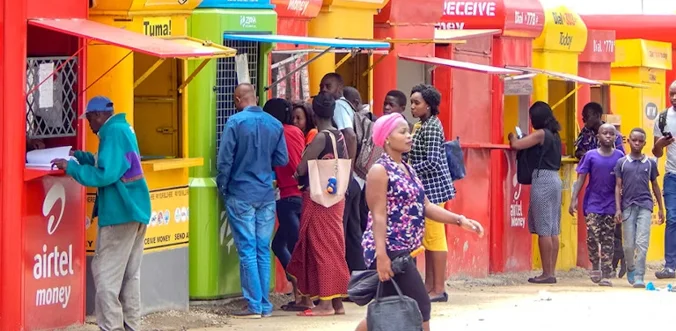
Mobile money has expanded access, but its impact on saving is uneven. A study of petty traders in Accra Central found that those with higher monthly incomes were more likely to use mobile money for saving. Those with lower incomes were less likely to save through the platform at all . The technology lowers barriers, but it does not create surplus.
What This Means for Ordinary Ghanaians
The inability to save is not a personal failing. It is the predictable outcome of a system where the largest expense—housing—demands a lump sum that wages cannot produce, where wages themselves are set at levels that assume survival rather than security, and where the financial system’s recent improvement in real returns is too small and too new to change behaviour.
For a worker earning GH¢1,000 a month in Accra, the monthly budget is not a puzzle to be solved with discipline. It is a zero-sum calculation. Rent, food, transport, utilities—each claim consumes what the previous one left behind. Saving requires something left over. For millions, there is nothing.
The recent decline in inflation offers a glimmer of relief. If prices stabilise and savings rates hold, the small surplus that some households manage to generate will retain its value better than it did during the crisis years. But the structural barriers—the advance rent system, the low wage floor, the gap between formal and informal employment—remain untouched.
Frequently Asked Questions
Why is saving so hard for low-income earners in Accra?
The main reasons are the two-year advance rent system, which forces tenants into debt; wages that are too low to cover basic living costs; and a history of negative real returns on savings that discouraged formal banking.
How much does it cost to live modestly in Accra?
Estimates suggest GH¢4,000 to GH¢8,000 monthly for a modest lifestyle, including shared accommodation, local food, and shared transport.
What percentage of Ghanaian workers can save?
Only 32.2% of salaried workers can save. 67.8% report that their expenditure exceeds their income .
Is advance rent legal in Ghana?
The Rent Act caps advance rent at six months. However, the law is rarely enforced, and landlords routinely demand one to two years upfront.
Do savings accounts now offer positive returns?
Yes, recently. With inflation at 3.3% in February 2026 and savings rates around 5%, depositors are earning a small positive real return for the first time in years.
Does mobile money help low-income earners save?
It can, but research shows that higher-income petty traders are more likely to use it for saving than lower-income traders. Mobile money lowers access barriers but does not create surplus.
What would make saving easier for low-income earners?
Enforcement of the rent law, policies that raise the wage floor, expansion of formal bank account access, and sustained low inflation that protects the real value of small savings.
What to Remember
Saving money in Accra is not primarily a question of discipline. It is a question of arithmetic. When rent demands two years’ wages upfront, when the minimum wage yields GH¢565 a month against a living cost of GH¢4,000, and when the banking system spent years eroding the real value of deposits, the surplus required for saving rarely exists.
The recent fall in inflation has improved the real return on savings for the first time in years. That is a genuine shift. But it does not resolve the rent trap, the wage gap, or the exclusion of informal workers from secure financial footing.
For low-income earners in Accra, the path to saving runs through structural change: enforceable rent laws, wages that reflect the cost of living, and financial access that reaches the people who need it most. Until then, the ability to save will remain, for many, a distant prospect rather than a daily habit.
Source: The Accra Daily Mail

Samuel Kwame Boadu is a Ghanaian media entrepreneur and storyteller with a passion for amplifying urban voices and uncovering everyday truths. He is the Editor-in-Chief and Founder of The Accra Daily Mail, a dynamic digital platform dedicated to capturing the pulse of Ghana’s capital—its people, culture, challenges, business, sports and innovations.