
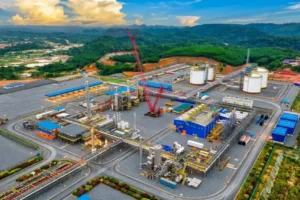







ACCRA — Ghana, Africa’s top gold producer, posted a record 5.1 million ounces of gold output in 2023, and projections suggest a further 6.25% rise in production in 2024, according to recent data from the Ghana Chamber of Mines and the Minerals Commission. But as the country basks in the glow of rising gold revenues, analysts are warning that beneath the surface lies a more complex—and precarious—reality.
At a time when Ghana faces mounting debt, a weakening industrial sector, and currency volatility, the gold boom appears to be a lifeline. Yet, its ripple effects on the environment, informal mining, and macroeconomic stability are far from uniformly positive.
Gold Output on the Rise
The 5.1 million ounces recorded in 2023 represented a significant rebound from the 3.7 million ounces recorded in 2021, a year marred by pandemic-era restrictions and regulatory friction. According to the Ghana Chamber of Mines, the projected increase in 2024 to 5.42 million ounces will be driven largely by revived investments in large-scale mining, notably by AngloGold Ashanti and Newmont, as well as a spike in production from small-scale and artisanal miners.
The Bank of Ghana also ramped up its domestic gold purchase program in 2023, buying nearly 26,000 ounces from small-scale producers—up nearly 75% year-over-year—under its Domestic Gold Purchase Programme aimed at shoring up forex reserves.

A Boost to the Cedi—But Not Without Risks
Gold exports have proven critical in stabilizing Ghana’s foreign exchange reserves, which climbed to $5.9 billion in April 2024, thanks in part to strong global gold prices, currently hovering above $2,300 per ounce. The revenue from gold exports has helped the cedi appreciate nearly 24% year-over-year, outperforming the currencies of most African peers.
But economists at Databank Research caution that Ghana’s growing dependence on gold exports may be short-sighted. “A commodity boom masks structural vulnerabilities. If gold prices crash or if large mines pull out due to operational costs or political risk, the impact on the cedi and inflation could be severe,” said Dr. Afua Mireku, a senior economist at the firm.
The Informal Surge: Artisanal Miners Take Center Stage
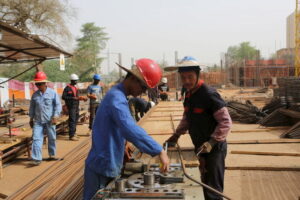
One of the least discussed aspects of Ghana’s gold surge is the rise of artisanal and small-scale mining (ASM). While this sector has long existed in the shadows, it now accounts for over 40% of the country’s gold production.

However, regulation has not kept pace. Many of these miners operate outside the formal licensing system, leading to significant losses in tax revenue and exposing the sector to illicit trade and unsafe practices.
In 2023 alone, the Minerals Commission reported at least 45 mining-related deaths, many tied to unsafe galamsey (illegal mining) operations in Eastern and Western Regions. Moreover, smuggled gold is estimated to cost Ghana nearly $2 billion annually in lost revenue, according to a joint report by <strong data-start=”3397″ data-end=”3408″>Reuters and ACEP Ghana.
Environmental and Social Fallout
The boom has come at a steep environmental cost.

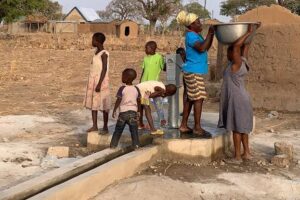
Satellite data from NASA and Ghana’s EPA show a 23% increase in deforestation in gold-producing regions such as Tarkwa, Obuasi, and Bibiani over the last two years. Rivers like the Ankobra and Pra—once lifelines for local farming communities—are now contaminated with mercury and cyanide due to unregulated processing activities.
“These communities may be rich in gold but poor in health and clean water,” said Lydia Asare, a community activist in Prestea, speaking to Accra Street Journal. “We’re mining wealth for the world but digging graves for ourselves.”
If the Big Players Pull Out
While small-scale miners are rising in numbers, Ghana’s mining economy remains highly dependent on a few large multinational players. AngloGold Ashanti and Newmont Ghana alone account for more than 60% of large-scale output.
But both companies have signaled potential operational downscaling in the next two years unless the government offers clearer fiscal terms and improves energy reliability for operations. The recent introduction of the Growth and Sustainability Levy and increases in utility tariffs have raised operating costs, prompting uncertainty.
“If the big mines reduce production or suspend operations, we’ll see a shortfall not just in gold output, but also in corporate taxes, royalties, and jobs,” warned Dr. Kojo Addae-Mensah of the Ghana Extractive Industries Transparency Initiative (GHEITI).
A Double-Edged Sword
Ghana’s record gold production is an economic headline worth celebrating—but only cautiously.
Yes, gold is helping stabilize the cedi and buy time for economic reforms. But overreliance on a single export commodity, paired with unregulated artisanal mining and environmental degradation, makes this boom inherently fragile.
The challenge now lies in leveraging gold revenues to build a more resilient, diversified economy, while simultaneously regulating the artisanal sector, enforcing environmental protections, and investing in sustainable infrastructure.
Until then, Ghana’s gold may shine brightly on the balance sheet—but its luster may not reflect the deeper fractures beneath.
Accra Street Journal will continue monitoring trends in gold production, artisanal mining regulation, and macroeconomic sustainability across Ghana’s mining regions.
Source: Accra Street Journal

Samuel Kwame Boadu is a Ghanaian media entrepreneur and storyteller with a passion for amplifying urban voices and uncovering everyday truths. He is the Editor-in-Chief and Founder of The Accra Daily Mail, a dynamic digital platform dedicated to capturing the pulse of Ghana’s capital—its people, culture, challenges, business, sports and innovations.