





A government announces a new policy. Perhaps it is a change to how much tax you pay, a new regulation for mobile money, or a plan to build more roads. The announcement sounds like a decision has been made. But by the time you hear about it, the policy has already passed through a complex chain of institutions, consultations, reviews and approvals.
Understanding that chain matters. It explains why some policies take years to arrive, why ministers sometimes get scolded for announcing things prematurely, and why Parliament does not always simply approve what the executive sends its way. Ghana’s policy-making system is not one person or one office. It is a structure built into the 1992 Constitution, involving the Cabinet, the National Development Planning Commission, ministries, Parliament and, at least in theory, ordinary citizens.
Quick Facts
-
Cabinet’s role: The Cabinet assists the President in determining the general policy of Government. It consists of the President, Vice President and between ten and nineteen Ministers of State.
-
Planning authority: The National Development Planning Commission (NDPC) is established under Articles 86 and 87 of the 1992 Constitution as part of the Executive.
-
Parliament’s role: Parliament does not simply rubber-stamp executive proposals. Its Speaker has stated that its mandate is to “question, investigate, review, and scrutinize” before approving, amending or rejecting.
-
Planning framework: Ghana operates a four-year planning cycle aligned with medium-term development plans, guided by long-term frameworks such as Vision 2057.
-
Key legislation: The National Development Planning (Systems) Act, 1994 (Act 480) governs the decentralised planning system.
The Beginning: Where Policy Ideas Come From
Policies rarely emerge from nowhere. They originate from multiple sources: a ruling party’s manifesto, a President’s vision, a crisis that demands a response, research from ministries, or recommendations from international commitments such as the Sustainable Development Goals.
The NDPC’s guidelines for policy formulation describe the first formal step as “identification and analysis of the issue” – essentially, recognising that a problem exists and requires government action. This is agenda setting. Before a policy can be drafted, someone must decide that the issue deserves attention.
For policies tied to national planning, the process is anchored in Ghana’s four-year planning cycle. The President’s vision and the party manifesto feed into a Coordinated Programme of Economic and Social Development Policies, which then informs the Medium-Term National Development Policy Framework prepared by the NDPC. From there, ministries, departments and agencies prepare their own sector plans, and district assemblies prepare local plans, all expected to align with the national framework.
The Technical Work: Formulating the Policy
Once an issue is identified, the responsible ministry or agency begins the technical work of formulation. The NDPC’s public policy formulation guidelines outline a structured process: analysing the problem, developing policy options, consulting stakeholders, selecting a preferred option, and defining vision, goals, objectives and strategies.
Stakeholder consultation is a formal step. The guidelines require that public sector institutions consult with stakeholders on policy options, validate the recommended approach, and build consensus. This consultation can take the form of workshops, forums or teleconferences with relevant groups.
The process also requires resource mapping – identifying how the policy will be funded – and implementation planning, including an action plan with indicators, targets and timelines. A communications strategy is expected as well, covering how the policy will be explained to the public.
The Cabinet Filter: Where Policies Get Approved or Sent Back
For a policy to become an official government position, it must pass through Cabinet. This is where the system often slows down.
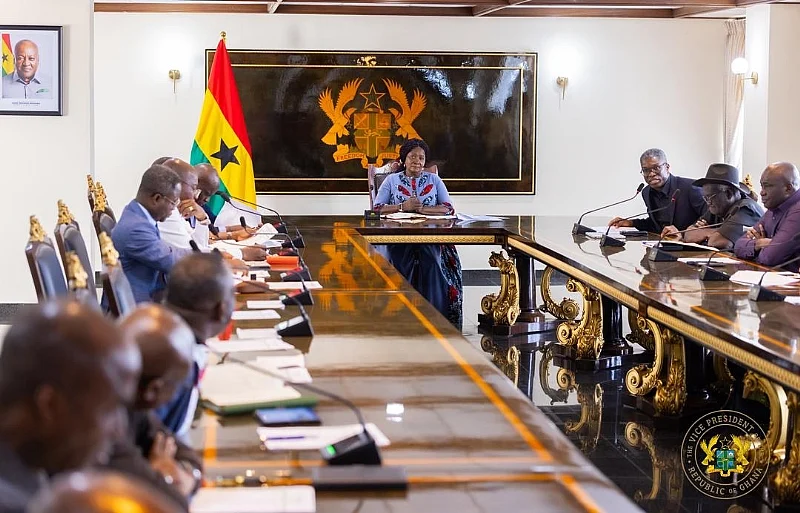
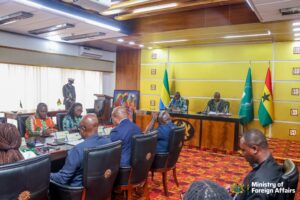
The Cabinet consists of the President, Vice President and a number of Ministers of State. Its constitutional role is to assist the President in determining the general policy of Government. In practice, this means no public policy, programme or major initiative can be considered official unless Cabinet has reviewed and approved it.
The presidency has reinforced this rule. In October 2025, the Secretary to the Cabinet issued a circular reminding ministers that announcing policies without Cabinet approval breaches constitutional protocol and undermines collective responsibility. Ministers were directed to submit proposed policies through their Chief Directors to the Cabinet Secretariat for formal inclusion on the Cabinet agenda.
The Cabinet Secretariat reviews proposals before they reach ministers. According to accounts of governance reforms in Ghana, proposals that lack adequate components – such as clear justification, evidence, consultation records or implementation plans – are returned to the sponsoring ministry for further work. The manual encouraged ministries to be concise and evidence-based, and to justify why the issue required Cabinet’s attention.
This is why policy timelines can stretch. A ministry may spend months preparing a proposal, only to have it sent back for more consultation or clearer evidence.
The NDPC’s Review Role
For policies connected to national development planning, the NDPC plays a review role before Cabinet consideration. The Commission, established under the Constitution, is the government’s principal advisory body on development planning and policy coordination.
Once a policy document has been formulated by a ministry, it is submitted to the NDPC for review. The NDPC assesses whether the policy aligns with national development priorities and the medium-term framework before it proceeds to Cabinet. The Commission also issues guidelines for the preparation of medium-term development plans by ministries and district assemblies, ensuring alignment with the national vision.
The NDPC’s work is not merely technical. Its Chairman has briefed Parliament’s Economy and Development Committee on the Commission’s mandate and its role in shaping strategic research, policy formulation and monitoring across sectors. The Commission also coordinates the preparation of a consolidated National Development Plan, consulting widely on long-term frameworks.
Parliament: Scrutiny, Not Rubber-Stamping
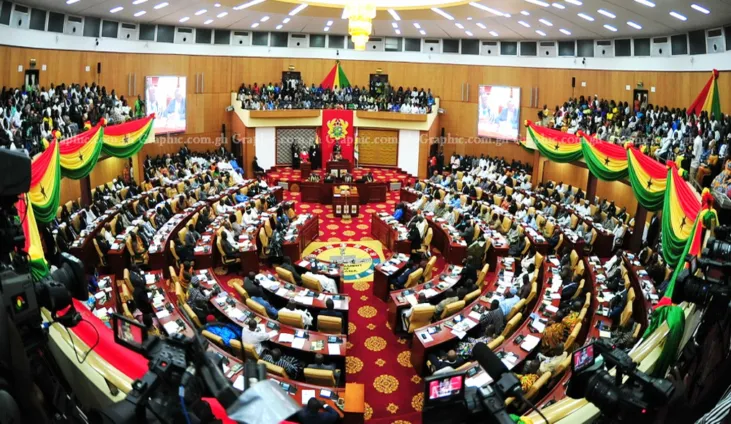
Once a policy requires legislative change or budget approval, Parliament enters the process. And Parliament’s role is more active than outsiders often assume.
The Speaker of Parliament has explicitly rejected the idea that the House should be a rubber stamp. “Parliament’s role is to check-and-balance the Executive, not to obstruct or rubber stamp the Executive’s agenda,” Speaker Alban Bagbin said in 2021. “Parliament does its job, as it must, when it questions, investigates, reviews, and scrutinizes the Executive, its bills, its nominations, and its proposed agreements, and then proceeds to approve, to amend, or to reject them, as the case may be”.
This scrutiny happens largely through committees. Parliamentary committees examine bills, budget estimates and policy proposals in detail. The Research Department of Parliament analyses sector budgets for committees, producing briefs that contain critical assessments of financial and policy performance from the previous year and scrutiny of projections for the coming year.
Parliament’s oversight extends beyond legislation. It monitors implementation, demands evidence that the annual budget is based on development plans, and approves guidelines for resource allocation such as the District Assemblies Common Fund. It can also investigate government accounts and examine loan agreements with international institutions.
The committee system has been described as “the pivot around which the work of Parliament revolves”. While Ghana’s Parliament has historically been characterised by some as weak relative to the executive, research suggests that committees do influence policy outcomes at various stages of the legislative process.
The Budget Link
Policy and budget are inseparable in Ghana’s system. A policy without funding is just a statement.
The Ministry of Finance issues budget guidelines with indicative ceilings to ministries and district assemblies. Draft budgets are subjected to policy and technical hearings, organised jointly by the Ministry of Finance and the NDPC, to ensure they align with approved development plans and the national framework. Final budget ceilings are then provided for finalising the budgets.
Implementation of medium-term plans begins only after Parliament passes the Appropriations Bill. This means the budget process is a policy process – it determines which policies actually get resources and which remain on paper.
The Long-Term Framework: Vision 2057 and Planning Cycles
Ghana has attempted to create continuity beyond election cycles through long-term planning frameworks. Vision 2057, unveiled by the NDPC in 2024, is designed as a 34-year framework guiding subsequent medium-term plans and annual action plans across all governance structures.
The NDPC Chairman explained that Vision 2057 aims to balance long-term national interests with the democratic right of successive administrations to implement their own agendas. The Commission will coordinate to ensure medium-term plans conform to the long-term framework while allowing incoming governments policy space.
The framework was developed through consultation with government, private sector, civil society, political parties, academia, traditional authorities and development partners. It focuses on areas including macroeconomic stability, human capital, science and technology, land reforms, infrastructure and clean energy.
Whether such long-term frameworks can survive political transitions remains an open question. But they represent an attempt to address a persistent challenge: policy instability across changes in government.
The Decentralised Dimension
Ghana’s planning system is not solely national. It is decentralised across national, regional and local levels.
Metropolitan, Municipal and District Assemblies are the primary planning authorities at the local level, responsible for preparing and implementing district medium-term development plans. Regional Coordinating Councils provide oversight and coordination across districts.
The NDPC issues planning guidelines that apply to all levels, and district plans are expected to align with national priorities. The Commission has also promoted Voluntary Local Reviews, enabling district assemblies to integrate the Sustainable Development Goals into their plans and report on progress.
This decentralisation is meant to ensure that national policies translate into local action. But resource constraints and capacity gaps at the subnational level remain challenges.
What This Means for Ordinary Ghanaians
The policy-making chain can feel distant from daily life. But it shapes what happens in clinics, classrooms, markets and workplaces.
Understanding the process helps citizens know where to engage. Public consultations are a formal step in policy formulation, and the NDPC’s guidelines require stakeholder engagement on policy options. District assemblies are expected to hold public hearings as part of their planning processes.
It also explains why announcements should be treated with caution. A minister’s statement is not government policy until Cabinet has approved it. A bill is not law until Parliament passes it and the President assents. A plan is not funded until the budget provides for it.
The system has inefficiencies. The Princeton case study on Ghana’s governance reforms noted that “slowness in decision making at senior political levels” affected how quickly reforms could be implemented. Resource constraints, capacity gaps and coordination challenges persist.
But the framework exists to ensure that policy is not made arbitrarily. It requires evidence, consultation, review, approval and accountability – at least in principle.
Frequently Asked Questions
Who approves national policies in Ghana?
Cabinet approves the general policy of Government. The Cabinet consists of the President, Vice President and Ministers of State. No public policy is considered official until Cabinet has reviewed and approved it.
What is the role of the NDPC in policy-making?
The NDPC advises the President on development planning policy, issues planning guidelines, reviews policy documents formulated by ministries, and ensures alignment with national development frameworks.
Can a minister announce a policy without Cabinet approval?
No. The presidency has directed that ministers must not publicly announce policy initiatives without first obtaining Cabinet approval. Doing so breaches constitutional protocol.
Does Parliament just approve whatever the executive sends?
No. The Speaker has stated that Parliament’s role is to scrutinise, question and review executive proposals, and to approve, amend or reject them as appropriate. Committees examine bills and budgets in detail.
What is the difference between a policy and a law in Ghana?
A policy is a government position or plan of action, usually approved by Cabinet. A law is a legislative instrument passed by Parliament and assented to by the President. Policies may require new laws or budget allocations to be implemented.
How can ordinary citizens participate in policy-making?
Public consultations are a formal step in policy formulation. Stakeholders are consulted on policy options through workshops and forums. District assemblies also hold public hearings as part of their planning processes.
What is Vision 2057?
Vision 2057 is a long-term national development framework designed to guide medium-term plans and annual action plans over 34 years. It aims to provide continuity across political cycles while allowing governments to pursue their own agendas within the framework.
Why do policies take so long to implement?
Policies must pass through multiple stages: problem identification, formulation, stakeholder consultation, NDPC review, Cabinet approval, legislative or budget approval, and then implementation. Each stage can involve delays, revisions or resource constraints.
What to Remember
Ghana’s policy-making system is layered. It starts with an idea, moves through technical formulation and consultation, passes through NDPC review and Cabinet approval, and often requires parliamentary action and budget allocation before implementation.
The system is designed to prevent arbitrary decision-making and ensure coherence, but it is not fast. The multiple checkpoints – Cabinet, NDPC, Parliament, Finance Ministry – can slow things down and occasionally cause friction between institutions.
For citizens, the practical takeaway is that policy is not made by announcement alone. A minister’s statement, a presidential ambition, or a party manifesto is only the beginning. The real decision-making happens through structured processes that, while imperfect, are meant to ensure that national policies serve the public interest rather than individual whims.
Source: The Accra Daily Mail

Samuel Kwame Boadu is a Ghanaian media entrepreneur and storyteller with a passion for amplifying urban voices and uncovering everyday truths. He is the Editor-in-Chief and Founder of The Accra Daily Mail, a dynamic digital platform dedicated to capturing the pulse of Ghana’s capital—its people, culture, challenges, business, sports and innovations.