








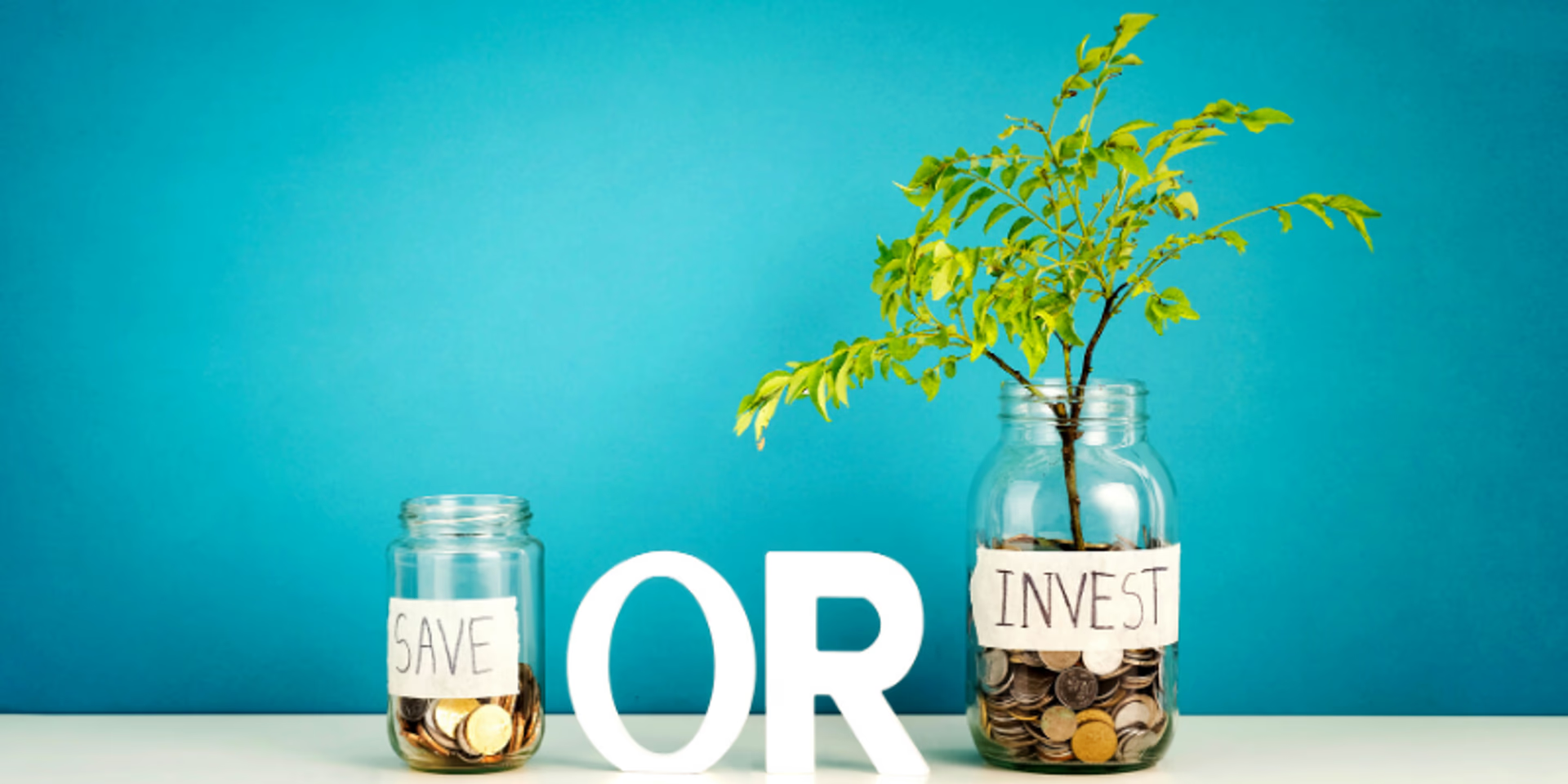

Many Ghanaians are told to save and invest, often in the same breath, as if the two were interchangeable. They are not. Saving and investing serve different purposes, carry different risks, and produce different outcomes. Confusing them can lead to poor financial decisions — money locked away when it should be accessible, or money sitting idle when it should be growing.
The question of which comes first is not merely theoretical. It affects how you handle your income, how you prepare for emergencies, and how you build wealth over time. The answer, for most people, is clear: saving comes first. But the full picture is more nuanced.
This article explains the difference between saving and investing, why the order matters, and how to think about both in the Ghanaian context. It is written for the ordinary earner, the young professional, the market trader, and anyone trying to build a stable financial life.
Quick Facts
-
Saving is setting money aside in a safe, accessible place for short-term needs and emergencies.
-
Investing is committing money to assets such as shares, bonds, treasury bills, or property with the expectation of growth over time.
-
Saving prioritises safety and liquidity. Investing prioritises growth and accepts risk.
-
An emergency fund — savings set aside for unexpected expenses — should come before any serious investing.
-
The right order for most people is: build savings first, then invest with money you can afford to leave alone.
-
Inflation reduces the value of idle savings, which is why investing becomes important for long-term goals.
-
Both saving and investing are essential; the question is sequencing, not choosing one over the other.
What Saving Is
Saving is the act of setting aside money for future use. The money is kept in a safe, accessible place — a savings account, a mobile money wallet, a fixed deposit, or even a cash box.

The defining features of saving are safety and liquidity. Safety means the money is not exposed to significant risk of loss. Liquidity means you can access it quickly when you need it.
Saving is for short-term goals and emergencies. It is the money you will need for rent next month, school fees next term, a medical bill, or an unexpected repair. Because the need may arise suddenly, the money must be available quickly.
The trade-off is that savings earn little or no return. In fact, in a high-inflation environment like Ghana’s, the real value of savings often declines over time. A cedi saved today will buy less next year. But that is the price of safety and access.
What Investing Is
Investing is the act of committing money to an asset with the expectation of generating a return over time. Common investments include shares, bonds, treasury bills, mutual funds, real estate, and private businesses.
The defining feature of investing is growth. The goal is to make your money work — to generate income or appreciation that outpaces inflation and builds wealth.
The trade-off is risk and reduced liquidity. Investments can lose value. Shares can fall. Businesses can fail. Property can be hard to sell. And the money is often tied up for long periods.

Investing is for long-term goals: retirement, a house purchase years away, a child’s education a decade from now, or the simple desire to build wealth over time.
Why Saving Comes First
For most people, saving should come before investing. The reason is simple: before you can afford to take risks, you need a foundation of security.
The Emergency Fund
Life is unpredictable. Cars break down. People fall ill. Businesses have slow months. Jobs are lost. Without savings, these events become crises. You borrow at high rates, sell assets at bad prices, or go without essentials.
An emergency fund — money set aside specifically for unexpected expenses — protects you from these shocks. It means that when something goes wrong, you can handle it without disrupting your long-term plans.
Financial advisors typically recommend setting aside enough to cover three to six months of essential expenses. The exact amount depends on your income, your obligations, and the stability of your situation. For a market trader with irregular income, a larger cushion may be wise. For a salaried worker with stable employment, a smaller one may suffice.
The Discipline of Regular Saving
Saving also builds the habit of living below your means. It forces you to set aside money before spending it, which is the foundation of all financial stability.
Investing without a savings habit is dangerous. You may invest money you cannot afford to leave alone, then find yourself forced to sell at a loss when an emergency arises.
The Sequence
The sensible sequence is therefore:
-
Save for emergencies.
-
Pay down expensive debt.
-
Then invest for the long term.
This does not mean you must build a complete emergency fund before ever investing. Many people save and invest simultaneously. But the priority should be clear: secure the foundation first, then take on risk.
When Investing Becomes Necessary
If saving is the foundation, investing is the engine of growth. Once your emergency fund is in place, money beyond that should be put to work.
The reason is inflation. Money sitting in a savings account loses purchasing power over time. If inflation is 20% and your savings account pays 10%, you are losing 10% of your real value every year. Saving alone cannot build wealth in a high-inflation environment.
Investing offers the possibility of returns that outpace inflation. It is how you grow your wealth, fund long-term goals, and achieve financial independence.
The key is to invest money you can afford to leave alone. Long-term investments need time to ride out volatility. If you might need the money next month, it should be saved, not invested.
The Balance Between Saving and Investing
The right balance depends on your circumstances.
If You Have No Savings
Focus entirely on saving. Build an emergency fund. Do not invest yet, except perhaps in the safest, most liquid instruments such as treasury bills or money market funds that can serve as part of your emergency reserve.
If You Have Some Savings
You can begin to invest modest amounts while continuing to build your savings. A common approach is to split your surplus: part to savings, part to investments.
If You Have a Solid Emergency Fund
You can invest more aggressively. Money beyond your emergency fund and short-term needs can go into shares, bonds, real estate, or other growth-oriented assets.
The point is not to choose between saving and investing but to sequence them sensibly and maintain the right mix for your situation.
The Ghanaian Context
Inflation
Ghana has experienced high inflation for much of its recent history. This makes saving alone insufficient for long-term wealth building. The erosion of purchasing power is too severe. Investing, in inflation-beating assets, becomes essential.
Interest Rates
Interest rates in Ghana have also been high, which means that safe instruments such as treasury bills and fixed deposits can offer meaningful returns. These can serve as a bridge between saving and more aggressive investing.
The Informal Sector
Many Ghanaians work in the informal sector, with irregular incomes. For them, the emergency fund is especially important, because income volatility is high. A larger savings buffer provides security against slow periods.
Access to Investment Products
Investment products are increasingly accessible in Ghana. Treasury bills can be bought through banks. Mutual funds are open to small investors. The Ghana Stock Exchange offers shares in listed companies. Even with modest amounts, investing is possible.
Common Misconceptions
“Saving and investing are the same thing”
No. Saving is about safety and access. Investing is about growth and risk. They serve different purposes.
“I should invest everything to grow my money”
Investing everything is dangerous. Without an emergency fund, you may be forced to sell investments at the wrong time. Security comes first.
“Saving is pointless because of inflation”
Saving is essential for short-term needs and emergencies. Inflation reduces the value of long-term idle cash, but it does not eliminate the need for accessible funds.
“You need a lot of money to invest”
No. Many investment options in Ghana are accessible with small amounts. The key is consistency and time.
“Once I start investing, I can stop saving”
No. Saving and investing serve different goals. You should continue to maintain your emergency fund and save for short-term goals even as you invest.
Frequently Asked Questions
How much should I save before I start investing?
A common guideline is to save three to six months of essential expenses as an emergency fund. The exact amount depends on your income stability and obligations.
What counts as an emergency fund?
An emergency fund is money set aside for unexpected expenses: medical bills, car repairs, loss of income, urgent travel. It should be in a safe, accessible place.
Can I use treasury bills as an emergency fund?
Treasury bills are relatively liquid, but they have fixed maturities. A savings account or money market fund may be more suitable for funds you might need at short notice.
Should I pay off debt before investing?
Expensive debt — such as high-interest loans — should generally be paid down before investing. The guaranteed cost of the debt usually outweighs the uncertain return from investments.
What is the best investment for a beginner in Ghana?
Many beginners start with treasury bills or money market mutual funds because they are simple and relatively safe. From there, they may move to bond funds, balanced funds, or shares.
Can I save and invest at the same time?
Yes. Once your emergency fund is in place, you can split your surplus between savings for short-term goals and investments for long-term growth.
What should I do if I have no savings at all?
Start now. Set aside a small amount from every income, however little. Build the habit first, then grow the amount over time.
What to Remember
Saving and investing are not rivals. They are partners. Saving provides the security that allows you to invest with confidence. Investing provides the growth that allows you to build wealth over time.
The order matters. Build your savings first. Establish an emergency fund that can carry you through hard times. Pay down expensive debt. Then, with money you can afford to leave alone, begin to invest.
The next time someone tells you to save or invest, remember that the real question is not which one, but in what order and for what purpose. A solid financial life includes both — in the right sequence, in the right proportions, and with the right expectations.
Source: The Accra Daily Mail

Samuel Kwame Boadu is a Ghanaian media entrepreneur and storyteller with a passion for amplifying urban voices and uncovering everyday truths. He is the Editor-in-Chief and Founder of The Accra Daily Mail, a dynamic digital platform dedicated to capturing the pulse of Ghana’s capital—its people, culture, challenges, business, sports and innovations.