







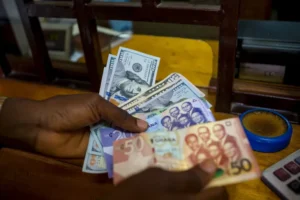






When a club pays millions for a player, it is not buying the person. It is buying the right to register that player for the duration of their contract. That distinction explains almost everything about how the transfer market works—why fees exist at all, why they vary so wildly between leagues, and why a Ghanaian club’s survival can depend on a clause tucked into a contract signed years earlier.
Transfer fees are the compensation one club pays another to release a player from their registration before the contract expires. But the forces that drive those fees are not universal. In the English Premier League, broadcasting wealth and domestic scarcity push prices to astronomical levels. In Ghana, direct fees are modest, and the real money often lies in what happens after the first sale.
Quick Facts
-
What a fee buys: The right to register a player, not the player themselves. A club holds a player’s registration until the contract ends.
-
Global scale: About 85% of international transfers involve no fee at all; less than 5% exceed €880,000 .
-
Premier League record: English top-flight clubs spent a record £3bn in the 2025 summer window, with three £100m-plus deals .
-
Ghana’s reality: Total transfer spending by Ghana Premier League clubs in 2025/26 was approximately €17,000, with most moves being free transfers or loans .
-
Enforcement: Clubs that fail to pay transfer debts can be banned from registering new players, as Hearts of Oak experienced in 2025 .
The Foundation: Registration Creates the Right to Charge
Football’s transfer system rests on a simple legal mechanism: registration. When a player signs for a club, that club holds the player’s registration, which grants exclusive rights to their services for the contract’s duration.
If another club wants that player before the contract ends, it must compensate the holding club for releasing the registration. That compensation is the transfer fee.

This is why free transfers exist. When a player’s contract expires, the registration is no longer held by anyone. The player can move without a fee because there is nothing to buy out .
The system was formalised by FIFA over decades, creating a global market where player registrations are traded between clubs. But the prices attached to those registrations are determined not by FIFA, but by the economic forces at play in each market.
Why Premier League Fees Are So High
The English Premier League operates in a financial universe of its own. In the 2025 summer window alone, English clubs spent a record £3bn, with Chelsea paying £117m for Morgan Rogers, Manchester City spending £116m on Elliot Anderson, and Tottenham paying £100m for Sandro Tonali .

Three forces drive these numbers.
First, broadcasting wealth. The Premier League’s television deals give its clubs spending power unmatched elsewhere in world football. As football finance expert Kieran Maguire explained to the BBC, this wealth means “it’s relatively rare that a club is in financial straits where it has to sell”. Selling clubs can demand premiums because they do not need the money.
Second, the benchmark effect. One record fee sets the price for the next comparable player. After City’s £116m move for Anderson established a new market rate, Aston Villa made clear that any club wanting Rogers would need to exceed that figure. Chelsea did exactly that, agreeing a guaranteed £117m fee . Each deal recalibrates expectations.

Third, domestic scarcity. Premier League rules require clubs to register at least eight homegrown players in their 25-man squads. This creates fierce competition for a limited pool of English talent capable of performing at the highest level. Buying domestically also removes the adaptation risks of recruiting from abroad—clubs know these players can handle the physical demands of the league. That certainty carries a premium .
The Ghanaian Reality: Small Fees, Bigger Clauses
The dynamics in Ghana’s Premier League could not be more different. According to Transfermarkt data, total spending on transfer fees by Ghana Premier League clubs in the 2025/26 season was approximately €17,000—roughly the cost of a single week’s wages for a mid-tier Premier League player.
Most moves are free transfers or loans. The average spend per club was around €944, and per player just €75 . Direct fees are simply not the primary mechanism for player movement in Ghanaian football.
Where Ghanaian clubs do find value is in sell-on clauses. When a local club sells a player to a bigger Ghanaian club or a foreign team, they often negotiate a percentage of any future sale. For a smaller club, that future payment can be the difference between survival and collapse.
The Salim Adams case illustrates how these clauses work—and what happens when they are ignored. In 2021, Hearts of Oak signed Adams from New Edubiase United for a package worth $120,000: a $100,000 base fee plus a $20,000 sell-on clause payable if Adams moved again. Hearts paid only $50,000 of the base fee. When Adams was transferred to FC Cincinnati in 2023, the sell-on clause was triggered, bringing Hearts’ total debt to New Edubiase to $70,000. The unpaid debt led the Ghana Football Association to impose a transfer ban on Hearts in 2025.
For New Edubiase, the sell-on clause was not a bonus. It was a core part of the deal’s value—compensation for developing a player who would eventually move on.
Enforcement: The Ban That Freezes a Club
Transfer fees are not merely private agreements between clubs. They are backed by the full weight of football’s governing bodies, and the enforcement mechanism is brutally simple: if you do not pay, you cannot register new players.
Hearts of Oak discovered this in 2025. Beyond the New Edubiase debt, the club faced a FIFA-imposed ban over an unpaid $150,000 owed to former Technical Director Rene Hiddink. FIFA’s Legal and Compliance Division barred the club from registering new players for three consecutive transfer windows, domestically and internationally.
The club eventually cleared the New Edubiase debt—paying over GHS 129,000, including principal, interest and legal costs—and the GFA lifted that ban. But the Hiddink matter lingered, a reminder that transfer obligations follow clubs across borders and jurisdictions.
The message is clear: in football’s transfer system, a fee is not a suggestion. It is a debt with teeth.
Frequently Asked Questions
Why do clubs pay transfer fees instead of just hiring players directly?
Because clubs hold a player’s registration for the duration of their contract. To acquire that registration before the contract expires, another club must compensate the holding club. This is the transfer fee .
Why are Premier League transfer fees so much higher than in Ghana?
The Premier League’s massive broadcasting revenues give its clubs spending power that Ghanaian clubs cannot match. English clubs also face homegrown player quotas that create scarcity for domestic talent, driving up prices.
What is a sell-on clause and why does it matter in Ghana?
A sell-on clause entitles a selling club to a percentage of any future transfer fee. For Ghanaian clubs, these clauses are often more valuable than the initial fee, because they capture value when a player moves to a bigger club or abroad .
Can a club avoid paying a transfer fee it owes?
No. Football’s governing bodies enforce transfer debts through registration bans. A club that fails to pay can be barred from signing new players until the debt is settled, as Hearts of Oak experienced in 2025.
Do most transfers involve a fee?
Globally, no. About 85% of international transfers involve no fee at all, and less than 5% exceed €880,000. The headline-grabbing mega-deals are the exception, not the norm .
What happens if a player’s contract expires?
The player can move without a transfer fee, because the club no longer holds their registration. This is why free transfers are common, especially in leagues with limited financial resources .
Why did Hearts of Oak get banned from transfers?
The club failed to pay debts related to player transfers—first $70,000 owed to New Edubiase United for Salim Adams, and later $150,000 owed to former Technical Director Rene Hiddink. FIFA and the GFA imposed registration bans as enforcement.
Are transfer fees the only money involved in a deal?
No. Deals can include bonuses, instalments, sell-on clauses, and agent commissions. In many transfers, the headline fee is only part of the total financial package.
What to Remember
Football clubs pay transfer fees because the registration system gives them the exclusive right to a player’s services. When another club wants that right, it must buy it.
In the Premier League, broadcasting wealth, benchmark pricing, and homegrown quotas push those fees into the tens and hundreds of millions. In Ghana, direct fees are tiny, but sell-on clauses and the threat of registration bans carry enormous weight for clubs operating on thin margins.
The Salim Adams case and Hearts of Oak’s bans show that transfer fees are not abstract numbers. They are obligations that can freeze a club’s ability to build a squad. For Ghanaian clubs, the lesson is clear: a well-negotiated sell-on clause can be worth more than the initial fee, and an unpaid debt can cost you the next transfer window
Source: The Accra Daily Mail

Samuel Kwame Boadu is a Ghanaian media entrepreneur and storyteller with a passion for amplifying urban voices and uncovering everyday truths. He is the Editor-in-Chief and Founder of The Accra Daily Mail, a dynamic digital platform dedicated to capturing the pulse of Ghana’s capital—its people, culture, challenges, business, sports and innovations.