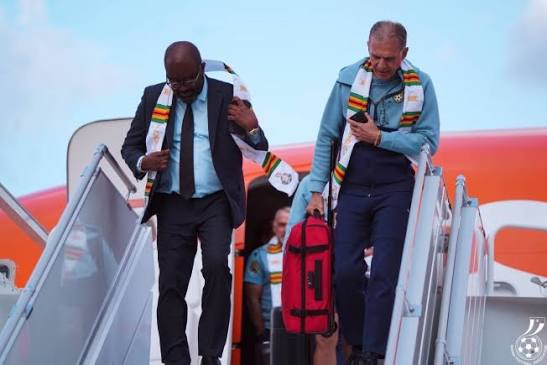











When a Ghanaian club announces a new signing, the photograph shows a player holding a shirt and smiling. What it does not show is the machinery behind the deal: the registration windows that open and close, the contract templates that must be used, the FIFA system that has to match the paperwork from both clubs, and the bans that can freeze a club out of the market entirely.
Football transfers are not simply a matter of one club agreeing to pay another for a player. They are a regulated process governed by the Ghana Football Association (GFA), FIFA, and a set of rules that determine when deals can happen, how they are recorded, and what happens when a club fails to follow them.
Quick Facts
-
FIFA TMS: All international transfers must be registered in FIFA’s Transfer Matching System, where both clubs must enter matching details .
-
Standard contract: From the 2025/26 season, all professional signings in Ghana must use the GFA Standard Player Contract .
-
Squad minimum: Clubs must register at least 20 approved players or risk deactivation .
-
Enforcement: FIFA can impose transfer bans on clubs that fail to pay debts, barring them from registering new players .
The Window: When Transfers Can Happen
Transfers do not happen at any time. They are confined to registration periods, commonly called transfer windows.
In Ghana, the GFA announces these windows for each season. For the 2025/26 season, the second registration window opened on 16 December 2025 and closed on 15 January 2026 . Both international and domestic transfers were permitted during this period.

The GFA’s rules are strict on deadlines. Clubs must process all transfers and registrations through the Transfer Matching System before the window closes. There are no extensions. And clubs that fail to meet the minimum requirement of 20 approved players by the end of the registration period risk being deactivated .
The window system exists to preserve competitive integrity. If clubs could sign players at any time, a team fighting relegation could suddenly acquire reinforcements from a club with nothing left to play for, distorting the competition.
The Paperwork: Contracts and Registration
Once a club identifies a player, two agreements are needed: one between the buying and selling clubs (if the player is under contract), and one between the buying club and the player.

In Ghana, the player contract is no longer a free-for-all. The GFA Executive Council approved the GFA Standard Player Contract (GSPC), which took effect from the 2025/26 season. It is now mandatory for all professional signings in the Ghana Premier League, the Women’s Premier League, and the Division One League .
The GSPC sets minimum standards. It codifies provisions on salary, bonuses, insurance, medical coverage, and a minimum wage. It specifies that contract start dates must fall within the July or January transfer windows, and end dates must fall in June or December, just before the next window opens. It also includes dispute resolution procedures, referencing the GFA Players’ Status Committee and appeals to the Court of Arbitration for Sport .
The GFA described the contract as a way to “improve player conditions and welfare by codifying some minimum provisions and standards,” and to create “a level playing field between clubs and minimising legal disputes” .

The FIFA System: How International Transfers Are Matched
For transfers that cross borders, the process is more complex. Every international transfer must be registered in FIFA’s Transfer Matching System (TMS) .
The system works by requiring both clubs to enter matching information. The buying club enters its details: the player, the type of transfer (permanent or loan, paid or free), and the counterpart club. The selling club must enter the corresponding details. The system checks that the three basic fields match: player, instruction type, and counter club .
If the details do not match—for example, if the clubs disagree on the transfer fee instalments or the loan dates—the transfer is blocked with a matching exception. The clubs must resolve the discrepancy before the transfer can proceed .
Once the TMS is matched, international clearance is generated. The buying club’s association requests clearance, and the selling club’s association issues it, allowing the player to be registered in the new country .
FIFA has described the TMS and the associated FIFA Clearing House as tools designed to “ensure transparency and integrity in the transfer system” .
When Transfers Go Wrong: Bans and Disputes
The transfer system has teeth. Clubs that fail to meet their obligations can be barred from the market entirely.
In August 2025, FIFA imposed a transfer ban on Hearts of Oak after the club missed a 90-day deadline to pay US$150,000 owed to former Technical Director Rene Hiddink. The ban barred the club from registering new players for three consecutive registration periods—domestically and internationally—until the debt was settled.
This was not the club’s only transfer dispute. Hearts of Oak had also been handed a ban over a US$70,000 debt to New Edubiase United related to the transfer of Salim Adams, with the GFA Players’ Status Committee ruling that the club owed outstanding payments plus a percentage of an onward transfer fee .
These cases illustrate a key feature of the transfer system: financial obligations are enforceable. A club cannot simply ignore a debt and continue signing players. The registration system is the leverage.
Disputes within Ghana are handled by the GFA Players’ Status Committee, which is responsible for settling employment, status, eligibility, compensation, and contractual disputes involving clubs, players, and intermediaries
Frequently Asked Questions
When are the transfer windows in Ghana?
The GFA operates two registration periods per season. For 2025/26, the second window ran from 16 December 2025 to 15 January 2026. The primary window typically aligns with the July period.
What is the GFA Standard Player Contract?
It is a mandatory contract template for all professional signings in Ghana, effective from the 2025/26 season. It sets minimum standards for salary, insurance, and dispute resolution .
What is FIFA TMS?
The Transfer Matching System is FIFA’s online platform where both clubs in an international transfer must enter matching details before clearance is granted .
Why do transfers get blocked in TMS?
Transfers are blocked when the details entered by the two clubs do not match—such as different transfer fee amounts, payment dates, or loan terms. This is called a matching exception .
Can a Ghanaian club be banned from transfers?
Yes. FIFA and the GFA can impose transfer bans on clubs that fail to pay debts or comply with decisions. Hearts of Oak received a ban in 2025 over an unpaid US$150,000 debt.
What happens if a club has fewer than 20 players?
The GFA has warned that clubs failing to meet the minimum requirement of 20 approved players by the end of the registration period risk being deactivated.
Who resolves transfer disputes in Ghana?
The GFA Players’ Status Committee handles disputes involving employment, status, eligibility, compensation, and contracts. Appeals can go to the Court of Arbitration for Sport.
Do domestic transfers use TMS?
Ghana uses a Domestic Transfer Matching System (DTMS) alongside the International TMS (ITMS) for domestic moves .
What to Remember
Football transfers in Ghana are not informal arrangements between clubs. They are regulated processes with defined windows, mandatory contracts, and a digital matching system for international moves.
The GFA Standard Player Contract has introduced minimum standards for player welfare. The FIFA TMS ensures that international transfers are transparent and documented. And the enforcement mechanisms—transfer bans, squad minimums, and dispute resolution—give the system teeth.
For clubs, the lesson is that paperwork and payments matter. A missed deadline or an unpaid debt can freeze a club out of the transfer market entirely. For players, the standard contract offers protections that did not exist before. And for fans, understanding the machinery behind a signing explains why some deals collapse at the last minute, and why a club’s transfer activity can be restricted by decisions made thousands of kilometres away in Zurich.
Source: The Accra Daily Mail

Samuel Kwame Boadu is a Ghanaian media entrepreneur and storyteller with a passion for amplifying urban voices and uncovering everyday truths. He is the Editor-in-Chief and Founder of The Accra Daily Mail, a dynamic digital platform dedicated to capturing the pulse of Ghana’s capital—its people, culture, challenges, business, sports and innovations.