








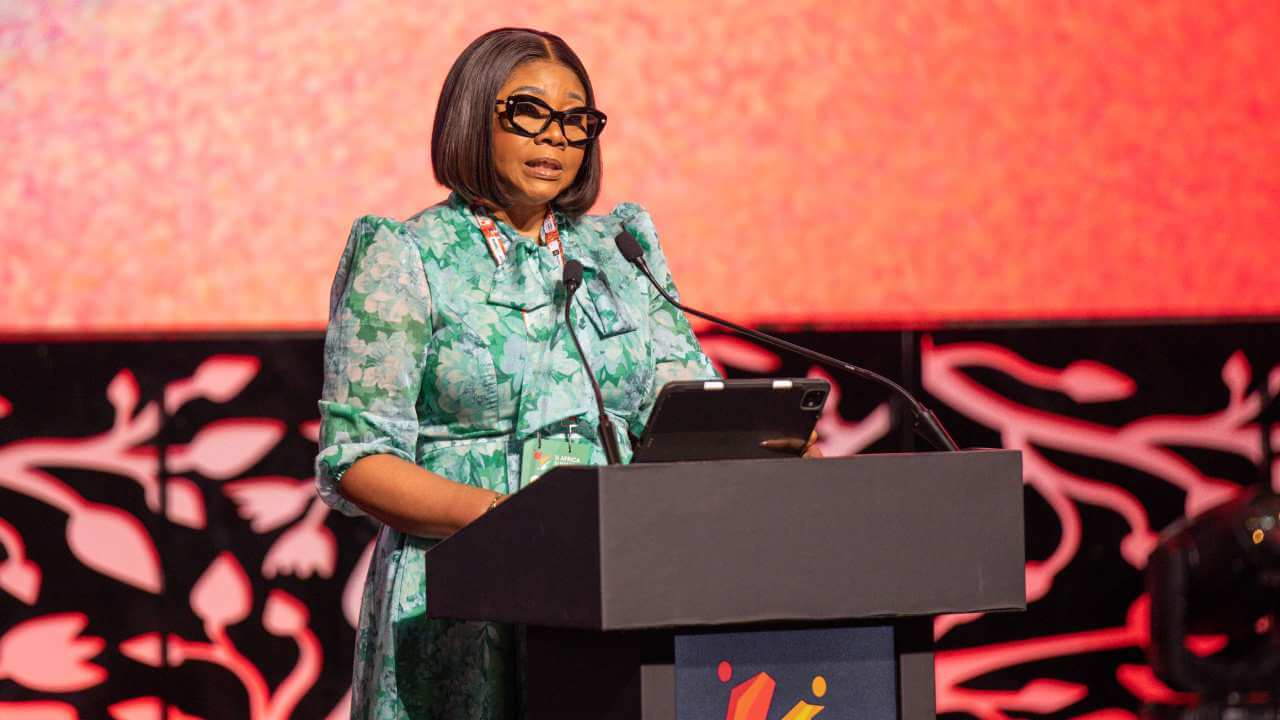

Ghana’s small and medium-sized enterprises face a financing problem that is less about a shortage of capital and more about how the financial system connects available funds to businesses that need them, Second Deputy Governor of the Bank of Ghana, Mrs. Matilda Asante-Asiedu, has said. Delivering the Distinguished Digital Finance Lecture, Mrs. Asante-Asiedu said banks, pension funds, investors, development finance institutions and risk-sharing schemes have resources that could support businesses, but the mechanisms for moving that capital to SMEs remain inadequate. “Ghana does not have a capital shortage. It has an architecture problem,” she said. The disconnect is particularly evident in the contrast between how quickly businesses can receive payments and how slowly they can secure financing. An SME in Kumasi can receive payment through Ghana’s instant payment infrastructure within seconds, but may wait three months or longer for a working-capital loan decision, even though the transaction that demonstrates its ability to generate income has already taken place.
Key Developments: The $4.8 Billion SME Financing Gap and the Architecture Problem
The financing gap for SMEs is estimated at close to $4.8 billion annually, according to the Second Deputy Governor. This is not a figure that reflects a shortage of capital; it reflects a failure of intermediation. Banks, pension funds, and DFIs have capital, but they are not deploying it to SMEs. The reasons are structural: cumbersome credit assessment processes, collateral requirements that many SMEs cannot meet, and a lack of data-sharing mechanisms that would allow lenders to assess creditworthiness based on transaction history.
The disconnect between payment speed and financing speed is a telling symptom. Ghana’s instant payment infrastructure is world-class: an SME can receive a payment from a customer within seconds. But that same SME may wait months for a loan decision. The transaction that proves the business is viable and generating income is not being used to assess creditworthiness. Mrs. Asante-Asiedu argued that the financial system is not making sufficient use of the information contained in those transactions when assessing borrowers. A business’s payment flows, savings patterns and merchant activity can show how frequently it earns money, whether revenues are rising or falling and how predictable its cash flow is. That is not background information; it is a credit record. We have simply not built the habit of reading it as such.”
The gap between large lenders and microfinance providers is another structural issue. Large banks require substantial collateral and lengthy credit assessments. Microfinance providers offer smaller loans at higher rates and over shorter periods. Neither adequately serves businesses seeking medium-sized, short-term working capital—say, GH¢500,000 for 30 to 90 days to fulfil a contract. A firm that needs five hundred thousand cedis for 30 to 90 days to fulfil a contract is not served by either of them,” she said.
Invoice discounting—which allows businesses to raise working capital against outstanding receivables—is one instrument that could help fill that gap, but remains underdeveloped relative to the needs of Ghana’s SME sector. The financial system, she argued, needs to look beyond traditional measures of business security as more companies build value through contracts, receivables, and transaction histories rather than fixed assets. “A confirmed purchase order, an export contract or a multi-year service agreement represents an identifiable claim on future income that can be assessed by a lender,” even though such claims are not currently treated as collateral in the same way as land, buildings, or financial instruments.
The Bank of Ghana is looking to open banking and open finance as a way of improving how financial data moves between institutions and how lenders assess businesses. The success of those frameworks, Mrs. Asante-Asiedu said, should not be judged simply by the number of APIs or systems connected, but by whether they result in more credit reaching SMEs because lenders can access and assess their financial histories. That would allow a business to use its transaction record to seek financing from another provider where its existing financial institution cannot offer suitable terms.
Analysis & Implications: The Architecture Problem, Data-Driven Lending, and Policy Response
The diagnosis is clear: Ghana does not lack capital; it lacks the architecture to channel capital to SMEs. The architecture problem has multiple dimensions. First, information asymmetry: lenders do not have reliable data on SME performance, and SMEs do not have audited financial statements or collateral. Second, risk aversion: banks are hesitant to lend to SMEs because they perceive them as risky, and the legal framework for recovery is slow and costly. Third, product mismatch: existing loan products (short-term micro loans, long-term collateralised loans) do not fit the needs of SMEs (medium-term, unsecured working capital).
The solution, according to the Second Deputy Governor, lies in data-driven lending. Transaction data—payment flows, savings patterns, merchant activity—can serve as a proxy for creditworthiness. If lenders can access and analyse this data, they can make faster, more accurate lending decisions. The Bank of Ghana’s push for open banking and open finance is designed to enable this data sharing. But the success of open banking depends on adoption by financial institutions, and on the development of credit scoring models that can analyse transaction data.
The Bank of Ghana has a broader challenge: to improve the mechanisms through which capital already available in Ghana’s financial system reaches productive businesses. This requires regulatory reform (to encourage innovation in lending products), infrastructure investment (to enable data sharing), and capacity building (to train lenders in data-driven credit assessment). It also requires a shift in mindset: from viewing SMEs as risky borrowers to viewing them as potential growth engines.
The Accra Street Journal notes that the SME financing gap is not unique to Ghana. Across Africa, SMEs account for a majority of employment but receive a minority of bank credit. The International Finance Corporation estimates the SME financing gap in Africa at over $300 billion. The solutions are similar: data-driven lending, collateral reform, and product innovation. Ghana’s instant payment infrastructure is a foundation; the challenge is to build on it.
The timing of the Second Deputy Governor’s remarks is significant. Ghana is emerging from a debt crisis; the macroeconomic environment is stabilising. The government is seeking to boost growth and employment; SMEs are the engine of job creation. If the financing gap can be addressed, Ghana could see a surge in SME activity, with knock-on effects for employment, innovation, and poverty reduction.
What This Means for Ghanaian SMEs, Financial Institutions, and Policymakers
For SMEs, the message is one of opportunity. The Bank of Ghana recognises the financing gap and is pushing for reforms. SMEs that maintain accurate transaction records—and that are willing to share those records with lenders—will be better positioned to access credit. The shift toward transaction-based lending should favour businesses that are active, transparent, and growing.
For financial institutions, the message is one of adaptation. The era of relying on collateral and audited financial statements is ending. Lenders must invest in data analytics and credit scoring to assess SMEs. They must also innovate their product offerings: invoice discounting, supply chain finance, and other working capital solutions. The institutions that adapt will capture a growing market segment; those that do not will lose share.
For policymakers, the message is one of action. The Bank of Ghana is leading the push for open banking and open finance. The government must complement this with legal reform: improving the enforcement of contracts, reducing the cost of recovery, and creating a regulatory environment that encourages innovation. The $4.8 billion SME financing gap is not a fixed constraint; it is a solvable problem.
The Accra Street Journal’s advice to SMEs: maintain good records. Your transaction history is your credit record. Share it with potential lenders. Advocate for better financing products. The architecture is changing; be ready to participate.
Wider Context: SME Financing in Africa and the Role of Digital Finance
The SME financing gap is a global challenge, but it is particularly acute in Africa. The IFC estimates that formal SMEs in Africa face a financing gap of $331 billion. The gap is driven by high collateral requirements, high interest rates, and limited access to credit information. Digital finance offers a pathway to address these constraints: mobile money data can be used to assess creditworthiness; digital platforms can connect SMEs to lenders; and open banking can enable data sharing.
Ghana is a leader in digital finance. Its instant payment infrastructure is world-class; mobile money penetration is high. The Bank of Ghana’s push for open banking and open finance is consistent with the country’s digital leadership. The challenge is to extend digital finance from payments to credit: to use the infrastructure that enables instant payments to enable instant lending.
The lessons from other countries are instructive. In Kenya, M-Pesa has enabled credit scoring through mobile money data; lenders use transaction history to assess creditworthiness. In Nigeria, digital lending platforms have emerged to serve SMEs. In India, the government’s India Stack—a digital infrastructure for payments, identity, and data—has enabled a surge in digital lending. Ghana’s architecture problem is solvable; the solutions are elsewhere.
The Accra Street Journal’s conclusion: Mrs. Matilda Asante-Asiedu’s diagnosis is correct. Ghana has capital but lacks architecture to channel it to SMEs. The solution lies in data-driven lending, open banking, and product innovation. The Bank of Ghana is pushing in the right direction; the private sector must respond. The $4.8 billion SME financing gap is not a measure of failure; it is a measure of opportunity. If Ghana can close it, the economy will be more inclusive, more resilient, and more dynamic.

Samuel Kwame Boadu is a Ghanaian media entrepreneur and storyteller with a passion for amplifying urban voices and uncovering everyday truths. He is the Editor-in-Chief and Founder of The Accra Daily Mail, a dynamic digital platform dedicated to capturing the pulse of Ghana’s capital—its people, culture, challenges, business, sports and innovations.