


Most people experience the economy before they ever study it. You feel it when transport fares rise, when the price of a bag of rice shifts between visits to the market, when a landlord adjusts rent, or when a young graduate struggles to find a first job. What is often missing is a clear explanation of how all these experiences connect.
Ghana’s economy is not a mystery. It is a system with identifiable parts: people producing goods and services, people buying them, the government collecting revenue and spending it, and the rest of the world trading with us. Once you understand these basic parts, many headlines about inflation, interest rates, the cedi, and public debt begin to make sense.
This guide explains how Ghana’s economy actually works, in plain language, without assuming you already know the jargon. It is written for the ordinary reader: the trader in Kumasi, the teacher in Tamale, the student in Cape Coast, the driver in Accra, and anyone who simply wants to understand what is happening around them.
Quick Facts
-
Ghana’s economy is a mixed economy, meaning both private businesses and the government play important roles.
-
The main sectors are services, agriculture, and industry.
-
The Bank of Ghana is the central bank responsible for monetary policy and issuing the cedi.
-
The Ministry of Finance leads fiscal policy, which covers government spending, taxation, and borrowing.
-
The Ghana Statistical Service is the official body that measures inflation, GDP growth, unemployment, and other key indicators.
-
Inflation is measured using the Consumer Price Index, which tracks changes in the prices of goods and services ordinary households buy.
-
Ghana trades heavily with the rest of the world, exporting commodities like gold, cocoa, and crude oil, while importing items such as fuel, machinery, and some food products.
What an Economy Is
An economy is simply the system through which a country produces, distributes, and consumes goods and services. Goods are physical items: food, clothes, cement, phones. Services are activities people pay others to perform: teaching, transporting, hairdressing, banking, healthcare.
Every economy has producers and consumers. Some people and businesses produce things. Others buy and use those things. Many people do both. A farmer produces maize and also buys fertiliser, airtime, and school uniforms. A nurse provides healthcare services and also buys food, transport, and electricity.
When people talk about “the economy,” they are usually referring to how well this system is working. Is there enough production? Are people able to buy what they need? Are prices stable? Are there jobs? Is the government able to provide basic services? These questions sit at the heart of everyday economic concerns in Ghana.
The Main Parts of Ghana’s Economy
Services
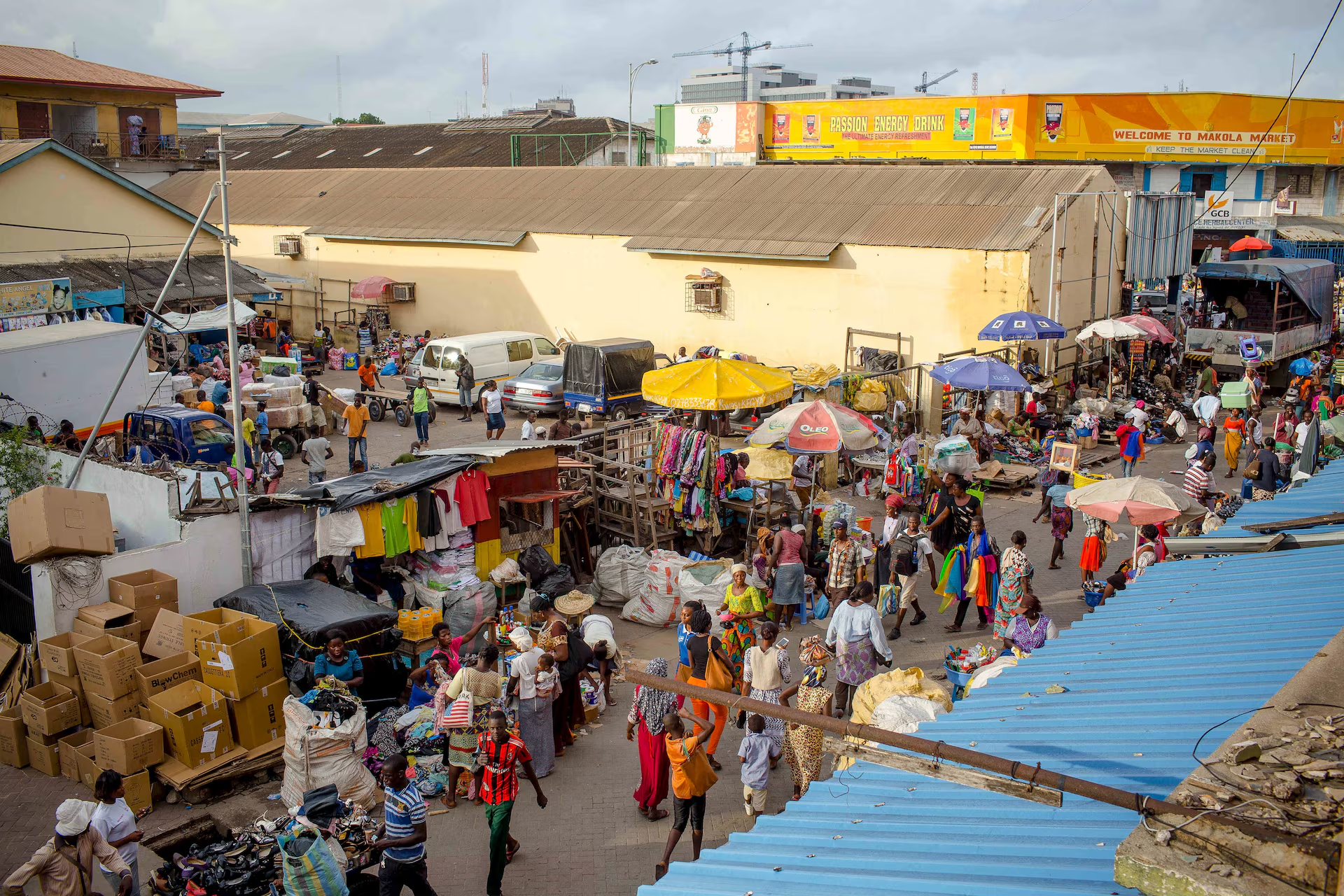
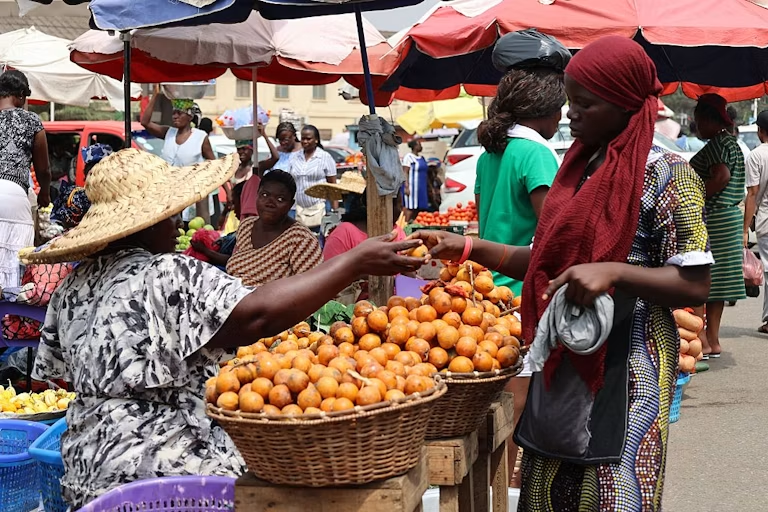
Services form the largest part of Ghana’s economy. This includes banking, insurance, telecommunications, transport, retail and wholesale trade, education, health, hospitality, and public administration. When you send mobile money, take a trotro, visit a hospital, or buy goods from a shop, you are participating in the services sector.
The service sector is important because it employs a large number of Ghanaians and connects other parts of the economy. A cocoa farmer may produce beans, but the farmer needs transport services, financial services, communications, and market traders to turn that harvest into income.
Agriculture
Agriculture has historically been the backbone of Ghana’s economy and remains a major source of employment, especially in rural areas. The main agricultural products include cocoa, maize, rice, cassava, yam, plantain, oil palm, and vegetables. Livestock and fishing also contribute.
Cocoa is particularly significant. Ghana is one of the world’s largest producers of cocoa, and the crop has long been a major source of foreign exchange earnings. However, the agriculture sector is exposed to challenges such as changing weather patterns, limited access to modern equipment in some areas, post-harvest losses, and fluctuating global commodity prices.
Industry
The industrial sector includes manufacturing, construction, mining, and quarrying, as well as electricity and water production. Gold is Ghana’s most valuable mineral export. Crude oil and natural gas have also become important since commercial oil production began in 2010 at the Jubilee Field, followed by other fields.
Industry matters because it adds value. Instead of only exporting raw materials, an economy that processes materials locally can create more jobs and earn more income. For example, turning cocoa beans into chocolate or gold ore into refined jewellery usually generates more value than exporting the raw commodity alone.
How Money Flows Through the Economy
Households and Businesses
The simplest way to picture an economy is as a circular flow of money. Households provide labour to businesses and the government. In return, they receive wages, salaries, or income from their own enterprises. Households then spend that income on goods and services. Businesses use that spending to pay workers, buy inputs, and produce more.
When this flow is strong, the economy feels active. Markets are busy, businesses expand, and more people find work. When the flow weakens — perhaps because prices rise too quickly or incomes fall — people buy less, businesses earn less, and the effects spread.
Government
The government plays a central role. It collects revenue through taxes, fees, and other charges, and it spends money on infrastructure, salaries, education, healthcare, security, and social programmes. The Ghana Revenue Authority is responsible for collecting taxes.
When government spending is higher than its revenue, the government runs a deficit. To cover the gap, it borrows money from domestic or international sources. This borrowing contributes to the national debt. Public debt is not automatically bad — many governments borrow to build roads, schools, and hospitals — but the level of debt and what it is used for matter a great deal.
The Rest of the World
Ghana does not operate in isolation. The country exports goods and services to other countries and imports goods and services from them. Exports bring foreign currency into the country, especially US dollars. Imports require foreign currency to pay for them.
The balance between exports and imports affects the value of the cedi. When demand for dollars is high because the country is importing a lot — fuel, machinery, rice, cars — and supply is lower, the cedi tends to lose value against the dollar. When exports rise or imports fall, pressure on the cedi can ease. This relationship is one reason exchange rate movements receive so much attention in Ghana.
Understanding Key Economic Terms
Inflation
Inflation is the general rise in prices over time. When inflation rises, the same amount of money buys fewer goods and services. The Ghana Statistical Service measures inflation every month using a basket of goods and services that ordinary households purchase.
For example, if a basket of goods cost GH₵1,000 in January and the same basket costs GH₵1,200 a year later, that reflects annual inflation. It does not mean every item rose by the same amount. Some prices rise faster, others slower, and a few may even fall.
Inflation affects everyone. It reduces the purchasing power of wages and savings. It can also create uncertainty for businesses, making it harder to plan.
Interest Rates
Interest is the cost of borrowing money or the reward for saving it. When you take a loan from a bank, you pay interest. When you save money, you may earn interest.
The Bank of Ghana sets a key interest rate called the monetary policy rate. This rate influences the rates commercial banks charge their customers. When inflation is high, the central bank may raise the policy rate to reduce the amount of money circulating in the economy and slow price increases. The trade-off is that higher interest rates make borrowing more expensive for individuals and businesses.
Exchange Rate
The exchange rate is the price of one currency in terms of another. In Ghana, people often focus on the cedi–dollar exchange rate because many international transactions are settled in dollars.
The exchange rate matters because Ghana imports many goods, including fuel and some food items. A weaker cedi makes imports more expensive, which can push up prices at the pump, in the market, and in shops. It also affects the cost of servicing foreign debt and the price of imported medicines, equipment, and raw materials.
Gross Domestic Product (GDP)
Gross Domestic Product, or GDP, is the total value of all goods and services produced within a country over a specific period, usually a year or a quarter. It is one way to measure the size of an economy.
When GDP grows, the economy is said to be expanding. When it shrinks for two consecutive quarters or more, that is often described as a recession. However, GDP growth alone does not tell you how income is distributed or whether life is improving for ordinary citizens.
Public Debt
Public debt is the total amount the government owes to lenders, both inside and outside Ghana. Domestic debt is owed to local banks, pension funds, insurance companies, and individuals who buy government bonds. External debt is owed to foreign lenders, including governments, multilateral institutions like the International Monetary Fund and World Bank, and private investors.
Debt becomes a serious problem when a government struggles to repay or when a large share of revenue goes toward interest payments instead of schools, hospitals, and roads. Ghana has restructured its domestic and external debt in recent years, a process that has had significant consequences for the economy and for those who held government bonds.
How Everyday Life Connects to the Economy
Transport and Fuel
Fuel prices are one of the clearest examples of how global and national forces affect daily life. Ghana imports refined petroleum products and also processes some crude oil locally. Global oil prices, the exchange rate, taxes, and distribution costs all influence what you pay at the pump.
Because transport is so central to economic activity, changes in fuel prices quickly affect the cost of moving goods and people. That is why fuel price increases often lead to higher transport fares, which then feed into the prices of food and other goods.
Food Prices
Food prices respond to many factors at once: the weather, the planting season, the cost of fertiliser, transport costs, exchange rates for imported items like rice and cooking oil, and market conditions. A poor harvest in one region can push up the price of maize or vegetables elsewhere. A weak cedi can increase the price of imported food. Because food carries significant weight in the consumer basket used to measure inflation, changes in food prices have a strong effect on the overall inflation figure.
Jobs and Incomes
When an economy grows, businesses often expand and hire. When growth slows, firms may delay hiring, reduce hours, or lay off workers. The link between economic growth and jobs, however, is not automatic. Some sectors grow without creating many formal jobs. Many Ghanaians work in the informal economy, as traders, artisans, drivers, and farmers, and their incomes depend heavily on daily demand and the cost of doing business.
Savings and Pensions
Inflation and interest rates directly affect savings. If inflation is higher than the interest earned on a savings account, the real value of the money falls. People who rely on fixed-income investments, including some retirees, are especially sensitive to this. This is one reason discussions about pension funds and government bonds are so important in Ghana.
What Shapes Ghana’s Economy
Government Decisions
Government decisions on taxation, spending, borrowing, and regulation shape the economy in major ways. A decision to increase VAT or expand spending on infrastructure can affect businesses and households nationwide. The national budget, presented annually by the Minister of Finance to Parliament, is the main document that sets out these decisions.
Global Conditions
Ghana is deeply connected to the global economy. International prices for gold, cocoa, and oil affect export earnings. Global interest rates affect the cost of borrowing abroad. International supply chain disruptions can affect the availability and cost of goods. Global inflation and recessions also spill over into Ghana.
The Activities of Ordinary People
It is easy to think of the economy as something controlled only by officials in Accra or Washington. In reality, the daily choices of millions of ordinary Ghanaians shape it. When people buy more, production increases. When people save, banks have more funds to lend. When people start small businesses, they create employment. The informal sector, in particular, plays a massive role in Ghana’s economic life.
The Role of Key Institutions
Bank of Ghana
The Bank of Ghana is the central bank. Its responsibilities include issuing the cedi, managing the country’s foreign exchange reserves, supervising banks and other financial institutions, and setting monetary policy to keep inflation stable. The Governor of the Bank of Ghana regularly announces the monetary policy rate, and these announcements are closely watched.
Ministry of Finance
The Ministry of Finance oversees fiscal policy. This includes preparing the national budget, managing public debt, coordinating economic policy with international partners, and ensuring that government revenue and spending are managed properly.
Ghana Statistical Service
The Ghana Statistical Service produces official statistics on prices, GDP, employment, poverty, and many other matters. Its monthly inflation figures and periodic surveys provide the evidence base for much economic discussion.
Ghana Revenue Authority
The Ghana Revenue Authority is responsible for collecting taxes. It administers income tax, corporate tax, VAT, and other levies. Tax revenue is the main source of government funding, and tax compliance is a major economic issue.
Common Misconceptions
“The government controls all prices”
No. The government may influence prices through taxes, subsidies, and exchange rate policies, but most prices in Ghana are determined by supply and demand. Fuel prices, for example, are influenced by government levies and global oil prices, not set directly by the government for the whole market.
“If GDP is growing, everyone is getting richer”
Not necessarily. GDP measures total output, but it says nothing about how the gains are shared. A country can experience economic growth while many citizens see little improvement in their own lives, especially if growth is concentrated in capital-intensive sectors or if inequality is widening.
“A weak cedi is always bad”
A weak cedi makes imports more expensive and increases the cost of foreign debt. But it can also make Ghanaian exports cheaper for foreign buyers, which may help some exporters and local producers competing with imported goods. The overall effect depends on the structure of the economy and who is affected.
“Inflation means every single price is rising”
Inflation is an average. Some prices rise faster than the headline figure, some slower, and some may fall. The consumer price index reflects a basket of goods and services, and your own experience may differ depending on what you buy most often.
“Government debt is the same as household debt”
There are similarities, but there are important differences. A government has the power to tax and issue currency, which households do not. However, excessive government debt can still create serious problems, including higher interest rates, reduced public services, and inflation.
Frequently Asked Questions
What is the biggest sector of Ghana’s economy?
The services sector is the largest by contribution to GDP, followed by industry and agriculture. The Ghana Statistical Service periodically releases data showing the contribution of each sector.
Why do prices keep rising in Ghana?
Several factors influence inflation: the exchange rate, fuel prices, food supply conditions, government taxes and levies, and expectations about future prices. The Bank of Ghana and the Ministry of Finance take measures to reduce inflation, but global conditions also play a role.
Who controls the value of the cedi?
No single person or institution directly sets the cedi’s value. The exchange rate is largely determined by supply and demand for foreign currency. The Bank of Ghana can intervene in the foreign exchange market and adjust monetary policy, but it cannot permanently fix the exchange rate if market forces pull in a different direction.
What is the difference between the Bank of Ghana and the Ministry of Finance?
The Bank of Ghana manages monetary policy, issues currency, and supervises banks. The Ministry of Finance manages fiscal policy: government spending, taxation, and borrowing. They work together but have different responsibilities.
Why does Ghana borrow money if it exports gold, cocoa, and oil?
Exports bring in foreign currency, but the government’s revenue comes mainly from taxes, fees, and other domestic sources. If government spending exceeds revenue, the gap must be covered through borrowing. Export earnings help the broader economy but do not automatically eliminate the government’s financing needs.
How does inflation affect my savings?
If your savings earn less interest than the inflation rate, the purchasing power of your savings falls. For example, if inflation is 20% and your savings account earns 10%, your money effectively loses value. This is why many savers look for investments that at least keep pace with inflation.
Is Ghana’s economy improving?
The answer depends on which indicators you examine and the period considered. GDP growth, inflation, employment, and debt levels have all moved in different directions at different times. The Ghana Statistical Service, the Bank of Ghana, and the Ministry of Finance publish regular data that can help you assess the latest situation.
Why Understanding the Economy Matters
You do not need a degree in economics to participate in economic discussions or make informed decisions. When you understand inflation, you can make better choices about saving and spending. When you understand the exchange rate, you can make sense of price changes at the market. When you understand public debt, you can evaluate political promises more critically.
The economy is not an abstract subject that belongs only to bankers and ministers. It is the system that determines whether a small business can survive, whether a family can afford school fees, whether a pension will be enough, and whether a young person can find meaningful work. The more ordinary Ghanaians understand how the system works, the better equipped they are to demand accountability and make good decisions in their own lives.
What matters most is not memorising every statistic, but grasping the relationships: how prices, incomes, debt, trade, and government decisions all interact. Once you see those connections, the daily news begins to make much more sense.
Source: The Accra Daily Mail

Samuel Kwame Boadu is a Ghanaian media entrepreneur and storyteller with a passion for amplifying urban voices and uncovering everyday truths. He is the Editor-in-Chief and Founder of The Accra Daily Mail, a dynamic digital platform dedicated to capturing the pulse of Ghana’s capital—its people, culture, challenges, business, sports and innovations.