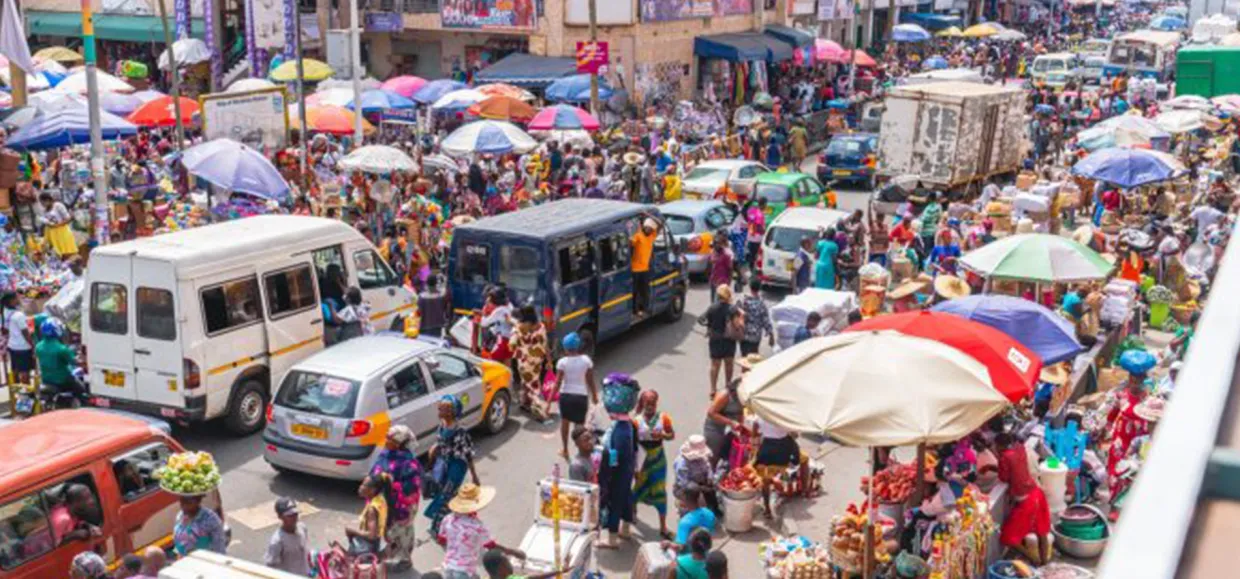





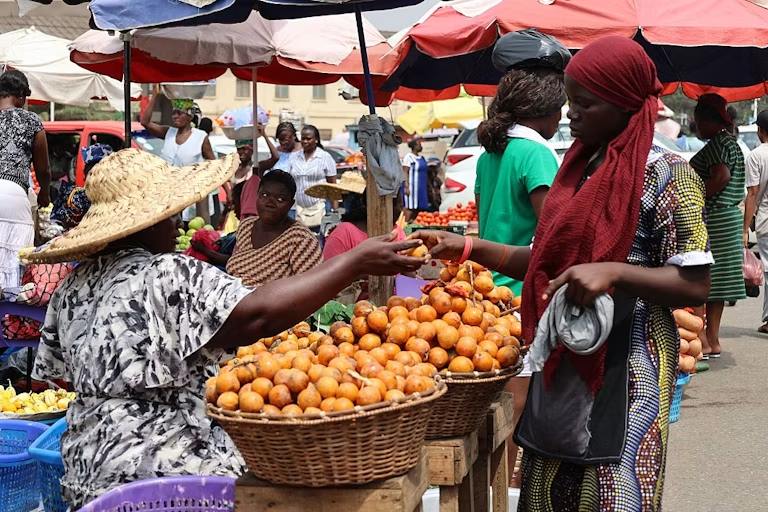

If you have ever stood in a Ghanaian market and noticed that the same amount of money now buys fewer items than it did a few months ago, you have experienced inflation. You do not need an economist to tell you that prices have gone up. You feel it directly. Yet the way inflation actually works, why it happens, and what can be done about it often remains unclear.
Inflation is not a uniquely Ghanaian problem, and it is not new. But in Ghana, it is felt intensely because many households spend a large share of their income on food, transport, and rent. When prices in these essential areas rise quickly, the pain spreads fast.
This article explains inflation in plain English. It covers what inflation is, how it is measured in Ghana, what causes it, who is affected most, and what the Bank of Ghana and the government try to do about it. It also clears up some common misunderstandings and offers practical ways ordinary people can protect their purchasing power.
Quick Facts
-
Inflation is the general rise in the prices of goods and services over time.
-
In Ghana, the official inflation rate is measured and published each month by the Ghana Statistical Service.
-
The measurement uses a Consumer Price Index (CPI), which tracks the cost of a basket of goods and services that households commonly buy.
-
Food prices carry a heavy weight in Ghana’s inflation calculation because food takes up a large share of household spending.
-
The Bank of Ghana uses monetary policy, especially its policy interest rate, to help bring inflation under control.
-
Inflation reduces the real value of money. If inflation is 20% and your savings earn less than 20%, the purchasing power of your savings falls.
-
Inflation can be caused by rising production costs, excessive money in circulation, supply shortages, or a sharp depreciation of the cedi.
What Inflation Actually Means
Inflation is a sustained increase in the general price level of goods and services in an economy over a period of time. It does not mean that one or two items have become more expensive. It means that, on average, the things people buy are costing more.
The simplest way to understand it is through purchasing power. Purchasing power is what your money can actually buy. When inflation rises, the purchasing power of the cedi falls. If you could buy a loaf of bread for GH₵15 last year and it now costs GH₵18, your money has lost some of its ability to buy bread.
That example is about one item. Inflation measures a much broader range of goods and services, including food, clothing, housing costs, transport, healthcare, education, and utilities. When statisticians say inflation is 25%, they do not mean every item rose by exactly 25%. Some prices may have risen by much more, others by much less, and a few may have fallen. The inflation rate is an average.
It is also important to distinguish inflation from a one-time price jump. If fuel prices spike because of a sudden global shock but then stabilise, that is a price increase at a point in time. Inflation is about a general and persistent rise in prices across the economy.
How Inflation Is Measured in Ghana
The Ghana Statistical Service (GSS) is the official body responsible for measuring inflation in Ghana. It does so using a Consumer Price Index, known as the CPI.
The CPI is built from a fixed basket of goods and services that represents what an average Ghanaian household buys. The basket is not random. It is constructed from household expenditure surveys that reveal where people actually spend their money. The basket includes items such as maize, rice, bread, fish, meat, vegetables, cooking oil, rent, electricity, water, transport fares, school fees, medical expenses, clothing, and communication services.
Each item in the basket is assigned a weight. The weight reflects how important that item is in the average household budget. Because food accounts for a large share of spending for many Ghanaian families, food inflation tends to have a strong influence on the overall inflation figure.
Every month, the GSS collects prices for the items in the basket from markets, shops, and service providers across selected areas in the country. The statisticians compare the current cost of the basket with its cost in a base period. The percentage change over twelve months is the annual inflation rate. When news reports say “inflation was 23.1% in May,” they are usually referring to the year-on-year change in the CPI.
The GSS publishes separate figures for food inflation and non-food inflation, which helps analysts understand where price pressures are coming from. It also publishes regional inflation figures, showing that price changes are not uniform across Ghana.
Why Inflation Happens
Inflation does not have a single cause. In practice, several forces can push prices up at the same time. Economists often group the causes into three broad categories: demand-pull inflation, cost-push inflation, and built-in inflation.
Demand-Pull Inflation
Demand-pull inflation occurs when there is too much money chasing too few goods. If households and businesses suddenly have more money to spend, but the economy cannot produce enough goods and services quickly enough, prices rise.
This can happen when the government injects money into the economy through heavy spending, or when banks lend aggressively, or when wages rise broadly. In Ghana, periods of high government spending around elections or major infrastructure projects have sometimes been associated with increased demand pressures.
Cost-Push Inflation
Cost-push inflation happens when the cost of producing goods and services rises, and producers pass those costs on to consumers.
In Ghana, several factors regularly drive up production costs. Fuel prices are a major one. When petrol and diesel prices rise, transport costs increase. Since almost every product must be transported to market, those costs spread across the economy. Electricity and water tariffs also matter. If businesses pay more for utilities, they may raise their prices.
The exchange rate is another key cost factor. Ghana imports many items, including machinery, raw materials, medicines, and some food products. When the cedi depreciates against the dollar, imported goods become more expensive in cedi terms. Importers then raise their prices to cover their costs. Even locally produced goods can be affected if they rely on imported inputs.
Built-In Inflation
Built-in inflation, sometimes called an inflation spiral, occurs when people begin to expect higher prices and act accordingly. Workers demand higher wages to keep up with rising costs. Businesses raise prices in anticipation of higher wages and input costs. These expectations can become self-fulfilling.
For example, if traders expect the cedi to weaken further or fuel prices to rise, they may increase their prices now to protect their margins. That increase then feeds into the next inflation reading, which reinforces the expectation of more price rises.
Inflation and the Money Supply
A deeper cause of inflation is excessive growth in the money supply. The money supply is the total amount of money in circulation in an economy, including cash and bank deposits. If the amount of money grows much faster than the amount of goods and services available, prices tend to rise.
The Bank of Ghana has the responsibility of managing the money supply through monetary policy. Its main tool is the monetary policy rate, often called the policy rate. This is the rate at which the central bank lends to commercial banks. When the Bank of Ghana raises the policy rate, borrowing becomes more expensive for banks, who then raise their own lending rates. This reduces borrowing and spending, which can help slow inflation. When the Bank of Ghana lowers the rate, it aims to encourage borrowing and economic activity.
The central bank also uses other tools, such as open market operations, where it buys or sells government securities to influence the amount of money in the banking system, and reserve requirements, which determine how much money commercial banks must hold rather than lend.
What Inflation Does to Ordinary People
It Reduces Purchasing Power
The most direct effect of inflation is that money loses value. Wages and salaries may stay the same, but the items they can buy shrink. A fixed income, such as a pension, is particularly vulnerable. Even if the cedi amount remains unchanged, its real value declines.
It Hurts Savers
People who keep money in savings accounts or fixed deposits suffer when inflation is higher than the interest they earn. If a bank pays 10% interest and inflation is 25%, the real return is negative. The money grows in cedi terms but buys less than before. This is a serious problem in Ghana, where many people rely on fixed deposits and government bonds for income.
It Creates Uncertainty
High and unpredictable inflation makes planning difficult. Businesses struggle to set prices and sign long-term contracts. Households cannot confidently budget. Investors may delay decisions because they cannot predict future costs. This uncertainty can slow economic growth and job creation.
It Affects Borrowers and Lenders Differently
Inflation is not always bad for everyone. Borrowers with fixed-rate loans may benefit, because they repay debts with money that is worth less. Lenders, on the other hand, lose. This is why banks and other lenders adjust interest rates when inflation rises. In Ghana, lending rates tend to be high precisely because lenders demand compensation for inflation and the risk of default.
It Widens Inequality
Inflation does not affect everyone equally. Wealthier households often have assets such as land, property, and foreign currency that can rise in value during inflationary periods. Poorer households, which hold most of their wealth in cash and spend heavily on food and transport, are hit hardest. Inflation can therefore widen the gap between rich and poor.
Inflation in the Ghanaian Context
Ghana has experienced periods of very high inflation and periods of relative stability. In the 1970s and early 1980s, inflation was extremely high, contributing to severe economic hardship. Since then, Ghana has pursued various stabilisation programmes, with mixed results. Inflation has at times fallen to single digits, as it did briefly in the early 2010s, and has at other times risen sharply above 40% on a year-on-year basis.
Several structural factors make Ghana vulnerable to inflation. First, the country imports a significant share of its goods, including fuel, machinery, vehicles, and certain foods. This means exchange rate movements have an immediate impact on domestic prices. When the cedi depreciates, imported inflation follows.
Second, food prices are highly sensitive to weather and seasonality. Because food carries a large weight in the CPI, a poor harvest or supply chain disruption can push the overall inflation figure up quickly.
Third, public sector borrowing can feed inflation when the government borrows heavily from the domestic market or when the central bank finances government spending directly, a practice now restricted by law. High fiscal deficits can therefore complicate the fight against inflation.
Fourth, the cost of doing business in Ghana — including electricity, transport, and credit — is often high. These costs feed into the prices of goods and services.
Finally, inflation expectations can become entrenched. When households and firms have lived through repeated price surges, they begin to expect them. Changing these expectations takes time and consistent policy.
How the Bank of Ghana Responds
The Bank of Ghana has a legal mandate to maintain price stability. Under the Bank of Ghana Act, the central bank is tasked with pursuing stability in the general level of prices. It does this primarily through monetary policy.
The Monetary Policy Committee, made up of senior officials from the central bank and the Ministry of Finance, meets regularly to review economic conditions and set the policy rate. When inflation is rising, the committee may raise the rate. The logic is straightforward: higher interest rates make borrowing more expensive, reduce spending, dampen demand, and eventually ease pressure on prices.
Raising rates, however, is not painless. It can slow economic growth, make credit expensive for businesses, and increase the cost of servicing government debt. The central bank must balance the need to control inflation against the need to support economic activity.
The Bank of Ghana also communicates its inflation targets and uses regular reports to guide public expectations. If people trust that the central bank will bring inflation down, they are less likely to demand rapid wage increases or raise prices pre-emptively.
The Role of Government
While the central bank manages monetary policy, the government influences inflation through fiscal policy — its spending and taxation decisions.
When the government spends more than it collects in revenue, it runs a deficit. If the deficit is financed by borrowing from the banking system or by printing money, the money supply can expand and fuel inflation. If the government instead borrows from the domestic bond market, it can push up interest rates and crowd out private borrowing.
The government also affects inflation directly through taxes and levies. Increases in VAT, import duties, fuel levies, and electricity tariffs feed directly into prices. Some of these measures are taken to raise revenue or meet policy goals, but their short-term effect is often higher inflation.
Finally, the government can help address structural problems that make inflation persistent. Investing in agriculture can improve food supply. Investing in transport and storage can reduce distribution costs. Improving energy reliability can lower business costs. These measures take time, but they address the underlying causes of cost-push inflation.
How Individuals Can Protect Themselves
Inflation is largely outside the control of ordinary households. But there are practical steps people can take to reduce its impact.
Budget More Frequently
When prices are rising rapidly, an annual budget can become useless. It helps to review spending monthly or even weekly. Track what you actually spend on food, transport, and utilities, and adjust quickly when prices change.
Buy in Bulk Where Sensible
For non-perishable items, buying in bulk when prices are lower can protect you from future increases. This works for items like rice, cooking oil, soap, and toiletries. The key is to ensure you have the storage space and the cash flow to buy ahead.
Prioritise Essential Spending
During high inflation, discretionary spending should be cut before essentials. This means reducing spending on things you can do without while protecting funds for food, rent, school fees, and healthcare.
Review Your Savings and Investments
Leaving large amounts of money in a low-interest savings account during high inflation is costly. Consider whether there are safe alternatives that offer better protection. Treasury bills, bonds, fixed deposits, and, for those who can manage risk, other asset classes can offer returns that partially offset inflation. It is important to seek advice from a licensed financial professional before making investment decisions.
Build Skills and Multiple Income Streams
One of the best long-term protections against inflation is the ability to earn more. Acquiring skills that are in demand, starting a side business, or finding ways to add value in your current work can help your income keep pace with rising prices.
Avoid Panic Buying
Panic buying can create artificial shortages and drive prices even higher. In some cases, traders may raise prices simply because they see customers rushing to buy. Staying calm and buying only what you need helps reduce the momentum of price increases.
Common Misconceptions
“Prices only rise because traders are greedy”
Traders do not operate in isolation. They face higher costs for fuel, transport, electricity, rent, and imported goods. While some traders may exploit shortages or uncertainty, sustained inflation is usually driven by broader economic forces, not simply greed. Blaming traders alone misunderstands how inflation works.
“Inflation is caused only by the government printing money”
Excessive money creation can cause inflation, but it is not the only cause. Supply shortages, exchange rate depreciation, fuel price increases, and poor harvests can all push prices up even without excessive money printing. Ghana’s inflation has often been driven more by supply shocks and exchange rate effects than by money printing alone.
“If I don’t buy anything, inflation doesn’t affect me”
Even if you consume very little, inflation affects you indirectly. It affects the cost of public services, the real value of your savings, the stability of your job, and the price of future purchases. You cannot fully escape inflation by opting out of the market.
“The government can simply fix prices to stop inflation”
Price controls have been tried in many countries, including Ghana, with limited success. When prices are fixed below market levels, shortages often develop because producers and importers cannot cover their costs. Goods disappear from the formal market and reappear on black markets at higher prices. Price controls rarely provide lasting relief and can create new problems.
“A drop in prices is always good”
Falling prices, known as deflation, can be harmful. If people expect prices to fall, they delay spending, businesses lose revenue, wages fall, and unemployment can rise. The goal of most central banks is stable and moderate inflation, not zero or negative inflation.
Frequently Asked Questions
Why is food inflation always higher than other inflation in Ghana?
Food prices are influenced by many local factors, including weather, planting seasons, transport costs, storage challenges, and market access. Because food carries a heavy weight in Ghana’s CPI, food price increases often push the overall figure up. The Ghana Statistical Service publishes separate food and non-food inflation data to show this clearly.
What is a good inflation rate?
There is no perfect number, but many central banks, including the Bank of Ghana, aim for inflation in a moderate range. Very high inflation is harmful, but very low or negative inflation can also be damaging. A stable, predictable rate is more important than any particular figure.
Does raising interest rates really reduce inflation?
Higher interest rates reduce borrowing and spending, which can cool demand and slow price increases. The process takes time and works through several channels. It is not a quick fix, but it is one of the main tools central banks use worldwide.
Why do transport fares rise when fuel prices rise?
Fuel is a direct cost for transport operators. When fuel prices rise, operators either absorb the cost or pass it on to passengers through higher fares. Transport costs also affect the prices of goods that must be moved from farms and factories to markets.
How is the inflation rate different from a price index?
A price index, like the CPI, is a number that tracks the cost of a basket of goods over time. The inflation rate is the percentage change in that index over a specified period, usually twelve months.
Who calculates inflation in Ghana?
The Ghana Statistical Service is the official authority responsible for measuring and publishing inflation data. It collects prices monthly and publishes the Consumer Price Index and the inflation rate.
Can inflation ever be good?
Mild inflation can encourage spending and investment, because people prefer to buy today rather than wait for prices to rise. It can also help reduce the real burden of debt. Problems arise when inflation is high, volatile, or unpredictable.
Is it better to keep money in cedis or foreign currency during high inflation?
There is no single answer. Foreign currency can protect against cedi depreciation, but exchange rates can also move in unexpected directions. Holding all your savings in foreign currency also carries risks. Diversification and professional financial advice are often the safest approach.
What to Remember
Inflation is not an abstract statistic published monthly by the Ghana Statistical Service. It is a daily reality for every Ghanaian who buys food, pays rent, fills a tank, or saves for the future. Understanding inflation does not stop prices from rising, but it does help you make better decisions and understand what the Bank of Ghana and the government are trying to achieve.
The next time you see the monthly inflation figure in the news, you will know what it means. You will understand that it is an average of many prices, that food and transport carry heavy weight, and that the figure reflects forces from Ghana and beyond. You will also understand why interest rates, the cedi, and government borrowing all feature in the same conversation.
Inflation is ultimately about one simple question: what can your money actually buy? The more clearly you understand that question, the better equipped you are to protect what you have and plan for what you want.
Source: The Accra Daily Mail

Samuel Kwame Boadu is a Ghanaian media entrepreneur and storyteller with a passion for amplifying urban voices and uncovering everyday truths. He is the Editor-in-Chief and Founder of The Accra Daily Mail, a dynamic digital platform dedicated to capturing the pulse of Ghana’s capital—its people, culture, challenges, business, sports and innovations.