


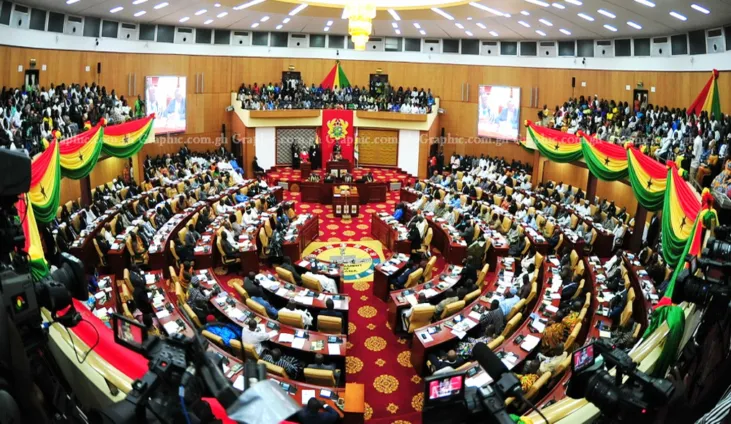

When a government agency is accused of wasting public money, mishandling a contract, or failing to deliver on its mandate, the question of who investigates often arises. In Ghana, the answer is not solely the police, the courts, or the Auditor-General. Parliament itself has a constitutional mandate to investigate and inquire into the activities and administration of ministries, departments and agencies.
This is not a ceremonial power. Parliamentary committees can summon ministers, compel the production of documents, and examine witnesses under oath. They have recovered millions of cedis in misused funds, recommended prosecutions, and forced officials to answer for their stewardship. Understanding why Parliament investigates – and how that power works in practice – matters for anyone who wants to know how public accountability functions in Ghana.
Quick Facts
-
Constitutional basis: Article 103(3) of the 1992 Constitution empowers parliamentary committees to investigate and inquire into the activities and administration of ministries and departments.
-
Court-like powers: Committees have the powers, rights and privileges of a High Court for enforcing witness attendance, examining witnesses on oath, and compelling the production of documents.
-
Public Accounts Committee: The PAC examines Auditor-General reports and has recovered over GH¢233 million in misused public funds through its hearings.
-
Ministerial appearances: Ministers are routinely summoned before committees; failure to appear can result in formal citations.
-
Special committees: Parliament can establish ad hoc committees to investigate specific matters, from bribery allegations to environmental issues.
The Constitutional Mandate: Oversight Is Not Optional
Parliament’s investigative power is not a recent invention. It flows directly from the 1992 Constitution, which vests legislative power in Parliament and authorises it to appoint committees as necessary for the effective discharge of its functions.
Article 103(3) is the key provision: “Committees of Parliament shall be charged with such functions, including the investigation and inquiry into the activities and administration of ministries and departments as Parliament may determine”. The same article specifies that such investigations may extend to proposals for legislation.
What makes this power substantive rather than symbolic is Article 103(6). It grants committees “the powers, rights and privileges of the High Court or a Justice of the High Court at a trial” for three critical purposes: enforcing the attendance of witnesses, examining them on oath or affirmation, and compelling the production of documents.
This means a parliamentary committee is not merely a discussion forum. It can require a public officer to appear. It can require documents to be produced. It can examine witnesses under oath. These are powers that carry legal weight.
The Commission on Human Rights and Administrative Justice (CHRAJ) has noted that these powers are often under-utilised. As far back as 2010, CHRAJ’s Commissioner observed that Parliament’s oversight powers were “grossly under utilized,” despite the Constitution granting committees the authority to compel public officers to make documents available.
The Committee System: Where Investigations Happen
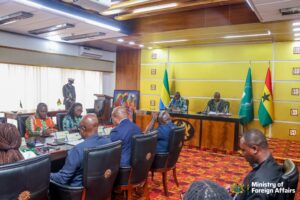
Parliament does not investigate as a single body. It works through committees. Each standing committee has jurisdiction over a defined area and the authority to investigate the activities and administration of relevant ministries, departments and agencies.
The Committee on Defence and Interior, for example, has jurisdiction to investigate and inquire into activities and administration of ministries and agencies under its mandate, including matters pertaining to national security and internal affairs. The Committee on Trade, Industry and Tourism has similar investigative authority over its sector. The Committee on Security and Intelligence reviews matters concerning national security and intelligence, and examines the budget estimates of the National Security Ministry and its affiliated agencies. The Committee on Petitions investigates and reports on matters referred to it under the Standing Orders.
Then there is the Public Accounts Committee (PAC), which holds a distinct and particularly consequential role. The PAC examines reports from the Auditor-General, which detail financial irregularities across government institutions. In doing so, it functions as the primary parliamentary mechanism for scrutinising how public funds have been used – or misused.
The Public Accounts Committee: The Accountability Engine
If one committee embodies Parliament’s investigative function in practice, it is the PAC. Its work is relentless, public, and increasingly impactful.
Speaker Alban Bagbin revealed in 2025 that the PAC’s examinations had resulted in the recovery of GH¢233.3 million in misused public funds. This followed 261 sittings examining Auditor-General reports and 252 specific recommendations to address systemic weaknesses.
The PAC’s hearings are not abstract. In 2026, the committee examined a special audit report on government outstanding claims and commitments. The Chairperson, Abena Osei-Asare, disclosed that out of $241 billion in commitments, claims and bank transfer advice submitted, $104.4 billion was validated and recommended for payment, while $115.5 billion was held to be justified with relevant documents before payment. From the same total, $68.7 billion in claims and bank transfer advice were teased out, later reclassified to $66.7 billion; $47.7 billion was validated for payment, $10.3 billion rejected outright, and $8.6 billion remained subject to further justification.
These are not trivial figures. As Osei-Asare noted, “every cedi wrongly claimed is a cedi diverted from schools, hospitals, roads, and other livelihood programmes”.
The PAC’s work has direct consequences for individuals. In March 2026, during hearings on a GH¢4.8 million “ghost vehicles” scandal at the Ministry of Defence, the Ranking Member Samuel Atta-Mills announced plans to petition the Attorney-General to prosecute a former procurement director. The committee found that vehicles supposedly supplied for border surveillance during the 2024 elections had never been delivered, despite a Stores Receipt Advice being issued.
Ministers and officials who ignore PAC invitations face consequences. In March 2026, the PAC issued an ultimatum to absentee ministers: appear in Tamale or face a formal citation for “refusal to attend,” which would be included in the committee’s final report to the President. The Ranking Member, Samuel Atta Mills, attributed the no-shows to “arrogance”.
Why Investigation Matters: Accountability as a Culture
The PAC’s Chairperson has articulated the deeper purpose behind these investigations. “Accountability is not an event, it is a culture,” Abena Osei-Asare stated during a hearing. She emphasised that the committee’s objective is not merely to produce reports, but to restore confidence that public finances are managed with integrity and that financial management systems are strong enough to prevent recurrence.
She has also pushed back against the notion that PAC hearings are about political point-scoring. “We are not always out there to find wrongdoing,” she said. “Rather, we give Ghanaians the opportunity to know the amount of money that comes to government in a particular financial year”.
This transparency function is significant. Without public hearings, many Ghanaians would not know what funds came in, how they were allocated, or what happened to them. The PAC’s zonal hearings – taking proceedings to Tamale, for example – bring scrutiny closer to the communities affected by the decisions being examined.
Osei-Asare has also highlighted a persistent weakness in the system: enforcement. “The PFM Act should be made to work,” she said. “We have a lot of laws, but acting on them is where we fall short”. She cited a case where a procurement director who committed an infraction was simply transferred to another ministry. “If the sanction does not work, all the person knows is that if a wrong is done, I will be transferred”.
Special and Ad Hoc Committees: Investigating Specific Matters
Beyond standing committees, Parliament can establish special or ad hoc committees to investigate specific issues. The Parliament of Ghana’s repository shows a history of such investigations.
A Special Committee investigated the difficulties of the Electoral Commission in conducting the originally announced December 2010 District Assembly elections. Another investigated the levy and collection of sums of money by the Ministry of Trade and Industry from expatriate businesses during the Ghana Expatriate Business Awards. A Special Committee investigated bribery allegations made against the Chairman and some members of the Appointments Committee in 2017. An Ad Hoc Committee investigated the effects of sand winning in the country.
These committees demonstrate that Parliament’s investigative power is not limited to financial audits. It extends to any matter of public concern that falls within its oversight mandate.
The Limits and Tensions
Parliament’s investigative power is broad, but it is not absolute. There are tensions and limitations.
One recurring tension is the boundary between parliamentary inquiry and criminal proceedings. In September 2026, the Minority criticised the Speaker’s rejection of a motion for a parliamentary investigation into a cocaine menace, arguing that the Speaker failed to explain how the matter fell outside Parliament’s constitutional jurisdiction. The Minority contended that Article 103(3) expressly empowers committees to investigate the activities and administration of public institutions, and that a parliamentary inquiry could be framed to avoid prejudicing any criminal case in court.
The Minority’s argument highlights a legitimate constitutional question: where does institutional oversight end and interference with judicial proceedings begin? The Speaker’s ruling suggested he saw a boundary. The Minority saw an abdication of oversight responsibility.
Another limitation is practical. The CHRAJ observation from 2010 – that Parliament’s powers are under-utilised – remains relevant. Investigations can be slow. Ministers can ignore invitations, at least initially. Recommendations may not be enforced. The PAC’s recovery of GH¢233 million is significant, but it represents a fraction of the irregularities identified in Auditor-General reports over the years.
Parliament has taken steps to strengthen its integrity framework. Speaker Bagbin announced the establishment of an Office of Profits Committee, the recruitment of a former CHRAJ anti-corruption head to lead a Parliamentary Integrity Department, and the introduction of a National Integrity Award and a “Vulture Award” to publicly identify integrity violations. These measures suggest an awareness that oversight requires institutional capacity and culture, not just constitutional powers.
What This Means for Ordinary Ghanaians
Parliamentary investigations may seem distant from daily life, but their outcomes affect public services and public trust.
When the PAC recovers misused funds, that money is theoretically available for schools, hospitals and roads. When a committee recommends prosecution for a ghost vehicles scandal, it signals that procurement fraud carries consequences. When ministers are forced to appear and answer questions, it reinforces the principle that public office is a trust, not a personal fiefdom.
The Constitution gives Parliament the tools. The question is whether those tools are used consistently, effectively and impartially. The record shows that they can be – and that when they are, the results are tangible.
Frequently Asked Questions
What is the constitutional basis for Parliament investigating government agencies?
Article 103(3) of the 1992 Constitution empowers parliamentary committees to investigate and inquire into the activities and administration of ministries and departments. Article 103(6) grants them High Court powers to enforce witness attendance and compel documents.
What powers do parliamentary committees have during investigations?
Committees can summon witnesses, examine them on oath, compel the production of documents, and issue commissions to examine witnesses abroad. These are the powers, rights and privileges of a High Court at trial.
What is the Public Accounts Committee and what does it do?
The PAC examines Auditor-General reports on financial irregularities across government institutions. It holds public hearings, questions officials, and makes recommendations. It has recovered over GH¢233 million in misused funds.
Can a minister refuse to appear before a parliamentary committee?
They can attempt to, but the committee can issue a formal citation for “refusal to attend,” which is included in its report. In 2026, the PAC issued such an ultimatum to absentee ministers.
What happens after a parliamentary investigation?
Committees produce reports with findings and recommendations. These may include calls for prosecution, recovery of funds, or systemic reforms. The PAC can petition the Attorney-General for prosecution.
What is a special or ad hoc committee?
Parliament can establish special or ad hoc committees to investigate specific matters, such as bribery allegations, electoral difficulties, or environmental issues. These committees are created for a defined purpose and report back to the House.
Can Parliament investigate a matter that is before the courts?
This is a contested area. The Minority has argued that institutional oversight and criminal liability are separate constitutional functions, and that a parliamentary inquiry can be framed to avoid prejudicing a court case. The Speaker has rejected at least one motion on jurisdictional grounds.
Why are parliamentary investigations important for ordinary Ghanaians?
They provide a mechanism for scrutinising how public funds are used, holding officials accountable, and ensuring that money intended for public services is not diverted. The PAC’s public hearings also give citizens insight into government financial management.
What to Remember
Parliament’s power to investigate government agencies is constitutional, not discretionary. Article 103 gives committees the authority to inquire into the activities and administration of ministries and departments, with High Court-like powers to summon witnesses and compel documents.
The Public Accounts Committee is the most active investigative body, examining Auditor-General reports and recovering misused funds. Special and ad hoc committees investigate specific matters of public concern.
The system has limitations: enforcement gaps, ministerial non-appearance, and jurisdictional tensions with the courts. But the record shows that when Parliament uses its powers, it can produce tangible accountability outcomes.
For citizens, the practical takeaway is that Parliament is not just a law-making body. It is an oversight institution. Its committees are where ministers and officials answer for their stewardship of public resources. Understanding that function is the first step toward demanding that it works.
Source: The Accra Daily Mail

Samuel Kwame Boadu is a Ghanaian media entrepreneur and storyteller with a passion for amplifying urban voices and uncovering everyday truths. He is the Editor-in-Chief and Founder of The Accra Daily Mail, a dynamic digital platform dedicated to capturing the pulse of Ghana’s capital—its people, culture, challenges, business, sports and innovations.