









At some point, most people face a situation where they need more money than they have on hand. It could be a medical emergency, school fees, a business opportunity, a wedding, or urgent home repairs. When that happens, a personal loan is often the first option that comes to mind.
A personal loan can be a useful tool. It can bridge a gap, fund an important purchase, or help you manage an emergency. But it can also become a burden if you do not understand how it works and what you are signing up for.
This article explains personal loans in the Ghanaian context. It covers what personal loans are, how they work, the types available, what lenders consider, the true cost of borrowing, and the questions you should ask before you commit. It is written for ordinary Ghanaians who want to borrow wisely, not recklessly.
Quick Facts
-
A personal loan is money borrowed from a bank, savings and loans company, microfinance institution, or other licensed lender for personal use.
-
Personal loans are usually unsecured, meaning they do not require collateral, though some lenders may ask for it.
-
The cost of a personal loan includes interest plus fees and charges. The annual percentage rate, or APR, gives a fuller picture than the interest rate alone.
-
Lenders assess your income, employment, credit history, and existing debts before approving a loan.
-
Missing payments can damage your credit record and make future borrowing harder.
-
Personal loans in Ghana often carry high interest rates, so it is important to compare offers and read the fine print.
-
Borrowing only what you need and can repay is the golden rule.
What a Personal Loan Is
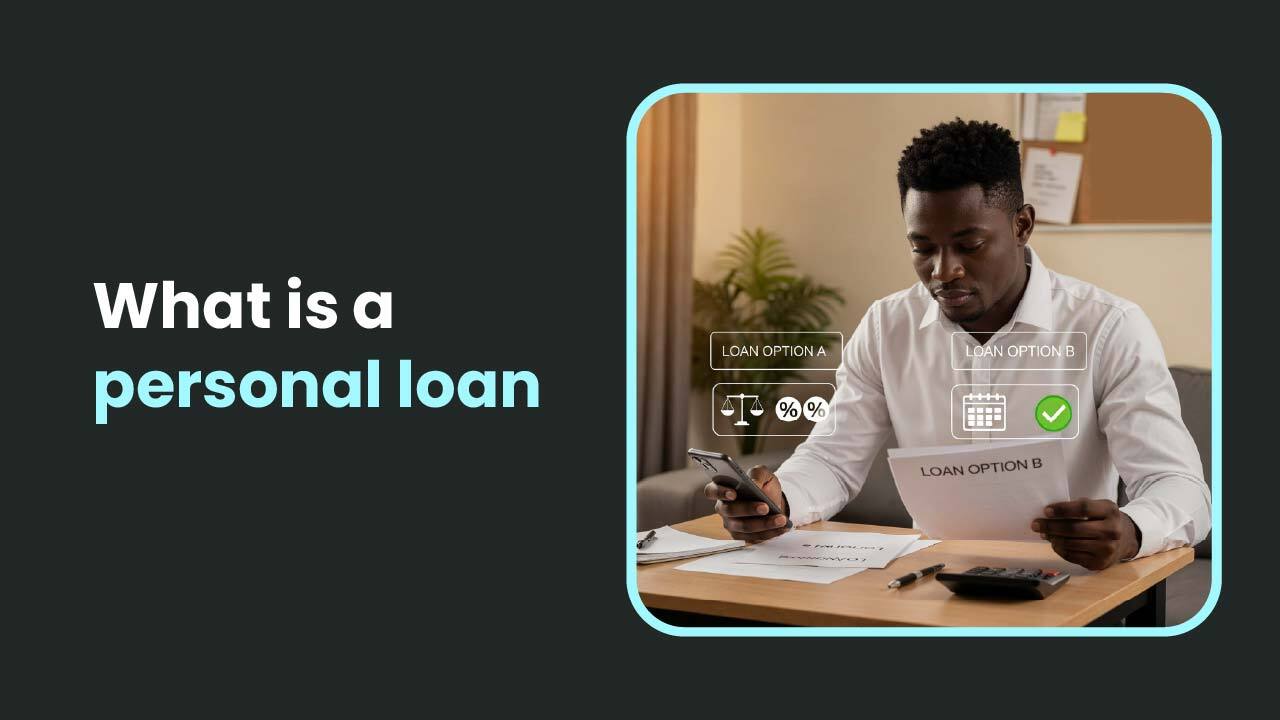
A personal loan is a sum of money borrowed from a licensed financial institution for personal use. Unlike a business loan, which is meant for commercial activities, a personal loan is typically used for individual or household needs.

Personal loans can be used for many purposes: paying school fees, covering medical expenses, repairing a home, buying a car, consolidating other debts, or handling an emergency. The lender generally does not dictate how you use the money, though some loans are tied to specific purposes.
Personal loans are usually repaid in instalments over an agreed period, with interest charged on the amount borrowed.
How Personal Loans Work
The basic mechanics of a personal loan are straightforward.

You apply to a lender. The lender assesses your ability to repay. If approved, you receive the money. You then repay the loan in regular instalments, usually monthly, over a fixed period. Each instalment includes a portion of the principal — the original amount borrowed — and a portion of interest.
The loan agreement sets out the terms: the amount, the interest rate, the repayment period, the instalment amount, and the fees. It is a legally binding contract, which is why you must read and understand it before signing.
Types of Personal Loans in Ghana
Salary Loans
Salary loans are offered to salaried workers, often through their employers or directly by banks. The lender requires proof of employment and income. Repayments are often deducted directly from the borrower’s salary.
Salary loans are generally easier to obtain than other personal loans because the lender has confidence in the borrower’s regular income. Interest rates may be lower than for unsecured loans to informal workers.
Unsecured Personal Loans
An unsecured personal loan is not backed by collateral. The lender relies on your creditworthiness and income. Because the risk to the lender is higher, interest rates tend to be higher.
Secured Personal Loans
Some personal loans are secured, meaning you provide collateral such as a vehicle, land, or savings. Secured loans often have lower interest rates because the lender can seize the collateral if you default. The risk is that you could lose the asset.
Micro Loans
Microfinance institutions and some fintech companies offer small, short-term loans. These loans are accessible to people who may not qualify for bank loans, including informal workers. However, the interest rates and fees can be very high.
Digital and Mobile Loans
Mobile money platforms and fintech lenders now offer quick digital loans. You can apply from your phone and receive money in minutes. The convenience is attractive, but the costs can be steep, and the repayment periods are often short.
What Lenders Look At
When you apply for a personal loan, the lender assesses several factors.
Income
The lender wants to know that you have a reliable source of income to repay the loan. Salaried workers provide payslips. Informal workers may need to show evidence of regular earnings, such as bank or mobile money statements.
Existing Debts
If you already have other loans, the lender will consider whether you can handle another one. Your total debt relative to your income is an important factor.
Credit History
In Ghana, credit reference bureaus track borrowing and repayment behaviour. A good credit history improves your chances. A history of defaults makes lenders wary.
Employment Stability
Lenders prefer borrowers with stable employment or a stable business. Frequent job changes or an unstable income can count against you.
Collateral (for secured loans)
If the loan is secured, the lender will assess the value and ownership of the collateral.
The True Cost of a Personal Loan
The interest rate is not the only cost. You must also consider fees and charges.
Interest
Interest is the main cost. It is usually expressed as an annual percentage rate, but it may be calculated monthly. A loan with a quoted rate of 2% per month translates to roughly 24% per year, not including compounding.
Processing Fees
Many lenders charge a processing fee when you take a loan. This may be a percentage of the loan amount or a flat fee.
Insurance
Some lenders require you to buy credit life insurance, which pays off the loan if you die or become disabled. The cost may be added to the loan.
Late Payment Penalties
If you miss a payment, the lender may impose penalties. These add to the cost and can make the loan harder to repay.
The Annual Percentage Rate
The APR is the most complete measure of a loan’s cost. It includes interest and most fees, expressed as an annual rate. Lenders in Ghana are required to disclose the APR, though borrowers do not always pay attention to it.
Always ask for the APR and compare it across lenders.
The Risks of Personal Loans
Over-Indebtedness
The biggest risk is borrowing more than you can repay. When loan payments consume too much of your income, you may struggle to meet other obligations. You may even take new loans to pay old ones, creating a debt spiral.
Damage to Your Credit Record
If you default or pay late, the information is recorded by credit bureaus. This can make it harder to borrow in the future, and it may affect other aspects of your financial life.
Loss of Collateral
If you secure a loan with an asset and you default, the lender can seize the asset. Losing a car or land is a heavy price.
Predatory Lending
Not all lenders are licensed or ethical. Some charge exorbitant rates or use aggressive collection practices. Borrow only from licensed institutions regulated by the Bank of Ghana.
Questions to Ask Before Taking a Personal Loan
Before you sign any loan agreement, ask these questions:
-
What is the total amount I will repay, including interest and fees?
-
What is the APR?
-
What is the monthly instalment, and can I afford it comfortably?
-
Are there penalties for early repayment?
-
What happens if I miss a payment?
-
Is the lender licensed by the Bank of Ghana?
-
Do I really need this loan, or is there another way?
If you cannot answer these questions clearly, do not take the loan.
How to Borrow Wisely
Borrow Only What You Need
It may be tempting to take more than you need, especially if the lender offers it. Resist. Every extra cedi increases your repayment burden.
Compare Offers
Do not accept the first loan offer you see. Compare interest rates, fees, and terms from different lenders. The differences can be significant.
Read the Fine Print
Read the loan agreement carefully. Look for hidden fees, penalty clauses, and conditions. If you do not understand something, ask.
Plan Your Repayment
Before you take the loan, know how you will repay it. Budget for the monthly instalment and make sure it fits within your income.
Avoid Borrowing for Consumption
Borrowing to buy things that lose value — clothes, entertainment, travel — is risky. Borrowing for things that generate income or preserve value — education, business, health — may be more justifiable.
Common Misconceptions
“The interest rate is the only cost”
No. Fees, insurance, and penalties can add significantly to the cost. The APR is the better measure.
“I need collateral for every personal loan”
No. Many personal loans are unsecured, especially salary loans and digital loans. However, unsecured loans often carry higher interest rates.
“Borrowing more means I earn more”
Borrowing more means you owe more. The money is not yours; it is a liability. You repay it with your future income.
“If I can’t repay, I can just take another loan”
Taking a new loan to pay an old one is dangerous. It can create a spiral that becomes impossible to escape.
“All lenders are the same”
No. Lenders differ in their rates, terms, and practices. Some are licensed and reputable; others are not. Do your research.
Frequently Asked Questions
How much can I borrow?
The amount depends on your income, credit history, and the lender’s policies. Some lenders cap the loan at a percentage of your monthly income.
How long do I have to repay?
Repayment periods vary. Personal loans in Ghana typically range from a few months to several years, depending on the lender and the amount.
What happens if I miss a payment?
You may face penalties, and the missed payment may be reported to credit bureaus. Repeated missed payments can lead to default and legal action.
Can I pay off my loan early?
Many lenders allow early repayment, but some charge a penalty. Check the terms before you sign.
What is the difference between a personal loan and a payday loan?
A payday loan is a very short-term loan designed to be repaid on your next payday. It is often more expensive than a regular personal loan. The term is less common in Ghana, but some digital lenders offer similar products.
How do I know if a lender is licensed?
Check the Bank of Ghana’s list of licensed banks and financial institutions. Do not borrow from unlicensed operators.
Can I get a personal loan if I work in the informal sector?
Yes, but it may be harder. Microfinance institutions and some fintech lenders cater to informal workers. You may need to show evidence of regular income.
What to Remember
A personal loan is a tool, not a solution. Used wisely, it can help you manage an emergency or invest in something important. Used carelessly, it can trap you in debt and damage your financial future.
The key is understanding what you are signing up for. Know the total cost. Know the APR. Know the repayment schedule. Know your own ability to pay.
The next time you consider a personal loan, pause and ask the hard questions. Borrowing is easy. Repaying is the part that requires discipline. The best loan is the one you truly need, fully understand, and can repay without losing sleep.
Source: The Accra Daily Mail

Samuel Kwame Boadu is a Ghanaian media entrepreneur and storyteller with a passion for amplifying urban voices and uncovering everyday truths. He is the Editor-in-Chief and Founder of The Accra Daily Mail, a dynamic digital platform dedicated to capturing the pulse of Ghana’s capital—its people, culture, challenges, business, sports and innovations.