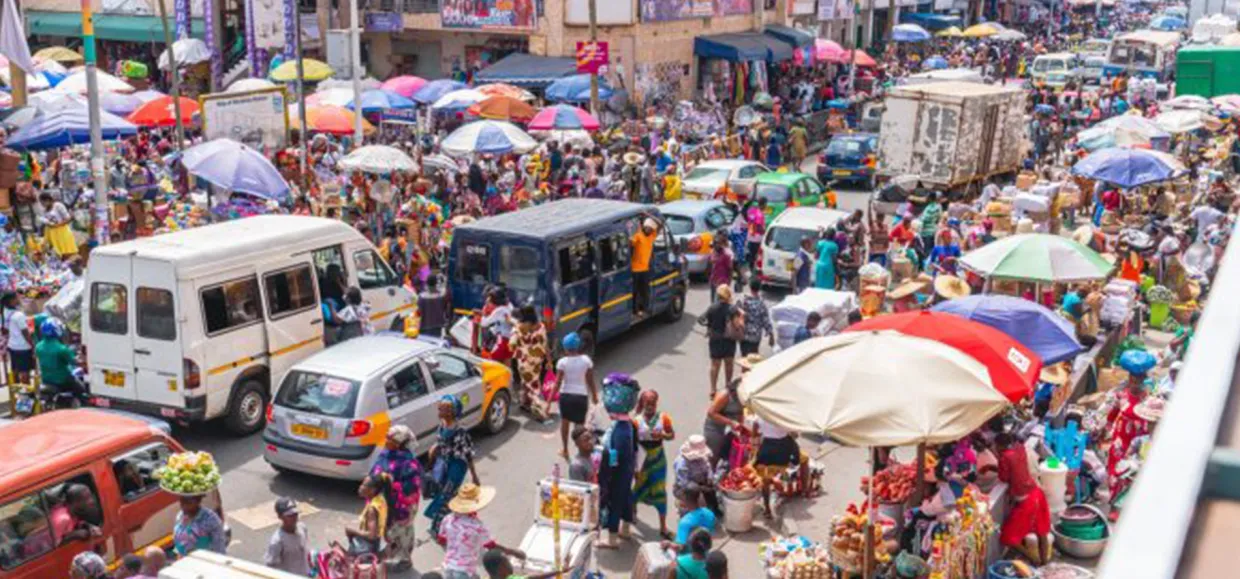








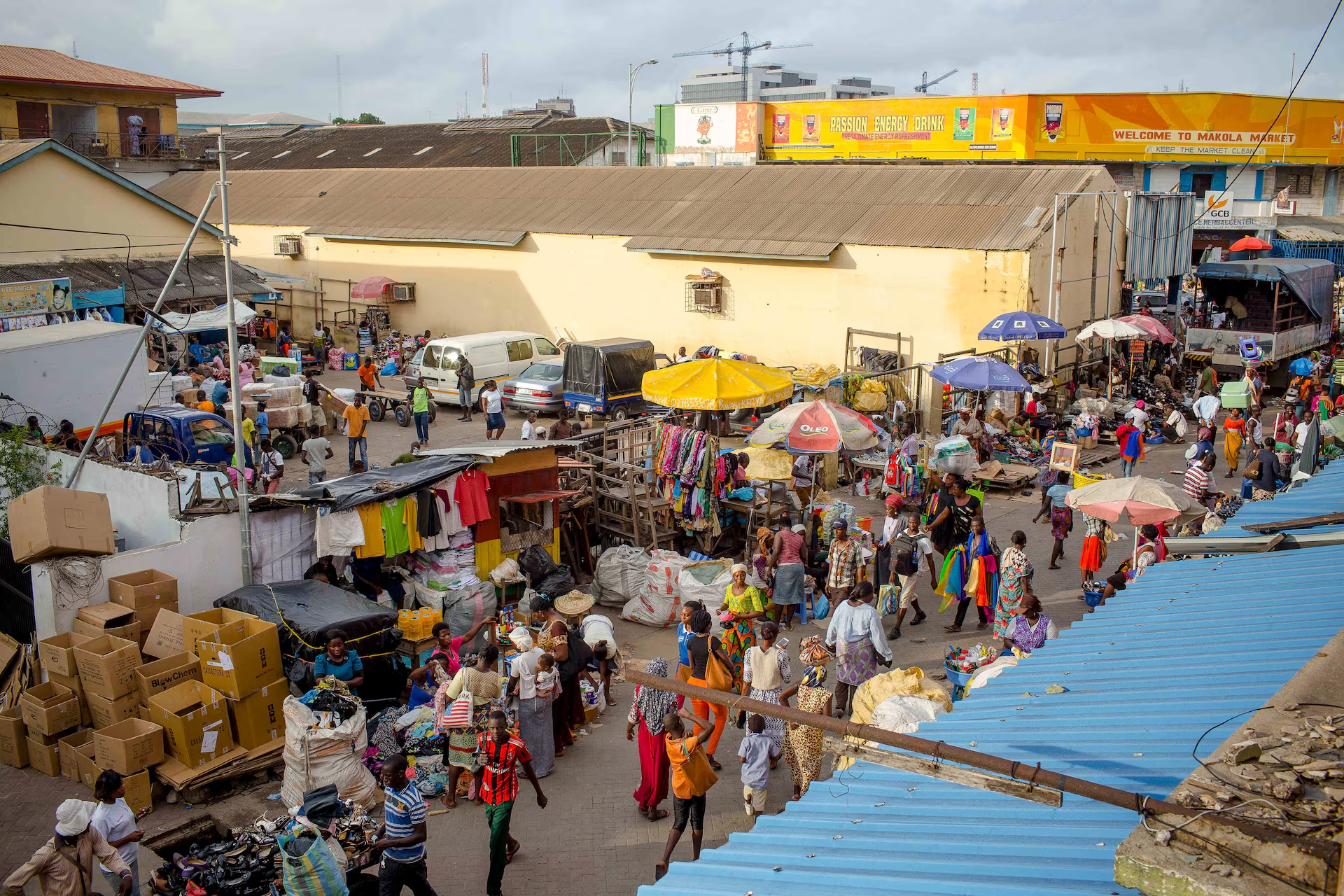

The question comes up in trotros, at markets, in church meetings, and around family dinner tables: why does everything keep getting more expensive? The price of bread rises. Transport fares adjust upward. Rent renews at a higher rate. School fees increase. Electricity and water tariffs go up. Even items that seemed stable suddenly cost more.
This is the cost-of-living problem. It is not one single price increase but a steady, spreading pressure on household budgets. And while inflation is the technical name for rising prices, the lived experience is simpler: the money you earn no longer stretches as far as it used to.
This article explains why prices keep rising in Ghana, what is driving the increases, who is affected most, and what, if anything, can be done. It is not a political argument. It is a plain explanation of the economic forces at work, grounded in what is known from official data and economic analysis.
Quick Facts
-
The cost of living refers to the amount of money needed to cover basic expenses such as food, housing, transport, utilities, healthcare, and education.
-
Ghana’s official inflation rate is measured monthly by the Ghana Statistical Service using the Consumer Price Index.
-
Food and non-alcoholic beverages carry the largest weight in Ghana’s inflation basket because they consume a large share of household income.
-
Transport costs, fuel prices, the exchange rate, and utility tariffs are major contributors to price increases in Ghana.
-
When the cedi weakens against the dollar, imported goods — including fuel, machinery, medicines, and some foods — become more expensive in cedi terms.
-
Inflation reduces purchasing power and hits low-income households hardest.
What “Cost of Living” Actually Means
The cost of living is not an abstract concept. It is the total amount of money a household needs to maintain a basic standard of living. That includes food, housing, utilities, transport, clothing, healthcare, education, and communication.
When people say the cost of living is rising, they mean that the same basket of goods and services now costs more than it did before. A family that needed GH₵5,000 a month to survive may now need GH₵6,500 to maintain the same standard.
This is different from a single price increase. If only the price of rice rises, a household can switch to maize or yam. But when many prices rise at the same time — food, fuel, rent, transport, utilities — there is nowhere to turn. That is the cost-of-living squeeze.
The Main Drivers of Rising Prices in Ghana
Several forces combine to push prices up in Ghana. They operate at the same time and feed into each other.
Fuel and Energy Costs
Fuel prices are one of the most visible and most influential costs in Ghana. Petrol, diesel, and liquefied petroleum gas (LPG) prices affect almost everything. When fuel prices rise, transport operators increase fares. Farmers and traders pay more to move goods. Businesses pay more to run generators when electricity is unreliable. These costs are passed on to consumers in the form of higher prices.
Fuel prices in Ghana are influenced by global crude oil prices, the exchange rate, taxes and levies, and distribution costs. Even when global oil prices fall, a weak cedi can offset the decline, because fuel imports are paid for in dollars.
Electricity and water tariffs also matter. When the Public Utilities Regulatory Commission approves tariff increases, the effect spreads through the economy. Businesses face higher operating costs, and households face higher direct bills.
The Exchange Rate
Ghana imports a significant share of what it consumes. Fuel, machinery, vehicles, medicines, some foods, raw materials, and many consumer goods are imported. These imports are paid for in foreign currency, primarily US dollars.
When the cedi loses value against the dollar, imported goods become more expensive in cedi terms. Importers must raise their prices to cover their costs. Even locally produced goods often rely on imported inputs — fertiliser, packaging, equipment, spare parts — so the exchange rate affects them too.
The cedi’s value is influenced by Ghana’s export earnings, foreign investment flows, remittances from Ghanaians abroad, government borrowing, and the overall demand for dollars. When demand for dollars exceeds supply, the cedi depreciates.
Food Supply and Seasonality
Food prices in Ghana are highly sensitive to supply conditions. Poor rainfall, flooding, pests, and disease can reduce harvests and push prices up. Even in good years, food prices follow seasonal patterns. Staples like maize and vegetables are cheaper during harvest periods and more expensive during lean seasons.
Food also carries the largest weight in Ghana’s Consumer Price Index. This means that when food prices rise, the overall inflation figure rises significantly. For households that spend 40% or more of their income on food, the effect is immediate.
The cost of producing food has also risen. Fertiliser, seeds, agrochemicals, fuel for tractors, and transport all cost more. These higher input costs are reflected in the price of the final product.
Taxes, Levies, and Government Charges
Government policies directly affect prices. VAT, import duties, fuel levies, and other charges add to the cost of goods and services. When these taxes are introduced or increased, businesses often pass the additional cost to consumers.
Some taxes are applied to specific items. For example, levies on fuel are added to the pump price. Import duties on rice, vehicles, or machinery affect their final retail prices. VAT applies to a broad range of goods and services. Each of these policy choices has an effect on the cost of living.
Supply Chain and Distribution Costs
Ghana’s distribution network includes transport, storage, wholesaling, and retailing. Each stage adds costs. Poor roads, traffic congestion, checkpoints, and high vehicle operating costs all make distribution more expensive. These costs do not disappear. They are built into the final price.
In urban areas, rent for shops and market stalls is a significant cost for traders. In rural areas, the challenge is often transport and access to markets. These structural issues affect how efficiently goods move and how much they cost by the time they reach the consumer.
Inflation Expectations
Once people expect prices to rise, they act in ways that make the expectation come true. Traders increase prices pre-emptively to protect their margins. Workers demand higher wages. Landlords raise rents in anticipation of higher costs. This creates a self-reinforcing cycle.
Breaking these expectations is difficult. It requires consistent policy and credible communication from the central bank and the government. When people trust that inflation will fall, they are less likely to demand rapid increases, and the cycle can slow.
How the Official Figures Are Calculated
The Ghana Statistical Service measures changes in the cost of living using the Consumer Price Index (CPI). The CPI tracks the price of a fixed basket of goods and services that represents what an average household buys.
The basket is not the same for every household. It is an average based on household expenditure surveys. The items include food, housing, water, electricity, gas, transport, communication, education, health, clothing, and other goods and services.
Each item is given a weight. The weight reflects the item’s share of average household spending. Food and non-alcoholic beverages typically carry the largest weight. This means food price changes have the biggest impact on the overall inflation figure.
Every month, data collectors from the Ghana Statistical Service visit markets, shops, and service providers in selected areas across the country. They record the prices of the items in the basket. The statisticians then compare the current cost of the basket with its cost a year earlier. The percentage difference is the year-on-year inflation rate.
It is important to understand that the official inflation rate is an average. Your personal inflation rate may be higher or lower depending on what you buy. A household that spends heavily on food and transport will feel inflation more than a household that spends mostly on services.
Why It Feels Worse Than the Headline Number
Many Ghanaians feel that the official inflation rate understates the real increase in their cost of living. There are several reasons for this.
First, the CPI is an average. Some prices rise faster than others. The prices of items you buy frequently — food, transport, electricity — may be rising faster than the items that carry less weight in the basket.
Second, people notice price increases more than price stability. If the price of tomatoes doubles, you remember it. If the price of clothing stays the same, you may not notice. The psychology of inflation means the pain is felt more vividly than the statistics suggest.
Third, incomes may not be keeping pace. Even if inflation is falling, the cumulative effect of past price increases remains. Prices that rose 50% two years ago do not fall back just because the inflation rate has slowed. Slower inflation means prices are rising less quickly, not that they are returning to their old levels.
Fourth, the timing of price increases matters. If transport fares rise sharply in a single month, the impact on daily life is immediate, even if the overall inflation figure smooths out the increase over twelve months.
Who Is Affected Most
Inflation does not hit everyone equally. Low-income households are disproportionately affected because they spend a larger share of their income on essentials — food, transport, and utilities. When these prices rise, there is little room to adjust. A middle-income household can cut back on entertainment or delay a purchase. A low-income household may be forced to reduce meals or forgo medicine.
Fixed-income earners are also vulnerable. Pensioners and workers whose salaries are adjusted only once a year see their purchasing power erode between adjustments. By the time a salary increase arrives, prices may have already moved further ahead.
Informal sector workers face a double challenge. Many do not have fixed salaries and cannot negotiate regular increases. Their incomes depend on daily sales and customer demand. When prices rise, their customers have less to spend, which can reduce their own earnings even as their costs increase.
Rural households may be affected differently from urban ones. In rural areas, some food items may be cheaper because they are produced locally. But access to fuel, transport, and manufactured goods may be more expensive due to distribution costs.
What Can Be Done
Monetary Policy
The Bank of Ghana’s primary tool for controlling inflation is the monetary policy rate. When inflation is high, the central bank raises the rate to make borrowing more expensive and reduce the amount of money circulating in the economy. This can help cool demand and slow price increases.
The effect is not immediate. It takes time for higher interest rates to work through the economy. In the meantime, higher borrowing costs can slow business activity and increase the cost of credit for households.
Fiscal Policy
The government influences prices through its spending and taxation decisions. Reducing the fiscal deficit — the gap between revenue and spending — can ease inflationary pressure. This may involve cutting spending, improving tax collection, or both.
The government can also review the taxes and levies that directly affect prices. Reducing some levies may provide short-term relief, though it must be balanced against the need for revenue.
Structural Reforms
In the longer term, reducing Ghana’s vulnerability to price shocks requires structural changes. Investing in agriculture can improve food supply and reduce dependence on imports. Improving transport infrastructure can lower distribution costs. Reliable energy supply reduces business costs. Building local manufacturing capacity reduces the economy’s exposure to exchange rate movements.
These reforms do not produce immediate results, but they address the underlying causes of cost-of-living pressure rather than just the symptoms.
Personal Strategies
While individuals cannot control inflation, they can take steps to manage its impact. Budgeting more frequently, buying in bulk where possible, prioritising essential spending, and seeking ways to increase income can all help. Reviewing savings and investments to ensure they are not losing value to inflation is also important.
It is important to be realistic. No personal strategy can fully offset high inflation. But careful management can reduce the damage and buy time for incomes to adjust.
Common Misconceptions
“Traders are the main cause of price increases”
Traders operate within a system. They face higher costs for fuel, transport, rent, utilities, and imported goods. While some traders may raise prices opportunistically, sustained inflation is driven by broader economic forces. Blaming traders oversimplifies the problem.
“If the government just reduced taxes, prices would fall”
Reducing taxes can lower some prices, but it is not a cure-all. If the government loses revenue and borrows more to compensate, the resulting deficit can put pressure on the cedi and push inflation higher. The relationship between taxes and prices is complex.
“Inflation will fall when oil prices fall”
Oil prices matter, but they are not the only factor. The exchange rate, food supply, utility tariffs, and inflation expectations all play roles. A decline in global oil prices may be offset by a weakening cedi or poor harvests.
“The cost of living is only about food”
Food is a major part of the cost of living, but it is not the only part. Housing, transport, utilities, education, and healthcare all matter. In some years, the fastest-rising prices are in these non-food categories.
“Once inflation falls, prices will return to what they used to be”
Falling inflation means prices are rising more slowly. It does not mean prices are falling. To return to old price levels, the economy would need deflation, which brings its own problems, including unemployment and reduced spending.
Frequently Asked Questions
What is the difference between inflation and the cost of living?
Inflation is the rate at which prices are rising. The cost of living is the amount of money needed to maintain a particular standard of living. Inflation is one factor that drives the cost of living up, but the cost of living also depends on income, household size, and spending patterns.
Why do food prices rise so much in Ghana?
Food prices are affected by weather, seasonality, transport costs, fuel prices, exchange rates, and input costs such as fertiliser and seeds. Because food carries a large weight in the CPI, food price increases have a major effect on the overall inflation figure.
Why can’t the government simply fix prices?
Price controls have been tried in many countries and often lead to shortages. When prices are fixed below the cost of production or importation, producers reduce supply or goods disappear into black markets. The result can be worse than the original problem.
How does the cedi affect prices?
When the cedi depreciates against the dollar, imported goods cost more in cedi terms. Since Ghana imports fuel, machinery, medicines, and some foods, a weaker cedi feeds directly into higher domestic prices. Even locally produced goods are affected if they rely on imported inputs.
Who is most affected by the rising cost of living?
Low-income households, fixed-income earners, pensioners, and informal sector workers are affected most. They spend a larger share of their income on essentials and have fewer resources to absorb price increases.
What is the government doing about the cost of living?
The government, through the Ministry of Finance and the Bank of Ghana, uses fiscal and monetary policies to manage inflation. These include interest rate adjustments, revenue measures, and spending decisions. Structural reforms in agriculture, energy, and transport are also part of the long-term response.
Will prices ever go down?
Individual prices can fall when supply improves or costs decline. But a general fall in the overall price level, known as deflation, is rare and can be harmful. The realistic goal is stable, moderate inflation rather than falling prices across the board.
What to Remember
The rising cost of living in Ghana is not the result of a single cause or a single decision. It is the product of many forces operating together: fuel prices, the exchange rate, food supply, taxes, distribution costs, and expectations. Understanding these forces does not reduce the pain of paying more for bread or transport, but it does clarify that simple explanations are often incomplete.
The official inflation figure is a useful starting point, but it is an average. Your own cost of living depends on where you live, what you buy, how you earn, and how many people depend on you.
The most important thing to remember is that prices reflect deeper economic conditions. Fixing the cost-of-living problem requires addressing those conditions — not just the symptoms. That means responsible monetary policy, disciplined fiscal management, and sustained investment in the things that make the economy productive: food, energy, transport, and manufacturing.
Until then, the question of why prices keep going up will remain one of the most important economic questions in every Ghanaian household.
Source: The Accra Daily Mail

Samuel Kwame Boadu is a Ghanaian media entrepreneur and storyteller with a passion for amplifying urban voices and uncovering everyday truths. He is the Editor-in-Chief and Founder of The Accra Daily Mail, a dynamic digital platform dedicated to capturing the pulse of Ghana’s capital—its people, culture, challenges, business, sports and innovations.