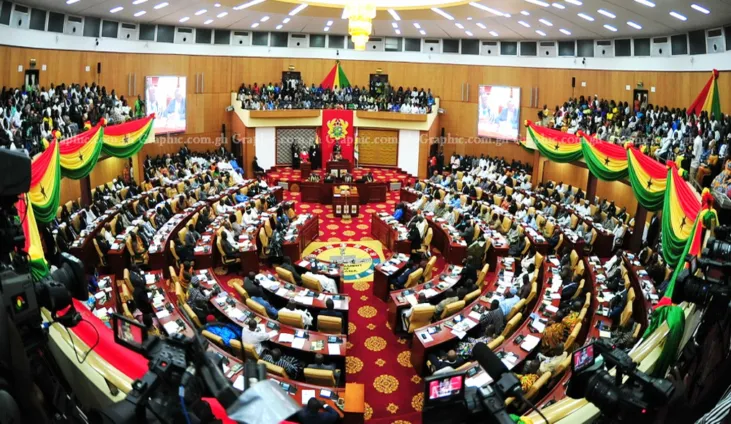


Every Ghanaian lives in a district. Whether you are in Accra, Kumasi, Tamale or a small farming community, there is a Metropolitan, Municipal or District Assembly that is supposed to be your closest point of government. It is the body responsible for local planning, local services and local development.
But the system that connects you to the state is not simple. Ghana operates a decentralised governance structure built on a 1992 constitutional framework, a 2016 Local Governance Act and decades of reform. It has achieved real results: over GH¢7 billion has been disbursed through the District Assemblies Common Fund to support local development . Yet power remains concentrated in Accra in ways that frustrate local leaders and ordinary citizens alike. Understanding how the system works – and where it falls short – is essential for anyone who wants to know how decisions that affect their daily life are actually made.
Quick Facts
-
Legal foundation: The 1992 Constitution and the Local Governance Act, 2016 (Act 936) .
-
Three-tier structure: Central government, Regional Coordinating Councils (RCCs), and Metropolitan, Municipal and District Assemblies (MMDAs) .
-
Core local authority: MMDAs are the only planning authorities within their jurisdictions. Any agency operating locally must engage with them in planning and executing development programmes.
-
Assembly composition: 70% elected members, 30% appointed by the President in consultation with traditional authorities and interest groups. MPs attend without voting rights.
-
Chief Executive: Metropolitan, Municipal and District Chief Executives (MMDCEs) are appointed by the President with Assembly approval, not elected .
-
Key funding: District Assemblies Common Fund (DACF), Internally Generated Funds (IGF), and District Development Fund (DDF) .
The Three-Tier Structure: What Each Level Does
Ghana’s decentralisation system is not a single tier of local government. It is a layered architecture.
At the top is the central government, which retains responsibility for national policy, macroeconomic management and the bulk of revenue collection. Below it sit the Regional Coordinating Councils (RCCs), chaired by Regional Ministers appointed by the President. The RCCs are not decentralised authorities in the true sense. They monitor, coordinate and evaluate the performance of District Assemblies in their regions, and monitor the use of funds mobilised by or allocated to those Assemblies . But the Oxford Constitutional Law analysis describes them as “deconcentration” rather than decentralisation – the President retains overriding authority over regional matters, and the RCC’s deliberations carry little weight against presidential authority.
The real local authority is the MMDA. Pln. Seth Passah of the Ministry of Local Government put it plainly: “Our laws recognize the district assemblies as the only planning authorities within their jurisdictions. Any agency operating at the local level must engage with them in planning and executing development programmes”.
There are three categories of MMDA, distinguished by population and settlement pattern. District Assemblies are created for geographically contiguous areas with populations of 75,000 and above. Municipal Assemblies cover single compact settlements with populations of 95,000 and above. Metropolitan Assemblies serve the largest urban areas .
Below the MMDAs sit sub-district structures: Sub-Metropolitan District Councils in metropolitan areas, and Urban, Zonal and Town Councils and Unit Committees across all assemblies. These are meant to bring governance even closer to communities, but their operationalisation has been uneven. A peer-reviewed study found that while the majority of Urban, Town and Area Councils were operational, there were significant regional differences, and many operated from temporary office accommodation .
Who Sits on an Assembly and Who Leads It
The composition of an MMDA reflects a deliberate balance between elected local representation and central government influence.
Under the 1992 Constitution, 70% of assembly members are elected on a non-partisan basis by universal adult suffrage. The remaining 30% are appointed by the President in consultation with traditional authorities and other interest groups. Members of Parliament whose constituencies fall within the assembly area attend meetings but do not vote – a provision intended to keep national politics out of local decision-making.
The Assembly is presided over by a Presiding Member, elected by two-thirds of members . The executive and administrative functions are performed by the Executive Committee, chaired by the MMDCE, which is made up of not more than one-third of Assembly members .
The MMDCE is the most contested figure in the system. They are appointed by the President with the prior approval of not less than two-thirds of Assembly members. They are not elected by the people. This arrangement means that while MMDCEs work within local assemblies, their appointment and tenure depend on the President. As ConstitutionNet notes, MMDCE appointments have become a way to reward local party loyalists, effectively excluding opposition supporters from a share of local patronage even in districts where the opposition is electorally stronger.
The Oxford Constitutional Law analysis is blunt about the implication: “the central government, which is dominated by a strong executive, has been noticeably reluctant to relinquish power to the District Assemblies. The dominance by the central executive is accentuated by the fact that the DCEs who head the District Assemblies are appointed by the President”.
The Money: How Assemblies Are Funded
Decentralisation without resources is an empty promise. Ghana’s assemblies have three main funding streams.
The District Assemblies Common Fund (DACF) is the most significant. Article 252 of the Constitution requires that not less than 5% of national revenue be transferred to local assemblies for development. In practice, disbursement has been inconsistent and often subject to central deductions. The Vice President announced in 2025 that over GH¢7 billion had been disbursed through the DACF , while the Local Government Minister stated that at least 80% of DACF is now being released directly to assemblies, compared to less than 50% in previous years. Each assembly received GH¢25 million in 2025 .
Internally Generated Funds (IGF) come from property rates, fees, licences and rents collected by assemblies within their jurisdictions . IGF represents a measure of genuine fiscal autonomy, but collection capacity varies widely. The Local Government Minister has reminded assemblies that the DACF “does not replace their obligation to mobilize Internally Generated Funds”.
The District Development Fund (DDF), created in 2010, provides additional development financing, though its total amount is even smaller than the DACF .
The fiscal picture is constrained. A JICA report found that only 7.5% of national income is allocated to the DACF, and local autonomy in Ghana remains significantly restricted, with most MMDAs having only limited staff and budget under their power. The IMCC position paper notes that delays in DACF releases have stalled critical projects, citing school infrastructure and markets in Wa and Keta as examples.
What the System Was Meant to Achieve
Ghana’s decentralisation journey began in earnest with the 1988 reforms, legally backed by PNDC Law 207. The 1992 Constitution entrenched the District Assembly as the mainstay of decentralisation. The Local Governance Act, 2016 (Act 936) consolidated the framework, establishing a Local Government Service, the District Assemblies Common Fund, and a National Development Planning System.
The stated goals were clear: bring governance closer to the people, promote participatory democracy, improve service delivery, and ensure equitable development across all districts. The Ministry of Local Government has described decentralisation as “not an event but a continuous process” .
The architecture is designed to transfer functions, resources and decision-making authority from Accra to the districts. The Local Governance Act lists 18 devolved service sectors assigned to MMDAs, including education, health, agriculture, physical planning, social welfare, works, trade, disaster prevention, roads, and waste management.
Where the System Falls Short
Three decades on, the gap between the rhetoric and reality of decentralisation remains wide.
Functional devolution is incomplete. The IMCC position paper notes that District Health and Education offices in places like Berekum and Yendi still report more to their national headquarters in Accra than to their local assemblies . The Oxford analysis describes the non-decentralisation of the Ghana Education Service and Ghana Health Service as leaving Ghana’s decentralisation programme “unfinished business” . Education and health are the two sectors that touch every household most directly, yet decision-making authority over them remains centralised.
Planning is often top-down. The IMCC position paper states that district priorities in Saboba or Axim are frequently overridden by central ministries’ projects . The planning framework requires alignment between local, regional and national plans, but the power to set priorities still tilts heavily toward Accra.
Popular participation is weak. Citizen engagement mechanisms are described as “weak and inconsistent” . Town hall meetings are irregular and poorly attended in many districts . Voter turnout in local government elections has averaged just 33.8% since 1992. The sub-district structures meant to provide platforms for local participation are not functioning effectively in many areas .
The MMDCE appointment system undermines downward accountability. Because MMDCEs are appointed by and serve at the pleasure of the President, their incentives point upward to Accra rather than downward to local residents. ConstitutionNet notes that MMDCEs accountable “downward” to local voters are seen as more likely to prioritise local concerns, but the current system favours upward accountability.
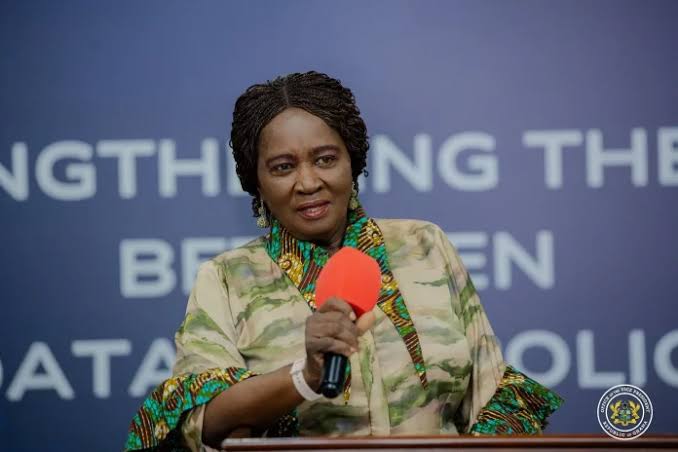
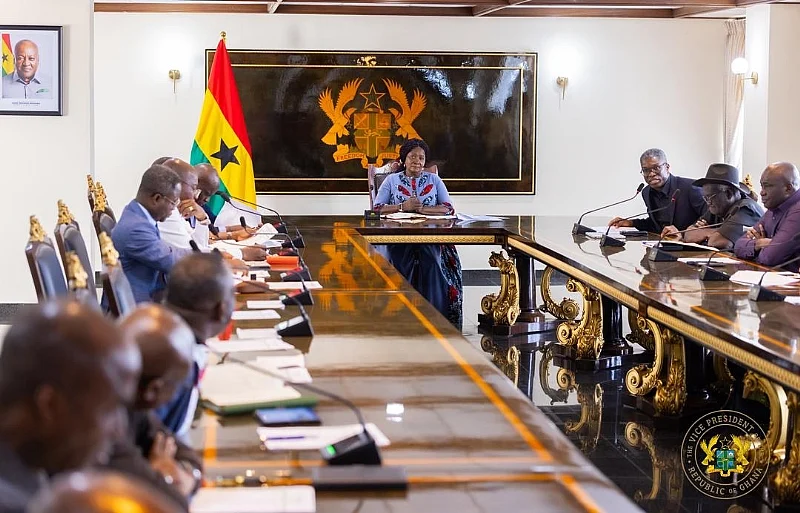
The Vice President herself acknowledged the need for reform. “Our Reset Agenda places decentralisation at the very heart of national development,” she said in 2025, committing to “moving towards the election of MMDEs, so that leadership at the local level reflects the will of the people”.
What Comes Next: The 2026-2030 Policy Window
Ghana is currently formulating a new National Decentralisation Policy and Strategy covering 2026 to 2030. A national dialogue held in September 2025 ended with resolutions calling for sustainable financing for local governments, deepened political decentralisation through the election of MMDCEs, strengthened accountability, and institutionalised citizen participation.
The IMCC – the Inter-Ministerial Coordinating Committee on Decentralisation – is central to this effort. Chaired by the President, it was established to drive cross-sectoral collaboration and ensure compliance with decentralisation mandates across government institutions. The IMCC’s executive secretary has described decentralisation as central to the success of Ghana’s governance agenda, arguing that “local authorities are better placed to respond because they have direct knowledge of community needs”.
There is also discussion of devolving road functions to assemblies. The IMCC and the Ministry of Roads and Highways have begun consultations on strengthening the role of MMDAs in road sector governance, potentially creating a roads department in every district.
Whether these reforms will meaningfully shift power away from Accra remains to be seen. The 1992 Constitution and the 2016 Act provide the legal framework. The political will to use it fully is the variable.
Frequently Asked Questions
What is decentralisation in Ghana?
Decentralisation is the transfer of power, functions, resources and decision-making authority from central government to local authorities. In Ghana, the main local authorities are Metropolitan, Municipal and District Assemblies (MMDAs), established under the 1992 Constitution and the Local Governance Act, 2016 .
How many levels of government does Ghana have?
Ghana operates a three-tier structure: central government, Regional Coordinating Councils, and Metropolitan, Municipal and District Assemblies.
Who is in charge of a District Assembly?
The Assembly is led by a Presiding Member elected by members. Executive authority is exercised by the District Chief Executive (DCE), who is appointed by the President with two-thirds approval of Assembly members.
How are District Assemblies funded?
Through the District Assemblies Common Fund (a constitutional transfer of not less than 5% of national revenue), Internally Generated Funds from local rates and fees, and the District Development Fund.
What is the District Assemblies Common Fund?
It is a fund established under Article 252 of the 1992 Constitution to transfer a minimum of 5% of national revenue to local assemblies for development. In 2025, over GH¢7 billion had been disbursed .
Can I vote for my District Chief Executive?
No. MMDCEs are appointed by the President with Assembly approval, not elected by the public. There are ongoing discussions about moving toward elections .
What is the difference between an MMDA and an RCC?
MMDAs are the local authorities responsible for planning and development within their jurisdictions. RCCs are regional bodies that monitor and coordinate MMDAs, chaired by Presidentially-appointed Regional Ministers. The RCCs are not decentralised authorities in the same sense .
Why is decentralisation important for ordinary Ghanaians?
It determines who makes decisions about local roads, schools, clinics, markets and sanitation. When decentralisation works, services reflect local needs. When it does not, decisions are made in Accra without local input.
What to Remember
Ghana’s decentralisation system is built on a clear legal framework: the 1992 Constitution and the Local Governance Act, 2016. It establishes MMDAs as the primary planning and development authorities at the local level, funded through the DACF, IGF and other transfers.
But the system is a work in progress. MMDCEs are appointed, not elected. Education and health remain largely centralised. Planning is often driven from Accra. Citizen participation is weak. Fiscal transfers, while improving, remain insufficient and sometimes delayed.
The current policy window – the National Decentralisation Policy and Strategy 2026-2030 – presents an opportunity to address these gaps. Whether it delivers meaningful change depends on whether the political commitment to devolution matches the rhetoric. For ordinary Ghanaians, the practical question is simple: does the assembly in your district have the power and resources to solve local problems, or does it still wait for instructions from Accra?
Source: The Accra Daily Mail

Samuel Kwame Boadu is a Ghanaian media entrepreneur and storyteller with a passion for amplifying urban voices and uncovering everyday truths. He is the Editor-in-Chief and Founder of The Accra Daily Mail, a dynamic digital platform dedicated to capturing the pulse of Ghana’s capital—its people, culture, challenges, business, sports and innovations.