










Most Ghanaians encounter laws every day without thinking about how they were made. The speed limit on the highway, the tax on your mobile money transactions, the requirement to register a business, the rules around land ownership — all of these began as ideas that had to travel a long road before becoming enforceable law.
The process of making laws in Ghana is set out in the 1992 Constitution. It involves Parliament, the President, and sometimes the Council of State, the Supreme Court, and the broader public. Understanding how a bill becomes law is not just for lawyers and politicians. It helps ordinary citizens follow what their representatives are doing, participate in decisions that affect them, and hold public officials accountable.
This article explains the legislative process in Ghana step by step, in plain language. It covers where bills come from, how they are debated, what happens when the President refuses to sign, and how citizens can get involved.
Quick Facts
-
A bill is a draft law that has not yet been passed by Parliament or assented to by the President.
-
Most bills are introduced in Parliament by a Minister on behalf of the government, but private members can also introduce bills.
-
The 1992 Constitution is the supreme law of Ghana, and all laws must be consistent with it.
-
A bill must go through several stages in Parliament: first reading, committee stage, second reading, consideration stage, and third reading.
-
Once Parliament passes a bill, it must be presented to the President for assent.
-
The President has 7 days to sign or indicate refusal, and Parliament can override a refusal under certain conditions.
-
The public can participate in the law-making process through consultations, memoranda, and engagement with Members of Parliament.
What a Bill Is
A bill is a proposal for a new law or a change to an existing law. It is a draft document that has no legal force until it has been passed by Parliament and assented to by the President. Once those steps are completed, the bill becomes an Act of Parliament — a law.

Laws in Ghana take various forms. Some are simple and short, like a law changing the name of a public institution. Others are long and complex, like a law regulating the petroleum sector or establishing a new tax. The basic process for all of them is the same, though the details may differ depending on the nature of the bill.
Where Bills Come From
Government Bills
Most bills that become law in Ghana originate from the executive branch — the government. A Minister or group of Ministers develops a policy proposal, often in consultation with stakeholders. The draft is then prepared as a bill and submitted to Cabinet for approval. Once Cabinet approves, the Attorney-General’s Department drafts or reviews the legal text to ensure it is consistent with the Constitution and existing laws.
The government then presents the bill to Parliament. The Minister responsible for the relevant sector usually leads the process in the House.

Private Members’ Bills
Members of Parliament who are not Ministers can also introduce bills. These are called private members’ bills. They are less common than government bills, but the Constitution allows for them. A private member who wants to introduce a bill must follow the same parliamentary stages as a government bill.
The practical challenge for private members is that bills often require financial resources or policy changes that are easier to pursue from within the government. Still, private members’ bills remain an important tool for MPs who want to address issues that the executive may not prioritise.
Where Policy Ideas Start
Before a bill is drafted, there is usually a policy process. An idea may come from a manifesto commitment, a court ruling, a public campaign, a report from a commission of inquiry, a directive from an international body, or simply a problem that government officials have identified.

For example, a bill to regulate cybersecurity may begin with concerns about online fraud. A bill to change the school curriculum may start with research on educational outcomes. The policy idea is then developed into a legislative proposal.
The Legislative Process Step by Step
Introduction and First Reading
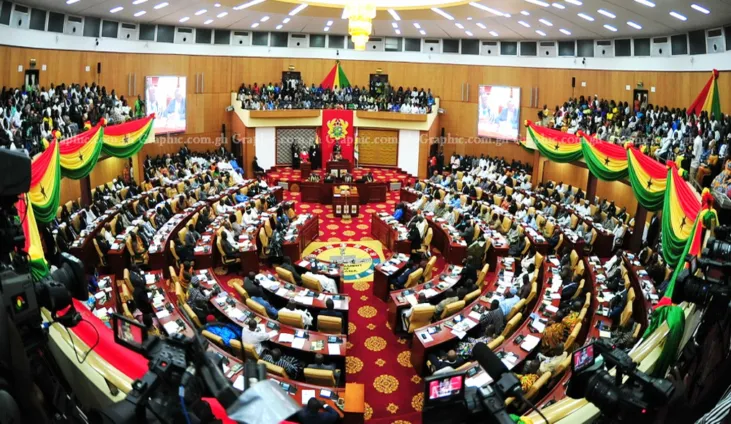
The formal process begins when the bill is introduced in Parliament. The bill is printed and distributed to Members of Parliament. The Clerk of Parliament reads the short title of the bill aloud. This is called the first reading.
No debate takes place at this stage. The purpose is simply to inform Parliament that the bill exists and to make it available to members. The bill is then referred to the relevant committee or committees.
Committee Stage
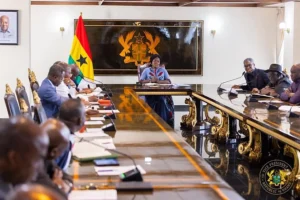
The committee stage is one of the most important parts of the process, though it receives less public attention than debates in the chamber. The committee examines the bill in detail. It may hold public hearings, invite experts, consult stakeholders, and consider written submissions from the public.
Parliamentary committees in Ghana cover different sectors: finance, health, education, lands and forestry, constitutional and legal affairs, and others. A bill on taxation, for example, would go to the Finance Committee. A bill on chieftaincy would go to the committee responsible for that area.
The committee produces a report with recommendations. It may suggest amendments to the bill or recommend that it be passed as drafted. The report is submitted to the full House.
Second Reading
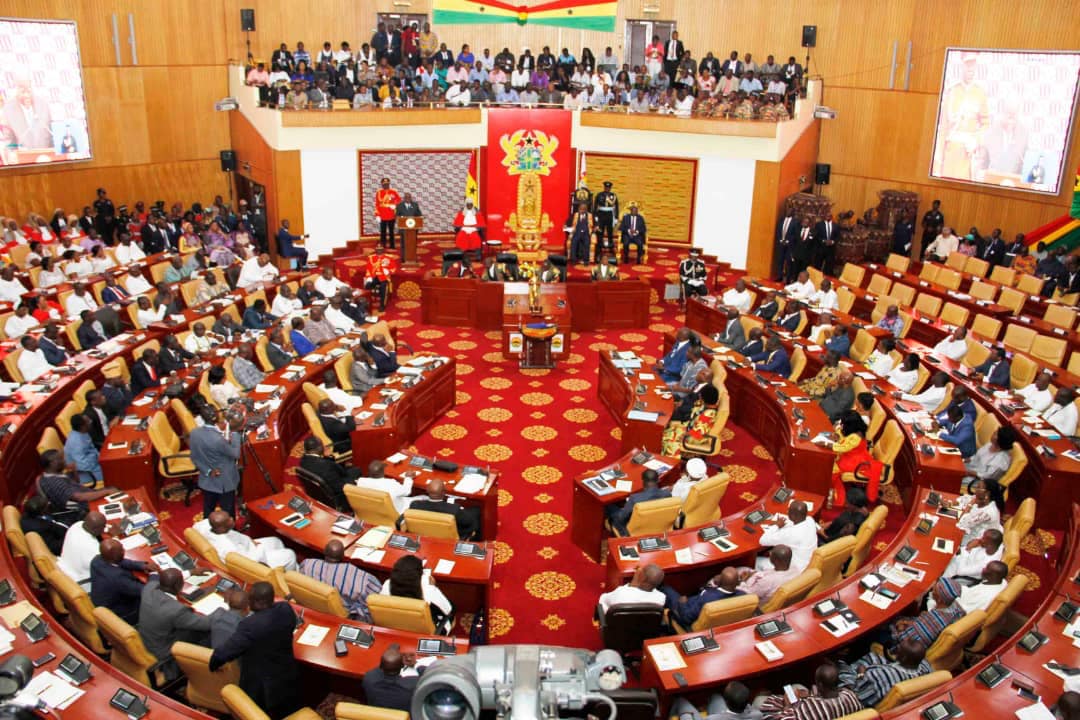
At the second reading, the bill is debated in the full chamber. The Minister or member sponsoring the bill explains its purpose and key provisions. Other members then debate the general principles of the bill, not the detailed clauses.
The debate at this stage focuses on whether the bill is a good idea, whether it addresses the problem it claims to solve, and whether there are fundamental objections. At the end of the debate, the House votes. If the bill passes the second reading, it moves to the next stage.
Consideration Stage
The consideration stage is where the detailed work happens. The whole House, or sometimes a committee of the whole House, goes through the bill clause by clause. Members propose amendments. Each clause is discussed and voted on.
This stage can be lengthy for complex or controversial bills. It is where the precise wording of the law is settled. Technical issues, definitions, penalties, and administrative arrangements are all examined.
Third Reading
After the consideration stage, the bill is prepared in its final form. The third reading is usually brief. The purpose is to approve the bill as amended. No further substantive amendments are typically allowed at this stage, though procedural motions may be possible.
Once the third reading is passed, the bill has been passed by Parliament. But it is not yet law.
The President’s Role
After Parliament passes a bill, it is presented to the President for assent. The Constitution gives the President 7 days to act.
Assent
If the President agrees with the bill, he or she signs it. The bill becomes an Act of Parliament and takes effect on the date specified in the law or, if no date is specified, on the date of publication in the Gazette.
Refusal
The President may refuse to assent to a bill. If this happens, the President must, within 7 days, inform the Speaker of Parliament in writing of the reasons for the refusal. The President may recommend changes to the bill.
Parliament then has options. It may reconsider the bill and make the changes suggested by the President. If it does so, the revised bill is sent back for assent.
Alternatively, Parliament may insist on the original version. The Constitution provides that if Parliament passes the bill again by a resolution supported by at least two-thirds of all Members of Parliament, within the prescribed period, the bill must be presented to the President again. If the President still refuses to sign, the bill may be sent to the Council of State for its views. If the Council of State supports the bill or fails to respond within the constitutional period, Parliament may pass the bill again by a two-thirds majority, and it then becomes law without presidential assent.
This override mechanism exists to prevent the President from blocking legislation indefinitely. In practice, however, it is rarely used, partly because of the strict timelines and the two-thirds threshold.
The Role of the Council of State
The Council of State is an advisory body provided for by the Constitution. It advises the President and other institutions. In the context of legislation, the Council of State may be consulted when there is a dispute between the President and Parliament over a bill. The Council’s role is to give its views, not to make the final decision.
Special Types of Bills
Money Bills
A money bill is a bill that deals with taxation, public spending, or public debt. The Constitution gives the President or the Minister responsible for Finance a special role in relation to these bills. Parliament cannot proceed with a bill that imposes taxation or charges on public funds unless it has been introduced by or on behalf of the President, or unless the Speaker has certified that it is a private member’s bill that does not unduly burden the public purse.
This rule exists to ensure that only the government, which is responsible for managing the economy, initiates spending and taxation measures. Parliament can still scrutinise and amend such bills, but the initiative lies with the executive.
Constitutional Amendment Bills
Amending the Constitution is not the same as passing an ordinary law. The 1992 Constitution distinguishes between entrenched provisions and non-entrenched provisions.
For non-entrenched provisions, Parliament can pass an amendment by a two-thirds majority, and the President must assent. For entrenched provisions — those that affect fundamental rights, the structure of government, or other core constitutional matters — the amendment must also be submitted to a national referendum. The amendment only takes effect if it is approved by the required percentage of voters.
Constitutional amendments are therefore a much more demanding process than ordinary legislation.
Bills Affecting Traditional Authorities
Certain bills that affect chieftaincy or traditional matters may be subject to special consultation requirements. The Constitution recognises the institution of chieftaincy and provides protections for it. Bills affecting the functions or privileges of chiefs may need to be referred to the National House of Chiefs or other relevant bodies for input.
How Citizens Can Participate
Public Consultations
Before a bill is introduced, the government or the relevant Ministry may hold consultations with stakeholders. These may include professional associations, civil society organisations, trade unions, religious bodies, and members of the public. The consultation may take the form of meetings, workshops, or requests for written comments.
Memoranda to Parliamentary Committees
When a bill is before a parliamentary committee, the committee may invite the public to submit memoranda — written views on the bill. Anyone can prepare a memorandum, explaining their concerns, suggesting changes, or supporting particular provisions. Committees often consider these submissions seriously, especially when they come from affected groups or technical experts.
Engaging Members of Parliament
Citizens can also engage their Members of Parliament directly. MPs are required to represent their constituents, and they can raise issues during debates or in committee. Meeting your MP, writing to them, or raising the issue through constituency channels can influence how the MP approaches a bill.
Media and Advocacy
Public advocacy through the media — radio, television, newspapers, and social platforms — can shape the climate in which a bill is considered. When the public pays attention to a bill, Parliamentarians are more likely to scrutinise it carefully. Campaigns by civil society groups have influenced debates on bills relating to health, education, environmental protection, and governance.
How Long the Process Takes
There is no fixed timeline for all bills. Some bills pass quickly, within a few weeks. Others take months or years. The speed depends on the complexity of the subject, the level of public interest, the degree of consensus in Parliament, and the government’s legislative priorities.
Urgent bills may be fast-tracked, but even urgent bills must follow the basic constitutional stages. Shortcuts that violate the Constitution can lead to legal challenges.
What Happens After a Bill Becomes Law
Once a bill receives presidential assent, it becomes an Act of Parliament. It is then published in the Gazette, the official publication of record. The Act may come into force immediately or on a date specified in the law. Some laws also require regulations, known as legislative instruments, to be made by a Minister before the law can be fully implemented.
The implementation of laws depends on various agencies: the police, the courts, regulatory bodies, local authorities, and others. Passing a law is only the beginning. Enforcement and compliance are separate challenges.
If a law is believed to violate the Constitution, any citizen can challenge it in the Supreme Court. The Court has the power to declare a law unconstitutional, in whole or in part. This is an important check on legislative power.
Common Misconceptions
“Once Parliament passes a bill, it is law”
No. A bill passed by Parliament still requires presidential assent. Only after the President signs it, or after Parliament successfully overrides a refusal, does it become law.
“The President can make laws alone”
The President can issue executive instruments and regulations, but these must be based on authority granted by an Act of Parliament. The President cannot create primary legislation without Parliament.
“Any MP can introduce any bill”
In practice, yes, but money bills — those involving taxation and public spending — can only be introduced by or on behalf of the President. Private members can introduce other types of bills, subject to parliamentary rules.
“Public opinion has no effect on the process”
Public input can be very influential, especially at the committee stage. The more organised and well-researched the input, the greater the impact. However, public opinion alone does not determine the outcome.
“Once a law is passed, it cannot be changed”
Laws can be amended or repealed. A new bill can change an existing law or replace it entirely. The Constitution itself can be amended, though the process is more demanding.
Frequently Asked Questions
What is the difference between a bill and a law?
A bill is a proposal. It has no legal force until it has been passed by Parliament and assented to by the President. Once that happens, it becomes an Act of Parliament, which is a law.
How many readings does a bill go through in Parliament?
A bill typically goes through three readings: first reading, second reading, and third reading. Between the first and second readings, the bill is examined by a committee. Between the second and third readings, it goes through the consideration stage, where clauses are debated and amended.
Who can introduce a bill in Ghana?
Bills can be introduced by Ministers on behalf of the government. MPs who are not Ministers can also introduce private members’ bills. In practice, most bills are government bills.
What happens if the President refuses to sign a bill?
The President must inform the Speaker within 7 days and give reasons. Parliament may amend the bill or pass it again by a two-thirds majority. If the dispute continues, the Council of State may be consulted, and Parliament may ultimately pass the bill without presidential assent.
Can the public see drafts of bills?
Many bills are published on the Parliament of Ghana website or shared during consultations. The extent of public access depends on the stage of the process and the practice of the relevant committee or Ministry. Some bills are also published in the Gazette.
What is a legislative instrument?
A legislative instrument, or LI, is a subsidiary law made by a Minister or other authority under powers given by an Act of Parliament. LIs provide detailed rules and regulations needed to implement the parent law.
How can I challenge a law I believe is unconstitutional?
You can file a case in the Supreme Court. The Court has the power to review laws and strike down those that violate the Constitution. Legal advice from a qualified lawyer is essential if you intend to pursue this route.
What to Remember
The process of making laws in Ghana is designed to ensure that no single person or institution has unchecked power. Parliament debates and votes. The President signs or refuses. The Council of State advises when there is a dispute. The Supreme Court reviews constitutional questions. The public can participate through consultations, submissions, and advocacy.
Understanding this process matters. Laws affect your daily life — what you pay in taxes, how you run your business, how you access public services, and what rights you have. When you know how a bill becomes law, you are better able to follow the issues, make your voice heard, and hold those in power accountable.
The next time you hear that Parliament is considering a new bill, you will know what happens next. You will know that there is still a long road before it becomes law. And you will know that, somewhere along that road, there is space for citizens to be heard.
Source: The Accra Daily Mail

Samuel Kwame Boadu is a Ghanaian media entrepreneur and storyteller with a passion for amplifying urban voices and uncovering everyday truths. He is the Editor-in-Chief and Founder of The Accra Daily Mail, a dynamic digital platform dedicated to capturing the pulse of Ghana’s capital—its people, culture, challenges, business, sports and innovations.