


Every four years, Ghanaians vote for Members of Parliament. Campaigns are intense. Candidates promise development, representation, and accountability. Then, after the elections, most voters hear very little about what their MP actually does until the next campaign season begins.
This gap between election-time attention and everyday understanding is a problem. Parliament is one of the most important institutions in Ghana’s democracy. It makes laws, approves budgets, and holds the executive to account. Yet its work often seems distant and technical.
This article explains what Parliament does, what MPs actually do with their time, and how citizens can engage with their representatives. It is written in plain language for ordinary readers who want to understand the institution that is supposed to represent them.
Quick Facts
-
Parliament is the law-making body of Ghana, established under the 1992 Constitution.
-
Members of Parliament are elected from single-member constituencies across the country.
-
Parliament’s main functions are law-making, financial oversight, representation, and holding the Executive accountable.
-
The Speaker of Parliament presides over sittings and is elected by MPs.
-
Parliamentary committees do much of the detailed work of reviewing bills, budgets, and policies.
-
MPs do not have the power to spend public money directly. They approve budgets and oversee spending.
-
Citizens can engage with Parliament through their MPs, public hearings, and petitions.
What Parliament Is
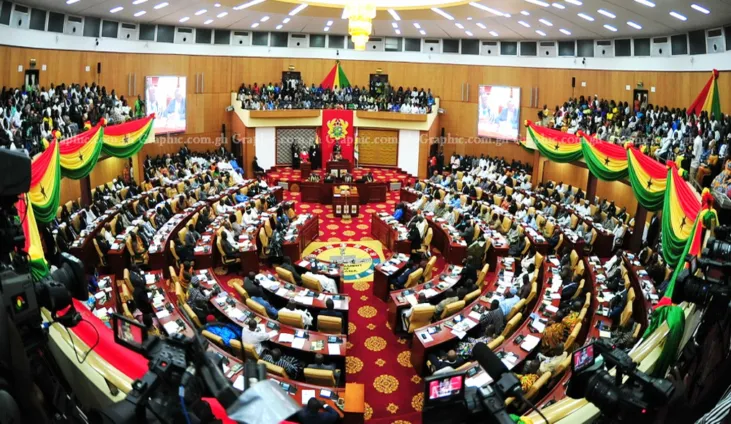
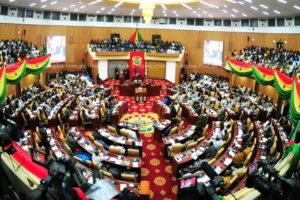
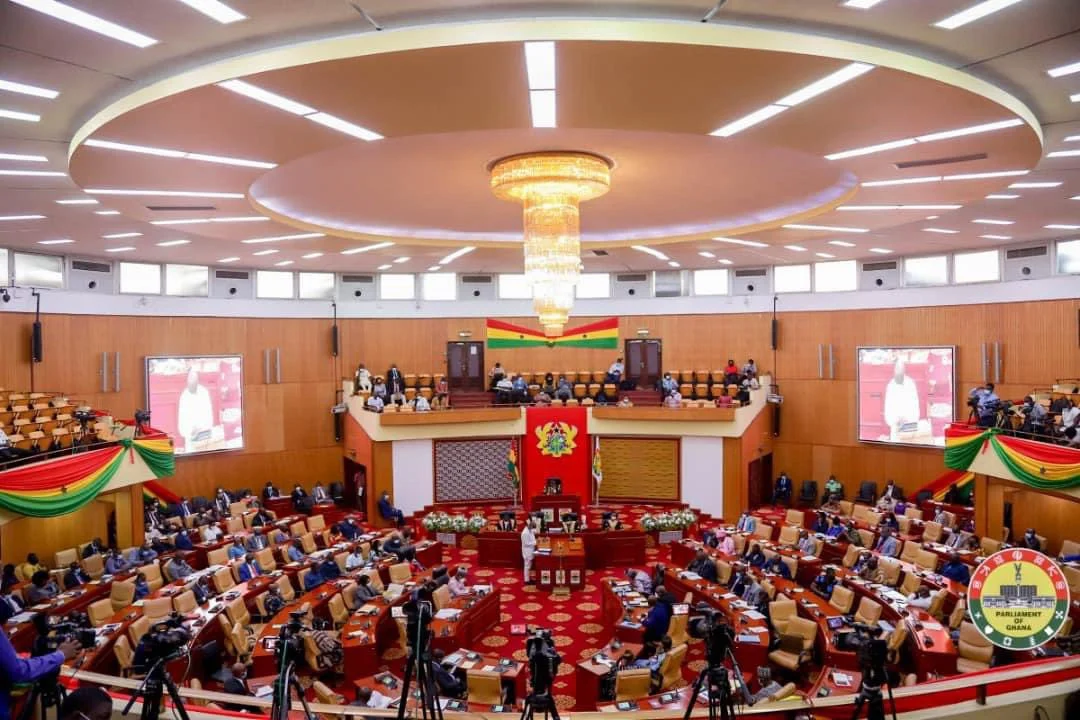
Parliament is the legislative branch of Ghana’s government. It is the place where laws are made, where the national budget is debated and approved, and where ministers are questioned about their work.

The current Parliament is part of the Fourth Republic, established by the 1992 Constitution. It is a unicameral legislature, meaning there is only one chamber, unlike countries with a Senate or House of Lords.
Parliament is made up of Members of Parliament, each elected from a constituency. The number of constituencies has grown over time as the population has increased. The Electoral Commission is responsible for demarcating constituencies based on population and geography.
The Constitution requires that Parliament meet at least once a year, but in practice it sits for much of the year, with breaks between sessions.

Who Can Become an MP
The qualifications for becoming an MP are set out in the Constitution. A person must:
-
Be a citizen of Ghana
-
Be at least 21 years old
-
Be of sound mind
-
Be a registered voter
-
Not have been convicted of certain criminal offences
In practice, becoming an MP usually requires winning a party primary and then a general election. Some MPs run as independents, but party affiliation dominates Ghanaian politics.
How MPs Are Elected
MPs are elected through a first-past-the-post system. Each constituency elects one MP. The candidate with the most votes wins, even if they do not receive more than 50% of the votes.

This system is simple and familiar, but it has consequences. It tends to favour large parties and can produce results where a party wins a majority of seats without winning a majority of votes. It also means that votes for losing candidates do not translate into representation.
The Electoral Commission conducts parliamentary elections alongside presidential elections every four years. By-elections are held when a seat becomes vacant, such as when an MP dies, resigns, or is expelled.
What Parliament Does
Parliament has four core functions: law-making, financial oversight, representation, and accountability.
Law-Making
Parliament is the only body that can make laws in Ghana. The process begins with a bill, which is a draft law. Bills can be introduced by ministers or by private members, though most significant bills come from the government.
The bill goes through several stages:
-
First reading: The bill is formally introduced.
-
Second reading: The bill is debated in full, and its principles are discussed.
-
Committee stage: The bill is examined in detail by a committee.
-
Consideration stage: Amendments are debated and voted on.
-
Third reading: The final version is voted on.
-
Presidential assent: The bill is sent to the President for approval.
Once the President assents, the bill becomes law and is published in the Gazette.
Not all bills pass. Some are withdrawn, some lapse when Parliament is dissolved before elections, and some are defeated.
Financial Oversight
One of Parliament’s most important powers is control over public money. The government cannot spend money without parliamentary approval.
The annual budget is presented to Parliament by the Minister of Finance, usually in November. Parliament debates the budget, examines the estimates of each ministry, and eventually passes an Appropriation Act that authorises spending.
Parliament also approves borrowing. When the government wants to take a loan, it often needs parliamentary approval. This is a significant check on executive power.
The Public Accounts Committee and the Finance Committee play important roles in examining government spending and ensuring that funds are used for their intended purposes.
Representation
MPs are elected to represent their constituencies. This means they should:
-
Listen to constituents’ concerns
-
Raise local issues in Parliament
-
Advocate for development projects
-
Help constituents navigate government systems
-
Report back on what Parliament is doing
This representational role is often what voters care most about. Many Ghanaians expect their MP to bring development — roads, schools, clinics, jobs — to the constituency.
Accountability
Parliament holds the Executive accountable. This happens through:
-
Questions to ministers
-
Debates on government policy
-
Committee investigations
-
Votes of censure
-
Approval of appointments
-
Review of the budget
Ministers are required to answer questions in Parliament. These sessions can be lively and revealing, though they do not always produce the accountability voters expect.
The Speaker
The Speaker of Parliament is the presiding officer. The Speaker is elected by MPs and may come from within Parliament or from outside.
The Speaker’s role is to:
-
Preside over sittings
-
Maintain order in the chamber
-
Interpret parliamentary rules
-
Represent Parliament
-
Act as President when both the President and Vice President are unable
The Speaker is expected to be impartial, even if the Speaker previously belonged to a political party. In practice, this impartiality is sometimes tested, especially in tightly divided Parliaments.
The Deputy Speakers
Parliament also has First and Second Deputy Speakers. They assist the Speaker and preside over sittings when the Speaker is absent. The Constitution requires that the First and Second Deputy Speakers come from different political parties.
The Majority and Minority
Parliament is organised around the majority and minority. The party or coalition with the most seats forms the Majority. The largest opposition party or coalition forms the Minority.
The Majority Leader and Minority Leader are key figures. They manage their respective sides, schedule business, and negotiate on procedural matters.
The Majority Leader is often seen as the government’s chief parliamentary strategist. The Minority Leader leads the opposition and coordinates challenges to government policy.
This division between Majority and Minority shapes almost everything in Parliament. Debates are often partisan, and votes frequently split along party lines.
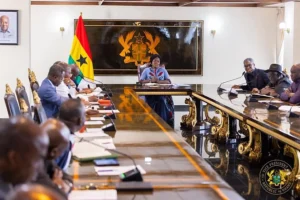
Parliamentary Committees
Much of Parliament’s detailed work happens in committees. Committees examine bills, review budgets, investigate issues, and hold public hearings.
Some of the important committees include:
Finance Committee
The Finance Committee examines financial matters, including the budget, taxation, and borrowing.
Public Accounts Committee
The Public Accounts Committee reviews the Auditor-General’s reports and examines how public money has been spent. It is traditionally chaired by a member of the Minority to ensure independent scrutiny.
Appointments Committee
The Appointments Committee vets presidential nominees for ministerial positions, judicial appointments, and other roles requiring parliamentary approval.
Subsidiary Legislation Committee
This committee reviews regulations and statutory instruments to ensure they are consistent with the law.
Other Committees
There are committees for health, education, defence, foreign affairs, lands and forestry, gender, and many other areas. Each committee shadows one or more ministries.
Committees can call witnesses, request documents, and conduct investigations. They are a vital part of parliamentary oversight.
What MPs Actually Do Day to Day
The public often sees MPs only during elections or in brief news clips from the chamber. The daily work of an MP is broader and less glamorous.
Sitting in the Chamber
MPs spend many hours in plenary sessions, debating bills, asking questions, and listening to statements. Attendance matters, but much of the real work happens outside the chamber.
Committee Work
MPs serve on committees, where they examine issues in detail. Committee meetings are often where the substance of parliamentary work is done.
Constituency Work
MPs are expected to visit their constituencies, meet constituents, attend funerals and ceremonies, and address local problems. This is time-consuming and emotionally demanding.
Party Meetings
MPs attend party caucus meetings, where positions are debated and strategies formed. Party discipline is strong in Ghana, and MPs are expected to vote with their party.
Public Functions
MPs attend public events, speak at ceremonies, and represent Parliament in various forums. These activities build visibility and relationships.
Casework
Constituents bring problems to MPs: a school with no roof, a family seeking a hospital referral, a young person seeking a job. MPs often act as a bridge between citizens and government agencies.
What MPs Cannot Do
There is a common belief that MPs control development funds or can directly authorise projects. This is largely inaccurate.
MPs do not have a development fund they can spend directly. The government allocates development funds through ministries and agencies. MPs can lobby for projects in their constituencies, but they do not control the purse.
MPs cannot award contracts. Procurement is handled by government agencies under the Public Procurement Act. MPs are not procurement officers.
MPs cannot hire and fire government staff. Civil servants are employed through the public service system, not by individual MPs.
MPs cannot instruct the police or the courts. The police and judiciary are independent institutions.
Understanding these limits is important. It helps citizens have realistic expectations and reduces the tendency to blame MPs for problems outside their formal powers.
How MPs Are Held Accountable
MPs are accountable to their constituents in several ways.
Elections
The most direct form of accountability is the ballot box. Every four years, constituents can re-elect or reject their MP.
Public Scrutiny
The media, civil society, and citizens can scrutinise MPs’ performance, attendance, and conduct.
Parliamentary Rules
MPs must follow parliamentary rules and codes of conduct. Breaches can result in sanctions, including suspension.
Recall
The Constitution does not provide for the recall of MPs by their constituents. Once elected, an MP serves the full term unless they resign, die, or are expelled by Parliament. This is a gap in the accountability framework that some have called to address.
The Relationship Between Parliament and the Executive
Parliament and the Executive are separate branches, but they are deeply intertwined.
The President is not a member of Parliament, but the President’s ministers may come from Parliament. The Constitution requires that a majority of ministers be MPs, though this has been interpreted with some flexibility.
The Executive needs Parliament to pass budgets and laws. Parliament needs the Executive to implement what it approves. This creates interdependence.
When the President’s party controls Parliament, the relationship is usually cooperative. When the opposition controls Parliament, conflict can arise, and the government may struggle to pass legislation.
Ghana has experienced both scenarios. The current Parliament has at times been closely divided, creating tension and negotiation.
How Citizens Can Engage with Parliament
Parliament is not a closed institution. Citizens can engage in several ways.
Contact Your MP
The most direct route is to contact your MP. MPs have offices in their constituencies and in Parliament. You can write, call, or visit to raise issues.
Attend Public Hearings
Committees often hold public hearings on bills and investigations. These are open to the public and sometimes announced in the media.
Submit Petitions
Parliament receives petitions from citizens and groups. A petition can raise an issue and request parliamentary action.
Follow Parliamentary Proceedings
Parliamentary sittings are broadcast and reported. Following the news helps you know what is happening and hold MPs accountable.
Join Advocacy Groups
Civil society organisations monitor Parliament and advocate on issues. Joining such groups amplifies your voice.
Vote
The most important act of engagement is voting. Choosing who represents you is the foundation of parliamentary democracy.
Common Misconceptions
“MPs are rich because they control money”
MPs receive salaries and allowances, but they do not control public funds directly. The budget process is governed by law, and MPs approve spending collectively, not individually.
“MPs can bring development to my area by themselves”
MPs can lobby for projects, but development is delivered through government agencies and district assemblies. MPs do not have their own development fund.
“Once elected, MPs can do whatever they want”
MPs are bound by the Constitution, parliamentary rules, and party discipline. They are also accountable to voters at the next election.
“Parliament is just a rubber stamp”
Parliament has real powers, including the power to reject budgets, block appointments, and investigate the government. Its effectiveness depends on political will and public engagement.
“Only the majority matters”
The Minority plays a vital role in scrutiny and debate. The Public Accounts Committee is traditionally chaired by a Minority MP precisely to ensure independent oversight.
Frequently Asked Questions
How many MPs are in Ghana’s Parliament?
The number has changed over time as constituencies are created. Check the Electoral Commission for the current number.
How long is an MP’s term?
An MP serves a four-year term, with elections held every four years.
Can an MP be removed before the end of the term?
An MP can lose their seat if they are expelled by Parliament, convicted of certain offences, or cease to meet the qualifications. There is no recall mechanism for constituents to remove an MP directly.
Do MPs have immunity?
MPs have freedom of speech in Parliament and cannot be sued for what they say during proceedings. This is not general immunity from prosecution.
How is the Speaker chosen?
The Speaker is elected by MPs. The Speaker may come from within Parliament or outside.
What is the difference between an MP and a Minister?
An MP is elected to represent a constituency and make laws. A Minister is appointed by the President to head a ministry and implement policy. A person can be both, and many ministers are also MPs.
How can I find out what my MP is doing?
Contact your MP’s office, follow parliamentary proceedings, and monitor committee reports. The media also reports on parliamentary activities.
Can I attend Parliament sittings?
Parliamentary sittings are generally open to the public, subject to security and seating. Check with Parliament for current arrangements.
What to Remember
Parliament is the heart of Ghana’s democracy. It is where laws are made, budgets are approved, and the government is held to account. But it only works as well as citizens make it work.
MPs are not development contractors. They are lawmakers and representatives. Their power is collective, not individual. Understanding this helps citizens engage more effectively and have realistic expectations.
The next time you hear that Parliament has passed a law or rejected a nomination, you will know what that means. You will know the process, the players, and the stakes. And you will be better equipped to hold your MP accountable for the job you elected them to do.

Samuel Kwame Boadu is a Ghanaian media entrepreneur and storyteller with a passion for amplifying urban voices and uncovering everyday truths. He is the Editor-in-Chief and Founder of The Accra Daily Mail, a dynamic digital platform dedicated to capturing the pulse of Ghana’s capital—its people, culture, challenges, business, sports and innovations.