




Walk through any university campus in Ghana, sit in a trotro during rush hour, listen to callers on morning radio, or spend an evening at a neighbourhood drinking spot. You will hear ideas. Detailed, ambitious, sometimes brilliant ideas about how to fix the roads, improve the schools, create jobs, reform the tax system, stop corruption, and transform the economy.
Ghana has never suffered from a shortage of ideas. The problem lies elsewhere: in the difficult, unglamorous work of turning ideas into reality. That gap — between what is proposed and what is actually delivered — is one of the defining features of Ghanaian public life.
This article examines why execution is such a persistent problem in Ghana, where the pattern shows up most clearly, and what ordinary citizens can do about it. It is not an attack on any particular government or party. The problem is structural and long-standing, and it predates the current political era.
Quick Facts
-
Ghana has produced numerous national development plans, policy frameworks, and strategic documents over the decades.
-
Many announced projects experience delays, cost overruns, abandonment, or significant changes in scope.
-
The gap between policy announcements and actual delivery is a recurring concern raised by civil society groups, auditors, and international partners.
-
The Auditor-General’s reports regularly document weaknesses in public financial management and project implementation.
-
Execution problems affect sectors including infrastructure, education, health, agriculture, and public sector reform.
-
Citizens can play a role in improving execution through scrutiny, advocacy, and demanding accountability.
The Pattern Is Familiar
The pattern repeats itself often enough to feel routine. A government announces a major project with fanfare. There are ground-breaking ceremonies, artist’s impressions, and confident timelines. Then the project stalls. There are disputes over land, funding gaps, procurement challenges, or simply silence. Years pass. The project is either abandoned, re-announced under a different name, or completed late and over budget, often to a lower standard than promised.

This pattern is not confined to one sector. It appears in road construction, housing, hospital projects, school infrastructure, agricultural initiatives, and digital transformation programmes. The details differ, but the underlying problem is the same: the distance between announcement and delivery is often much longer than anyone admits.
The issue is not that Ghanaians lack the intelligence or creativity to design good policies. The country has produced technocrats, engineers, planners, and professionals who are respected internationally. The issue is the system within which they operate. That system too often rewards announcement over delivery, appearance over substance, and political expediency over long-term discipline.
Why Execution Fails
There is no single cause of Ghana’s execution problem. Several factors combine, and they reinforce each other.

The Politics of Announcement
In Ghana’s political culture, announcements are valuable. They generate headlines, signal activity, and create a sense of momentum. A government that announces many projects appears dynamic and ambitious. The actual completion of those projects may take years, by which time the political moment has passed.
This creates an incentive to launch projects without adequate planning, funding, or feasibility work. The announcement is the product. What happens after the announcement is often treated as a secondary concern.
Weak Project Preparation
Many projects fail before they begin. The preparatory work — feasibility studies, environmental assessments, land acquisition, detailed designs, realistic cost estimates — is often rushed, incomplete, or skipped entirely. When a project starts without proper preparation, the problems surface later: the land turns out to be disputed, the costs were underestimated, the design does not fit the site, or the technical requirements were misunderstood.

By the time these issues are discovered, money has already been spent and expectations have been raised. The choice is then between abandoning the project and pouring more money into rescuing it.
Procurement Problems
Ghana’s procurement system is governed by the Public Procurement Act, which is intended to ensure transparency, competition, and value for money. In practice, procurement is often a weak link in the execution chain.
Contracts are sometimes awarded to companies with political connections rather than technical capacity. Bidding processes can be manipulated. Due diligence can be superficial. The result is that projects are entrusted to entities that cannot deliver, leading to delays, substandard work, and litigation.
Even when the process is clean, procurement can be slow. The review and approval process can take months, delaying project start dates and inflating costs.
Funding Gaps
Many projects are announced before funding is secured. Governments assume that revenue will be available, or that donors will come through, or that borrowing will cover the cost. When those assumptions prove wrong, the project stalls.
Fiscal constraints are real. Ghana’s public finances have been under pressure for years, with high debt levels and limited fiscal space. But the problem is not only about money. It is about matching commitments to resources. Announcing projects without a credible funding plan is a recipe for failure.
Poor Project Management
Project management is a discipline. It requires clear objectives, realistic timelines, defined responsibilities, regular monitoring, and accountability for results. In Ghana’s public sector, project management capacity is often thin.
Projects may lack a single accountable manager. Timelines may be vague or ignored. Reporting may be irregular or non-existent. When problems arise, there is no mechanism to catch them early and correct course. By the time the problems become obvious, they are expensive to fix.
Political Transitions
Ghana’s political transitions are a source of democratic pride, but they also contribute to the execution problem. When a new government comes into office, it often reviews the projects of its predecessor. Some projects are cancelled outright. Others are renegotiated, renamed, or redesigned.
This discontinuity creates uncertainty and waste. A project that was halfway through may be abandoned, only for a similar project to be launched under a new name. Contractors learn that their agreements may not survive a change of government, so they price that risk into their bids or walk away.
Corruption and Rent-Seeking
Corruption is part of the story, though it is not the only part. Where public funds are involved, there are opportunities for private gain. Inflated contracts, kickbacks, and diversion of materials all reduce the resources available for actual delivery.
The Auditor-General’s reports have repeatedly documented irregularities in public spending. Some of these involve outright theft. Others involve poor record-keeping, unauthorised spending, or failure to follow procedure. The cumulative effect is that public money does not buy what it should.
Weak Accountability
The most serious problem may be the weakest: the absence of consequences for failure. In Ghana, it is rare for a public official to be personally held to account for a failed project. Projects can run years behind schedule, exceed their budgets by multiples, or never be completed at all, and those responsible face no professional or legal consequences.
When there are no consequences for failure, failure becomes an acceptable outcome. The lesson is learned at every level of the system: delivery is optional.
Where the Problem Shows Up
Infrastructure
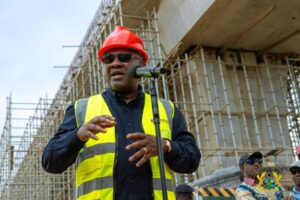
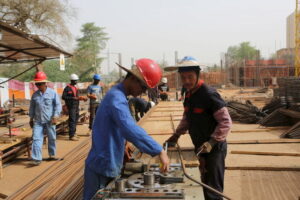
Roads are the most visible example. Ghana has a large stock of roads that need maintenance, rehabilitation, and expansion. Projects are announced regularly, often with specific timelines. Many are completed, but many others are delayed for years. The cost of delays is enormous: detours, vehicle damage, lost productivity, and the eventual escalation of construction costs.
Other infrastructure projects — bridges, hospitals, schools, housing units — follow similar patterns. Some are completed to a good standard. Others are left unfinished for so long that they deteriorate before they are ever used.
Education
Education policy in Ghana is rich with initiatives. Curriculum reforms, infrastructure programmes, teacher training schemes, and digital learning projects have all been announced over the years. The challenge is consistent implementation.
A new curriculum may be announced before textbooks are ready. A school building programme may be launched without adequate site surveys. A teacher deployment policy may falter because of payroll delays. The ideas are sound; the execution is uneven.
Health
The health sector faces similar challenges. Hospital projects have been started and abandoned. Equipment has been procured but not installed. Health policies have been announced but not fully funded. The National Health Insurance Scheme, one of Ghana’s most important social programmes, has struggled with funding and reimbursement delays for years.
Agriculture
Agricultural programmes illustrate the gap between rhetoric and delivery. Ghana has announced numerous initiatives to boost food production, support farmers, and reduce imports. Some have worked well. Others have been undermined by late delivery of inputs, poor targeting, and weak monitoring.
The idea of modernising agriculture is not in question. The challenge is turning policy announcements into actual support that reaches farmers on time and at scale.
The Cost of Poor Execution
The cost of poor execution is not abstract. It is measured in lost time, wasted money, and diminished trust.
Financial Waste
Money spent on a project that is never completed is money lost. Even if the project is eventually finished, delays and cost overruns mean the public pays more than necessary. Those resources could have been used for schools, hospitals, or debt reduction.
Lost Opportunity
Every year a project is delayed is a year in which its benefits are not realised. A road that opens five years late delays economic activity for five years. A hospital that is not completed means patients travel further for care. An irrigation scheme that stalls means farmers depend on rain.
Reduced Confidence
When projects fail repeatedly, people stop believing in announcements. Citizens become cynical. Investors hesitate. The result is a corrosive loss of confidence that makes everything harder.
Deepening Inequality
The costs of failed execution fall most heavily on the poor. Those with resources can find private alternatives: generators for electricity, boreholes for water, private schools for education, private clinics for health. The poor depend on public systems, and when those systems fail to deliver, the poor suffer most.
What Can Be Done
Strengthen Project Preparation
The government should commit to completing feasibility studies, environmental assessments, and detailed designs before announcing major projects. This may make announcements slower, but it will make delivery faster. A project that is properly prepared is less likely to stall.
Improve Procurement
Procurement should be transparent, competitive, and focused on technical capacity. Companies with a history of failed projects should not continue to receive contracts. The Public Procurement Authority should have the resources and independence to do its job.
Enforce Accountability
Officials responsible for project delivery should be held to account when projects fail. This does not require witch hunts; it requires professional standards, regular reporting, and consequences for non-performance. The Auditor-General’s findings should lead to action, not just discussion.
Protect Projects from Political Cycles
Ghana should consider mechanisms to protect long-term projects from political transitions. This could include multi-year funding commitments, independent project management offices, or legal frameworks that make it harder to cancel projects without due process.
Involve Citizens
Citizens are not passive observers. They can demand information about projects, track progress, and speak out when things go wrong. Civil society organisations, the media, and local communities all have roles to play. The more visible the process, the harder it is for failure to hide.
Common Misconceptions
“The problem is just about money”
Money matters, but it is not the only issue. Even well-funded projects can fail if they are poorly planned, mismanaged, or undermined by corruption. Conversely, modest projects can succeed if they are well executed.
“The private sector would solve everything”
The private sector can help, but private projects also fail. The difference is that private failures usually have financial consequences for the owners. Public failures often have no consequences for anyone. The issue is accountability, not ownership.
“A new government will fix it”
Every government inherits the problem and contributes to it. The execution gap is structural, not personal. Unless the underlying incentives change, new administrations will face the same pressures.
“Ghanaians don’t like to work”
This is a lazy stereotype and a false one. Ghanaians work extremely hard in difficult conditions. The problem is not effort; it is systems. When the system rewards announcement over delivery, people respond to the incentives they face.
Frequently Asked Questions
Why do so many projects in Ghana get abandoned?
Projects are abandoned for many reasons, including funding gaps, land disputes, contractor failure, political transitions, and poor planning. Often, several factors combine.
Does the Auditor-General hold people accountable?
The Auditor-General audits public accounts and reports irregularities. The reports are submitted to Parliament, which is supposed to act on them. The weakness is in the follow-up: many findings lead to no sanctions.
Are there examples of successful execution in Ghana?
Yes. Ghana has completed significant infrastructure projects, held regular elections, and rolled out programmes that work. The point is not that execution always fails, but that it fails too often, and the pattern is well established.
What can ordinary citizens do?
Citizens can ask questions, demand information, support civil society groups that monitor projects, and vote with performance in mind. Public pressure is one of the few forces that can change incentives.
Is this problem unique to Ghana?
No. Many countries struggle with execution. But the specific causes and consequences differ, and Ghana’s political and institutional context shapes the problem in particular ways.
What to Remember
Ghana’s development challenge is not primarily intellectual. It is operational. The country has no shortage of policy documents, strategic plans, and well-meaning announcements. What it lacks is a system that reliably converts those intentions into results.
Fixing that system requires changes to incentives, institutions, and culture. It means rewarding delivery, punishing failure, protecting projects from political whims, and giving citizens the information they need to hold power to account.
The next time you hear a grand announcement about a new project, the right response is not cynicism or applause. It is a simple question: what is the plan for execution, and who will be held responsible if it fails?
That question, asked often enough, can begin to change the way Ghana does things.
Source: The Accra Daily Mail

Samuel Kwame Boadu is a Ghanaian media entrepreneur and storyteller with a passion for amplifying urban voices and uncovering everyday truths. He is the Editor-in-Chief and Founder of The Accra Daily Mail, a dynamic digital platform dedicated to capturing the pulse of Ghana’s capital—its people, culture, challenges, business, sports and innovations.