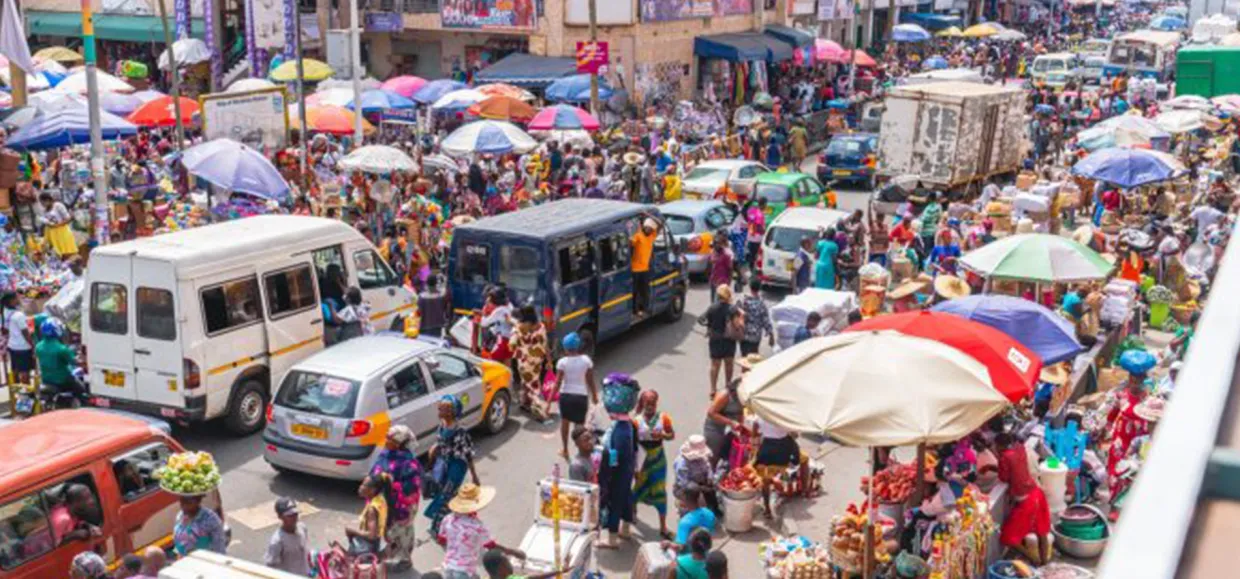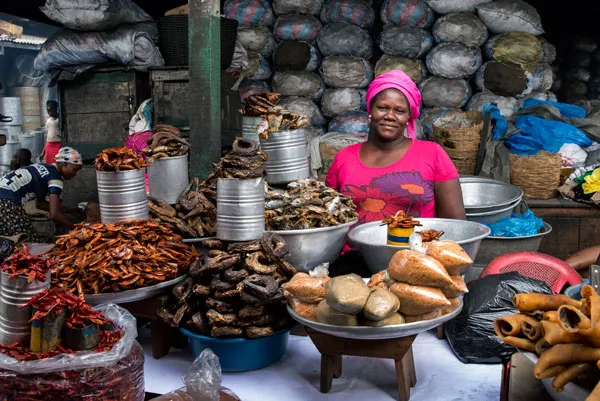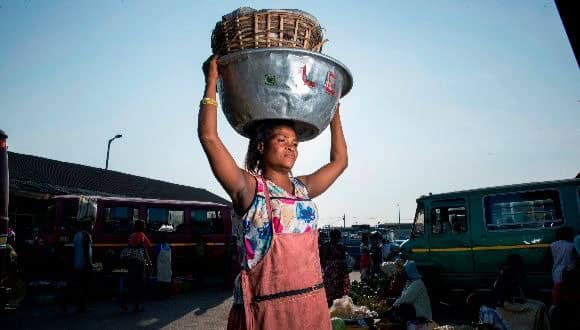






Every entrepreneur in Ghana knows the feeling. You have a good product, a growing customer base, and a clear plan. But the numbers tell a different story. The money that comes in seems to disappear before it can be reinvested. The margins are thin. The costs keep rising.
Running a business in Ghana is expensive. This is not a secret, but the specific costs — and how they have changed recently — are often poorly understood. Some costs are obvious: rent, salaries, stock. Others are hidden: taxes that cascade, logistics that delay, power that fails. Together, they shape what is possible for every entrepreneur in the country.
This Accra Daily Mail article explains the main costs of doing business in Ghana, what has changed recently, and what entrepreneurs should understand as they plan and budget.
Quick Facts
-
Business registration costs are relatively modest, but compliance obligations add ongoing expenses.
-
The VAT system was overhauled in 2026, with the effective rate reduced from about 21.9% to 20% and the registration threshold raised.
-
Electricity and water tariffs are adjusted quarterly by the Public Utilities Regulatory Commission, with increases announced for the third quarter of 2026.
-
Commercial lending rates remain elevated, though the benchmark rate has been declining.
-
Port congestion and customs delays add significant costs, particularly for importers.
-
The cedi has stabilised recently, easing the pressure on import-dependent businesses.
-
Many small businesses operate informally, avoiding some costs but also missing out on formal benefits.
The Tax Burden
Taxes are one of the most significant and complex costs of doing business in Ghana.
The New VAT Regime
The VAT system changed significantly on 1 January 2026, with the implementation of the Value Added Tax Act, 2025 (Act 1151).
The reform reduced the effective VAT rate from approximately 21.9% to 20% by abolishing the 1% COVID-19 levy and integrating key levies back into the VAT base . The previous system had separate levies — the National Health Insurance Levy (2.5%) and the GETFund Levy (2.5%) — that were calculated on different bases, creating a cascading effect that increased the overall tax charge .
Under the new system, the traditional VAT (15%), NHIL (2.5%), and GETFund Levy (2.5%) are all calculated on the same tax base, simplifying the computation and eliminating the cascading effects .
The government estimated that removing the COVID levy would return approximately 3.7 billion Ghanaian cedis to households and businesses in 2026 alone .
The Registration Threshold
One of the most significant changes for small businesses is the increase in the VAT registration threshold for businesses dealing in goods. The threshold was raised from GH¢200,000 to GH¢750,000 in annual sales .
This means that thousands of micro and small enterprises are now exempt from VAT registration and its compliance obligations. For a small trader with turnover below GH¢750,000, the administrative burden of VAT — filing returns, issuing VAT invoices, tracking input credits — is no longer required.
The threshold for services remains different, and businesses should check their specific obligations.
Modified Taxation for Informal Businesses
For informal sector operators, the Ghana Revenue Authority has introduced the Modified Taxation Scheme, a simplified approach to tax compliance.
The scheme has three categories based on turnover:
-
Presumptive Tax Based on Instalment (PTI): For businesses with average annual sales not exceeding GH¢20,000 over three consecutive years. Taxpayers pay a fixed tax amount based on income level and business activity .
-
Presumptive Tax Based on Turnover (PTT): For businesses with annual sales more than GH¢20,000 but not exceeding GH¢500,000. Taxpayers pay a flat rate of 3% on total annual sales .
-
Modified Cash Basis (MCB): For those who do not qualify for the presumptive categories or choose this method. Tax is paid on profit — earnings after deducting allowable business expenses .
Professionals with formal qualifications, owners of multiple businesses, and partners in registered partnerships do not qualify for the presumptive categories .
Registration can be done through the MTS mobile app, at GRA offices, through field officers, or via trade associations. Payment is available through USSD code *880# or the MTS app using mobile money .
Other Taxes and Levies
Beyond VAT and income tax, businesses face other obligations. The Communications Service Tax of 5% applies to electronic communications services — calls, data, SMS — and is added to the cost before VAT is charged .
For companies, corporate income tax applies to profits. Capital duty of 1% is charged on stated capital for companies limited by shares .
Registration and Compliance Costs
Starting a business formally involves registration fees, which are relatively modest.
Registration Fees
For a business name or sole proprietorship, registration costs GH¢130 . A partnership registration is GH¢270, and a company limited by shares costs GH¢585, plus 1% capital duty on stated capital .
Annual renewals for business names cost GH¢70, and filing annual returns for companies costs GH¢175 .
These fees are not prohibitive for most entrepreneurs, but they add up, especially for businesses that need multiple registrations or permits.
Ghana Investment Promotion Centre Fees
For businesses that require GIPC registration — typically foreign-owned or joint-venture enterprises — the fees are significantly higher. A wholly Ghanaian-owned enterprise in trading pays GH¢17,650, while joint ventures pay the cedi equivalent of US$3,500 .
Energy Costs
Electricity and water are essential inputs for most businesses, and their costs are significant.
Tariff Adjustments
The Public Utilities Regulatory Commission (PURC) reviews electricity and water tariffs quarterly. For the third quarter of 2026, effective 1 July 2026, electricity tariffs were increased by 3.49% across all customer categories, while water tariffs rose by 0.85% .
For non-residential customers, the energy charge per kWh increased from GHp 177.7539 to GHp 183.9549 for the first tier, and from GHp 216.4873 to GHp 224.0395 for higher consumption levels .
For Special Load Tariff customers, the increase applies to energy charges, while service charges remain fixed at GHp 50,000.00 per month .
These increases are relatively modest, but they add to the cumulative cost burden. For energy-intensive businesses — manufacturers, cold storage operators, workshops — electricity is a major expense.
The Reliability Question
Beyond the tariff, the reliability of power matters. Businesses that experience outages must invest in generators, fuel, and maintenance. The cost of backup power can be substantial, adding to the effective cost of electricity.
The Cost of Capital
Access to affordable finance is one of the biggest constraints on business growth in Ghana.
The Ghana Reference Rate
The Ghana Reference Rate (GRR) is the benchmark upon which commercial banks build lending rates. It is calculated using a weighted combination of Treasury bill rates, the average interbank lending rate, and the central bank’s Monetary Policy Rate .
The GRR declined to 10.03% for May 2026, from 10.06% in April, continuing a downward trend from 14.58% in February . This decline reflects improving liquidity conditions, lower short-term interest rates, and easing inflationary pressures.
Commercial Lending Rates
Despite the decline in the benchmark rate, commercial lending rates remain elevated. Businesses continue to face average commercial lending rates of 17.64%, even as inflation stood at 5.3% and the Bank of Ghana’s policy rate was 14.0% .
The transmission from falling benchmark rates to actual borrowing costs is slow, uneven, and selective. Banks continue to price loans using several layers of risk beyond the reference rate: borrower quality, collateral strength, sector exposure, provisioning risks, and their own funding structures .
For small and medium-sized enterprises, which often lack strong collateral and credit history, the cost of borrowing remains prohibitively high. Many firms scaled back expansion plans, reduced inventories, or postponed investment decisions during the peak of the tightening cycle .
PwC has noted that while Ghana has made significant progress in restoring macroeconomic stability, businesses will ultimately judge the recovery by whether financing becomes more affordable .
The Exchange Rate Factor
For businesses that import goods or rely on imported inputs, the exchange rate is a critical cost variable.
Recent Stability
The cedi has been relatively stable for about 15 months as of April 2026. The Ghana Union of Traders Association (GUTA) has said this stability allows importers to plan their businesses with greater certainty .
The cedi appreciated significantly in 2025, rising from about GH¢14.70 to the US dollar at the end of 2024 to around GH¢11.0 in 2026, before stabilising .
This has reduced the cost of imports. A trader importing goods worth US$100,000 now saves about GH¢370,000 compared to late 2024 exchange rates .
The Risk of a Strong Cedi
However, economist Dr. George Domfe has warned that a strong cedi can create difficulties for local producers. While cheaper imports benefit consumers in the short term, they can weaken the competitiveness of Ghanaian businesses producing similar goods locally .
If goods that could be produced domestically are increasingly imported because imports are relatively cheaper, incentives for local production, investment and industrial expansion may weaken,” Domfe said .
The exchange rate, therefore, presents a double-edged sword: relief for importers and consumers, but pressure on domestic producers.
Logistics and Port Costs
For importers and exporters, the cost of moving goods through Ghana’s ports is a major expense.
Port Congestion
Despite significant investment in port infrastructure — including the $1.5 billion Terminal 3 at Tema Port — congestion remains a problem. About 70% of containers at Tema’s Terminal 3 undergo full physical inspections, seven times the rate recommended by the World Customs Organization .
The cement industry alone incurred between $45 million and $50 million in demurrage charges over eight months. Petroleum product distributors paid $44 million to shipping companies in the first half of 2025 .
Businesses pass these additional costs on to final consumers <span class=””>.
The Call for New Infrastructure
CUTS International has called for the development of another port terminal to complement existing facilities. The West African Regional Director, Appiah Adomako Kusi, noted that port capacity has been under pressure since 2020, and continued congestion is contributing to delays and increased demurrage costs .
The additional costs incurred by businesses do not end at the ports. They are passed on to consumers through higher prices .
What This Means for Entrepreneurs
The cost of doing business in Ghana is a composite of many factors: taxes, energy, finance, exchange rates, and logistics. Some costs have eased recently — the cedi has stabilised, the VAT burden has been reduced, and the benchmark lending rate has declined. Others remain challenging — commercial lending rates are still high, port congestion persists, and energy costs continue to rise.
For entrepreneurs, the practical implications are clear:
Budget for the Full Cost
Do not underestimate the cumulative burden of taxes, levies, compliance costs, energy, and logistics. Build these into your pricing and cash flow projections.
Take Advantage of Simplified Tax Schemes
If your business qualifies for the Modified Taxation Scheme, use it. The simplified processes reduce compliance costs and make tax payment manageable.
Monitor the Exchange Rate
If you import, the exchange rate is a critical variable. The recent stability has helped, but do not assume it will last forever. Build contingency into your pricing.
Consider the Cost of Capital
Borrowing is expensive. If you can grow from retained earnings or personal savings, do so. If you must borrow, shop around, understand the full cost, and ensure the return justifies the expense.
Plan for Logistics Delays
If you import, factor in the possibility of port delays and demurrage. Build buffer time into your supply chain and budget for potential extra charges.
Common Misconceptions
“Doing business in Ghana is cheap because labour is cheap”
Labour costs may be lower than in developed economies, but other costs — energy, finance, logistics, taxes — are high. The total cost of doing business is significant.
“The new VAT law means businesses pay less tax”
The effective VAT rate has been reduced from about 21.9% to 20%, which is a modest reduction. The more significant change for small businesses is the higher registration threshold, which exempts many from VAT compliance.
“If the cedi is strong, everyone benefits”
A strong cedi benefits importers and consumers, but it can hurt local producers who compete with cheaper imports. The effects are uneven.
“Port congestion is just an inconvenience”
Port congestion translates into real costs — demurrage charges that run into millions of dollars and are ultimately passed to consumers. It is a significant economic burden.
“Interest rates will fall immediately when inflation falls”
The transmission from lower inflation to lower lending rates is slow and uneven. Banks consider many factors beyond the benchmark rate when pricing loans.
Frequently Asked Questions
How much does it cost to register a business in Ghana?
A business name registration costs GH¢130. A company limited by shares costs GH¢585, plus 1% capital duty on stated capital .
What is the VAT registration threshold?
For businesses dealing in goods, the threshold is GH¢750,000 in annual sales. Businesses below this threshold are not required to register for VAT .
What is the Modified Taxation Scheme?
It is a simplified tax system for informal sector workers and small businesses, with categories based on turnover. The Presumptive Tax Based on Turnover charges a flat rate of 3% on annual sales between GH¢20,000 and GH¢500,000 .
Why are commercial lending rates still high?
Banks consider borrower quality, collateral, sector risk, and their own funding costs when pricing loans. The transmission from lower benchmark rates is slow and uneven .
How has the cedi’s stability affected businesses?
Importers can plan with greater certainty, and the cost of imports has declined. A trader importing US$100,000 worth of goods saves about GH¢370,000 compared to late 2024 rates .
What are the main port costs for importers?
Demurrage charges, customs delays, and congestion add significant costs. About 70% of containers at Tema undergo full physical inspections, contributing to delays .
Is the cost of doing business in Ghana getting better or worse?
It depends on the cost category. Taxes have been simplified and slightly reduced, the cedi has stabilised, and benchmark interest rates have declined. But commercial lending rates remain high, energy costs continue to rise, and logistics challenges persist.
What to Remember
The cost of doing business in Ghana is a reality that every entrepreneur must confront. It is shaped by forces largely outside any individual’s control: government policy, global markets, infrastructure, and the financial system.
But understanding these costs is the first step to managing them. Know your tax obligations and take advantage of simplified schemes where available. Budget for energy, logistics, and finance costs. Monitor the exchange rate if you import. And plan for the unexpected.
Running a business in Ghana is not easy. But for those who understand the terrain, it is possible to navigate. The costs are real, but so are the opportunities.
Source: The Accra Daily Mail

Samuel Kwame Boadu is a Ghanaian media entrepreneur and storyteller with a passion for amplifying urban voices and uncovering everyday truths. He is the Editor-in-Chief and Founder of The Accra Daily Mail, a dynamic digital platform dedicated to capturing the pulse of Ghana’s capital—its people, culture, challenges, business, sports and innovations.