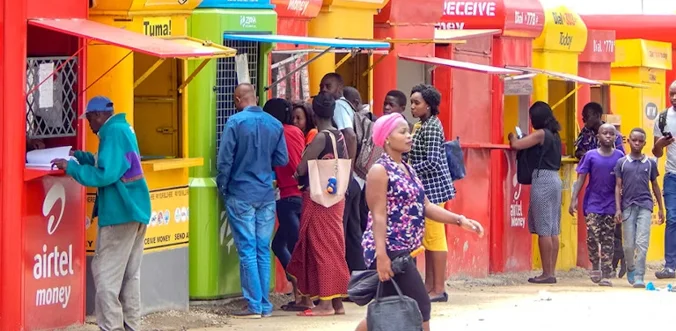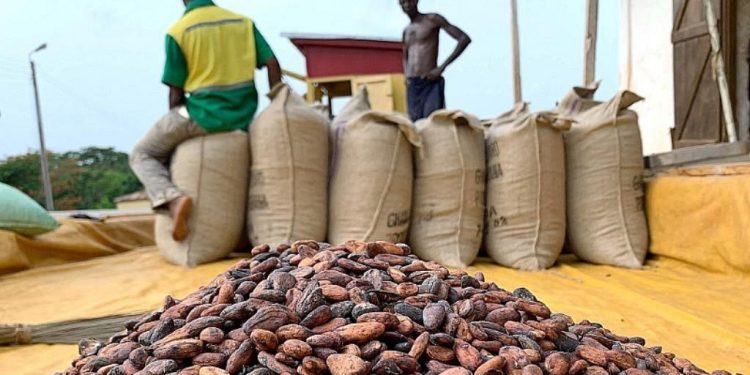











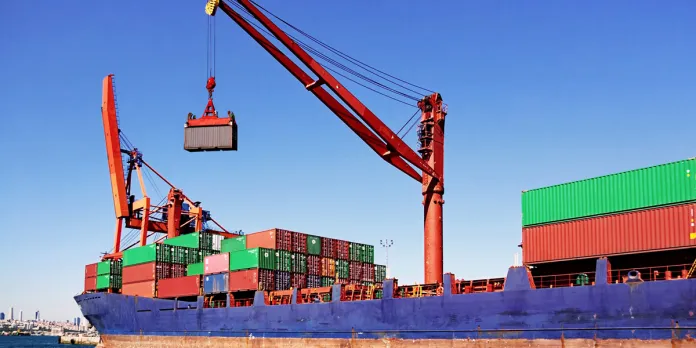

Walk through a Ghanaian market and you will see the paradox. Tomatoes from Burkina Faso. Rice from Thailand. Onions from Niger. Cooking oil from Malaysia. Poultry from Brazil. Toothpaste from India. Some of these products could be produced in Ghana. The land, the climate, and the labour are available. Yet the goods on the shelves come from thousands of kilometres away.
This is not a new observation. Successive governments have promised to reduce imports and boost local production. The gap between what Ghana could produce and what it actually produces is one of the most persistent puzzles of the country’s economy.
This Accra Daily Mail article explains why Ghana imports goods it could, in theory, produce locally. It is not a simple story of laziness or lack of patriotism. It is a story of costs, infrastructure, policy choices, and structural constraints that have accumulated over decades.
Quick Facts
-
Ghana imports a wide range of goods that could potentially be produced locally, including rice, poultry, cooking oil, and basic manufactured items.
-
The reasons include high local production costs, unreliable infrastructure, limited access to finance, and the legacy of trade liberalisation.
-
Local producers often struggle to compete with imports on price, quality, or consistency.
-
Imported goods benefit from economies of scale in their home countries, making them cheaper even after transport costs.
-
The weakness of local manufacturing and agro-processing limits Ghana’s ability to substitute imports.
-
Policy has sometimes favoured imports through tariffs and trade agreements, though this has been contested.
-
Reducing import dependence requires long-term investment, not just patriotic appeals.
The Simplest Explanation: Cost
The most important reason Ghana imports what it could produce is cost. In many cases, it is cheaper to import than to produce locally.

This may seem counterintuitive. How can rice grown in Thailand, shipped thousands of kilometres, and taxed at the port be cheaper than rice grown in Ghana? The answer lies in the structure of production.
In Thailand, rice is grown on a massive scale, with irrigation, mechanisation, high-yield varieties, and efficient supply chains. The cost per kilogram is low. In Ghana, much rice is grown by smallholder farmers with limited irrigation, using rain-fed methods and manual labour. The cost per kilogram is high.
The same pattern applies to poultry. In Brazil or the United States, poultry is raised in vast, highly efficient operations. Feed is cheap, energy is reliable, and processing is streamlined. In Ghana, poultry farmers face high feed costs, unreliable power, and limited access to affordable credit. The result is that imported frozen chicken can undercut local birds, even after transport and tariffs.

Cost is not just about money. It is also about consistency. Importers can deliver goods of uniform quality, in predictable quantities, on schedule. Local producers sometimes struggle to match that reliability. A restaurant owner or a food processor needs certainty. If local supply is erratic, they turn to imports.
The Infrastructure Gap
Production depends on infrastructure: electricity, water, transport, storage, and processing facilities. Where infrastructure is weak, production costs rise and competitiveness falls.
Electricity
Many local producers cite the cost and unreliability of electricity as a major constraint. Factories cannot run efficiently when power is expensive or intermittent. Some businesses rely on generators, which adds significantly to costs.

Transport
Moving raw materials to factories and finished goods to markets is expensive and slow when roads are poor and port logistics are congested. Imported goods often arrive at a port and are distributed efficiently, while local products face bottlenecks at every stage.
Storage and Processing
Agriculture is especially affected. Without adequate storage, produce spoils. Without processing capacity, farmers must sell raw goods at low prices. The absence of cold chains, warehouses, and processing plants limits the value that can be captured locally.
The Financial Constraint
Producing goods requires capital: buying equipment, renting premises, hiring workers, and surviving until revenue arrives. Access to affordable finance is a major barrier for Ghanaian producers.
Interest rates in Ghana are high by international standards. A manufacturer who borrows at 25% or 30% faces a cost burden that a competitor in another country does not. Many small and medium enterprises cannot access formal credit at all and must rely on personal savings or informal sources.
This financial constraint affects everything: the ability to scale, to invest in technology, to maintain quality, and to compete with imports. A local producer who cannot finance expansion will always struggle against an importer who simply buys finished goods from a low-cost producer abroad.
The Scale Problem
Many imported goods are produced at enormous scale in their home countries. This scale allows manufacturers to spread their fixed costs over millions of units, reducing the cost per unit.
Ghana’s domestic market is small by comparison. A local manufacturer producing for 30 million people cannot achieve the same economies of scale as a factory serving a regional or global market of hundreds of millions.
The scale problem is compounded by fragmentation. Many local producers operate at a very small scale, using outdated methods. They cannot compete on price with large, modern producers abroad.
The Legacy of Trade Liberalisation
For decades, Ghana has pursued trade liberalisation — reducing tariffs and opening the economy to international competition. This policy was driven by the belief that openness would promote efficiency and lower prices for consumers.
The benefits of liberalisation are real: consumers have access to cheaper goods, and competition can improve quality. But the costs are also real: local producers, especially nascent industries, often cannot compete with established foreign rivals.
Some economists argue that Ghana liberalised too quickly and too broadly, exposing local industries to competition before they were ready. Others argue that protectionism would simply lock in inefficiency. The debate continues, but the legacy is clear: many sectors that might have developed under protective policies were instead exposed to imports and declined.
Consumer Preferences
Consumers play a role too. Many Ghanaians prefer imported goods, believing them to be of higher quality. This preference is not universal, and it is often based on experience: local products have sometimes been inconsistent or of poor quality.
Changing consumer preferences is difficult. It requires local producers to raise their standards and to earn trust over time. Campaigns to “buy Ghanaian” help, but they cannot overcome a genuine quality gap. The best way to win consumers is to produce goods that compete on quality as well as price.
The Policy Vacuum
Some countries have built local industries through deliberate policy: subsidising inputs, protecting infant industries, investing in infrastructure, and restricting imports. Ghana has attempted some of this, but the efforts have been inconsistent.
Policies have changed with each government. Programmes have been announced and abandoned. Tariffs have been raised and lowered. The result is uncertainty, which discourages long-term investment.
A local manufacturer considering a major investment needs to know that the policy environment will remain stable for years. If policies can change overnight, the risk may be too great. Importing, by contrast, requires less long-term commitment and can adapt quickly to changing conditions.
The Agro-Processing Gap
Agriculture is the clearest case of the import paradox. Ghana has abundant land, water, and labour. Yet it imports rice, poultry, cooking oil, and other agricultural products that it could produce.
The reasons are structural. Yields are low because of limited irrigation, poor seeds, and inadequate fertiliser. Post-harvest losses are high because of poor storage and transport. Processing capacity is limited, so raw materials are not converted into finished products.
Closing the agro-processing gap requires investment across the value chain: from farm to factory to market. It is not enough to ask farmers to grow more rice. The rice must be milled, packaged, and delivered competitively. That requires coordinated effort and sustained funding.
What Can Be Done
Invest in Infrastructure
Reliable electricity, good roads, and modern ports would reduce the cost of local production and make Ghanaian goods more competitive.
Improve Access to Finance
Cheaper, longer-term credit would allow producers to invest in equipment and scale. Development finance institutions and targeted lending programmes can help.
Support Value Chains
Coordinated support across entire value chains — from inputs to processing to marketing — is more effective than isolated interventions.
Build Scale
Encouraging consolidation, cooperatives, and larger production units would help achieve economies of scale.
Raise Quality
Local producers must meet and exceed the standards of imported goods. Quality is the only sustainable basis for winning consumers.
Provide Policy Stability
A consistent, predictable policy environment would encourage investment. The stop-start approach of the past has discouraged exactly the long-term commitment that is needed.
Change Consumer Attitudes
Campaigns to promote local goods can help, but they must be backed by real improvements in quality and value. Patriotism alone is not enough.
Common Misconceptions
“Ghana imports because Ghanaians are lazy”
No. The reasons are structural: costs, infrastructure, finance, and policy. Ghanaians work hard; the system often works against them.
“Closing the borders would solve the problem”
Blanket import bans can create shortages, raise prices, and encourage smuggling. The solution is not isolation but competitiveness.
“Local products are always more expensive”
They are often more expensive because local production costs are high. As infrastructure and scale improve, costs can fall.
“Buying imported goods is unpatriotic”
Consumers make rational choices based on price and quality. The answer is to make local goods competitive, not to guilt consumers.
“The government can fix this quickly”
The problem is structural and long-term. Quick fixes have been tried and have failed. Sustainable change requires patience and persistence.
Frequently Asked Questions
Why is imported rice cheaper than local rice?
Imported rice often comes from countries with large-scale production, irrigation, and efficient supply chains. Local rice faces higher production costs and weaker infrastructure.
Can Ghana produce enough rice to feed itself?
Ghana has the land and water to produce much more rice, but achieving self-sufficiency requires major investment in irrigation, inputs, and processing.
What is the government doing to support local production?
Successive governments have launched programmes to boost local production in rice, poultry, and manufacturing. Results have been mixed, and structural constraints remain.
Are import duties protecting local industries?
Import duties provide some protection, but they are not enough by themselves. Local industries also need infrastructure, finance, and policy stability.
What can consumers do?
Support local products where they are competitive. But the real solution lies in making local products more competitive, not in asking consumers to accept less value.
Why don’t local manufacturers export more?
Many struggle to compete even domestically. Exporting requires meeting international standards and competing globally, which is an even higher bar.
Is import substitution possible?
Yes, but it requires sustained investment, stable policy, and a focus on competitiveness. Other countries have done it; Ghana can too, given time and commitment.
What to Remember
Ghana’s import dependence is not a mystery. It is the result of identifiable forces: high production costs, weak infrastructure, limited finance, small scale, and inconsistent policy. These forces have accumulated over decades, and they cannot be reversed overnight.
The answer is not to blame consumers or to close borders. It is to build the conditions under which local production can compete: reliable power, good roads, affordable credit, stable policy, and quality improvements.
The goods on the shelf tell a story. They are the visible evidence of deeper structural realities. Changing what appears on the shelf requires changing the structures beneath it — and that is the work of a generation.
Source: The Accra Daily Mail

Samuel Kwame Boadu is a Ghanaian media entrepreneur and storyteller with a passion for amplifying urban voices and uncovering everyday truths. He is the Editor-in-Chief and Founder of The Accra Daily Mail, a dynamic digital platform dedicated to capturing the pulse of Ghana’s capital—its people, culture, challenges, business, sports and innovations.