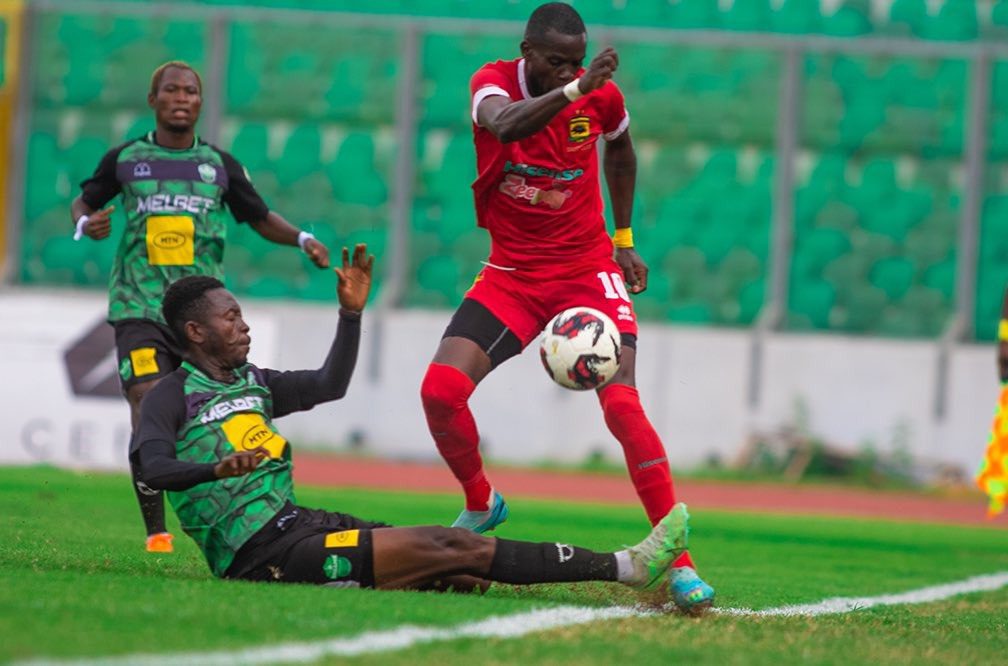








The Black Stars are more than a football team. They are a thread running through Ghana’s modern history — a source of joy, a mirror of national ambition, and at times a stage for the country’s frustrations. To follow the story of the Black Stars is to follow the story of Ghana itself: the optimism of independence, the turbulence of political change, the brilliance of individual talent, and the constant yearning for glory.
This article traces the history of Ghana’s senior men’s national football team from its early years to the present. It covers the great triumphs, the painful near-misses, the legendary players, and the evolution of the team’s identity. It is written for the ordinary fan who wants to understand how the Black Stars became what they are today.
Quick Facts
-
The name “Black Stars” comes from the black star in Ghana’s national flag, a symbol of African liberation.
-
Ghana won the Africa Cup of Nations four times: 1963, 1965, 1978, and 1982.
-
The Black Stars qualified for the FIFA World Cup for the first time in 2006.
-
Ghana reached the World Cup quarter-finals in 2010, the best result by a Ghanaian team.
-
Legendary players include Osei Kofi, Abedi Pele, Tony Yeboah, Stephen Appiah, Michael Essien, and Asamoah Gyan.
-
The team has experienced periods of dominance, decline, revival, and frustration, reflecting wider national dynamics.
-
The Ghana Football Association governs the team, with significant government involvement in funding and support.
The Early Years: Before Independence
Football arrived in Ghana, then the Gold Coast, through European contact in the late nineteenth and early twentieth centuries. Sailors, merchants, soldiers, and missionaries introduced the game, and it spread quickly through schools and urban centres.
By the 1920s and 1930s, football was already a popular pastime in the Gold Coast. Clubs were formed, competitions were organised, and the game became embedded in the social life of towns and cities. The colonial authorities used football as a tool of discipline and community, but Ghanaians soon made it their own.

The first national teams of the Gold Coast played against other colonial territories in West Africa. These early matches planted the seeds of international football in Ghana.
Independence and the Birth of the Black Stars
When Ghana became independent in 1957 under Kwame Nkrumah, football took on new significance. Nkrumah understood the power of sport as a tool for nation-building and Pan-African identity. The national team became a symbol of the new nation.
The name “Black Stars” was adopted in reference to the black star in the national flag. It was a deliberate assertion of African identity and pride at a time when the continent was throwing off colonial rule.

The team of the late 1950s and early 1960s was formidable. Ghana’s domestic football was strong, and the national team was built around local talent. The Black Stars quickly established themselves as one of the best teams on the continent.
The Golden Era: Africa Cup of Nations Glory
1963: First Continental Triumph
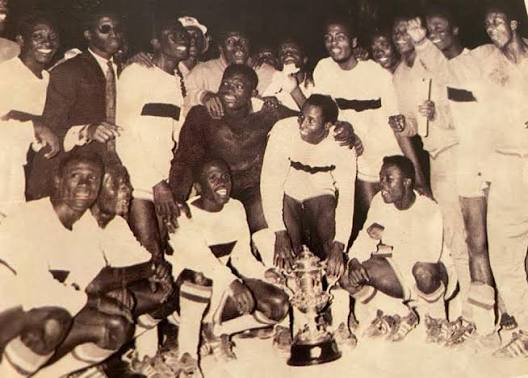
Ghana hosted the Africa Cup of Nations in 1963 and won the tournament. The victory was a landmark moment. It announced Ghana as a football power and gave the young nation a sense of achievement on the international stage.
The team played with flair and discipline. It was built around players who were household names in Ghana, men who had grown up in the local leagues and understood each other’s game.

1965: Defending the Crown
Two years later, in Tunisia, Ghana won the Africa Cup of Nations again. The team defended its title with a blend of experience and new talent. The 1965 triumph confirmed that the 1963 victory was not a fluke.
In the same era, Ghana came close to qualifying for the World Cup and competed in the Olympic football tournament. The foundations of a great footballing nation were being laid.
The Pain of Near-Misses
The late 1960s and early 1970s brought frustration. Ghana reached the final of the Africa Cup of Nations in 1968 and 1970 but lost on both occasions. The team was still among the best in Africa, but the ultimate prize proved elusive.
During this period, Ghanaian football was affected by political changes. The fall of Nkrumah in 1966 and subsequent instability affected many institutions, including sport. Yet the talent pool remained deep.
The 1978 and 1982 Triumphs
1978: Winning on Home Soil
Ghana hosted the Africa Cup of Nations again in 1978. The Black Stars, led by a generation of gifted players, won the tournament. The victory was celebrated across the country and restored the team’s place at the summit of African football.
1982: The Fourth Crown
The 1982 Africa Cup of Nations, held in Libya, produced Ghana’s fourth title. It was a triumph built on resilience and tactical intelligence. The team navigated a difficult field and lifted the trophy once again.
The 1982 victory remains the last time Ghana has won the Africa Cup of Nations. For more than four decades since, the Black Stars have chased a fifth title without success.
The Drought and Decline
The period from the mid-1980s through the 1990s was difficult for Ghanaian football. The national team struggled to qualify for major tournaments. Domestic football faced challenges, and many top players moved abroad, weakening the local game.
Ghana did not win the Africa Cup of Nations during this period. In fact, the team sometimes failed to qualify for the tournament at all. For a nation accustomed to continental success, this was a painful decline.
Yet even in these lean years, there were bright spots. Ghana won the FIFA Under-17 World Championship in 1991 and 1995, producing a generation of talented players who would later lead the senior team.
The Revival: The Early 2000s
The turn of the millennium brought new hope. A new generation of players, many of them from the successful youth teams of the 1990s, began to make their mark.
The Black Stars qualified for the Africa Cup of Nations in 2000 and reached the quarter-finals. In 2002, the team performed creditably. But the real breakthrough was still to come.
In 2004, Ghana qualified for the Olympics and later made history by qualifying for the FIFA World Cup for the first time.
The World Cup Era
2006: The First World Cup
Ghana’s qualification for the 2006 FIFA World Cup in Germany was a watershed. The Black Stars had finally reached the biggest stage in world football.
The team, led by captain Stephen Appiah and featuring players like Michael Essien, Sulley Muntari, and Asamoah Gyan, performed admirably. Ghana advanced from the group stage and reached the second round, where the team lost to Brazil. The performance earned respect and announced Ghana as a serious football nation.
2010: The Quarter-Final Run
The 2010 World Cup in South Africa produced Ghana’s greatest moment on the global stage. The Black Stars reached the quarter-finals, equalling the best result by an African team at the time.
The journey included a dramatic victory over the United States in the round of 16 and a heartbreaking quarter-final loss to Uruguay. The match is remembered for Luis Suárez’s deliberate handball on the goal line and Asamoah Gyan’s missed penalty in the final moments. The pain of that night still lingers for many Ghanaians.
2014: Disappointment and Internal Strife
The 2014 World Cup in Brazil was overshadowed by internal problems. Disputes over bonuses and team management became public. The team performed below expectations and exited in the group stage. The tournament exposed deep issues in the administration of Ghanaian football.
2022: A New Generation
Ghana returned to the World Cup in 2022 in Qatar with a younger squad. The team competed hard but did not advance beyond the group stage. The tournament marked a transition to a new generation of players.
The Africa Cup of Nations Near-Misses
Since the last AFCON triumph in 1982, Ghana has come close on several occasions without winning.
In 1992, Ghana reached the final but lost on penalties to Côte d’Ivoire. In 2010, the team reached the final again but lost to Egypt. In 2015, Ghana reached yet another final, this time losing to Côte d’Ivoire on penalties.
These near-misses have become part of the Black Stars’ modern story: a team that consistently contends but cannot quite cross the line. The wait for a fifth title continues.
The Legendary Players
The history of the Black Stars is written in the careers of its great players.
Osei Kofi
Osei Kofi was a star of the 1960s, known for his pace, skill, and goalscoring. He was a key figure in the early AFCON triumphs and remains one of Ghana’s most celebrated footballers.
Abedi Pele
Abedi Ayew, known as Abedi Pele, was one of Africa’s greatest players. He won the Africa Cup of Nations with Ghana in 1982 and later starred for Marseille in France, winning the UEFA Champions League in 1993. His elegance and creativity made him a legend.
Tony Yeboah
Tony Yeboah was a powerful striker who made his name in Germany and England. His goals for Eintracht Frankfurt and Leeds United are still remembered. He brought international recognition to Ghanaian talent in the 1990s.
Stephen Appiah
Stephen Appiah captained the Black Stars during the 2006 and 2010 World Cup campaigns. His leadership and composure in midfield made him one of Ghana’s most respected captains.
Michael Essien
Michael Essien was a dynamic midfielder who starred for Chelsea in England. His energy, power, and versatility made him one of the best African players of his generation.
Asamoah Gyan
Asamoah Gyan is Ghana’s all-time leading scorer at the World Cup and one of the team’s most important players of the modern era. His career was marked by spectacular goals and memorable moments, including the penalty miss in 2010 that defined an era of near-miss.
The Role of Politics and Administration
The history of the Black Stars cannot be separated from politics and administration.
Successive governments have supported the team financially, especially for major tournaments. This support has been essential, but it has also created tensions. Who controls the team? Who pays the bonuses? Who is accountable when things go wrong?
The 2018 corruption scandal, exposed by an investigative documentary, revealed deep problems in the administration of Ghanaian football. The GFA was dissolved, and reforms followed. The scandal damaged public trust and forced a reckoning with how the game was run.
The Fans
The story of the Black Stars is also the story of the fans.
Ghanaians support the team with remarkable passion. Matches bring people together across ethnic, religious, and political lines. The team is one of the few institutions that can unite the country.
But the passion cuts both ways. When the team fails, criticism is intense. The expectations placed on the Black Stars are enormous, and the players carry the weight of a nation’s hopes.
The Present and Future
Today, the Black Stars are in a period of transition. A new generation of players has emerged, many of them born in Europe to Ghanaian families. The team continues to compete in AFCON and World Cup qualifiers, chasing the success that has eluded it for decades.
The challenge is to build a team that honours the legacy of the past while adapting to the realities of modern football. That means better administration, stronger development pathways, and a clearer sense of identity.
Common Misconceptions
“Ghana has always been a World Cup team”
No. Ghana first qualified for the World Cup in 2006. Before that, the team had not reached the tournament despite several attempts.
“The Black Stars were named after a star player”
The name comes from the black star in Ghana’s flag, not from any individual.
“Ghana has never been competitive in African football”
Ghana is one of the most successful nations in AFCON history, with four titles. The recent wait for a fifth title does not erase that record.
“The 2010 World Cup was a failure because Ghana did not win”
Reaching the quarter-finals was a historic achievement. The pain of the Uruguay match should not obscure the scale of the accomplishment.
“The current team is worse than past teams”
Comparisons across eras are difficult. The game has changed, and the challenges are different. The current team faces its own pressures and has its own strengths.
Frequently Asked Questions
When did Ghana first win the Africa Cup of Nations?
Ghana first won the tournament in 1963, when the country hosted the event.
How many times has Ghana won AFCON?
Ghana has won the Africa Cup of Nations four times: 1963, 1965, 1978, and 1982.
What is Ghana’s best World Cup result?
Ghana reached the quarter-finals in 2010, the best result by the Black Stars.
Who is Ghana’s all-time leading World Cup scorer?
Asamoah Gyan is Ghana’s all-time leading scorer at the World Cup with six goals.
Why has Ghana not won AFCON since 1982?
There is no single reason. The team has reached several finals but lost narrowly. Changes in African football, administrative challenges, and the fine margins of tournament play all contribute.
Who are the most famous Black Stars players?
Famous players include Abedi Pele, Tony Yeboah, Stephen Appiah, Michael Essien, Asamoah Gyan, and many others from different eras.
Does the government run the Black Stars?
The Ghana Football Association runs the team, but the government provides significant funding and support. The relationship is complex and has sometimes been contentious.
What to Remember
The history of the Black Stars is not just a record of matches and trophies. It is a story about Ghana itself — its hopes, its struggles, its brilliance, and its disappointments.
The team has given Ghanaians moments of unforgettable joy: the AFCON triumphs, the World Cup run of 2010, the goals that made the country erupt. It has also given moments of pain: missed penalties, administrative failures, and the long wait for a fifth continental title.
Through it all, the Black Stars remain a mirror of the nation. They reflect Ghana’s talent, its complexity, and its enduring hope that the best is still to come.
The next time you watch the Black Stars play, remember that you are watching history unfold — a history that began before independence and continues with every match.
Source: The Accra Daily Mail

Samuel Kwame Boadu is a Ghanaian media entrepreneur and storyteller with a passion for amplifying urban voices and uncovering everyday truths. He is the Editor-in-Chief and Founder of The Accra Daily Mail, a dynamic digital platform dedicated to capturing the pulse of Ghana’s capital—its people, culture, challenges, business, sports and innovations.