












Modern football runs on money that flows from three main pipelines: television screens, corporate boardrooms, and stadium turnstiles. At the elite level, the game has become a multi-billion-dollar entertainment industry, with European clubs alone generating over €30 billion in annual revenue . But the sources of that wealth are not evenly distributed, and understanding where the money actually comes from explains why a Premier League club can spend more on one player than an entire African league generates in a year.
Quick Facts
-
European club revenue: Projected to exceed €30 billion for the first time in 2025 .
-
Premier League dominance: English top-flight clubs generated £6.8 billion in 2024/25, with commercial revenue (£2.4bn) the largest single stream .
-
Real Madrid’s record: The Spanish giant became the first sports organization to surpass €1.2 billion in operating revenue .
-
FIFA’s cycle revenue: Expected to top US$15 billion for the 2023-2026 cycle, driven largely by the World Cup .
-
Ghana’s lifeline: Each Ghana Premier League club received GH¢1 million under a new broadcast deal, a fraction of what European clubs earn from a single matchday .
The Three Pillars of Football Finance
Across the global game, club revenue comes from three primary sources: matchday income (tickets, hospitality, stadium tours), broadcast revenue (television and streaming rights), and commercial revenue (sponsorships, kit deals, merchandising, and increasingly, real estate and entertainment).
The balance between these pillars has shifted dramatically. For Europe’s elite, commercial income has become the largest and fastest-growing stream. Deloitte’s analysis of Premier League clubs found that commercial revenue rose 13% to £2.4 billion in 2024/25, with the “big six” clubs accounting for nearly three-quarters of that total . Matchday revenue surpassed £1 billion for the first time, while broadcast revenue stood at £3.4 billion .
Real Madrid illustrates the extreme end of this model. The club’s renovated Santiago Bernabéu generated €363 million in a single season, more than double its pre-renovation income, through premium hospitality, stadium experiences, and personal seat licences . Its commercial operations brought in even more, driven by sponsorship renewals and new partnerships.

Broadcast: The Engine of the Premier League
The Premier League’s financial power rests on its broadcast deals. In 2024/25, English clubs earned £3.4 billion from television rights alone, a figure that is expected to rise further with a new domestic rights agreement worth £6.7 billion .
This wealth is distributed through a central revenue system. Every club receives an equal share of domestic and international broadcast money—approximately £99.9 million in 2025/26—plus merit payments based on league position and facility fees based on how often they are televised . The result is that even the bottom-placed club earns more from television than most clubs in other European leagues generate from all sources combined.
Commercial: The New Frontier
Elite clubs are no longer content to rely on broadcast money. They are building brands, developing real estate, and turning stadiums into year-round entertainment destinations.

Deloitte’s Tim Bridge noted that “the presence of on-site breweries, hotels and restaurants is now commonplace and illustrates a strategic move to diversify income and create year-round entertainment destinations” . Clubs are monetizing their brand through global sponsorships, retail operations, and digital content. Real Madrid’s marketing revenue rose 6% in 2025-26, driven by new sponsorship agreements .
FIFA and UEFA: The Governing Bodies’ Cut
The money does not only flow to clubs. FIFA, football’s global governing body, generates billions from its tournaments. The 2026 World Cup alone helped push FIFA’s projected revenue for the 2023-2026 cycle to over US$15 billion . Most of this comes from broadcast rights (budgeted at over $4 billion) and ticketing and hospitality (which surpassed $2 billion in contracted sales before the tournament even began) .
UEFA, which runs the Champions League and European Championship, distributes substantial sums to clubs participating in its competitions. Premier League clubs earned £474 million from UEFA distributions in 2024/25, a 22% increase driven by the expanded Champions League format.

The Ghanaian Reality: A Different Economy
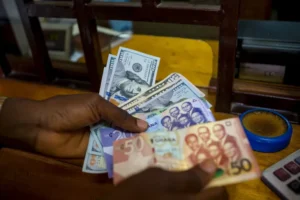
The financial model that sustains European football does not exist in Ghana. The Ghana Premier League has operated without a headline sponsor for seven years . Clubs rely on modest broadcast payments—GH¢1 million each under a new deal with Adesa Productions—government support, and player sales .
The contrast is stark. While Premier League clubs earn £3.4 billion from broadcast rights, Ghana’s entire league receives a fraction of that from its broadcast partner. The GFA has described the GH¢1 million per club as a “minimum payment” designed to strengthen financial stability, but critics note that it is more akin to corporate social responsibility than a commercial investment .
At the continental level, the Confederation of African Football (CAF) has increased its annual support to member associations to $700,000, up from $200,000 in 2021. This funding is intended to strengthen administration, develop youth programmes, and support domestic leagues. But it is a fraction of what UEFA distributes to its members.
Frequently Asked Questions
Where does most of the money in football come from?
At the elite level, the three main sources are broadcast rights, commercial revenue (sponsorships and merchandising), and matchday income. In the Premier League, commercial revenue is now the largest stream, followed by broadcast and matchday.
How much do Premier League clubs make from TV?
Premier League clubs earned £3.4 billion in broadcast revenue in 2024/25. Each club receives an equal share of approximately £99.9 million, plus merit and facility fees .
How does Real Madrid make so much money?
Real Madrid generates revenue from three main areas: marketing and commercial activities, stadium operations (the renovated Bernabéu), and broadcasting and competition income. The club surpassed €1.2 billion in operating revenue in 2025-26.
How does FIFA make money?
FIFA earns primarily from broadcast rights for the World Cup, ticketing and hospitality, and sponsorship deals. The 2023-2026 cycle is expected to generate over US$15 billion .
Why is there such a gap between European and African football finances?
European leagues benefit from massive collective broadcast deals, global brand recognition, and diversified business models. African leagues struggle with limited broadcast revenue, lack of sponsorship, and infrastructure challenges. The Ghana Premier League, for example, has not had a headline sponsor for seven years.
How do Ghanaian clubs survive financially?
Ghanaian clubs rely on modest broadcast payments (GH¢1 million per club), government support, matchday income, and player sales. Many clubs view selling players abroad as their primary revenue source.
What does CAF do with its money?
CAF distributes annual grants to its 54 member associations (now $700,000 each) to support administration, grassroots development, youth programmes, and domestic league strengthening.
Will the financial gap between European and African football ever close?
The gap is widening, not closing. European revenues continue to grow, while African leagues face structural challenges in attracting sponsorship and broadcast investment. Without significant reform and investment, the disparity is likely to persist.
What to Remember
Modern football’s wealth flows from three main sources: broadcast rights, commercial deals, and matchday income. At the elite level, these streams generate billions—Real Madrid alone surpasses €1.2 billion annually, and the Premier League collectively earns £6.8 billion.
The governing bodies also take a significant cut. FIFA’s World Cup generates over US$15 billion per cycle, and UEFA distributes hundreds of millions to clubs in its competitions.
But this wealth is concentrated in Europe. The Ghana Premier League operates on a fraction of these sums, with clubs receiving GH¢1 million each from broadcast deals and relying on player sales to survive. The gap between the global game’s financial giants and its developing leagues is not just about money—it is about structure, infrastructure, and commercial appeal.
For ordinary Ghanaians, the practical takeaway is that the football they watch on television is funded by forces—broadcast contracts, sponsorship empires, stadium entertainment—that have no equivalent in the domestic game. Understanding that gap explains why Ghanaian clubs struggle to keep their best players and why the league’s financial future depends on building a product that sponsors and broadcasters are willing to pay for.
Source: The Accra Daily Mail

Samuel Kwame Boadu is a Ghanaian media entrepreneur and storyteller with a passion for amplifying urban voices and uncovering everyday truths. He is the Editor-in-Chief and Founder of The Accra Daily Mail, a dynamic digital platform dedicated to capturing the pulse of Ghana’s capital—its people, culture, challenges, business, sports and innovations.