

Ask most Ghanaians what the country’s biggest economic problem is, and you will hear familiar answers: inflation, unemployment, the falling cedi, high taxes, or government debt. These are real problems. They affect daily life in visible ways. But they are also symptoms of something deeper.
Beneath the headlines about prices and exchange rates lies a more fundamental issue: the structure of Ghana’s economy has remained largely unchanged for decades. The country exports raw materials, imports finished goods, relies heavily on informal work, and struggles to convert its natural wealth into broad-based prosperity. Until that underlying structure changes, the familiar problems will keep returning.
This article argues that Ghana’s biggest economic problem is structural, not cyclical. It is not simply about what the government did last year or what the central bank will do next month. It is about the way the economy is organised — and the uncomfortable fact that this organisation has proven remarkably difficult to change.
Quick Facts
-
Ghana’s economy has historically depended on exports of primary commodities: gold, cocoa, timber, and more recently oil.
-
Manufacturing accounts for a relatively small share of GDP compared with services and agriculture.
-
A large proportion of Ghanaian workers are in the informal sector, outside formal employment contracts and social protection systems.
-
Economic growth in Ghana has not always translated into equivalent gains in employment or household incomes.
-
Ghana imports a significant share of its food, fuel, machinery, and consumer goods.
-
Periods of high growth driven by commodity exports have often been followed by fiscal difficulties when commodity prices fall.
-
Structural economic transformation — moving labour and resources from low-productivity to high-productivity sectors — remains a central development challenge.
The Economy Looks Busy, But the Structure Is Weak
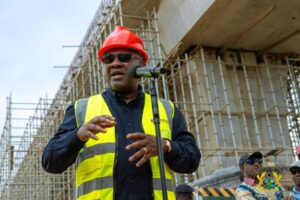
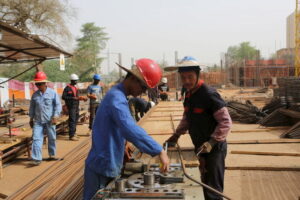
On the surface, Ghana’s economy appears active. Markets are crowded. Construction is visible in the cities. Services are growing. Mobile money transactions run into billions of cedis. Yet the underlying structure has not changed as much as the surface suggests.

The economy remains heavily dependent on a small number of export commodities. Gold, cocoa, and oil dominate export earnings. These commodities are subject to global price swings that Ghana does not control. When prices are high, the economy looks strong. When prices fall, the pressure on the cedi, the budget, and the balance of payments becomes severe.
This is an old problem. Ghana has been exporting raw materials since the colonial period. The difference is that the country’s population has grown significantly, and expectations have risen. Exporting raw materials may have been sufficient for a small economy in the 1950s. It is not sufficient for a country of over 30 million people with aspirations for middle-income status and beyond.
The Missing Middle: Manufacturing
Manufacturing is often called the engine of economic transformation. It creates jobs, adds value to raw materials, builds technical skills, and links to other sectors. Countries that have moved from poverty to prosperity — from South Korea to China to Mauritius — typically did so by building manufacturing capacity.

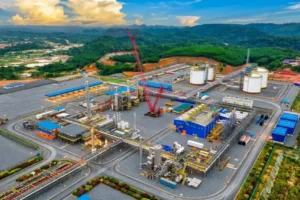
Ghana’s manufacturing sector has struggled. Its share of GDP remains small. The reasons are well known: unreliable and expensive electricity, high interest rates, poor infrastructure, limited access to long-term finance, competition from cheap imports, and a difficult business environment.
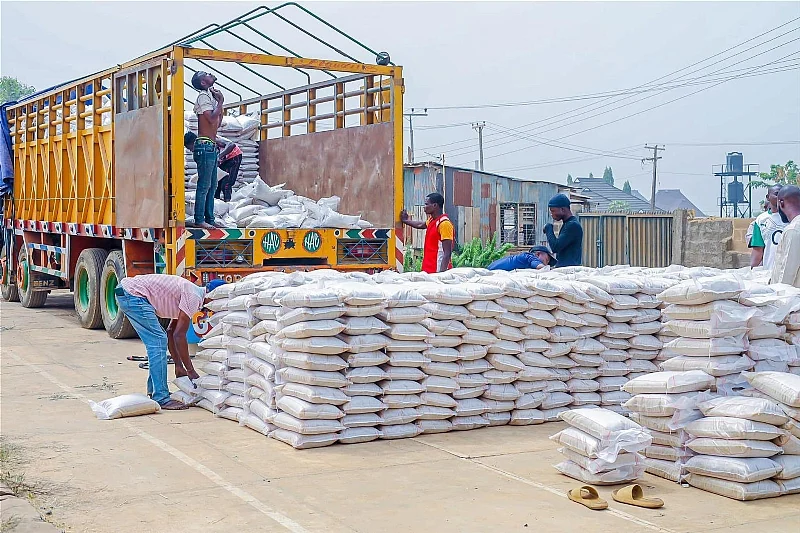
The absence of a strong manufacturing base has consequences. It means Ghana exports raw materials and imports the finished products made from those very materials. Cocoa beans leave the country; chocolate comes back. Gold leaves; jewellery comes back. Timber leaves; furniture comes back. At every stage, the value added — and the jobs associated with that value — is captured elsewhere.
This is not a new observation. Successive governments have promised industrialisation. Policies have been announced, industrial zones have been proposed, and some factories have been built. But the manufacturing sector has not grown at the scale needed to transform the economy.

The Informal Sector: A Cushion and a Constraint
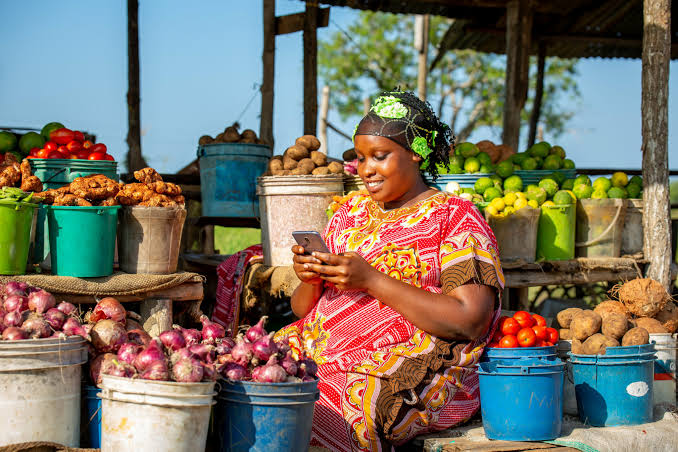
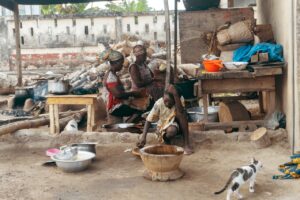
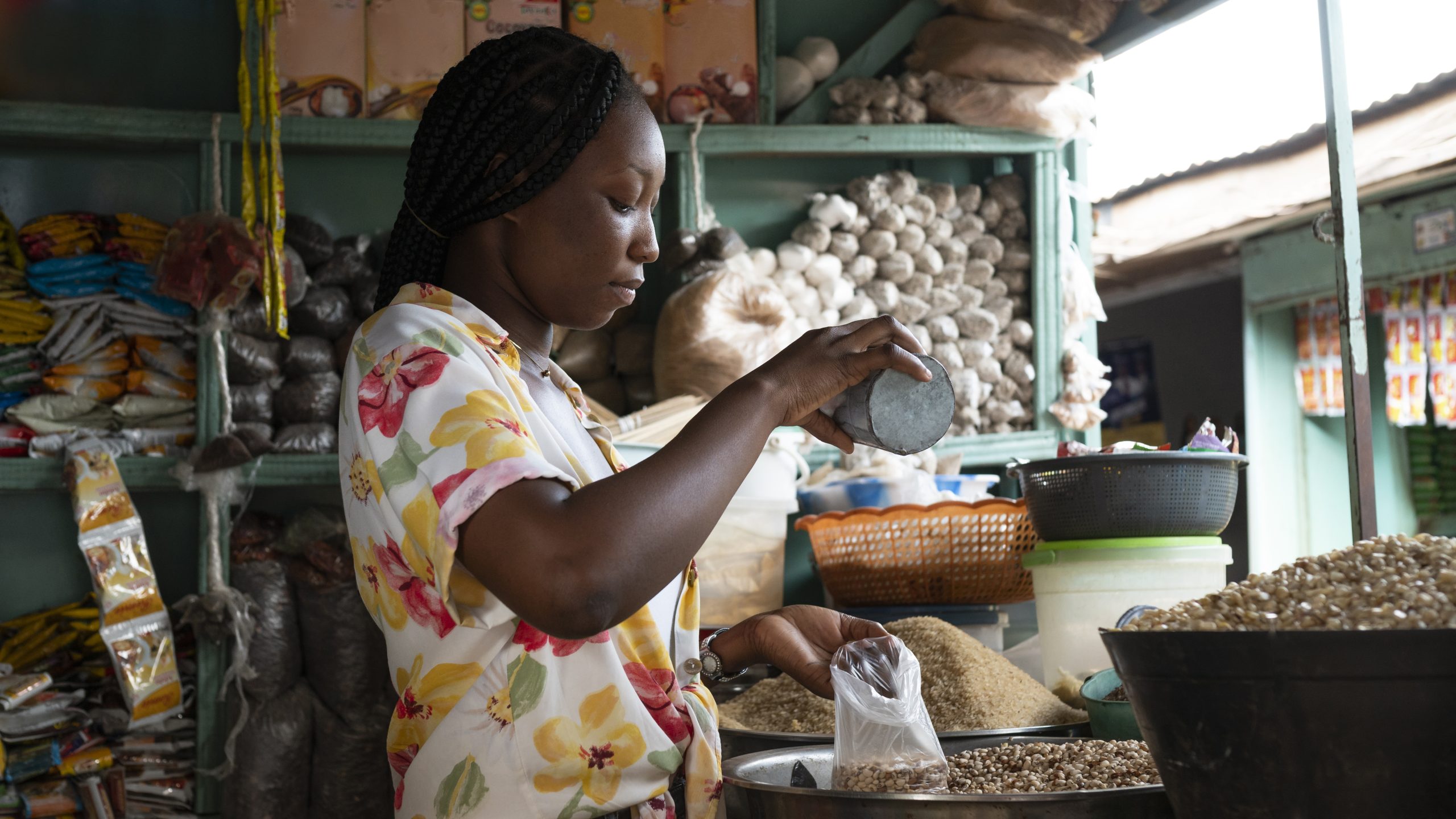
Ghana’s informal sector is vast. It includes market traders, artisans, drivers, smallholder farmers, tailors, mechanics, and countless other livelihoods. The informal sector absorbs labour that the formal economy cannot, provides income for millions, and keeps the social fabric intact.
But the informal sector also reflects a structural weakness. Informal businesses often operate at low productivity, with limited access to credit, no formal contracts, and little ability to scale. Workers in the informal sector usually lack pensions, health insurance, and legal protections. Their incomes are volatile, and their contributions to government revenue are limited.
The size of the informal sector is both a cushion and a constraint. It cushions the economy against unemployment shocks because people can always find something to do. But it constrains the economy’s ability to grow productively because so much activity remains outside the formal systems that support investment, innovation, and scale.
Growth Without Transformation
One of the most important lessons from Ghana’s recent economic history is that growth alone is not enough. What matters is the composition of growth.
An economy can grow because commodity prices rise, even if nothing fundamental has changed. It can grow because the services sector expands, even if most of that expansion is in low-productivity activities. It can grow because population increases, pushing up consumption.
Transformative growth is different. It involves moving labour and resources from low-productivity activities to high-productivity ones. It involves building new capabilities, deepening value chains, and creating jobs that pay better. Transformative growth changes the economy’s structure.
Ghana has experienced periods of growth without enough transformation. GDP has risen, but the structure of exports, the strength of manufacturing, and the productivity of the workforce have not changed as much. This is why growth has not consistently translated into the kind of jobs and incomes that ordinary people need.
The Vulnerability Cycle
The structural weaknesses create a familiar cycle.
When commodity prices are high, export earnings rise. The cedi stabilises, government revenue improves, and the economy appears healthy. But the underlying structure has not changed. The country is still dependent on commodities.
When commodity prices fall — or when global conditions tighten — the vulnerabilities appear. Export earnings decline. Pressure on the cedi increases. Government revenue falls. Debt becomes harder to service. Inflation rises. The cycle of crisis and adjustment begins.
This cycle has repeated itself in Ghana’s history, with variations. The details differ, but the pattern is the same: a commodity boom creates confidence, a bust reveals vulnerability, and the economy adjusts painfully until the next boom.
Breaking the cycle requires changing the structure, not just managing the symptoms. That means building an economy that is less dependent on raw material exports, more diversified, and better able to withstand global shocks.
Why Structural Change Is So Difficult
If structural change is the answer, why has it been so hard to achieve?
Short-Term Political Incentives
Structural transformation takes time. The benefits may not appear within a single political term. The costs — disruption, investment, reform — are immediate. Politicians facing elections every four years have strong incentives to focus on short-term visible projects rather than long-term structural change.
The Power of Incumbents
The existing structure benefits some powerful interests. Exporters of raw materials, importers of finished goods, and those who profit from the status quo have little incentive to support change. Structural transformation threatens their positions, and they resist.
Weak Institutions
Structural change requires strong institutions: a capable civil service, an effective legal system, reliable infrastructure, and credible policy frameworks. Where institutions are weak, even well-designed policies fail in implementation.
The Difficulty of Coordination
Transformation requires coordination across many areas: education, infrastructure, energy, finance, trade policy, and industrial policy. If these are not aligned, efforts in one area are undermined by failures in another. A factory built without reliable power will fail. A trained workforce without jobs will emigrate. A new industry without access to credit will collapse.
The Gap Between Policy and Execution
As argued elsewhere, Ghana does not suffer from a shortage of ideas. The problem is execution. Policy documents are produced, but implementation lags. The gap between what is announced and what is delivered is wide, and it undermines every effort at transformation.
What Structural Change Would Look Like
Value Addition in Commodities
Instead of exporting raw cocoa beans, Ghana could process more cocoa into chocolate, cocoa butter, and other products. Instead of exporting raw gold, Ghana could refine and produce jewellery. Instead of exporting crude oil, Ghana could build refining and petrochemical capacity. Each step up the value chain creates jobs and retains more value at home.
A Stronger Manufacturing Base
Manufacturing needs reliable and affordable energy, access to finance, good infrastructure, and a skilled workforce. Building this base requires sustained investment and policy consistency over many years. It also requires protecting infant industries from unfair competition while holding them accountable for performance.
Agricultural Modernisation
Agriculture still employs many Ghanaians but contributes a modest share of GDP. Modernising agriculture — through irrigation, improved inputs, mechanisation, and better market access — can raise productivity and incomes while reducing food imports.
Formalisation of the Informal Sector
Bringing more businesses into the formal sector is not just about taxation. It is about access to credit, legal protection, and the ability to scale. Formalisation should be made attractive through benefits, not just obligations. This requires simplifying registration, reducing costs, and providing real incentives.
Investment in Human Capital
Structural transformation requires skilled workers. Education and training must align with the needs of a modernising economy. This means investing not just in enrolment but in quality, and not just in university education but in technical and vocational skills.
Infrastructure and Energy
Reliable power, transport, and digital infrastructure are prerequisites for transformation. Ghana has made progress in some areas, but gaps remain. Closing those gaps requires sustained investment and maintenance.
The Role of Ordinary Citizens
Structural transformation is not only the business of government. Citizens shape the economy through their choices, their work, and their demands.
Supporting Local Products
Every purchase is a vote. Buying Ghanaian products, when they are competitive, supports local businesses and jobs. This does not mean accepting poor quality; it means giving local producers a fair chance and demanding improvement.
Holding Leaders Accountable
Citizens can ask for more than short-term projects. They can demand policies that build productive capacity, create decent jobs, and diversify the economy. They can reject the idea that a new road or a new building is a substitute for structural change.
Building Skills and Enterprises
Individuals can invest in their own capabilities. Learning new skills, starting businesses, and joining formal networks all contribute to the broader transformation of the economy.
Understanding the Issues
One of the most important things citizens can do is understand the structural issues. When the cedi falls, or inflation rises, it is tempting to look for a simple culprit. But the real causes are often structural. An informed public is better equipped to demand the right solutions.
Common Misconceptions
“The economy is doing badly because of one government or another”
Governments matter, but the structural problems predate and transcend any single administration. Blaming one government for problems decades in the making is convenient but misleading.
“If we just had more money, everything would be fine”
Money alone cannot fix structural problems. What matters is how money is invested, what institutions exist, and whether policies are implemented. Many resource-rich countries have struggled despite significant revenues.
“Ghana is too small to industrialise”
Many small countries have industrialised successfully. The issue is not size but strategy, institutions, and execution.
“The informal sector is a problem to be solved”
The informal sector is a source of resilience and entrepreneurship. The goal is not to eliminate it but to help it formalise where possible and to improve productivity within it.
“Structural change can wait”
Every year of delay makes the task harder. The population is growing, the environment is under pressure, and global conditions are shifting. The cost of inaction rises over time.
Frequently Asked Questions
What is structural economic transformation?
It is the process of shifting an economy from low-productivity activities, such as subsistence agriculture and raw material extraction, to high-productivity activities, such as manufacturing, agro-processing, and modern services.
Why does Ghana export raw materials instead of processing them?
Processing requires investment, energy, skills, and infrastructure. Ghana has faced challenges in all these areas. There have been efforts to add value, but they have not been sustained or scaled.
Is the informal sector a bad thing?
The informal sector provides income for millions and cushions the economy. But it also reflects low productivity and limited formal protections. The goal is to improve conditions within it and to help businesses grow into formality.
Why has manufacturing not taken off in Ghana?
Manufacturing has been constrained by expensive and unreliable energy, high interest rates, poor infrastructure, competition from imports, and limited access to finance. Policy instability has also discouraged investment.
Can Ghana feed itself?
Ghana has the natural resources to produce much more of its own food. Achieving greater self-sufficiency requires investment in irrigation, inputs, mechanisation, and market infrastructure.
What is the most important thing citizens can do?
Stay informed, support local businesses, hold leaders accountable for long-term results, and build their own skills and enterprises. Structural change is a collective effort.
What to Remember
Ghana’s biggest economic problem is not a single headline. It is not inflation, the cedi, or debt in isolation. It is the underlying structure of the economy — a structure that has proven resistant to change and that keeps reproducing the same vulnerabilities.
That structure can be changed. Other countries have done it. But it requires honesty about the nature of the problem, sustained effort over decades, and a willingness to look beyond short-term political cycles.
The next time the cedi falls or inflation rises, remember that these are symptoms. The disease is structural. And the treatment is transformation — slow, difficult, and absolutely necessary.
Source: The Accra Daily Mail

Samuel Kwame Boadu is a Ghanaian media entrepreneur and storyteller with a passion for amplifying urban voices and uncovering everyday truths. He is the Editor-in-Chief and Founder of The Accra Daily Mail, a dynamic digital platform dedicated to capturing the pulse of Ghana’s capital—its people, culture, challenges, business, sports and innovations.