











You have probably heard the term “artificial intelligence” many times. It appears in news headlines, job adverts, product descriptions, and political speeches. Some people say AI will transform Ghana’s economy. Others worry it will take away jobs. Many use AI-powered tools every day without realising it: when a phone suggests the next word while typing, when a banking app flags a suspicious transaction, or when a streaming service recommends a film.
Yet for all the talk, there is widespread confusion about what AI actually is. Is it a machine that thinks like a human? Is it a programme that follows instructions? Is it something to fear or something to embrace?
This article explains artificial intelligence in plain language. It focuses on what AI does, how it works in practice, where it is already being used in Ghana, and what its limits are. It is written for ordinary readers who want a clear understanding without hype or jargon.
Quick Facts
-
Artificial intelligence refers to computer systems designed to perform tasks that normally require human intelligence, such as recognising patterns, understanding language, or making decisions.
-
AI is not a single technology. It is a broad field that includes machine learning, natural language processing, computer vision, and other techniques.
-
Many everyday tools already use AI, including spam filters, mobile money fraud detection, voice assistants, and social media algorithms.
-
AI systems learn from data. The quality and quantity of that data heavily influence how well the system works.
-
AI does not “understand” the world the way humans do. It identifies patterns and makes predictions based on those patterns.
-
Ghana is seeing growing use of AI in sectors such as agriculture, health, finance, and education, though adoption remains at an early stage.
What Artificial Intelligence Actually Is
Artificial intelligence is a branch of computer science concerned with building systems that can perform tasks that would normally require human intelligence. These tasks include recognising speech, identifying objects in images, translating languages, making recommendations, and playing games.

The key word is “perform.” AI does not think or feel. It processes data and produces outputs. A spam filter does not “understand” that an email is fraudulent in the way a person understands it. It has learned to recognise patterns — certain words, sender addresses, or formatting features — that are statistically associated with spam. When a new email arrives, the system compares it against those patterns and decides whether it is likely to be spam.
This distinction matters. Much of the confusion and fear around AI comes from the assumption that these systems have human-like understanding. They do not. They are powerful pattern-recognition tools, but they are tools nonetheless.
How AI Works: The Simple Version
There are different approaches to building AI systems, but the most important in recent years is machine learning.

In traditional programming, a human writes a set of rules, and the computer follows them exactly. If you want a programme to identify a cat in a photo, you would have to write rules describing what a cat looks like: pointed ears, whiskers, fur, four legs. This approach works poorly because cats look very different depending on angle, breed, lighting, and posture.
Machine learning takes a different approach. Instead of writing rules, you show the computer thousands or millions of examples and let it find the patterns itself. The programme adjusts its internal parameters until it can correctly identify cats in images it has never seen before. This is called training.
The trained system is called a model. The model is not a set of rules written by a human. It is a mathematical structure that has learned to recognise patterns from data.

Machine learning requires three things: data, computing power, and algorithms. Data provides the examples. Computing power processes the examples. Algorithms are the mathematical procedures that adjust the model as it learns.
Types of AI You Should Know
Narrow AI
Narrow AI, also called weak AI, is designed to perform a specific task. A system that detects fraud in mobile money transactions is narrow AI. It cannot compose music or diagnose malaria. It does one thing, and it does it well within its defined scope.
Almost all AI in use today is narrow AI. This includes voice assistants, recommendation systems, facial recognition, self-driving car components, and language translation tools.
General AI
General AI, sometimes called strong AI, refers to a hypothetical system that can understand, learn, and apply knowledge across a wide range of tasks, much like a human. Such a system does not exist. No one knows if it ever will.
It is important to keep this distinction in mind. When people imagine AI as a robot with human-like consciousness, they are thinking of general AI. What actually exists is narrow AI — powerful but specialised.
Generative AI
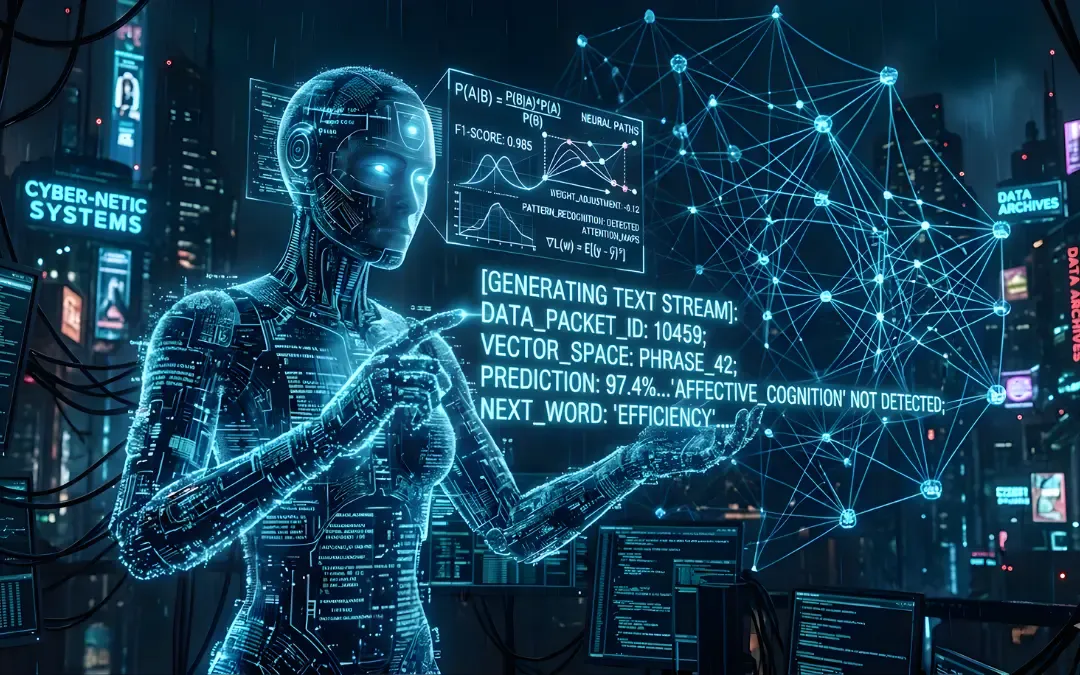
Generative AI is a type of narrow AI that creates new content, such as text, images, audio, or video. Tools like ChatGPT, DALL-E, and similar systems fall into this category. They generate outputs by predicting what should come next based on patterns learned from large amounts of data.
Generative AI has attracted enormous attention because it can produce essays, answer questions, create images, and write code. But it has important limitations. It can produce plausible-sounding but incorrect information. It can reflect biases present in its training data. It does not “know” anything in the human sense.
Where AI Is Already Being Used in Ghana
Financial Services
The financial sector is one of the most active users of AI in Ghana. Banks and mobile money operators use AI systems to detect fraud, assess credit risk, and automate customer service.
Fraud detection is particularly important in mobile money, where large volumes of transactions occur every day. AI systems monitor these transactions in real time, flagging unusual patterns that may indicate fraud. When you receive a message asking you to confirm a transaction, there is often an AI system behind it.
Some financial institutions also use AI to evaluate loan applications. Instead of relying solely on traditional credit history, which many Ghanaians lack, these systems analyse alternative data such as mobile money usage, airtime purchases, and utility payments to estimate creditworthiness.
Agriculture
AI is being used in agriculture to help farmers make better decisions. Applications include satellite image analysis to monitor crop health, weather forecasting models to guide planting decisions, and pest detection systems that identify problems early.
Some projects in Ghana have explored using AI-powered tools to diagnose crop diseases from photos taken with smartphones. A farmer photographs a maize leaf, and the system identifies whether the plant is diseased and suggests possible treatments.
These tools are not yet widespread, but they point to how AI could support productivity in a sector that employs many Ghanaians.
Healthcare
AI is beginning to appear in healthcare settings. Applications include tools that help radiologists interpret X-rays, systems that predict disease outbreaks, and chatbots that provide health information.
In Ghana, researchers and startups have explored using AI to support malaria diagnosis, maternal health monitoring, and disease surveillance. Some of these efforts are pilot projects. Others are being integrated into larger health programmes.
It is important to note that AI does not replace doctors or nurses. It assists them by processing large amounts of data quickly and flagging cases that need attention.
Education
AI-powered tools are being used in education for personalised learning, automated grading, and language learning. Some students use generative AI tools to help with research and writing, though this raises questions about academic integrity.
In Ghana, access to AI tools remains unequal. Students in urban areas and well-resourced schools are more likely to encounter them than students in rural or under-resourced schools. This digital divide is a significant policy concern.
Public Services
Some government agencies and private organisations are exploring AI for public services. Applications include traffic management, birth and death registration, and analysing public data to improve service delivery.
These efforts are at an early stage, and transparency about their use is important. Citizens should know when AI systems are making decisions that affect their lives.
What AI Does Well
Processing Large Amounts of Data
AI excels at handling data that is too large or complex for humans to analyse manually. It can scan thousands of records in seconds, identify patterns, and flag anomalies. This is why it is so useful in fraud detection, medical imaging, and market analysis.
Recognising Patterns
AI is good at finding patterns that humans might miss. In weather forecasting, for example, AI models can identify relationships between ocean temperatures, wind patterns, and rainfall that improve predictions.
Automating Repetitive Tasks
AI can automate tasks that are repetitive and rule-based. In customer service, chatbots handle routine queries, freeing human agents for more complex problems. In data entry, AI systems extract information from forms and reduce manual work.
Making Predictions
AI systems are prediction machines. They predict what word should come next in a sentence, whether a transaction is fraudulent, or whether a crop is likely to fail. These predictions are based on patterns in data, not certainty.
What AI Does Not Do Well
Understanding Context
AI systems often fail when the context is unfamiliar or ambiguous. A language model can produce grammatically correct sentences but may miss cultural nuance, sarcasm, or the deeper meaning of a conversation.
Handling Bias
AI systems learn from data, and data reflects the world as it is, including its biases. If a hiring algorithm is trained on historical data in which men were promoted more often, it may learn to favour male candidates. If a facial recognition system is trained mostly on light-skinned faces, it may perform poorly on darker-skinned faces. These are real problems, and they require careful attention.
Explaining Decisions
Many AI systems, especially deep learning models, are often described as “black boxes.” They produce results, but explaining exactly why they made a particular decision can be difficult. This is a serious concern in areas like credit scoring, medical diagnosis, and criminal justice.
Being Truly Creative
Generative AI can produce text, images, and music that seem creative. But it does so by remixing patterns from existing data. It does not have original ideas, emotions, or experiences. Its outputs can be impressive, but they are not the product of understanding or intention.
Knowing When It Is Wrong
AI systems can be confidently wrong. A language model may produce a polished answer that is factually incorrect. A fraud detection system may flag a legitimate transaction. A crop disease detector may misidentify a harmless condition as serious. This is why human oversight remains essential.
The Data Question
AI depends on data. The quality of an AI system is only as good as the data it was trained on. If the data is incomplete, biased, or outdated, the system’s outputs will reflect those flaws.
In Ghana, data availability is uneven. Some sectors have rich data — mobile money transactions, for example — while others, such as smallholder agriculture, have much less structured data. Building AI systems that work well for Ghanaian conditions requires investment in data collection, digitisation, and local expertise.
There is also the question of whose data is being used and whether consent has been obtained. As AI becomes more common, data protection and privacy become more important. Ghana’s Data Protection Act establishes rules for handling personal data, and organisations using AI must comply with these rules.
Jobs and the Workforce
The most common fear about AI is that it will take jobs. The reality is more nuanced.
AI will automate some tasks. Jobs that involve repetitive, rule-based work are most at risk. This includes some data entry, customer service, and administrative roles. But AI also creates new tasks and new roles. People are needed to build, maintain, audit, and manage AI systems. People are needed to interpret AI outputs and make decisions.
The bigger challenge is transition. Workers whose jobs are displaced need support to develop new skills. Education systems need to prepare students for an economy where AI tools are common. This is not a problem that can be solved by individuals alone. It requires policy, investment, and planning.
The more immediate concern in Ghana is not mass unemployment caused by AI but unequal access to the benefits of AI. Those who can use AI tools effectively will gain advantages. Those who cannot will be left behind.
What AI Means for Ordinary Ghanaians
AI is not something that will arrive in the future. It is already here. You encounter it when your bank blocks a suspicious transaction, when your phone corrects your typing, when social media shows you content you are likely to engage with, and when a customer service chat responds to your query.
Understanding AI helps you use it wisely. It helps you recognise that a chatbot’s answer may be wrong, that a recommendation is based on your past behaviour, and that a decision made by an algorithm can be challenged.
It also helps you participate in public conversations. As Ghana debates how to regulate AI, how to use it in government, and how to prepare the workforce, citizens need to understand what is being discussed. You do not need to be a programmer to have an informed opinion.
Common Misconceptions
“AI thinks like a human”
No. AI processes data and identifies patterns. It does not have consciousness, emotions, or understanding. Saying it “thinks” is a metaphor, not a technical description.
“AI is always right”
AI systems make mistakes. They can be wrong, biased, or confused by unfamiliar situations. Their outputs should be checked, especially when important decisions are involved.
“AI will take all the jobs”
AI will change the nature of work, but it will not eliminate work. Some tasks will be automated, new tasks will emerge, and many jobs will change rather than disappear. The challenge is managing the transition fairly.
“AI is only for rich countries”
AI is being used in many African countries, including Ghana. The challenge is to ensure that AI tools are adapted to local conditions and that the benefits are shared broadly.
“AI is too complicated for ordinary people to understand”
The basic ideas behind AI are accessible. You do not need to understand the mathematics to understand what AI does, what it is good at, and what its limits are.
Frequently Asked Questions
What is the difference between AI and normal software?
Normal software follows explicit rules written by a programmer. AI systems learn patterns from data and make predictions based on those patterns. Some AI systems can improve their performance as they are exposed to more data.
Is AI used in mobile money in Ghana?
Yes. Mobile money operators and banks use AI systems to detect fraud, identify unusual transactions, and assess customer risk. Many of these systems operate in the background without users noticing.
Can AI replace teachers and doctors?
AI can support teachers and doctors by handling routine tasks and analysing data, but it cannot replace the human judgement, empathy, and ethical decision-making that these professions require.
How can I learn more about AI?
There are free online courses from reputable universities and organisations. You can also follow research from Ghanaian universities and technology hubs that are working on AI applications relevant to local conditions.
Is my data safe when AI systems use it?
Data protection is a real concern. Ghana’s Data Protection Act sets rules for how personal data must be handled. Organisations using AI must comply with these rules, but enforcement and public awareness remain challenges.
Should I trust a chatbot’s answer?
Chatbots can provide useful information, but they can also be wrong. For important matters — health, finance, legal issues — verify the information with a qualified professional.
Will AI make life better for ordinary Ghanaians?
AI has the potential to improve services, create new opportunities, and solve problems. But the benefits are not automatic. They depend on how the technology is adopted, regulated, and shared.
What to Remember
Artificial intelligence is not magic, and it is not a monster. It is a set of tools that allow computers to recognise patterns, make predictions, and perform tasks that once required human intelligence. These tools are already part of daily life in Ghana, from fraud detection in mobile money to crop monitoring in agriculture.
The most important thing to understand is that AI is powerful but limited. It can process huge amounts of data, but it does not understand what the data means. It can make predictions, but those predictions are only as good as the data and assumptions behind them. It can assist humans, but it cannot replace human judgement.
The question is not whether AI will be part of Ghana’s future. It will be. The question is whether Ghanaians understand it well enough to shape how it is used, who benefits, and what protections are put in place. That understanding starts with knowing what AI actually does — and what it does not.
Source: The Accra Daily Mail

Samuel Kwame Boadu is a Ghanaian media entrepreneur and storyteller with a passion for amplifying urban voices and uncovering everyday truths. He is the Editor-in-Chief and Founder of The Accra Daily Mail, a dynamic digital platform dedicated to capturing the pulse of Ghana’s capital—its people, culture, challenges, business, sports and innovations.