











Ashanti regional traders’ body says confrontations will persist until government enforces retail restrictions reserved for Ghanaians, exposing a decade-old policy failure with mounting economic and diplomatic costs
The closure of at least ten foreign-owned spare-parts shops at Kumasi’s Suame Magazine has moved from a flashpoint of local anger to a formal test of Ghana’s commitment to its own investment laws. The Ashanti Regional branch of the Ghana Union of Traders Associations (GUTA) has thrown its weight behind the lockouts, arguing that the government’s failure to enforce the Ghana Investment Promotion Centre Act of 2013 has created a parallel retail economy in which foreign nationals operate where the law says they should not. The dispute is not new. What is new is the willingness of a major trade association to publicly endorse direct action, and the speed with which National Security operatives moved to contain the fallout .
Key Developments
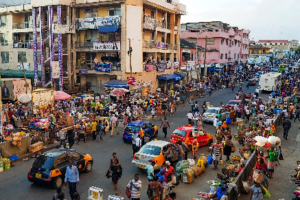
The confrontation unfolded at Suame Magazine, West Africa’s largest informal automotive repair and parts cluster, when artisans wearing red armbands locked shops operated predominantly by Nigerian traders and pasted notices on their doors. Video footage from the scene showed at least one individual believed to be a foreign trader being physically assaulted. The artisans accuse the foreign dealers of aggressive pricing that undercuts Ghanaian-owned businesses, and some allege the sale of counterfeit parts that damage the reputation of local trade .
GUTA’s Ashanti Regional Chairman, Anthony Oppong, framed the action as a symptom of a deeper governance failure. He told Adom News that the GIPA Act clearly reserves small-scale retail for Ghanaians and permits foreign investors to operate in wholesale and other designated categories. The problem, he argued, is not the law’s content but its selective enforcement. “If there is fairness and strict enforcement of the GIPA Act, there will be peace and sanity in the trading sector,” Oppong said, warning that similar confrontations will recur unless authorities act .

National Security operatives intervened to prevent further escalation and have convened a meeting with leaders of the affected groups. The affected foreign dealers have not issued a formal response, and no arrests have been reported .
The legal architecture at the centre of the dispute is unambiguous. Section 27(1) of the GIPC Act, 2013 (Act 865) prohibits non-citizens and enterprises not wholly owned by Ghanaians from engaging in “the sale of goods or provision of services in a market, petty trading or hawking or selling of goods in a stall at any place” . Foreigners may engage in trade only if the enterprise invests at least $1 million and employs a minimum of twenty Ghanaians, among other conditions. The law applies equally to all non-Ghanaians, though enforcement actions have disproportionately involved Chinese and Nigerian traders in practice .
Analysis and Implications
The Suame confrontation is best understood not as a sudden eruption of xenophobia but as the predictable outcome of a decade of regulatory drift. When a law exists on the books but is not enforced, the space it was meant to govern becomes contested territory. Ghanaian traders have watched foreign nationals establish retail operations in reserved sectors for years, and their frustration has periodically boiled over—at Abossey Okai in Accra in 2025, and at Suame in earlier episodes including 2019 . Each time, the pattern repeats: direct action, security intervention, promises of dialogue, and then silence until the next flashpoint.

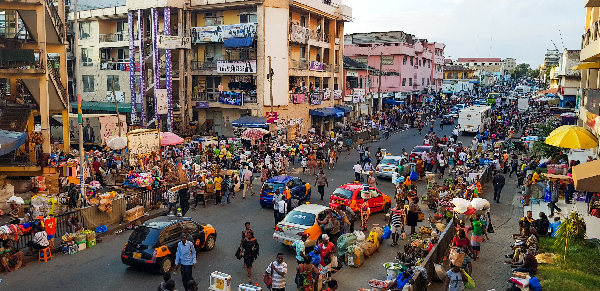
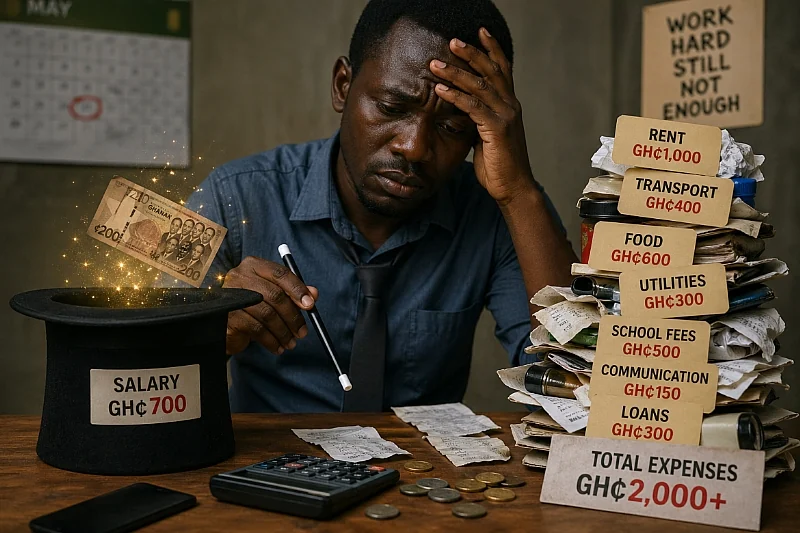
The economic stakes are substantial. Suame Magazine is not a marginal market. It is an industrial ecosystem employing tens of thousands of artisans, apprentices and traders, and it serves as a primary node in Ghana’s automotive supply chain. When local traders argue that foreign competitors are underpricing them, the claim deserves scrutiny rather than dismissal. Pricing advantages can stem from lower sourcing costs, economies of scale, or—as the artisans allege—counterfeit goods. But they can also stem from foreign traders operating with lower overheads precisely because they are evading the capital requirements the law imposes on legitimate foreign investors. A Nigerian trader selling spare parts from a small stall without having deposited $1 million or hired twenty Ghanaians is not competing fairly; he is operating outside the legal framework entirely.
The counterargument—that enforcement would raise prices for consumers and disrupt supply chains—has some merit. Informal cross-border trade is deeply embedded in West African commerce, and Nigerian traders have been part of Ghana’s spare-parts ecosystem for decades. But the existence of a longstanding informal arrangement does not erase the legal question. The GIPC Act represents a deliberate policy choice to reserve certain economic spaces for citizens, a choice that many countries make in various forms. The issue is whether Ghana will uphold its own law or continue to allow a de facto open-access regime that disadvantages the very citizens the law was designed to protect.
There is also a governance credibility dimension that extends beyond trade. The GUTA chairman’s accusation of “selective enforcement” echoes a broader pattern in Ghanaian regulatory life, where rules are plentiful but application is inconsistent and often susceptible to informal influence. When the state fails to enforce clear statutory provisions, it cedes authority to non-state actors—in this case, artisan groups willing to use physical force. That is a dangerous precedent. The National Security intervention prevented violence this time, but a state that relies on security operatives to contain the consequences of its own regulatory inaction is managing symptoms, not causes .

What This Means for Ghana
For Ghanaian businesses, the Suame episode carries a double message. The first is that the legal framework exists to protect them, but only if the political will exists to enforce it. The GIPC has acknowledged this gap and has been developing a new bill that would introduce administrative fines for offenders, a faster deterrent than the current reliance on court processes, along with a national register of investors to improve monitoring . Those reforms cannot come soon enough. The current system effectively rewards non-compliance: a foreign trader who ignores the law faces no immediate consequence, while the Ghanaian trader who follows it bears the cost of competition from an illegal operator.
For the broader economy, the confrontation at Suame is a reminder that the informal sector, which employs the vast majority of Ghana’s workforce, is not insulated from regulatory failure. The spare-parts trade is a significant contributor to local employment and apprenticeship training. When it is undermined by unregulated competition, the damage extends beyond the immediate traders to the apprentices, the landlords who depend on rental income, and the ancillary services that cluster around the market.
There is also a diplomatic dimension that Ghana cannot afford to ignore. The traders affected at Suame are predominantly Nigerian, and Nigeria is Ghana’s most important regional trading partner. Previous disputes—over onion exports, for instance—have required ministerial-level engagement and ECOWAS frameworks to resolve . A pattern of violent enforcement actions against Nigerian traders, even if legally justified in principle, risks straining bilateral relations and complicating the broader trade relationship. The Accra Street Journal has noted before that Ghana’s economic diplomacy requires a careful balance between protecting citizen livelihoods and maintaining regional goodwill. That balance is best struck through enforcement, not confrontation.
Wider Context
Across West Africa, the tension between informal cross-border trade and national investment laws is a recurring fault line. Nigeria has its own restrictions on foreign participation in retail, and Ghanaian traders have at times faced similar pressures in other markets. The ECOWAS protocol on free movement of persons and goods creates a legal space for regional traders, but it does not override national investment regulations that reserve certain sectors for citizens. The result is a persistent ambiguity: regional traders operate in a space where their mobility is protected but their economic activities may be restricted.
Ghana’s situation is distinctive in one respect: the law is clear, the enforcement mechanism is weak, and the affected sector is large enough to generate organised political pressure. That combination makes periodic eruptions almost inevitable. The GIPC’s proposed administrative fines and investor register would represent a meaningful step toward closing the enforcement gap, but they will only matter if they are implemented with consistency and without regard to the nationality of the offender .
Outlook
The immediate priority is to restore calm at Suame and ensure that the security meeting convened by National Security produces more than a communiqué. The affected traders—both Ghanaian and foreign—need clarity on what the law permits and what it prohibits, and the state needs to demonstrate that it will apply that law uniformly. If the GIPC bill reaches Parliament with administrative penalties intact, it should be passed without the dilution that so often accompanies regulatory reform in Ghana.
The deeper challenge is political. Enforcing the GIPA Act’s retail restrictions will require the government to accept short-term friction—diplomatic complaints, potential supply disruptions, accusations of xenophobia—in exchange for long-term credibility. The alternative is to continue the current trajectory, in which the law becomes a dead letter and frustrated traders take enforcement into their own hands. That path leads to more red armbands, more locked shops, and more National Security interventions. It does not lead to a functioning retail sector or a credible investment regime.
Ghana has a law. The question now is whether it has the will to apply it.
Source: The Accra Daily Mail

Samuel Kwame Boadu is a Ghanaian media entrepreneur and storyteller with a passion for amplifying urban voices and uncovering everyday truths. He is the Editor-in-Chief and Founder of The Accra Daily Mail, a dynamic digital platform dedicated to capturing the pulse of Ghana’s capital—its people, culture, challenges, business, sports and innovations.