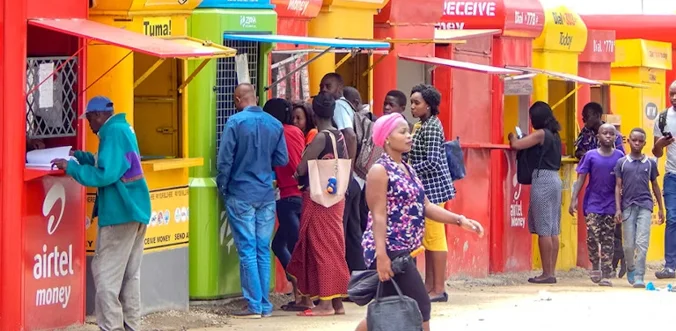







For millions of Ghanaians, sending money has become as routine as making a phone call. You dial a short code, enter a number, confirm the amount and the money is gone. But until a few years ago, that convenience stopped at the edge of your own network. An MTN customer could not send money directly to a Vodafone wallet. A bank account could not receive funds from a mobile wallet without friction.
Mobile money interoperability changed that. It is the invisible plumbing that allows money to move between different mobile networks, and between wallets and bank accounts, as though the networks were never separate. Since its launch, it has reshaped how Ghanaian households, traders and small businesses handle money. Understanding how it works – and what it costs – matters for anyone who uses a mobile wallet or a bank account.
Quick Facts
-
What it is: Mobile money interoperability (MMI) allows direct transfers between different mobile money wallets, and between wallets and bank accounts, without going through an agent.
-
Who runs it: The system is built and operated by Ghana Interbank Payment and Settlement Systems (GhIPSS), a subsidiary of the Bank of Ghana .
-
When it launched: Commercial launch took place in 2018 .
-
Regulator: The Bank of Ghana oversees the payment system under the Payment Systems and Services Act, 2019 (Act 987) .
-
Scale in 2025: Mobile money transactions reached GH¢4.54 trillion, with 26.6 million active accounts and 491,060 active agents .
-
Key institutions: Bank of Ghana, GhIPSS, mobile money operators (MTN, Telecel, AT), and licensed banks.
What Interoperability Actually Means
Think of Ghana’s financial system as a collection of walled gardens. MTN customers could send money to other MTN customers. Vodafone users could send to Vodafone users. Banks could move money among themselves. But crossing from one garden to another required you to leave and re-enter – often by withdrawing cash and depositing it elsewhere.
Interoperability tears down those walls. It creates a common language that allows different financial institutions to talk to each other. When you send GH¢50 from your MTN MoMo wallet to a friend on Telecel, the money does not physically travel through the air. GhIPSS processes the instruction, debits your wallet, credits your friend’s wallet, and settles the balances between the two operators behind the scenes .
The same logic applies to wallet-to-bank transfers. You can move money from your mobile wallet into your bank account, or from your bank account into a wallet, without visiting a branch or an agent.
How It Grew: From Fragmentation to Connection
Ghana’s mobile money journey began well before interoperability. MTN launched its MoMo service in 2010, and other networks followed . By the mid-2010s, mobile money had become a significant part of everyday life, but it remained fragmented along network lines.
The Bank of Ghana and GhIPSS began work on interoperability, and the service was commercially launched in 2018. Early adoption was gradual. By mid-2019, interoperable transactions accounted for only about 2.1 per cent of all person-to-person transfers . But the infrastructure was in place, and usage grew as awareness spread.
The numbers tell the story of what happened next. In 2017, the year before interoperability launched, Ghana had about 8.3 million active mobile money accounts. By the end of 2025, that figure had risen to 26.6 million active accounts, facilitating 9.70 billion transactions valued at GH¢4.54 trillion . Registered accounts reached 80.5 million – more than twice Ghana’s population – though many people hold accounts on multiple networks.
Not all of this growth is attributable to interoperability alone. The expansion of agent networks, the growth of smartphone use, and the rise of digital payments during the COVID-19 period all played roles. But interoperability removed a critical barrier: the inability to move money freely between networks.
How the System Works in Practice
For the ordinary user, interoperability is mostly invisible. You initiate a transfer from your wallet or banking app. You select the destination network or bank. The system handles the rest.
Wallet-to-wallet transfers: If you have an MTN wallet and want to send money to a Telecel wallet, you enter the recipient’s number and amount. The system identifies the network, routes the transaction through GhIPSS, and completes the transfer. The recipient receives the money in their wallet.
Wallet-to-bank transfers: You can move funds from your mobile wallet into a bank account. This is useful for savings, loan repayments, or paying for goods and services that require bank transfer.
Bank-to-wallet transfers: The reverse also works. You can fund your mobile wallet from your bank account without visiting an agent or a branch.
Behind the scenes, GhIPSS operates the switching infrastructure that connects banks, mobile money operators, and payment service providers . The Bank of Ghana provides regulatory oversight, ensuring that transactions are secure, consumer funds are protected, and operators comply with the rules.
The Fee Question: What Changed and What Did Not
For years, one of the most attractive features of mobile money interoperability was that wallet-to-bank transfers were free for the customer. That changed – temporarily – in 2026.
In May 2026, Mobile Money Fintech Limited (MMFL), an entity linked to MTN’s mobile money operations, announced a proposed 0.75 per cent fee on direct wallet-to-bank transfers, capped at GH¢5 per transaction, effective June 1. A GH¢100 transfer would have attracted a 75-pesewa charge; transfers above roughly GH¢667 would have hit the cap .
The Bank of Ghana intervened, directing MMFL to suspend the fee to allow for further consultations . The central bank said the suspension reflected its commitment to ensuring that any changes to charges in the mobile financial services ecosystem are introduced fairly and protect consumers.
As of the time of writing, the proposed fee has not been implemented. Whether it will return in some form after consultations remains an open question. What is clear is that the cost of moving money between wallets and banks is now a live regulatory issue, not a settled matter.
It is worth understanding the distinction between different types of transfers. Wallet-to-wallet transfers between different networks have always involved some cost structure, though the exact fees vary by operator and transaction type. Wallet-to-bank transfers had been free for the customer, with the cost borne by the operator or absorbed within the system. The proposed fee would have introduced a direct charge on that specific channel.
What the Numbers Show About Usage
The scale of mobile money in Ghana is difficult to overstate. In 2025, the total value of mobile money transactions reached GH¢4.54 trillion, a 50.8 per cent increase from GH¢3.01 trillion in 2024 . Monthly transaction values rose from GH¢333 billion in January to GH¢518 billion in December, indicating that Ghanaians are using mobile money more, not less.
Active mobile money accounts increased by 13.6 per cent, from 23.5 million in 2024 to 26.7 million in 2025 . The active agent network expanded by 21.4 per cent to 491,057 . These agents remain crucial for cash-in and cash-out transactions, especially in areas where banking infrastructure is limited.
A notable shift is underway in how people use mobile money. Cash-in and cash-out transactions – the traditional use case – declined as a share of total transaction values, from 20.1 per cent in 2024 to 16.1 per cent in 2025. Meanwhile, agent-to-agent transactions and third-party transfers grew, suggesting that mobile money is increasingly being used for digital payments, merchant transactions and business-to-business transfers rather than simply as a cash replacement.
Advantages and Challenges
Advantages
Financial inclusion: Interoperability allows people who are unbanked or underbanked to participate in the formal financial system through their mobile phones. A trader in a rural market can receive payment from a customer on a different network without needing a bank account.
Convenience: Transfers between networks and between wallets and banks happen in real time, without the need to visit an agent or branch.
Business efficiency: Small businesses can accept payments from customers regardless of network, reducing the friction that comes with cash handling.
Competition: When customers can move money freely between networks, operators must compete on service quality and pricing rather than relying on lock-in.
Challenges
Cost uncertainty: As the 2026 fee dispute shows, the cost of interoperability transactions is not always stable or predictable. Changes can affect household budgets, especially for frequent transfers.
Agent dependency for cash: Despite the growth of digital transactions, cash-in and cash-out still require agents. In areas with few active agents, access remains a challenge.
Fraud and security: As transaction volumes grow, so does the incentive for fraud. The Bank of Ghana and GhIPSS have implemented security measures, but consumers must remain vigilant.
Digital literacy: Not all Ghanaians are comfortable with digital financial services. Interoperability only delivers its benefits if people understand how to use it.
Common Misconceptions
“Interoperability means all mobile money fees are the same.” Not true. Each operator sets its own fees for wallet-to-wallet and other transactions. Interoperability enables the transfer; it does not set the price.
“Wallet-to-bank transfers are always free.” Historically, this was true for the customer. The proposed 2026 fee, though suspended, shows that this is not guaranteed.
“Interoperability is the same as a bank transfer.” Mobile money interoperability moves e-money between wallets and bank accounts. It is not the same as a traditional bank-to-bank transfer, though the lines are blurring as more services integrate.
“If I transfer to a different network, the money might get lost.” The system is designed for real-time settlement. Transfers are processed and confirmed. If a transaction fails, the funds should be returned to your wallet.
Frequently Asked Questions
What is mobile money interoperability in Ghana?
It is a system that allows direct transfers between mobile money wallets on different networks, and between mobile wallets and bank accounts. It is operated by GhIPSS and regulated by the Bank of Ghana.
How do I send money from MTN MoMo to Telecel Cash?
You initiate a transfer from your MTN MoMo wallet as you would for an MTN-to-MTN transfer, but enter a Telecel number as the recipient. The system routes the transaction through the interoperability platform. Fees may apply depending on the amount and the operator’s pricing.
Is mobile money interoperability free?
Wallet-to-wallet transfers typically involve fees set by the operator. Wallet-to-bank transfers were free for customers until a proposed fee in 2026, which was suspended by the Bank of Ghana pending consultations .
Who regulates mobile money interoperability in Ghana?
The Bank of Ghana regulates the payment system under the Payment Systems and Services Act, 2019 (Act 987). GhIPSS operates the technical infrastructure .
What is the difference between mobile money interoperability and GhIPSS Instant Pay?
Mobile money interoperability focuses on transfers involving mobile money wallets. GhIPSS Instant Pay (GIP) is a broader real-time payment system that connects bank accounts and other financial institutions. Both are operated by GhIPSS and serve different parts of the payment ecosystem .
Can I receive money from a bank account into my mobile wallet?
Yes. Interoperability supports bank-to-wallet transfers, allowing you to fund your mobile wallet from a bank account without visiting an agent.
Why did the Bank of Ghana suspend the wallet-to-bank transfer fee?
The Bank said it wanted to allow further consultations to ensure that any changes to charges are introduced fairly and protect consumers . The suspension does not mean the fee will never return; it means the matter is under review.
What should I do if a cross-network transfer fails?
Contact your mobile money operator’s customer service. Provide the transaction details, including the reference number. If the funds were debited but not credited, the operator should trace and resolve the issue.
What to Remember
Mobile money interoperability is one of the quieter but more consequential changes in Ghana’s financial landscape. It turned a collection of isolated mobile wallets into a connected network, allowing money to move across networks and between wallets and banks.
The system is not perfect. Fees can change, agents are not evenly distributed, and fraud remains a risk. But for millions of Ghanaians, the ability to send and receive money across networks has made daily life easier and brought more people into the formal financial system.
The next chapter is already being written. The Bank of Ghana’s National Payment Systems Strategy (2025–2029) continues to guide the development of digital payments, with a focus on real-time services, interoperability and financial inclusion. For ordinary Ghanaians, the practical question remains simple: can I move my money where I need it, when I need it, at a cost I can afford? The answer today is mostly yes – but as the 2026 fee debate showed, that answer is not guaranteed forever.
Source: The Accra Daily Mail

Samuel Kwame Boadu is a Ghanaian media entrepreneur and storyteller with a passion for amplifying urban voices and uncovering everyday truths. He is the Editor-in-Chief and Founder of The Accra Daily Mail, a dynamic digital platform dedicated to capturing the pulse of Ghana’s capital—its people, culture, challenges, business, sports and innovations.