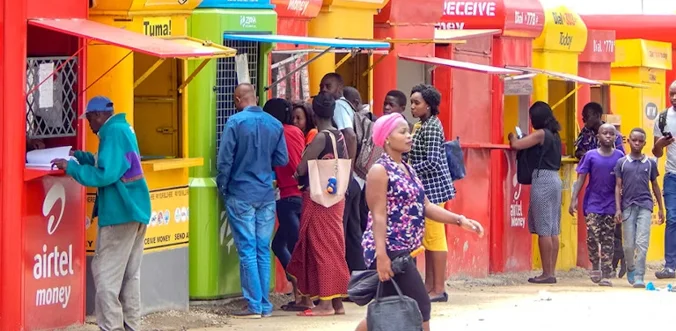










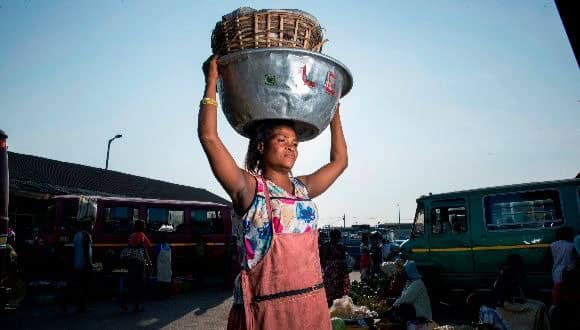
Walk through any Ghanaian city, town, or village and you will see them: the seamstress at her machine, the welder by the roadside, the woman selling bread from a wooden table, the young man repairing phones in a small kiosk. These small enterprises rarely make headlines. They do not have boardrooms or shareholders. But together, they form the largest part of Ghana’s economy — and the most important.
Small businesses are the backbone of Ghana’s economy. They provide most of the jobs, support millions of families, and keep money circulating in communities across the country. Understanding their role is essential for anyone who wants to understand how Ghana actually works — beyond the statistics and beyond the headlines.
This Accra Daily Mail article explains why small businesses matter so much, what challenges they face, and what can be done to support them.
Quick Facts
-
Small and medium enterprises account for a large majority of businesses in Ghana.
-
They provide most of the employment in the private sector.
-
Many small businesses operate informally, outside the formal tax and regulatory system.
-
Small businesses are concentrated in trade, agriculture, services, and light manufacturing.
-
They face challenges including access to finance, unreliable power, high costs, and weak infrastructure.
-
Despite the challenges, small businesses are resilient and adaptable.
-
Supporting small businesses is one of the most effective ways to reduce poverty and create jobs.
What We Mean by Small Businesses
A small business in Ghana can be many things. It can be a one-person operation — a tailor, a driver, a trader — or a firm with a handful of employees. It can be a shop, a workshop, a farm, a restaurant, a salon, or a tech startup.

The common features are scale and informality. Most small businesses in Ghana are sole proprietorships or family operations. They rely on personal savings, informal credit, and daily cash flow. They may not be registered, may not pay formal taxes, and may not appear in official statistics.
Yet their collective weight is enormous. They are not a fringe of the economy. They are the economy.
The Numbers Tell Part of the Story
Official data confirms the importance of small businesses, even if the informal nature of many enterprises means the figures are estimates.

The Ghana Statistical Service and other institutions have documented the dominance of micro, small, and medium enterprises in the economy. These businesses account for the vast majority of private sector employment and a significant share of economic output.
In the informal sector, which is largely made up of small businesses, millions of Ghanaians earn their living. For many, the small business is not a choice but a necessity — the only way to earn income in the absence of formal employment.
Why Small Businesses Matter
Employment
The most important contribution of small businesses is employment. Ghana’s formal sector cannot absorb the millions of young people entering the labour market each year. Small businesses fill the gap.

A market trader, a carpenter, a hairdresser, a commercial driver — each represents a job created outside the formal system. Multiply these individual efforts by millions, and you have the largest source of employment in the country.
For young people, women, and those without formal qualifications, small business is often the only path to income. It is the economy’s great safety net and its great engine of opportunity.
Income for Families
Small businesses support families. The income from a small shop, a farm, or a workshop pays school fees, buys food, covers healthcare, and builds homes.
For many households, the small business is the difference between poverty and a decent life. It provides not just income but also dignity and independence.
Circulation of Money
Small businesses keep money circulating in local communities. When a trader buys from a farmer, who pays a transporter, who buys food from a chop bar, the money moves through the local economy, creating value at each step.
This circulation is the lifeblood of towns and villages. It sustains local markets, supports local services, and builds local prosperity.
Innovation and Adaptability
Small businesses are often more adaptable than large ones. They can change their products, prices, and practices quickly in response to changing conditions.
During economic shocks — price increases, currency depreciation, supply disruptions — small businesses find ways to survive. They adjust, improvise, and persist. This resilience is a form of innovation that keeps the economy functioning.
A Foundation for Growth
Every large business starts small. The great companies of today were once small enterprises with a single founder and a simple idea. A thriving small business sector is the nursery from which larger firms emerge.
Supporting small businesses is therefore not just about helping the poor. It is about building the future of the economy.
The Challenges Small Businesses Face
Access to Finance
The most commonly cited challenge is access to finance. Banks are often reluctant to lend to small businesses, especially informal ones, because they lack collateral, credit history, and formal records.
Interest rates are high, and the conditions attached to loans are stringent. As a result, many small businesses rely on personal savings, family support, or informal credit sources.
This limits their ability to invest, expand, and weather shocks. A business that cannot borrow cannot grow.
The Cost of Doing Business
Small businesses in Ghana face high costs. Electricity is expensive and sometimes unreliable. Transport is costly. Taxes, levies, and informal charges add to the burden.
These costs reduce margins and make it harder for small businesses to compete, especially against imported goods.
Infrastructure
Poor roads, unreliable power, and inadequate storage affect small businesses directly. A farmer loses produce because there is no cold storage. A manufacturer loses output because the power goes out. A trader loses time and money because the roads are bad.
Infrastructure gaps are a tax on every small business.
The Informal Trap
Many small businesses operate informally — unregistered, untaxed, and outside the formal system. Informality has advantages: lower costs, less bureaucracy. But it also has limits.
Informal businesses cannot easily access credit, sign formal contracts, or bid for larger opportunities. They lack legal protection and may be vulnerable to harassment.
Moving from informality to formality is difficult, and the benefits are not always clear. This keeps many businesses trapped in a small-scale, survival mode.
Competition from Imports
Small manufacturers and agro-processors face stiff competition from imported goods, which are often cheaper due to scale and lower production costs elsewhere. This competition can squeeze local producers out of the market.
What Can Be Done
Improve Access to Finance
Expanding access to affordable finance is the single most important intervention. This could include:
-
Credit guarantee schemes
-
Microfinance and fintech lending
-
Lower interest rates through policy interventions
-
Financial literacy and record-keeping support
Invest in Infrastructure
Reliable power, good roads, and modern markets would reduce costs and improve productivity. Infrastructure investment is an investment in small businesses.
Simplify Regulation
Making it easier and cheaper to register and operate a business would encourage formalisation. The benefits of formality must be made real and accessible.
Support Skills and Training
Many small business owners lack formal business training. Practical support in areas like bookkeeping, marketing, and management can improve their performance.
Create Markets
Government procurement, export promotion, and support for value chains can create demand for small business products. Linking small businesses to larger markets is a powerful way to help them grow.
Protect Local Producers
Policies that give local producers a fair chance — not blanket protectionism, but targeted support — can help small businesses compete.
Common Misconceptions
“Small businesses are just survival activities”
Many small businesses are survival activities, but many others are genuine enterprises with growth potential. The distinction is not fixed; today’s survivalist can become tomorrow’s entrepreneur.
“The informal sector is a problem to be eliminated”
The informal sector is a source of resilience and employment. The goal is not to eliminate it but to help it formalise where possible and to improve conditions within it.
“Only big businesses create real jobs”
Small businesses are the largest source of employment in Ghana. Big businesses matter, but they do not employ the masses.
“Small businesses don’t pay taxes”
Some do, some do not. Many pay local levies and charges even if they are not formally registered. The question is how to bring them into the system in a way that is fair and beneficial.
“Government can fix everything”
Government support matters, but the primary engine of small business success is the energy and initiative of the entrepreneurs themselves. The best policy is one that removes obstacles and enables that energy.
Frequently Asked Questions
What is considered a small business in Ghana?
There is no single definition. A small business is typically one with few employees, modest turnover, and simple operations. Most are sole proprietorships or family enterprises.
How many small businesses are there in Ghana?
Exact figures are difficult to establish because of informality, but they number in the millions and dominate the private sector.
Why do so many small businesses fail?
Common causes include cash flow problems, lack of market understanding, poor record-keeping, and excessive debt. The business environment is also challenging.
How can I start a small business with little money?
Start with what you have, test your idea, and grow gradually. Many successful businesses began with tiny amounts.
Should I register my small business?
Registration offers benefits — legal recognition, access to credit, credibility — but it also brings obligations. The timing depends on your circumstances.
What is the best way to support small businesses?
Buy from them. Pay on time. Recommend them to others. Policy and finance matter, but customer support is the foundation.
Can small businesses grow into big companies?
Yes. Every large company was once small. Growth requires capital, management, market access, and persistence.
What to Remember
Small businesses are not the margins of Ghana’s economy. They are the centre of it. They employ the most people, support the most families, and keep communities alive. They are resilient, adaptable, and essential.
They also face real challenges: finance, infrastructure, costs, and competition. The solutions are known, but they require consistent effort from government, financial institutions, and the wider society.
The next time you buy from a market stall, hire a local artisan, or use a neighbourhood service, remember that you are supporting the backbone of the economy. Small businesses are not just part of the story. They are the story.
Source: The Accra Daily Mail

Samuel Kwame Boadu is a Ghanaian media entrepreneur and storyteller with a passion for amplifying urban voices and uncovering everyday truths. He is the Editor-in-Chief and Founder of The Accra Daily Mail, a dynamic digital platform dedicated to capturing the pulse of Ghana’s capital—its people, culture, challenges, business, sports and innovations.