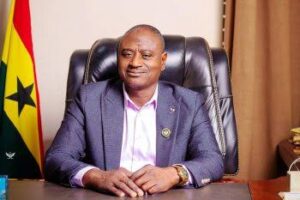







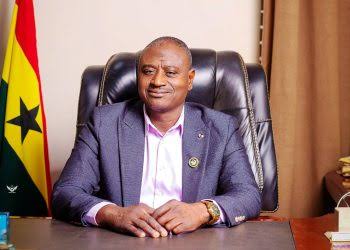

Introduction
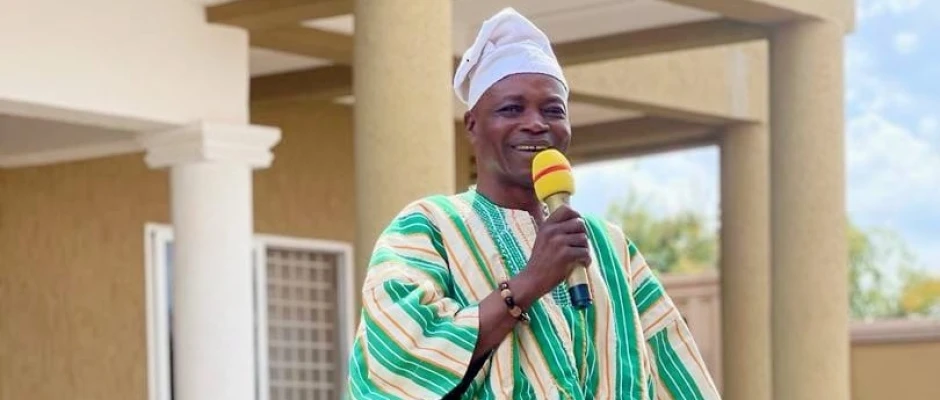
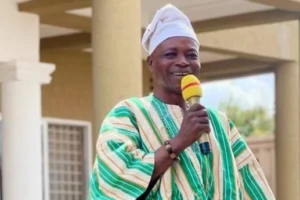
Ibrahim Tia is a Ghanaian public health finance professional and local government administrator who currently serves as the North East Regional Minister. Appointed by President John Dramani Mahama in January 2025, he brought to the role nearly a decade of leadership within the National Health Insurance Scheme and a parallel track record as the National Democratic Congress’s Regional Secretary for the North East Region . His tenure has been defined by an emphasis on internal revenue mobilisation, agricultural revitalisation—particularly tomato and rice production—and infrastructure delivery across the region’s six districts, alongside a candid acknowledgment of security and social media tensions that require careful management .
Quick Facts About Ibrahim Tia
| Field | Information |
|---|---|
| Full name | Ibrahim Tia |
| Nationality | Ghanaian |
| Profession | Public health finance professional; local government administrator |
| Current position | North East Regional Minister (since 2025) |
| Education | BSc in Information and Communication Technology; Postgraduate Diploma in Management Studies; Mini MBA in Project Management |
| Political party | National Democratic Congress (NDC) |
| Key previous roles | District Manager and Deputy Regional Manager, National Health Insurance Authority (Northern Regional Office); NDC Regional Secretary, North East Region (since 2019) |
| Known for | North East Regional Minister; NHIA career; NDC regional leadership |
Who Is Ibrahim Tia?
Ibrahim Tia is a Ghanaian public official whose career bridges health financing administration and regional political leadership. Before his ministerial appointment, he spent years within the National Health Insurance Authority, rising from District Manager to Deputy Regional Manager for the Northern Regional Office. In parallel, he served as the NDC’s Regional Secretary for the North East Region from 2019, a role that positioned him as a key party organiser in one of Ghana’s newer administrative regions. His nomination as Regional Minister in January 2025 placed him at the helm of a region created in 2019, tasked with consolidating its developmental foundations.
Education and Professional Background
Tia’s formal training reflects a blend of information technology, management, and project oversight. He holds a Bachelor of Science degree in Information and Communication Technology, a Postgraduate Diploma in Management Studies, and a Mini MBA in Project Management. This educational profile—combining technical, managerial, and project-focused competencies—aligns with the administrative demands of regional coordination, where oversight of infrastructure projects, financial systems, and inter-agency collaboration is essential.
Career in Health Financing and Party Leadership
Tia’s professional career was built within the National Health Insurance Scheme, where he progressed from District Manager to Deputy Regional Manager for the Northern Regional Office of the NHIA. This experience gave him direct exposure to health financing systems, claims management, and the operational challenges of extending insurance coverage in northern Ghana—knowledge that would later inform his approach to regional governance, particularly in the health sector.

Politically, Tia’s service as NDC Regional Secretary for the North East Region since 2019 placed him at the centre of the party’s organisational machinery in the region. This role involved coordinating party activities, mobilising support, and maintaining relationships with local executives and stakeholders—experience that translated directly into the coalition-building required of a Regional Minister.
Appointment as North East Regional Minister
In January 2025, President Mahama nominated Tia as part of his first batch of ten regional ministerial appointments, alongside figures such as Rita Akosua Adjei Awatey for the Eastern Region. His nomination was formally recorded with a tenure running from February 2025 to January 2029. Upon assuming office, he inherited a region that had been operational for only a few years, with the task of accelerating development while managing security concerns and administrative capacity constraints at the municipal and district levels.
Revenue Mobilisation and Financial Discipline
One of Tia’s earliest and most pointed interventions focused on the region’s weak internal revenue generation. In February 2026, he disclosed that the region’s Municipal and District Assemblies had generated only GH₵900,996.06 in Internally Generated Funds across the first three quarters of 2025—a figure he described as evidence of failure to maximise local revenue potential. He directed MDCEs to strengthen Zonal Councils, enforce property rate collection, and intensify public education on ratepayer compliance, warning that poor IGF performance directly reduces allocations from the District Assemblies Common Fund and undermines performance assessments.

He reinforced this fiscal discipline agenda through the signing of the 2026 performance contracts with MDCEs in February 2026, framing the contracts as “binding commitments” that demand measurable results and judicious use of public resources. He noted with concern that no assembly in the region had ever won an award under the Performance Contract initiative, urging them to prioritise stalled projects to prevent waste.
Agricultural Development and the Tomato Agenda
Agriculture has been a central pillar of Tia’s development agenda, with a particular focus on positioning the North East Region as a national supplier of tomatoes, rice, and other staples. During his vetting as Minister-designate in January 2025, he stated that the region possessed vast arable lands capable of producing rice and tomatoes to feed the entire nation.
This vision translated into concrete initiatives. In March 2025, during Ghana’s 68th Independence Day celebrations, Tia and British High Commissioner Paul Martin Edward launched a collaborative initiative to enhance tomato production, including plans for a modern tomato processing factory to reduce post-harvest losses and a partnership with a British agricultural expert to introduce best practices. In February 2026, he supplied agricultural inputs to senior high schools under the Feed Ghana programme, encouraging school farms and declaring his ambition to reverse the trend of tomato traders travelling to Burkina Faso for imports: “I want them to come to the North East Region to source their tomatoes”.

At the Government Accountability Series in May 2026, Tia reported that the region had distributed 20,000 bags of fertiliser, hybrid maize and tomato seeds, water pumps, and livestock support to farmers and schools under the Feed Ghana Programme. He also outlined plans to acquire a borehole drilling rig for solar-powered mechanised boreholes to support dry-season farming.
Infrastructure, Health, and Education Delivery
Tia’s accountability reporting in May 2026 presented a broad overview of infrastructure and social sector progress. He announced that 85 educational infrastructure projects had been initiated across the region, including classroom blocks, dormitories, and administrative facilities, alongside 31 health facilities constructed, rehabilitated, or completed in collaboration with development partners. All six districts were included in Phase One of the Mahama Care Policy, with ten health kiosks expected to improve access.
On water and sanitation, 26 borehole projects were initiated, with 10 completed and 16 ongoing, alongside plans to rehabilitate the Nalerigu and Langbinsi dams . Road infrastructure featured prominently, with the revival of the abandoned Mishio Bridge project and progress on the Gbintiri–Nakpanduri Eastern Corridor Road under the Big Push agenda. He also reported the completion of electricity looping works from Garu to Walewale, the distribution of 2,000 streetlights, the securing of seven 24-hour economy markets, the construction of a National Investment Bank branch in Nalerigu, and the operationalisation of a Passport Office.
Security, Social Cohesion, and Social Media
Tia has publicly acknowledged the North East Region’s security challenges, including curfews imposed in areas around Nalerigu-Gambaga and Walewale. In a Facebook post marking one year in office in February 2026, he urged youth to “desist from politics of insults and violence,” stating that “peace is the foundation upon which sustainable development is built”. He noted that the region had received seven vehicles for the Ghana Police Service, including three armoured vehicles, and that work was underway to establish a Bureau of National Intelligence office in Nalerigu.
In May 2026, he raised alarm over the misuse of social media to fuel tribal, religious, and community tensions, describing some online comments as so disturbing that “you can’t even sleep.” He called on community leaders, opinion leaders, and the media to discourage provocative content and promote coexistence.
Spatial Planning and Land Use
In October 2025, Tia addressed an orientation workshop on revised spatial planning documents, identifying poor physical planning as an “age-long problem” that had created congestion, flooding, and land use conflicts. He urged MDCEs to champion the preparation and implementation of spatial plans and called on traditional authorities to blend customary land tenure systems with modern planning frameworks.
Frequently Asked Questions About Ibrahim Tia
Who is Ibrahim Tia?
Ibrahim Tia is the North East Regional Minister of Ghana, appointed by President John Dramani Mahama in January 2025. He is a public health finance professional and former NDC Regional Secretary for the North East Region.
What position does Ibrahim Tia hold?
He is the North East Regional Minister, with a tenure recorded from February 2025 to January 2029 .
What did Ibrahim Tia study?
He holds a BSc in Information and Communication Technology, a Postgraduate Diploma in Management Studies, and a Mini MBA in Project Management .
What was Ibrahim Tia’s career before politics?
He worked with the National Health Insurance Scheme, rising from District Manager to Deputy Regional Manager for the Northern Regional Office of the NHIA.
Which political party does Ibrahim Tia belong to?
He is a member of the National Democratic Congress and served as the party’s Regional Secretary for the North East Region from 2019 .
What are Ibrahim Tia’s priorities as Regional Minister?
His priorities include improving internal revenue mobilisation, agricultural development (particularly tomato and rice production), infrastructure delivery, healthcare access, education, and maintaining security and social cohesion
Is Ibrahim Tia married?
Reliable publicly available information about his marital status is limited.
Source: The Accra Daily Mail

Samuel Kwame Boadu is a Ghanaian media entrepreneur and storyteller with a passion for amplifying urban voices and uncovering everyday truths. He is the Editor-in-Chief and Founder of The Accra Daily Mail, a dynamic digital platform dedicated to capturing the pulse of Ghana’s capital—its people, culture, challenges, business, sports and innovations.