



Every November, the Finance Minister stands before Parliament and delivers a speech that will shape the lives of every Ghanaian for the next twelve months. The budget statement is more than a political event. It is the legal blueprint for how the government will collect money, borrow money, and spend it on roads, schools, hospitals, salaries and debt repayments.
But the budget speech itself is only one moment in a cycle that runs all year. Understanding how that cycle works – who sets the ceilings, who approves the spending, how the money is released, and who checks that it was used properly – explains why some promises are fulfilled and others never leave the page.
Quick Facts
-
Legal foundation: Article 179(1) of the 1992 Constitution and the Public Financial Management Act, 2016 (Act 921) govern the budget process .
-
Deadline: The Finance Minister must present the budget to Parliament by 15 November each year .
-
Four stages: The budget cycle consists of formulation, approval, implementation, and monitoring, evaluation and reporting .
-
2025 deficit: The budget deficit for the first half of 2025 was GH¢15.1 billion, or 1.1% of GDP .
-
Debt rule: The PFM Act was amended in 2025 to introduce a debt-to-GDP rule of 45% by 2034 .
-
Parliamentary committees: The Finance Committee, Special Budget Committee and Public Accounts Committee play key oversight roles .
Stage One: Formulation – Where the Budget Is Built
The budget does not begin with the Finance Minister’s speech. It begins months earlier, with the Ministry of Finance issuing Budget Preparation Guidelines to all covered entities – ministries, departments, agencies, and district assemblies.
These guidelines set the rules. They outline government policy priorities, medium-term expenditure ceilings, and the templates that entities must use to prepare their estimates. The guidelines are issued under Article 179(1) of the Constitution and Section 20 of the PFM Act.

The process is both top-down and bottom-up. The Ministry of Finance sets indicative ceilings – the maximum amount each entity can propose to spend. Entities then prepare their budget submissions within those ceilings, detailing how they intend to deliver their mandate. Draft budgets are subjected to policy and technical hearings, organised jointly by the Ministry of Finance and the National Development Planning Commission, to ensure alignment with approved development plans.
For the 2025 budget, the guidelines noted that 2024 was an election year. In accordance with Article 180 of the Constitution, a draft Budget Statement and Economic Policy was prepared, alongside an Expenditure in Advance of Appropriation (Vote on Account) covering the first three months of 2025. This was laid before Parliament not later than 15 November 2024, while the full budget for 2025 was presented before the close of the first quarter.
This two-step arrangement for election years ensures that government does not shut down when Parliament dissolves before a general election.

Stage Two: Approval – Parliament’s Seven Chances
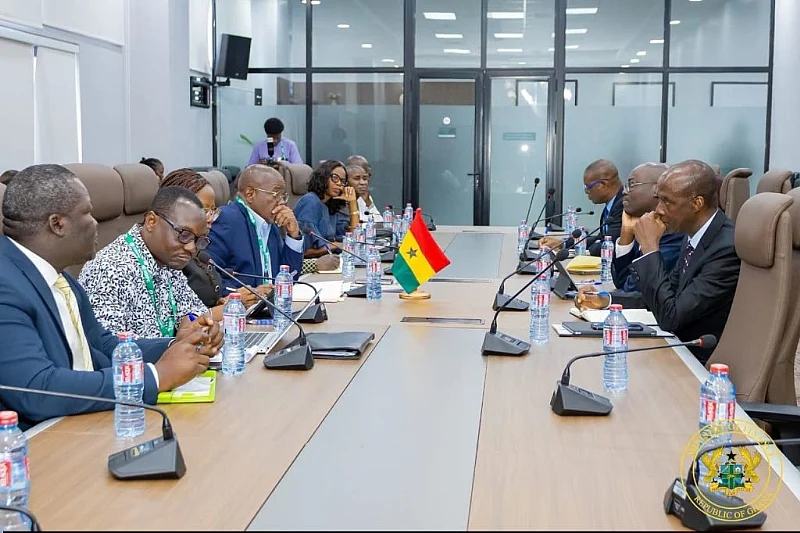
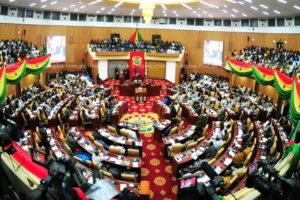
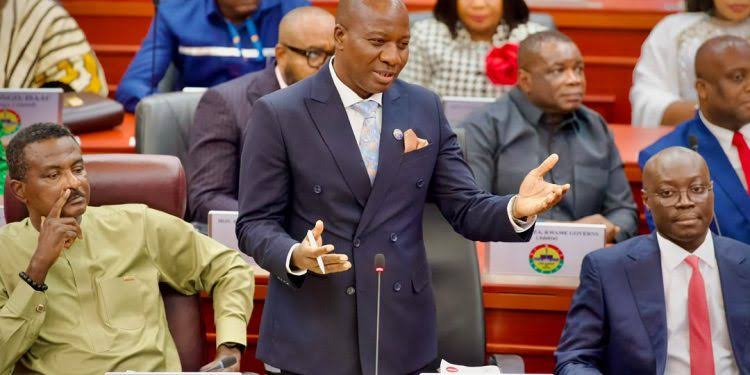
Once the Finance Minister presents the budget, Parliament takes over. The budget is referred to the Finance Committee, which examines the estimates and produces a report for the full House.
But approval is not a single vote. Parliament has multiple opportunities to intervene. It reviews the macroeconomic framework and assumptions, conducts hearings with ministries, departments and agencies, debates the budget, and votes on the Appropriation Bill – the legislation that authorises government to spend money from the Consolidated Fund.
The Finance Committee plays a central role. Its responsibilities include reviewing the Medium-Term Expenditure Framework and policy targets, scrutinising the Appropriation Bill, analysing off-budget reporting, ensuring the budget aligns with constitutional requirements, and assessing the economic impact of tax waivers.

The Special Budget Committee considers the budgets of Parliament itself and other constitutionally independent bodies. The Public Accounts Committee, meanwhile, examines audited accounts showing how previous appropriations were spent.
Approval is a seven-step process, during which Parliament can amend the budget, reject specific allocations, or demand changes. The public has no direct role in approval, but civil society organisations and the media try to influence the budget in March and August of each fiscal year by lobbying politicians and working with bureaucrats.
Stage Three: Implementation – How the Money Actually Moves
Once Parliament passes the Appropriation Bill, the budget becomes law. But approval does not mean the money is immediately available. Funds must be released through a warrant system.
Warrants are the mechanism used to request funds to pay for goods, services and contractual obligations. They convey authority to commit funds and disburse them. The Ministry of Finance issues warrants for control purposes – to ensure requests are within an entity’s ceiling. The Controller and Accountant-General’s Department issues warrants related to the treasury function of actually releasing funds .
There are two types of warrants. Specific warrants are initiated by ministries, departments and agencies. They include financial clearance warrants for new hires, compensation arrears and allowances warrants, commencement warrants for capital expenditure, and capital expenditure payment warrants for contract milestones. General warrants are issued by the Ministry of Finance without entities initiating them. General warrants for compensation are issued monthly; those for goods and services are issued quarterly .
Once funds are released, financial transactions proceed through four stages: commitment (when a good or service is ordered or a contract is entered into), verification (after delivery), payment order (issued by an authorised officer), and payment (when the invoice is paid) .
The Ghana Integrated Financial Management Information System (GIFMIS), launched in 2009, processes these transactions. The system allows the Ministry of Finance to track commitments and releases in real time, providing a check against overspending .
Stage Four: Monitoring and Oversight – Who Checks the Budget
Implementation is not the end of the process. The budget cycle is continuous. While the current budget is being implemented, it is monitored and evaluated, and government begins formulating the next budget.
Parliament oversees implementation through its committees. The Public Accounts Committee examines audited accounts showing the appropriation of sums granted by Parliament. It also considers the institutional capacity and processes of the Controller and Accountant-General’s Department and other entities that produce audited reports.
The Finance Committee examines international loan agreements and monitors foreign exchange receipts and payments. The Special Budget Committee considers the budget of Parliament and other constitutionally independent bodies.
Supplementary budgets and budget revisions must be approved by Parliament. The public monitors budget implementation and accountability through civil society organisations, non-governmental organisations and the media .
Where the Money Comes From and Where It Goes
The budget is financed through domestic revenue (taxes, fees, royalties), grants, and borrowing. In 2025, the government amended the PFM Act to introduce a debt rule of a debt-to-GDP ratio of 45% by 2034, alongside a fiscal rule for primary surplus . These rules are designed to enforce fiscal discipline.
Borrowing is a significant source of financing. For the first half of 2025, the overall budget deficit was GH¢15.1 billion, financed through net domestic borrowing of GH¢13.1 billion and net foreign financing of GH¢2.8 billion .
The 2026 Budget, presented by Finance Minister Dr Cassiel Ato Forson, set out three strategic priorities: consolidating macroeconomic stability, accelerating economic transformation and job creation, and strengthening security and social sectors. The government committed to sustaining fiscal discipline, strengthening revenue mobilisation, and ensuring responsible debt management .
Specific allocations announced in the 2026 and 2027 budget cycles illustrate how priorities translate into spending. President Mahama directed the Finance Minister to allocate GH¢1 billion in the 2027 Budget as government’s contribution to a GH¢3 billion revolving fund for the National Housing Fund . The government also announced that 100 new ambulances would be procured under the 2027 Budget to replace broken-down emergency vehicles . Funding for a permanent flood solution in Accra and other flood-prone areas was pledged for the 2027 Budget following the June 2026 floods .
Why the Budget Matters for Ordinary Ghanaians
The budget determines whether your local clinic receives medicines, whether your road is graded, whether your child’s school has desks, and whether the government can pay its workers on time.
It also determines how much you pay in taxes and fees. When the Finance Minister announces a new levy or adjusts an existing one, that decision flows directly from the budget process.
The warrant system, the ceiling controls, and the parliamentary oversight mechanisms exist to ensure that money is spent as approved, not diverted or wasted. They do not always work perfectly. But understanding how the system is supposed to function is the first step toward demanding that it does.
Frequently Asked Questions
When is Ghana’s national budget presented?
The Finance Minister must present the budget to Parliament not later than 15 November of each financial year, in accordance with Article 179(1) of the 1992 Constitution and Section 21 of the PFM Act, 2016 (Act 921).
What are the four stages of Ghana’s budget cycle?
The budget cycle consists of Budget Formulation, Budget Approval, Budget Implementation, and Monitoring, Evaluation and Reporting (Oversight) .
Who prepares the national budget?
The Ministry of Finance prepares the budget, issuing guidelines to covered entities and consolidating their submissions. The Minister of Finance presents it to Parliament on behalf of the President.
What is a warrant in the budget process?
A warrant is the mechanism used to request funds to pay for goods, services and contractual obligations. Approved warrants let ministries, departments and agencies spend their cash. There are specific and general warrants .
What is the Appropriation Bill?
The Appropriation Bill is the legislation that Parliament passes to authorise government to spend money from the Consolidated Fund. It is the legal instrument that gives effect to the budget .
What is the debt rule in Ghana’s PFM Act?
The PFM Act was amended in 2025 to introduce a debt rule of a debt-to-GDP ratio of 45% by 2034, along with a fiscal rule for primary surplus. These are designed to enforce fiscal discipline .
Can Parliament change the budget?
Yes. Parliament can amend the budget during the approval process, reject specific allocations, or demand changes. The Finance Committee and other committees scrutinise the estimates before the full House votes.
What happens if government needs to spend more than approved?
A supplementary budget must be approved by Parliament. All budget revisions require parliamentary approval .
What to Remember
Ghana’s national budget is a year-long cycle, not a single speech. It begins with formulation guidelines from the Ministry of Finance, moves through parliamentary approval, becomes law through the Appropriation Bill, and is implemented through a warrant system that controls the release of funds.
The process is governed by the 1992 Constitution and the PFM Act, 2016. It is designed to ensure that public money is collected, allocated and spent with accountability. The debt rule introduced in 2025 adds a new layer of fiscal discipline.
For ordinary Ghanaians, the budget determines the quality of public services and the level of taxation. Understanding the process – and the points at which citizens and their representatives can influence it – is part of active citizenship.
Source: The Accra Daily Mail

Samuel Kwame Boadu is a Ghanaian media entrepreneur and storyteller with a passion for amplifying urban voices and uncovering everyday truths. He is the Editor-in-Chief and Founder of The Accra Daily Mail, a dynamic digital platform dedicated to capturing the pulse of Ghana’s capital—its people, culture, challenges, business, sports and innovations.