







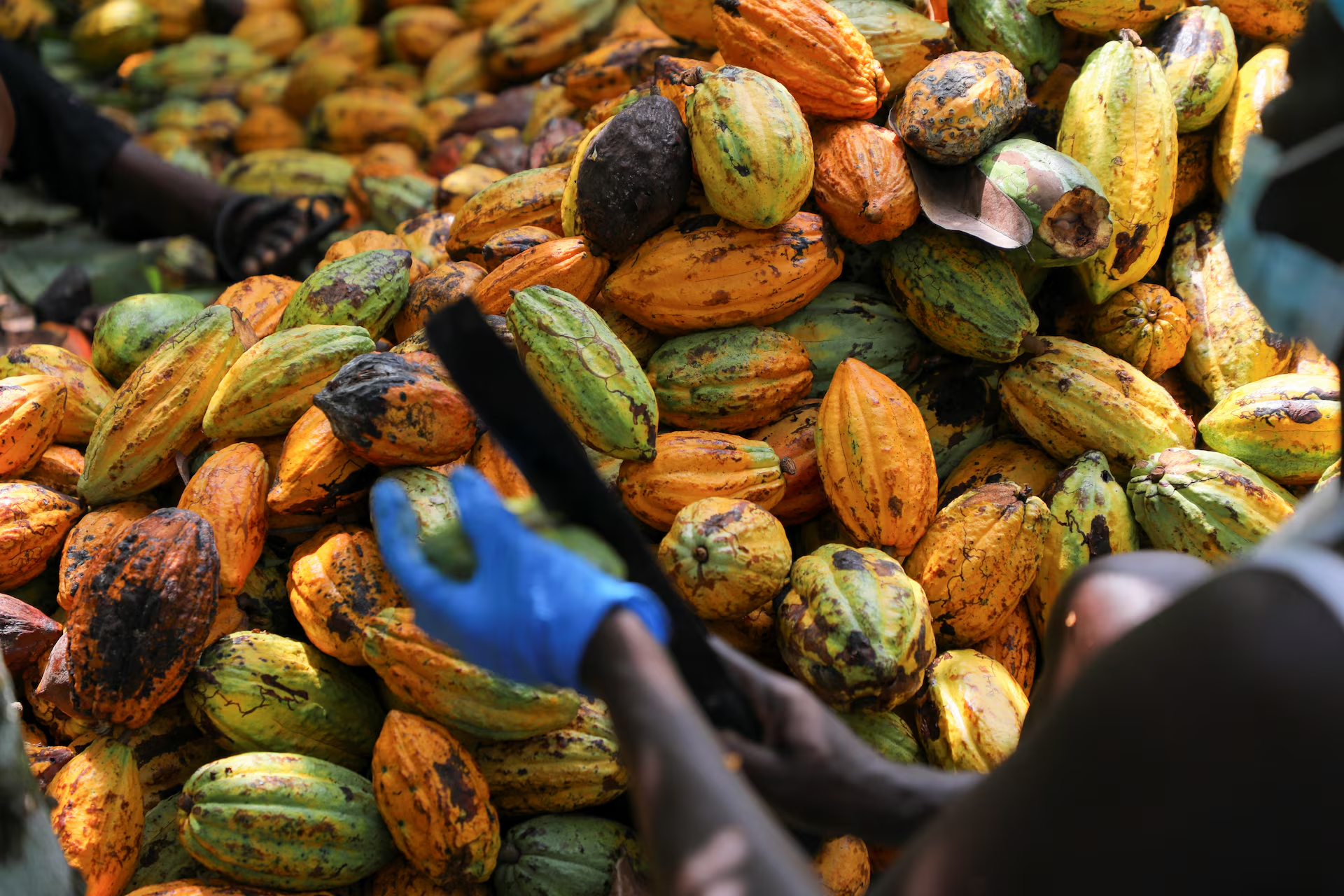

Cocoa is more than a crop in Ghana. It is part of the national identity, a pillar of the economy, and a way of life for hundreds of thousands of farming families. Ghana is one of the world’s largest cocoa producers, and the beans that leave its ports find their way into chocolate bars, beverages, and confectionery across the globe.
Yet the journey from a cocoa farm in the Western Region to a chocolate factory in Europe or Asia is long, complex, and often poorly understood. Many Ghanaians know that cocoa is important, but few understand how the business actually works — who buys the beans, who sets the price, and where the money goes.
This Accra Daily Mail article traces the cocoa value chain from farm to global market. It explains how cocoa is grown, harvested, sold, regulated, and exported, and it outlines the challenges and opportunities facing the industry.
Quick Facts
-
Ghana is one of the world’s largest cocoa producers, second only to Côte d’Ivoire in most years.
-
Cocoa is Ghana’s most important agricultural export and a major source of foreign exchange.
-
The industry is regulated by the Ghana Cocoa Board, known as COCOBOD.
-
COCOBOD sets the producer price paid to farmers each season.
-
Most Ghanaian cocoa is grown by smallholder farmers on plots of a few hectares.
-
Cocoa beans are processed abroad into chocolate and other products, meaning much of the value is captured outside Ghana.
-
The cocoa sector faces challenges including ageing trees, climate change, smuggling, and price volatility.
The Importance of Cocoa
Cocoa has been central to Ghana’s economy for over a century. It was the engine of the colonial economy and remained a cornerstone after independence. Even today, despite the growth of gold and oil, cocoa remains one of Ghana’s most important exports and a vital source of income for rural households.

The cocoa industry supports an estimated 800,000 farming families, directly and indirectly. In many rural communities, cocoa is the primary source of cash income, funding school fees, healthcare, housing, and daily needs.
Cocoa is also a major source of foreign exchange. The dollars earned from cocoa exports help support the cedi and finance imports. When cocoa prices are high, the economy benefits. When prices fall, the effects are felt widely.
How Cocoa Is Grown
The Crop
Cocoa is grown on trees that produce pods containing beans. The beans are the valuable part: they are fermented, dried, and eventually processed into chocolate and other products.

Cocoa trees thrive in tropical climates with regular rainfall, high humidity, and shade. Ghana’s forest zones, particularly in the Western, Ashanti, Eastern, Central, and Brong-Ahafo regions, provide suitable conditions.
The Farmers
Most Ghanaian cocoa is grown by smallholder farmers. A typical farm is a few hectares, often inherited and managed by a family. Farmers rely on manual labour for planting, weeding, harvesting, and processing.
Cocoa farming is demanding. The trees take several years to mature, and yields depend on inputs, weather, and management. Many farmers are ageing, and the next generation is not always eager to remain on the land.

The Cocoa Season
Cocoa production follows a seasonal rhythm.
The main crop season runs from around October to June, with the peak harvest between November and February. There is also a light crop season, with smaller volumes, typically around June to August.
During the season, farmers harvest ripe pods, break them open, and extract the beans. The beans are then fermented — usually in heaps or boxes covered with banana leaves — for several days. Fermentation is essential: it develops the flavour of the cocoa.
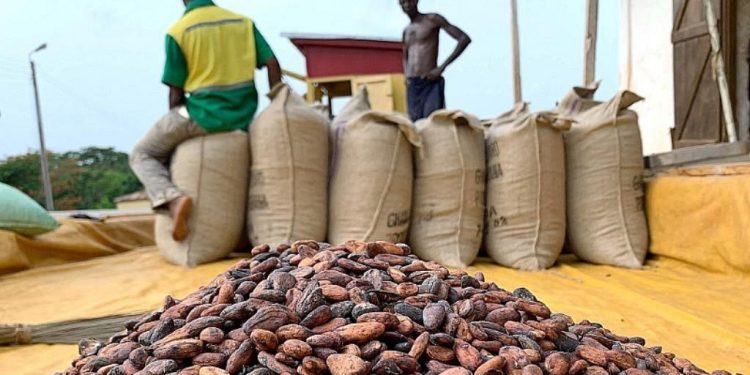
After fermentation, the beans are dried in the sun, either on mats or on raised platforms. Once properly dried, they are bagged and ready for sale.
Who Sets the Price
One of the most distinctive features of Ghana’s cocoa industry is the role of COCOBOD — the Ghana Cocoa Board.
COCOBOD is a government agency responsible for the regulation and development of the cocoa industry. It sets the producer price each season — the price paid to farmers for their beans.
The producer price is announced at the start of the season and is based on a range of factors, including world market prices, exchange rates, and government policy. The price is intended to give farmers a stable, predictable income, shielding them from the full volatility of global markets.
In addition to the producer price, COCOBOD provides support to farmers, including:
-
Seedlings and planting materials
-
Fertiliser and agrochemicals
-
Extension services
-
Disease and pest control programmes
This support is funded through cocoa revenues and government resources.
How Cocoa Is Sold and Exported
The Licensed Buying Companies
Farmers sell their dried beans to Licensed Buying Companies, known as LBCs. These are private companies licensed by COCOBOD to purchase cocoa from farmers at the official producer price.
The LBCs aggregate beans from thousands of smallholder farmers, store them, and deliver them to COCOBOD’s take-over centres.
COCOBOD’s Role
COCOBOD takes custody of the beans and manages their export. It sells the beans on the international market, either through direct contracts or through forward sales agreements.
COCOBOD also manages quality control, ensuring that Ghanaian cocoa meets international standards. Ghana’s cocoa is known for its quality, and the country has historically earned a premium for its beans.
The Export Process
The beans are transported to Ghana’s ports, mainly Tema and Takoradi, where they are loaded onto ships for export. The major buyers are international trading companies, chocolate manufacturers, and processors.
The export process involves documentation, quality inspections, and logistics coordination. It is a complex operation managed by COCOBOD and its partners.
Where the Beans Go
Most of Ghana’s cocoa is exported as raw beans. The beans are processed abroad — in Europe, Asia, and increasingly in other parts of the world — into cocoa butter, cocoa powder, and chocolate.
The major destinations include the Netherlands, Germany, France, the United States, and China. These countries have large chocolate industries that transform raw cocoa into finished products.
This is one of the central challenges of the industry: Ghana produces the raw material but captures only a small share of the value. The chocolate bar sold in a European shop may contain Ghanaian cocoa worth a few cedis, but it sells for far more after processing, branding, and distribution.
Local Processing
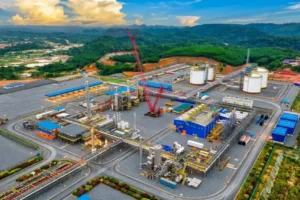
Ghana does have some local processing capacity. Companies in Ghana grind cocoa beans into cocoa liquor, butter, and powder, which are then exported or used in local products.
The government has set targets to increase the share of cocoa processed locally. Processing adds value and creates jobs, keeping more of the cocoa value chain within Ghana.
However, local processing faces challenges, including energy costs, financing, and competition from established processors abroad. Expanding processing requires investment and supportive policy.
The Challenges Facing the Industry
Ageing Trees
Many of Ghana’s cocoa trees are old and past their peak productivity. Old trees produce less fruit and are more vulnerable to disease. Replanting and rehabilitation programmes exist, but progress has been slow.
Climate Change
Rising temperatures, changing rainfall patterns, and more frequent droughts threaten cocoa production. Cocoa is sensitive to climate conditions, and the changing climate is making farming more difficult.
Diseases and Pests
Cocoa swollen shoot virus and black pod disease are persistent threats. They reduce yields and kill trees. Control programmes require sustained effort and resources.
Smuggling
Cocoa smuggling is a recurring problem. Farmers in border areas sometimes sell their beans to buyers from neighbouring countries, often at higher prices. This undermines official exports and reduces revenue.
Price Volatility
World cocoa prices fluctuate. Farmers are protected to some extent by the producer price system, but COCOBOD and the government bear the risk. When world prices fall, the system comes under strain.
Ageing Farmer Population
The average cocoa farmer is ageing, and young people are often reluctant to take up farming. The future of the industry depends on attracting a new generation of farmers.
The Reforms and Debates
Ghana’s cocoa industry has been the subject of ongoing reform debates. Questions include:
-
Should the producer price system be maintained or liberalised?
-
How can farmers be given a larger share of the value?
-
How can local processing be expanded?
-
What is the right role for COCOBOD?
The industry has also been affected by international discussions about sustainability, child labour, and fair trade. Ghana has committed to addressing these concerns and to producing cocoa responsibly.
In recent years, Ghana and Côte d’Ivoire have introduced a Living Income Differential — a premium added to the price of their cocoa, aimed at improving farmer incomes. This reflects a broader effort to ensure that cocoa farming is economically viable.
What This Means for Ghana
Cocoa matters beyond the farm gate. It affects the exchange rate, government revenue, rural livelihoods, and national identity. When the cocoa industry thrives, entire regions thrive. When it struggles, the effects ripple outward.
The challenge for Ghana is to move up the value chain — to process more cocoa locally, to capture more of the value, and to ensure that farmers earn a decent living. This is not easy, but it is essential.
Cocoa is a gift of nature, but it is also a test of management. How Ghana manages its cocoa industry will shape the economy and the lives of millions for decades to come.
Common Misconceptions
“COCOBOD buys all cocoa directly from farmers”
COCOBOD regulates the industry and sets the price, but beans are purchased by Licensed Buying Companies, which then deliver them to COCOBOD.
“Farmers get the full world price for their cocoa”
Farmers receive the producer price set by COCOBOD, which is a fraction of the world price. The difference funds COCOBOD’s operations, farmer support, and government revenue.
“Chocolate companies are evil for not paying more”
The chocolate industry is concentrated and highly profitable, but the relationship is complex. Ghana has engaged with companies and international partners to improve farmer incomes.
“All cocoa is exported raw”
A portion of Ghana’s cocoa is processed locally, though the majority is still exported as raw beans.
“Cocoa farming is no longer important”
Cocoa remains one of Ghana’s most important exports and a vital source of rural income. Its relative share of GDP has declined, but its significance remains.
Frequently Asked Questions
How is the cocoa producer price set?
COCOBOD sets the producer price each season based on world prices, exchange rates, and other factors. The price is announced publicly.
How many cocoa farmers are there in Ghana?
Estimates vary, but the industry is estimated to support around 800,000 farming families. The exact number depends on the source and year.
Where is most cocoa grown in Ghana?
The main cocoa-growing regions include the Western, Ashanti, Eastern, Central, and Brong-Ahafo regions.
What is the difference between raw cocoa and processed cocoa?
Raw cocoa refers to dried beans. Processed cocoa refers to products such as cocoa liquor, butter, and powder, which are made by grinding and pressing the beans.
Why does Ghana process so little of its own cocoa?
Local processing is constrained by energy costs, financing, and competition. The government has set targets to increase processing but faces challenges.
What is the Living Income Differential?
The Living Income Differential is a premium added to the price of cocoa from Ghana and Côte d’Ivoire, aimed at improving farmer incomes.
How can young people get involved in cocoa farming?
Through training programmes, access to land and finance, and support from COCOBOD and other institutions. Making farming viable and attractive is a key policy goal.
What to Remember
Cocoa is a national asset. It has supported Ghana for generations and remains one of the country’s most important industries. But the industry faces real challenges: ageing trees, climate change, disease, smuggling, and the enduring problem of capturing more value.
The journey from cocoa farm to global market is long, and most of the value is captured elsewhere. Changing that requires investment, policy reform, and patience.
The next time you see a chocolate bar, remember the farmer in the Western Region who grew the beans. Their work is part of a global value chain that stretches from a small farm to a global market — and the choices Ghana makes about that chain will shape the country’s future.
Source: The Accra Daily Mail

Samuel Kwame Boadu is a Ghanaian media entrepreneur and storyteller with a passion for amplifying urban voices and uncovering everyday truths. He is the Editor-in-Chief and Founder of The Accra Daily Mail, a dynamic digital platform dedicated to capturing the pulse of Ghana’s capital—its people, culture, challenges, business, sports and innovations.