





The votes have been counted. The results have been declared. The winner has been announced. For many Ghanaians, that is the end of the election story. But in reality, the period after a general election is one of the most important phases of the democratic process. What happens between the declaration of results and the swearing-in of the new government shapes the transition, the institutions, and the country’s stability.
This article explains what happens after a general election in Ghana. It covers the immediate aftermath, the legal challenges that may arise, the transition process, the swearing-in of the President and Parliament, and what ordinary citizens should expect. It is written for anyone who wants to understand the full arc of the electoral cycle.
Quick Facts
-
General elections in Ghana are held every four years to elect a President and Members of Parliament.
-
The Electoral Commission declares the results, but the process does not end there.
-
Losing candidates can challenge results in court: the Supreme Court for presidential elections and the High Court for parliamentary elections.
-
The President-elect is sworn in on 7 January following the election.
-
A transition period allows the outgoing and incoming administrations to prepare for the transfer of power.
-
Peaceful transitions have become a defining feature of Ghana’s democracy, but the process requires careful management.
The Immediate Aftermath
Once the Electoral Commission declares the results, the country enters a period of reaction and adjustment.
Celebration and Disappointment
Supporters of the winning candidate celebrate. Supporters of the losing candidate experience disappointment. These emotions are natural and expected. What matters is how they are expressed.
In Ghana, the tradition has generally been for the losing candidate to concede, either formally or informally. Concession statements have played an important role in calming tensions and signalling acceptance of the outcome. However, concession is not legally required, and candidates sometimes withhold it while they consider their options.
The Security Situation
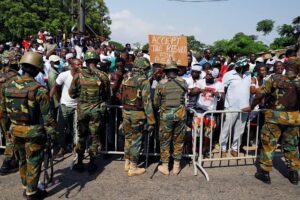
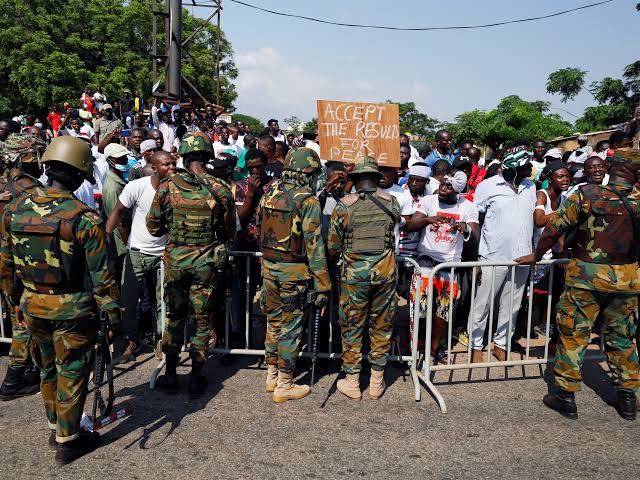
The period immediately after a general election can be tense. The security agencies remain on alert, and the Electoral Commission and other institutions continue their work.
In past elections, Ghana has generally managed this period without major violence. But the risk is real, and the behaviour of candidates, parties, and supporters matters enormously.
Legal Challenges
The declaration of results is not necessarily final. The law provides for challenges.
Presidential Election Petitions
A presidential election petition is filed in the Supreme Court. The petition must be filed within 21 days of the declaration of the result.
The Supreme Court hears the case, reviews the evidence, and issues a ruling. The Court can uphold the result, overturn it, or order remedies.
Ghana has experienced landmark presidential election petitions. The 2012 petition, filed by Nana Akufo-Addo against the declared victory of John Mahama, lasted several months and tested the country’s institutions. The Court ultimately upheld the result.
A presidential election petition does not automatically delay the swearing-in of the winner. The constitutional timeline continues unless the Court orders otherwise.
Parliamentary Election Petitions
Parliamentary election disputes are heard by the High Court. Petitions must be filed within 21 days of the declaration.
The High Court can uphold the result, overturn it, or order a fresh election. Parliamentary disputes are common, and some have resulted in re-runs or changes in the declared winner.
The Transition Period
The period between the election and the swearing-in of the new government is called the transition period. It is a time of preparation and handover.
The Transition Team
The outgoing administration and the incoming administration form transition teams. These teams coordinate the transfer of information, documents, and responsibilities.
The transition team of the incoming administration reviews the state of the government: finances, projects, personnel, and outstanding commitments. The outgoing team provides briefings and handover notes.
The goal is to ensure that the new government can take office with a clear understanding of the situation it inherits.
The Role of the Public Service
The public service continues to function during the transition. Civil servants, who are not political appointees, keep the machinery of government running. This continuity is essential to stability.
Political appointees, such as Ministers and Deputy Ministers, may leave office or be replaced. But the core of the civil service remains.
The Inauguration of Parliament
Parliament is also sworn in after the election. Newly elected MPs take their oaths, and the House elects a Speaker.
The composition of Parliament matters because the new government needs parliamentary support to pass legislation and approve the budget. The election of the Speaker can be a significant moment, especially when no party has an overwhelming majority.
The Swearing-In of the President
The President-elect takes the oath of office on 7 January following the election. This date is fixed by the Constitution, providing certainty and stability.
The swearing-in ceremony is a major national event. It marks the formal transfer of executive authority from one President to the next. The Chief Justice administers the oath.
The new President then delivers an inaugural address, setting out the administration’s priorities and vision.
The Formation of a New Government
After the swearing-in, the new President begins the process of forming a government.
Appointments
The President appoints Ministers, Deputy Ministers, and other officials. Some appointments require parliamentary approval. The President also appoints advisors and staff.
The Constitution requires that the majority of Ministers be appointed from among Members of Parliament, though there are exceptions.
The First Budget
The new government prepares and presents its first budget. The budget sets out the administration’s spending plans and policy priorities.
Parliament debates and approves the budget. This process can be contentious, especially if the government lacks a comfortable majority.
What Ordinary Citizens Should Expect
Confirmation of Results
The Electoral Commission publishes the full results, and the figures are available for scrutiny. Citizens can review the results and satisfy themselves that the process was fair.
Acceptance or Challenge
If the losing candidate accepts the result, the transition proceeds smoothly. If the result is challenged, the courts take over, and the country waits for the legal process to conclude.
Continued Governance
During the transition, the outgoing government remains in office until the new President is sworn in. This means there is no vacuum. The business of government continues.
The Handover
The handover of power is a formal, structured process. The outgoing President and the incoming President participate in the swearing-in ceremony, and the symbols of office are transferred.
The Significance of Peaceful Transitions
Ghana has developed a reputation for peaceful transfers of power. Since the return to democratic rule in 1992, power has changed hands between parties on multiple occasions without major violence.
This is not an accident. It is the result of:
-
A credible Electoral Commission
-
An independent judiciary
-
A professional security service
-
A political culture that, despite its tensions, generally respects the rules
The peaceful transfer of power is one of Ghana’s most important democratic achievements. It is worth protecting.
What Can Go Wrong
Disputed Results
When results are disputed, the period after the election can become tense. Legal challenges can drag on, and uncertainty can affect governance and investor confidence.
Violence
In some elections around the world, the post-election period has been marked by violence. Ghana has largely avoided this, but the risk is never zero. The behaviour of candidates and their supporters is critical.
Institutional Strain
The transition period can strain institutions. The Electoral Commission, the courts, the security agencies, and the public service all face pressure. Their ability to function under pressure is a test of democratic resilience.
Common Misconceptions
“The election is over once the results are declared”
The declaration is a major milestone, but the process continues. Legal challenges, the transition, and the swearing-in are all part of the electoral cycle.
“The new President takes office immediately after winning”
No. The President-elect is sworn in on 7 January. Until then, the outgoing President remains in office.
“A legal challenge means the result is invalid”
A legal challenge means the result is being questioned, not that it is invalid. The courts decide whether the challenge has merit.
“The transition is automatic and requires no effort”
The transition requires careful coordination. Handover notes, briefings, and logistical arrangements all require work.
“Parliament is less important than the Presidency”
Parliament is essential to governance. The new government needs parliamentary support to function. The composition of Parliament and the election of the Speaker matter.
Frequently Asked Questions
When is the new President sworn in?
The President-elect is sworn in on 7 January following the election.
What happens if the presidential result is challenged?
A petition can be filed in the Supreme Court within 21 days. The Court hears the case and issues a ruling.
Does the outgoing President leave office immediately after the election?
No. The outgoing President remains in office until the new President is sworn in on 7 January.
Who forms the transition team?
Both the outgoing and incoming administrations form transition teams to coordinate the handover.
What happens to Parliament after the election?
Newly elected MPs are sworn in, and Parliament elects a Speaker. The new Parliament then begins its work.
Can a parliamentary result be challenged?
Yes. Petitions are heard by the High Court, and the Court can uphold, overturn, or order a fresh election.
What if no presidential candidate wins in the first round?
If no candidate receives more than 50% of valid votes, a run-off is held between the top two candidates. The swearing-in date may be affected by the timing of the run-off.
What to Remember
The period after a general election is not an afterthought. It is a critical phase of the democratic process. It is when the results are tested, the transition is managed, and the new government is formed.
Ghana’s record of peaceful transitions is a source of pride, but it is not guaranteed. It depends on the integrity of institutions, the behaviour of politicians, and the vigilance of citizens.
The next time you hear that a winner has been declared, remember that the story is not over. The real work of democracy continues — and it requires everyone’s attention.
Source: The Accra Daily Mail

Samuel Kwame Boadu is a Ghanaian media entrepreneur and storyteller with a passion for amplifying urban voices and uncovering everyday truths. He is the Editor-in-Chief and Founder of The Accra Daily Mail, a dynamic digital platform dedicated to capturing the pulse of Ghana’s capital—its people, culture, challenges, business, sports and innovations.