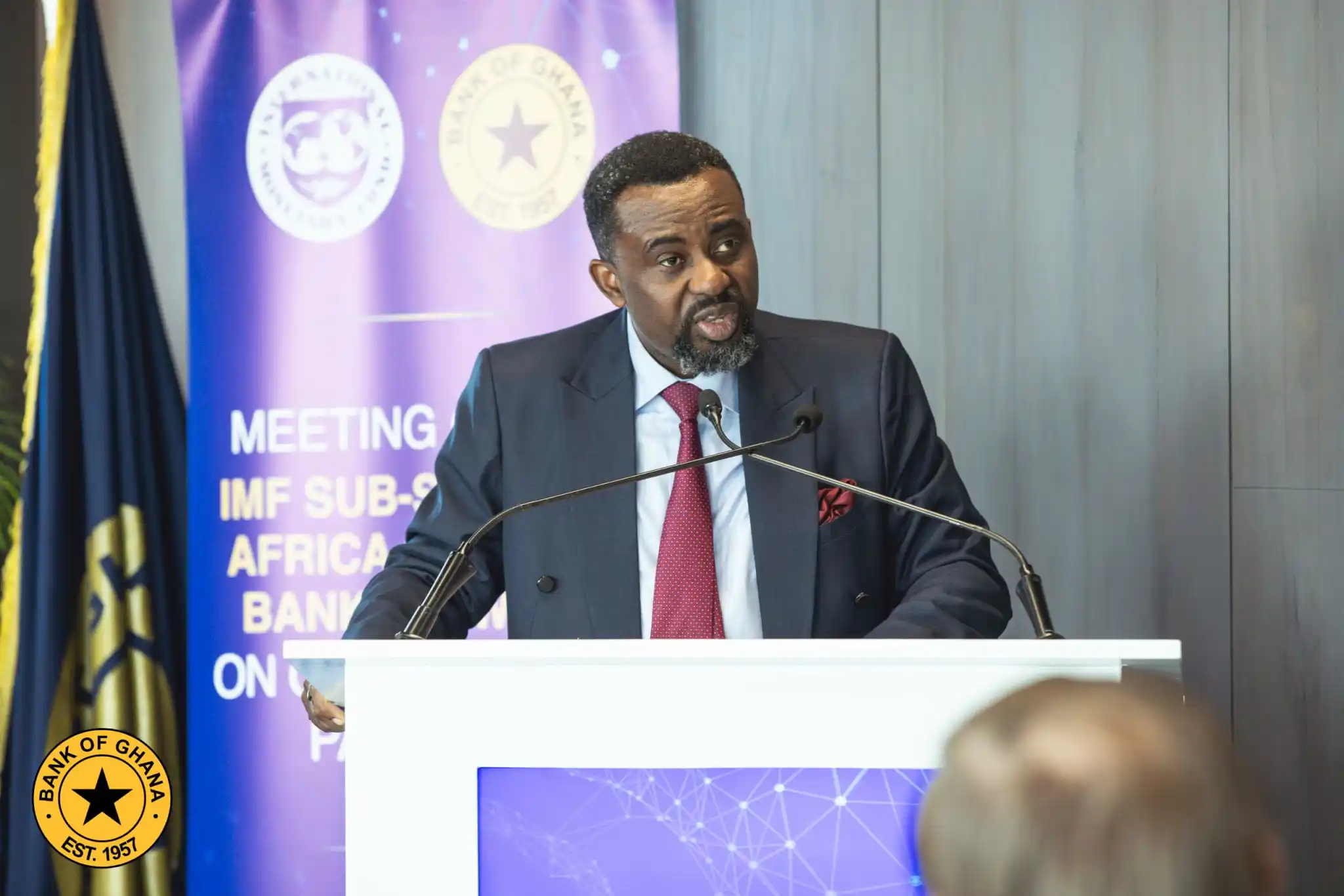








When the cedi loses value, when inflation rises, or when a bank collapses, the institution that Ghanaians look to for answers is the Bank of Ghana. But the central bank is not just a crisis manager. It is the institution that issues the currency in your pocket, sets the interest rate that determines how much you pay on a loan, regulates the banks that hold your savings, and supervises the payment systems that allow you to send mobile money.
Understanding what the Bank of Ghana actually does — and what it does not do — explains a lot about how money works in this country.
Quick Facts
-
Established: 4 March 1957, two days before Ghana’s independence, under the Bank of Ghana Ordinance No. 34 of 1957.
-
Governing law: Bank of Ghana Act, 2002 (Act 612), as amended by Act 918 of 2016.
-
Primary objective: Price stability, defined as a medium-term inflation target of 8±2%.
-
Policy framework: Inflation Targeting, adopted in 2007.
-
Key committee: The Monetary Policy Committee (MPC), chaired by the Governor, meets bi-monthly to set the Monetary Policy Rate (MPR).
-
Regulatory reach: The Bank supervises banks, specialised deposit-taking institutions, non-bank financial institutions, and payment systems.
The Core Mandate: Price Stability
The Bank of Ghana’s primary objective is to maintain stability in the general level of prices. In plain language, that means keeping inflation under control.
Inflation is the rate at which prices rise over time. When inflation is high, your money buys less. The Bank’s job is to use its policy tools to keep inflation within a target range. The current target is 8%, with a band of 2% on either side — meaning the Bank aims for inflation between 6% and 10%.

The Bank pursues this through an Inflation Targeting framework, which it adopted in 2007. Under this framework, the Bank forecasts future inflation and adjusts its main policy tool — the Monetary Policy Rate (MPR) — to influence borrowing costs, spending, and ultimately prices.
The Monetary Policy Committee: Where Interest Rates Are Decided
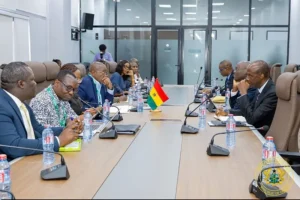
The MPR is not set by the Governor alone. It is decided by the Monetary Policy Committee (MPC), a seven-member body established under Section 27 of the Bank of Ghana Act.
The MPC includes the Governor, the First and Second Deputy Governors, the heads of the Bank’s economic research and treasury operations departments, and two external members appointed by the Board.

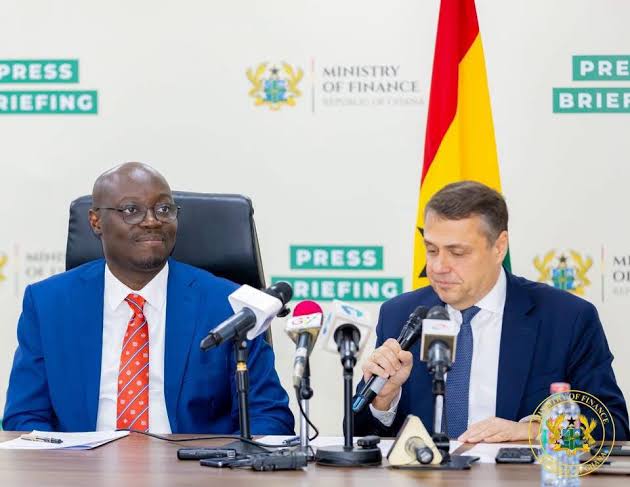
The Committee meets every two months over a three-day period. Each member votes on the appropriate policy rate, stating reasons for their preferred decision. The decision is announced at a press conference and communicated to the public.
When the MPC raises the MPR, it makes borrowing more expensive. This is meant to cool down spending and reduce inflation. When it lowers the MPR, it makes borrowing cheaper, encouraging spending and investment. The Bank has been using this tool actively: in late 2025, the MPC eased the policy rate by 350 basis points as inflation showed signs of easing.
The Bank as Regulator: Who Watches the Banks
The Bank of Ghana has overall supervisory and regulatory authority over banking and non-banking financial institutions. Its stated purpose is to achieve a sound, efficient banking system in the interest of depositors and the economy as a whole.

This regulatory role covers several areas:
Licensing and supervision. The Bank licenses banks and other financial institutions, and it can withdraw licenses when institutions fail to meet requirements. Its supervisory framework is designed to be consistent with international Basel Core Principles.
Risk-based supervision. The Bank uses a Risk-Based Supervisory framework that profiles the risks of each supervised institution. Supervisors assess both inherent risks in a bank’s business model and the quality of its risk management. This involves both off-site surveillance (reviewing reports submitted by banks) and on-site examinations (visiting banks to assess operations).
Capital requirements. The Bank sets minimum capital levels for banks. In 2017, it announced a new minimum paid-up capital of GH¢400 million, which led to a major recapitalisation exercise and a reduction in the number of universal banks from over 30 to 23.
Consumer protection. The Bank has taken an increasingly active role in protecting customers. It has capped Optional Issuer Fees on cross-currency card transactions at 2% and required mandatory disclosure of these fees. It has also warned banks against applying interest charges on inactive credit accounts in ways that distort customer outcomes.
Digital lending oversight. The Bank has been finalising comprehensive digital lending guidelines to address exploitative practices by online lending platforms. These guidelines set rules around licensing, disclosure, data protection, and ethical recovery practices.
Financial Stability: Beyond Individual Banks
The Bank’s mandate extends beyond supervising individual institutions. Since a 2016 amendment to the Act, it also has the statutory objective of promoting financial stability.
This means watching for risks that could affect the entire financial system — not just one bank. The Bank chairs the Financial Stability Council, an inter-institutional body that coordinates oversight across the Bank of Ghana, the Securities and Exchange Commission, the National Insurance Commission, the National Pensions Regulatory Authority, and other regulators.
The Bank has also taken dramatic action to protect stability. In recent years, it closed 420 banks and other financial institutions to sanitise the sector and create an environment for stronger institutions.
The Payment System: Making Money Move
If you use mobile money, a debit card, or a bank transfer, you are relying on payment systems that the Bank of Ghana regulates and supervises.
The Bank is responsible for promoting, regulating, and supervising payment and settlement systems. This includes facilitating the clearing of cheques and other credit instruments.
The Bank’s oversight covers systemically important payment systems, securities settlement systems, payment instruments including mobile money, and cross-border payments. It monitors risks such as credit risk, liquidity risk, operational risk, and systemic risk — the risk that one participant’s failure could cascade through the system.
The Bank also maintains the Collateral Registry, established in 2010 under the Borrowers and Lenders Act. This registry allows financial institutions to register collateral for loans, making it easier for lenders to extend credit and for borrowers to use assets as security.
The Bank as Banker to Government
The Bank of Ghana is also the government’s banker and financial adviser. It manages the government’s accounts, helps with debt issuance, and provides advice on economic policy.
This role is not without tension. When the Bank buys government bonds to support the government’s financing needs, it can inject liquidity into the economy. This is sometimes necessary in crises, but it can also undermine the Bank’s inflation-fighting efforts if overused. The IMF has noted the importance of strengthening the Bank’s macroprudential framework to better manage such risks.
What the Bank Does Not Do
The Bank of Ghana does not:
-
Set your taxes. Tax policy is the domain of the Ministry of Finance and Parliament.
-
Approve the national budget. That is Parliament’s responsibility.
-
Guarantee that your bank will never fail. It supervises and regulates, but banks can still fail. The Ghana Deposit Protection Scheme, which the Bank helped launch, provides limited protection for small depositors.
-
Set mobile money fees. Those are commercial decisions by operators, subject to regulatory oversight.
Frequently Asked Questions
What is the Bank of Ghana in simple terms?
It is Ghana’s central bank. It issues the currency, manages monetary policy to control inflation, regulates banks and financial institutions, and oversees the payment system.
Who owns the Bank of Ghana?
The Bank is a government-owned institution. It was established by ordinance in 1957 and operates under the Bank of Ghana Act, 2002 (Act 612).
How does the Bank of Ghana control inflation?
It uses an Inflation Targeting framework. The Monetary Policy Committee sets the Monetary Policy Rate, which influences borrowing costs and spending in the economy, helping to keep inflation within the 8±2% target band.
What is the Monetary Policy Rate?
It is the rate at which the Bank of Ghana lends to commercial banks. Changes in the MPR influence interest rates across the economy, affecting loans, mortgages, and savings.
Does the Bank of Ghana regulate mobile money?
Yes. The Bank regulates and supervises payment systems, including mobile money. It sets rules for payment service providers and monitors risks in the payment ecosystem.
What happens if a bank collapses?
The Bank of Ghana can take over a failing bank, revoke its license, or arrange a resolution. The Ghana Deposit Protection Scheme provides limited protection for depositors in eligible institutions.
How often does the MPC meet?
The MPC meets every two months over a three-day period to assess economic conditions and decide on the policy rate.
Can the Bank of Ghana print money to solve economic problems?
The Bank can create money through its operations, but doing so excessively can fuel inflation. Its primary mandate is price stability, which constrains how much money it can create without undermining its own objectives.
What to Remember
The Bank of Ghana is not just a building in Accra. It is the institution that determines the value of your money, the cost of your loans, and the safety of your savings.
Its primary job is to keep prices stable — to ensure that the cedi you earn today does not lose its value tomorrow. It does this by setting interest rates through the Monetary Policy Committee, regulating the banks that hold your deposits, and supervising the payment systems that move your money.
It also has a role in financial stability, watching for risks that could affect the entire financial system, and it acts as banker and adviser to the government.
Understanding what the Bank does — and what it does not do — is part of understanding how Ghana’s economy works. When the news reports that the MPC has raised the policy rate, or that the Bank has closed a bank, or that inflation has fallen, you now know who is making those decisions and why.
Source: The Accra Daily Mail

Samuel Kwame Boadu is a Ghanaian media entrepreneur and storyteller with a passion for amplifying urban voices and uncovering everyday truths. He is the Editor-in-Chief and Founder of The Accra Daily Mail, a dynamic digital platform dedicated to capturing the pulse of Ghana’s capital—its people, culture, challenges, business, sports and innovations.