
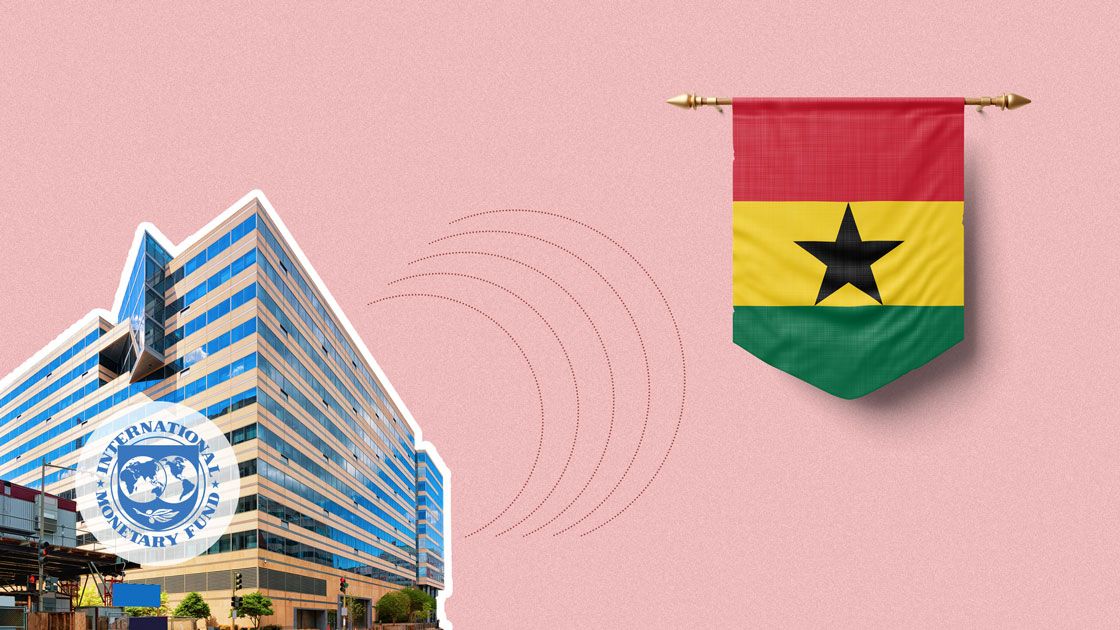
When Ghana ran into a severe economic crisis in 2022 – inflation climbing past 50%, the cedi losing more than half its value, and the country unable to pay its foreign debts – the government turned to an institution it had worked with many times before: the International Monetary Fund.
The IMF is not a bank in the ordinary sense. It does not fund roads, schools, or hospitals. It lends money to countries facing balance-of-payments crises – situations where a nation cannot pay for critical imports or service its debts – on the condition that the government implements reforms to fix the underlying problems. Understanding what the IMF is, why Ghana has worked with it for decades, and what the current arrangement means explains a central part of Ghana’s economic story.
Quick Facts
-
Founded: 1944 at the Bretton Woods Conference to promote international monetary cooperation
-
Membership: 191 countries, governed by and accountable to its member governments
-
Ghana’s relationship: Ghana has had 18 lending arrangements with the IMF since 1968, including the recent US$3 billion Extended Credit Facility (ECF)
-
2023 bailout: The ECF arrangement was approved in May 2023 to help Ghana stabilize its economy after the 2022 crisis
-
Exit and transition: Ghana completed the ECF in 2026 and moved to a non-financing Policy Coordination Instrument (PCI)
-
Key result: Inflation fell from over 50% to 5.3% by June 2026; reserves nearly doubled to about US$14.5 billion
What the IMF Actually Is
The International Monetary Fund works to achieve sustainable growth and prosperity for all of its 191 member countries. It does this by supporting economic policies that promote financial stability and monetary cooperation, which are essential to increase productivity, job creation and economic well-being.
The IMF has three critical missions: furthering international monetary cooperation, encouraging the expansion of trade and economic growth, and discouraging policies that would harm prosperity.

It was conceived in July 1944 at the United Nations Bretton Woods Conference. The 44 countries in attendance sought to build a framework for international economic cooperation and avoid repeating the competitive currency devaluations that contributed to the Great Depression of the 1930s.
The IMF is not an aid institution that subsidizes development projects. It lends to member countries to meet current international obligations – typically when a country cannot pay for imports or service its debts. For poor countries, it makes such loans at low interest rates and with longer-than-normal repayment periods.
Why Ghana Works With the IMF
Ghana’s relationship with the IMF is not new. The country has had 18 lending arrangements with the Fund since 1968, ranging from Standby Arrangements to Extended Credit Facilities.

The pattern is familiar. Ghana experiences a period of economic stress – often driven by fiscal slippages, external shocks, or both – and turns to the IMF for balance-of-payments support. The IMF provides financing in tranches, conditional on the government implementing reforms to restore stability.
The 2022 Crisis and the 2023 Bailout
The most recent crisis came to a head in 2022. Ghana faced the combined shocks of the COVID-19 pandemic and the Russia-Ukraine war, which worsened debt, inflation, and exchange rate pressures. By late 2022, the cedi had plummeted more than 40%, and consumer inflation hit a 21-year high of 37.2%.
President Akufo-Addo defended the decision to seek IMF assistance in July 2022, saying it was necessary to address the country’s economic predicament. In May 2023, the IMF approved a US$3 billion, 39-month Extended Credit Facility (ECF) arrangement.

The ECF is a lending programme designed for low-income countries facing serious economic difficulties. Under the arrangement, the IMF provides financial support in phases while monitoring economic reforms and targets agreed with the government.
According to Ghana’s Ministry of Finance, the government sought IMF support for three main reasons: to stabilize the economy after the combined shocks, to get balance-of-payments support to boost foreign reserves and stabilize the cedi, and to attract additional financing from development partners and creditors.
What the IMF Programme Required
IMF lending comes with conditions. The government must agree to a reform programme, and continued financial support is conditional on effective implementation.
Ghana’s ECF-supported programme focused on several areas:
-
Fiscal consolidation: Restoring debt sustainability through expenditure control and revenue mobilization
-
Monetary policy: Strengthening the central bank’s framework and rebuilding reserves
-
Debt restructuring: Negotiating with domestic and external creditors to reduce the debt burden
-
Structural reforms: Improving public financial management and governance, particularly for state-owned enterprises
The programme was not always smooth. There were delays in structural reforms, and a performance criterion was temporarily breached due to cost-sharing arrangements under the domestic gold purchase programme. The IMF approved a waiver based on the temporary nature of the deviation and corrective actions taken.
The Results: From Crisis to Stabilization
By 2026, the results of the programme were becoming clear.
Inflation fell from nearly 24% in January 2025 to 9.4% by late 2025, and further to 5.3% by June 2026. The cedi strengthened. Gross international reserves nearly doubled to about US$14.5 billion, reaching almost six months of import cover – compared to just two weeks during the crisis.
Economic growth exceeded expectations, reaching 6% in 2025 and accelerating to 6.4% year-on-year in early 2026. The primary fiscal balance swung to a surplus, and the risk of debt distress returned to moderate.
President Akufo-Addo, who initiated the IMF request, said the decision had “paid off” in terms of the turnaround seen in the economy.
The New Relationship: No More Borrowing
On May 15, 2026, Ghana officially completed the ECF programme. The final disbursement of about US$371 million** brought total disbursements under the arrangement to about **US$3 billion.
But Ghana did not end its relationship with the IMF. The country transitioned to a 36-month Policy Coordination Instrument (PCI).
The PCI is fundamentally different from the ECF. It is not a loan or bailout programme. It provides policy advice, technical support, monitoring, and economic assessments without any disbursement of IMF money.
According to the IMF staff team lead, the PCI aims at: sustaining growth-friendly fiscal adjustment; safeguarding debt sustainability; strengthening fiscal transparency and governance, particularly for state-owned enterprises; enhancing the monetary and exchange-rate policy framework; reinforcing financial sector stability; and supporting economic diversification and inclusive growth.
The government described the PCI as a signal of its commitment to prudent policy to private investors and development partners, which would lower borrowing costs and attract long-term institutional investment.
What This Means for Ordinary Ghanaians
The IMF programme had real consequences for daily life.
Austerity measures – spending cuts, tax increases, and public sector wage restraint – were part of the reform package. These measures are often painful, and their burdens are felt most sharply by ordinary citizens.
The debt restructuring that accompanied the programme also imposed losses on domestic bondholders, including pension funds and individual investors who had put savings into government bonds.
But the stabilization gains are tangible. Inflation is down, meaning prices are rising more slowly. The cedi is more stable, making imports less expensive. Reserves have been rebuilt, providing a buffer against future shocks.
The IMF’s assessment is that recent improvements in the debt trajectory have created “carefully calibrated fiscal space” that will help Ghana address pressing development needs, promote youth employment, and strengthen social spending.
Why Ghana Still Works With the IMF
Even though Ghana is no longer borrowing from the IMF, it remains under the PCI. Why?
The answer is credibility. The PCI signals to private investors and development partners that Ghana is committed to sound policies. It helps catalyze donor and market financing. For a country that defaulted on its debts and is rebuilding market access, that signal matters.
The IMF also provides technical assistance – helping Ghana strengthen tax administration, expenditure management, monetary policy, and financial sector supervision. This capacity-building work continues under the PCI.
The IMF’s own assessment is that “sustaining the reform momentum is critical”. The stabilization gains are real, but they are fragile. External uncertainty remains, and fiscal risks persist – notably from state-owned enterprises and ongoing quasi-fiscal activities.
Frequently Asked Questions
What is the IMF in simple terms?
The IMF is an international organization of 191 countries that works to promote financial stability and monetary cooperation. It lends money to countries facing balance-of-payments crises and provides policy advice and technical assistance.
Why did Ghana go to the IMF in 2022?
Ghana sought IMF support to stabilize its economy after the combined shocks of the COVID-19 pandemic and the Russia-Ukraine war worsened debt, inflation, and exchange rate pressures. The country needed balance-of-payments support to boost reserves and stabilize the cedi.
How much did Ghana borrow from the IMF?
Ghana’s 2023 Extended Credit Facility arrangement was for about US$3 billion. The country received the final disbursement of about US$371 million in 2026.
What is the difference between the ECF and the PCI?
The ECF was a lending programme that provided US$3 billion in financing. The PCI is a non-financing arrangement that provides policy advice and technical support without any IMF money.
Did Ghana default on its debt?
Yes. Ghana defaulted on its external debt in 2022 and underwent a comprehensive debt restructuring, including a Domestic Debt Exchange Programme and negotiations with external creditors.
What reforms did the IMF require?
The programme focused on fiscal consolidation, monetary policy strengthening, debt restructuring, and structural reforms including public financial management and state-owned enterprise governance.
How has Ghana’s economy improved?
Inflation fell from over 50% to 5.3% by June 2026. Reserves nearly doubled to about US$14.5 billion. Economic growth reached 6% in 2025. The risk of debt distress returned to moderate.
Is Ghana still borrowing from the IMF?
No. Ghana completed the ECF programme in 2026 and is now under the PCI, which does not involve any borrowing.
What to Remember
The IMF is not a development bank. It is a crisis lender and policy advisor. Ghana has worked with it for decades, turning to it when economic pressures become overwhelming.
The 2023 ECF programme was a response to a severe crisis. It came with conditions – fiscal consolidation, debt restructuring, and structural reforms – that were painful but produced results. Inflation fell, reserves were rebuilt, and the cedi stabilized.
Ghana has now exited the borrowing programme and moved to a non-financing PCI. The message to investors and creditors is that the reform momentum will continue. Whether that message holds depends on whether Ghana sustains the policies that brought it back from the brink.
For ordinary Ghanaians, the practical takeaway is that IMF programmes affect taxes, spending, and the cost of living. Understanding what the IMF does – and what Ghana has agreed to – is part of understanding the country’s economic reality.
Source: The Accra Daily Mail

Samuel Kwame Boadu is a Ghanaian media entrepreneur and storyteller with a passion for amplifying urban voices and uncovering everyday truths. He is the Editor-in-Chief and Founder of The Accra Daily Mail, a dynamic digital platform dedicated to capturing the pulse of Ghana’s capital—its people, culture, challenges, business, sports and innovations.