





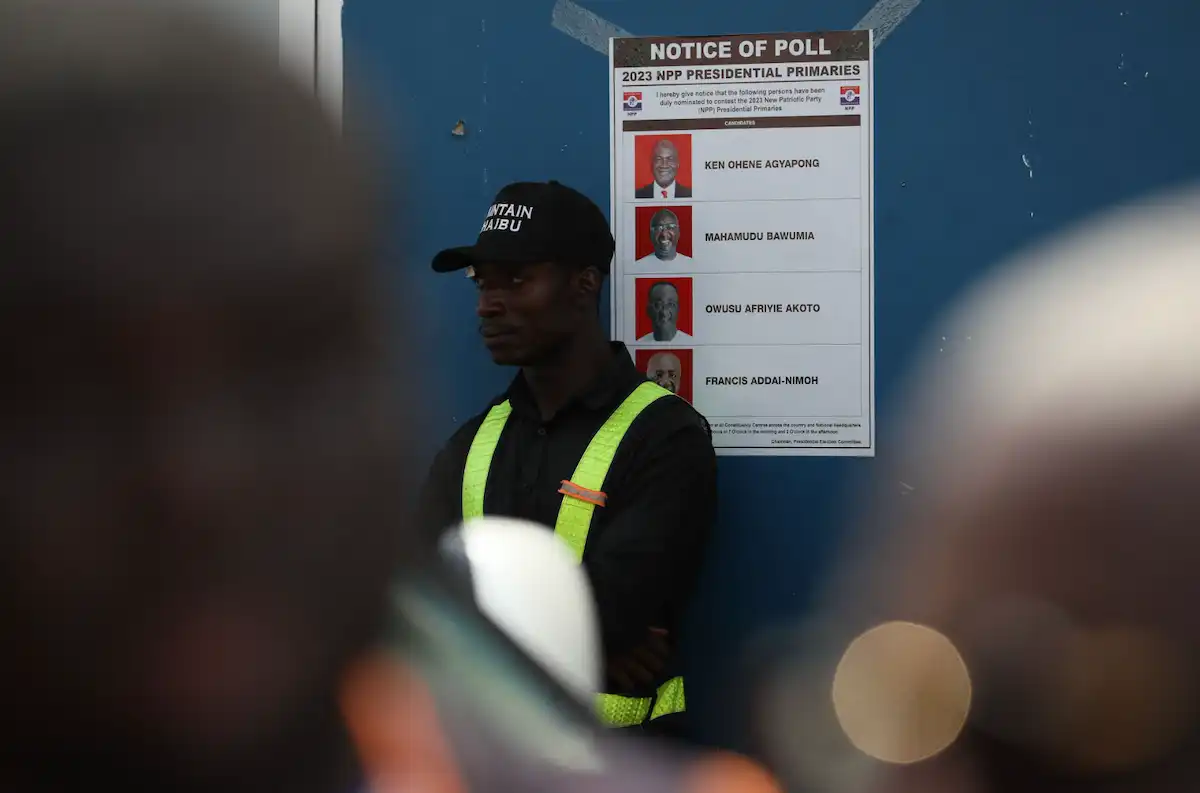

Political parties are everywhere in Ghanaian public life. Their colours appear on billboards, their slogans fill the airwaves during campaign season, and their symbols are printed on ballot papers. Yet for all their visibility, many people do not fully understand how political parties actually work. Who runs them? How do they choose candidates? What rules govern them? Where do they get their money?
This article explains how political parties operate in Ghana. It covers the legal framework, the internal structures, the candidate selection process, party financing, and the role parties play in the democratic system. It is written for ordinary citizens who want to understand the institutions that shape the country’s politics.
Quick Facts
-
Political parties in Ghana are regulated by the 1992 Constitution and the Political Parties Act.
-
Parties must be registered with the Electoral Commission to operate legally and contest elections.
-
Ghana has a multi-party system, with two dominant parties — the New Patriotic Party and the National Democratic Congress — and several smaller parties.
-
Parties are organised at national, regional, constituency, and polling station levels.
-
Candidate selection is done through internal processes, often primary elections or selection by party leadership.
-
Parties are funded through membership dues, donations, and sometimes state support, though the details vary.
-
Parties are essential to democracy, but they also face challenges including money, factionalism, and weak internal accountability.
What a Political Party Is
A political party is an organised group of people who share similar political views and come together to contest elections and seek government power. Parties provide a way for citizens to participate in politics collectively rather than as isolated individuals.
In Ghana, political parties are central to the democratic system. They recruit and train candidates, develop policy platforms, mobilise voters, and form governments when they win elections. Without parties, the machinery of representative democracy would not function.

The 1992 Constitution guarantees the right to form political parties. It also sets out rules to ensure that parties operate in accordance with democratic principles and national unity.
The Legal Framework
The Constitution
The Constitution guarantees the right to form political parties and sets out basic requirements. It prohibits parties that are based on ethnic, religious, or regional lines, reflecting the country’s commitment to national cohesion.
The Constitution also provides for the registration of parties and requires that they operate openly and democratically.

The Political Parties Act
The Political Parties Act provides detailed rules for the formation, registration, and operation of political parties. It covers:
-
The process of registration with the Electoral Commission
-
The internal organisation of parties
-
The conduct of party elections
-
Party finances and disclosure requirements
-
The rights and obligations of members
The Act is intended to ensure that parties operate transparently and democratically.
The Electoral Commission
The Electoral Commission is responsible for registering political parties. A party that wants to contest elections must be registered with the Commission and meet the legal requirements.

The Commission also monitors parties to ensure they comply with the law. In some cases, the Commission can take action against parties that violate the rules.
How Parties Are Organised
National Level
At the national level, a political party is run by a national executive committee, headed by a chairperson or general secretary. The national leadership sets the party’s overall direction, manages its finances, and makes key decisions about elections and strategy.
Regional Level
Parties have regional structures that coordinate activities within each region. Regional executives are responsible for organising campaigns, mobilising support, and communicating the party’s message.
Constituency Level
The constituency is the most important unit for parliamentary elections. Each constituency has a party organisation, led by constituency executives. These officials manage the party’s ground operations: registering members, organising events, and preparing for elections.
Polling Station Level
At the grassroots, parties have structures at the polling station level. Polling station agents and organisers are the party’s eyes and ears on the ground. They know the voters, monitor the process, and mobilise support on election day.
How Parties Choose Candidates
Parliamentary Candidates
The selection of parliamentary candidates is one of the most important functions of a political party. The process varies by party but generally involves:
-
Aspirants declaring their interest
-
Vetting by party committees
-
Primary elections, where party members in the constituency vote for their preferred candidate
-
Or selection by the national leadership in some cases
Primary elections can be competitive and contentious. Factional disputes sometimes arise, and losing aspirants may feel aggrieved. The party’s ability to manage these processes affects its unity and electoral prospects.
Presidential Candidates
Presidential candidates are usually selected through party congresses or special conferences. Delegates from across the country vote for their preferred candidate.
The presidential candidate is the face of the party in the general election. The choice is therefore critical, and the selection process is often intense.
The Two-Party Dynamic
Ghana has a multi-party system, but two parties have dominated since the return to democratic rule in 1992.
The New Patriotic Party
The New Patriotic Party, or NPP, traces its roots to the United Gold Coast Convention and the tradition of Danquah and Busia. It is a centre-right party that has won several presidential elections.
The National Democratic Congress
The National Democratic Congress, or NDC, emerged from the Provisional National Defence Council era. It is a centre-left party that has also won multiple presidential elections.
Other parties exist and contest elections, but they have struggled to break the dominance of the two major parties. Some smaller parties have formed alliances with the larger ones, while others continue to contest on their own platforms.
How Parties Are Funded
Membership Dues
Parties collect dues from their members, though collection is often inconsistent. Dues provide a base of funding but are rarely sufficient for major campaigns.
Donations
Parties receive donations from supporters, businesses, and other sources. Donations can be significant, especially during election years. The Political Parties Act requires parties to disclose their finances, though enforcement has been weak.
State Support
The question of state funding for political parties has been debated for years. Some argue that state support would reduce the influence of wealthy donors and level the playing field. Others resist the idea. The current framework allows for some state support in certain circumstances, but the details vary.
Campaign Spending
Election campaigns are expensive. Rallies, advertising, transportation, and party agents all cost money. The reliance on private donations raises questions about the influence of money in politics.
The Role of Party Members
Ordinary Members
Ordinary members are the foundation of a party. They pay dues, attend events, vote in primaries, and provide grassroots support. Their loyalty and energy are essential to the party’s success.
Activists and Volunteers
Some members are more active than others. Activists and volunteers organise events, distribute materials, and persuade voters. They are the party’s foot soldiers.
Party Agents
On election day, parties deploy agents to polling stations and collation centres. These agents observe the process, protect the party’s interests, and sign results forms. Their presence is a key safeguard of electoral integrity.
The Challenges Parties Face
Factionalism
Internal divisions are common. Factions form around personalities, regions, or policy differences. When factionalism is intense, it can weaken the party and affect its electoral performance.
Money and Corruption
The role of money in party politics is a persistent concern. Wealthy individuals may exercise disproportionate influence, and the sources of party funding are not always transparent.
Weak Internal Democracy
In some parties, internal processes are not as democratic as they should be. Leadership may manipulate primaries or suppress dissent. This weakens accountability and can alienate members.
The Dominance of Two Parties
The dominance of two parties limits political choice. Smaller parties struggle to compete, and some voters feel that their options are constrained.
Gender and Inclusion
Women and marginalised groups are underrepresented in party leadership and candidate selection. Efforts to improve representation have had limited success.
Why Parties Matter
Despite their flaws, political parties are essential to democracy. They:
-
Organise political choice
-
Recruit and train leaders
-
Mobilise citizens
-
Form governments and oppositions
Without parties, politics would be chaotic and fragmented. Parties provide structure and accountability, even when they fall short of their ideals.
Common Misconceptions
“Parties are private clubs with no rules”
Parties are regulated by law and must comply with constitutional and statutory requirements. They are not above the law.
“Only the two big parties matter”
The two big parties dominate, but smaller parties exist and can influence the political conversation. Their role should not be dismissed entirely.
“Party leaders can do whatever they want”
Party leaders must operate within the party’s constitution and the laws of Ghana. Internal accountability mechanisms exist, though they are not always effective.
“Political parties are only active during elections”
Parties operate year-round, though their visibility peaks during campaigns. They engage in policy work, member recruitment, and community activities between elections.
“Independent candidates are better than party candidates”
Independent candidates can be effective, but they lack party machinery and support. Party affiliation provides resources and structure that independents often struggle to replicate.
Frequently Asked Questions
How is a political party formed in Ghana?
A group must apply to the Electoral Commission for registration, meeting the legal requirements. The Commission reviews the application and registers the party if it complies with the law.
Can anyone join a political party?
Generally, yes. Parties welcome new members who share their principles. However, certain public officials may be restricted from active party politics.
How are party leaders chosen?
Party leaders are chosen through internal elections, usually at party congresses. The process varies by party.
Do parties receive government funding?
The question is complex. Some state support exists in certain circumstances, but parties are primarily funded through donations and dues. Check the current legal framework for details.
Can a party be banned?
The Constitution and the law provide for the regulation of parties. A party that violates the law can face sanctions, including deregistration in extreme cases.
What is the difference between a party and a movement?
A party is formally registered with the Electoral Commission and contests elections. A movement may be less formal and not necessarily focused on winning office.
How can I get involved in party politics?
You can join a party as a member, attend meetings, volunteer during campaigns, and participate in internal elections. The first step is to contact the party’s local office.
What to Remember
Political parties are the engines of Ghanaian democracy. They organise political choice, recruit leaders, and connect citizens to the state. They are also flawed institutions, shaped by money, factionalism, and internal power struggles.
Understanding how parties work helps citizens engage more effectively. You can make better choices as a voter, a member, or a candidate when you know the rules and structures that govern party life.
The next time you see a party rally or a primary election, you will know something about the machinery behind the spectacle. Political parties are not just platforms for ambition. They are the institutions through which democracy is practised — and their health matters for the health of the whole system.
Source: The Accra Daily Mail

Samuel Kwame Boadu is a Ghanaian media entrepreneur and storyteller with a passion for amplifying urban voices and uncovering everyday truths. He is the Editor-in-Chief and Founder of The Accra Daily Mail, a dynamic digital platform dedicated to capturing the pulse of Ghana’s capital—its people, culture, challenges, business, sports and innovations.