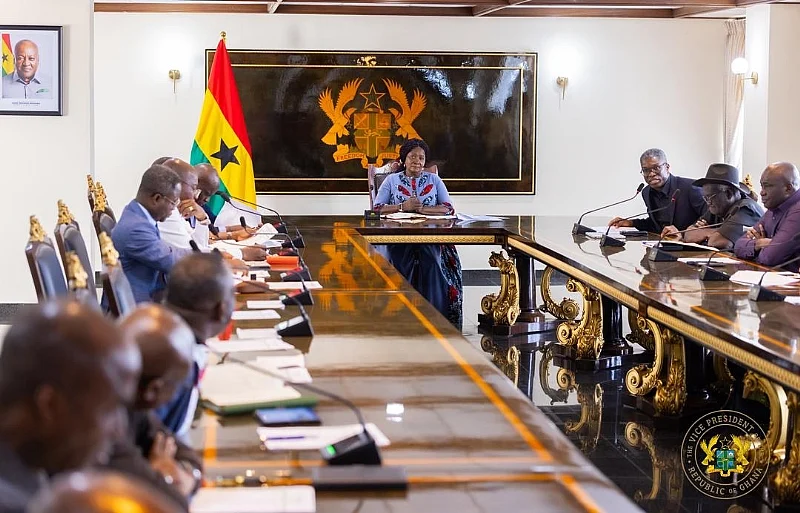












When a government ministry needs to build a road, buy vehicles, or hire consultants, it does not simply call a supplier and place an order. It must follow a legal process that determines who gets the contract, how much they are paid, and what happens if they fail to deliver.
That process is public procurement, and it produces government contracts. Understanding how these contracts work matters because they consume a significant share of the national budget and determine the quality of infrastructure and services that ordinary Ghanaians rely on. Recent reforms have tightened the rules, giving the Finance Ministry more control and reducing the time it takes to award contracts.
Quick Facts
-
Governing law: Public Procurement Act, 2003 (Act 663), amended by Act 914 of 2016 .
-
Regulator: Public Procurement Authority (PPA), established in 2004 .
-
New finance control: Since April 2025, no contract can be approved without prior commencement authorisation from the Ministry of Finance .
-
Tender timelines: Government has moved to cut national competitive tendering from 23 weeks to 8 weeks for goods, and international competitive tendering for works from 27 weeks to 14 weeks .
-
E-procurement: The Ghana Electronic Procurement System (GHANEPS) was launched in 2019 to digitise the process .
-
Complaints: Suppliers can seek administrative review at the PPA under Section 80 of Act 663 .
The Legal Foundation
Every government contract in Ghana sits on a legal framework built around Act 663 and its 2016 amendment. The Act established the Public Procurement Authority to harmonise procurement across the public service, secure judicious use of state resources, and ensure procurement is fair, transparent and non-discriminatory.
The law defines what can be procured: goods (objects of every kind, including raw materials and equipment), works (construction, reconstruction, repair or renovation of buildings and structures), and services (labour, time or effort, including consulting and technical services).
The Act applies to all government agencies and institutions where the state has a majority interest. Procurement decisions are decentralised: each ministry, department, agency and district assembly is a procuring entity with its own procurement unit and Entity Tender Committee.
The Tender Process: From Planning to Award
Before a contract can be awarded, the procuring entity must plan. The PPA’s annual assessment of procurement compliance found that procurement planning remains a weak area, with some entities failing to post their procurement plans on the PPA website. This gap, the Authority noted, “works against increasing the levels of transparency associated with the award of contracts” .
Once a need is identified, the entity selects a procurement method. Competitive tendering is the preferred method. This can be International Competitive Tendering for large or specialised contracts, or National Competitive Tendering for contracts that local suppliers can handle. Restricted tendering limits participation to pre-qualified suppliers. Single-source procurement is the most restrictive and requires PPA Board approval .
The choice of method is determined by thresholds set out in the Act’s schedules. Parliament has passed a Legislative Instrument to increase these thresholds, a move the PPA Board Chair noted could enhance spending autonomy but also risk entities “bypassing established tendering procedures by breaking bulk to meet threshold limits”.
For competitive tenders, the entity publishes a notice, issues tender documents, receives bids, opens them publicly, evaluates them against stated criteria, and selects the winning bidder. The Act prohibits introducing new evaluation criteria after tenders are submitted.
The Finance Ministry’s New Gatekeeping Role
A significant change came into effect in April 2025. Finance Minister Dr Cassiel Ato Forson announced that no government contract would be approved without prior commencement authorisation from the Ministry of Finance. “You cannot award contracts without the express approval of the Ministry of Finance,” he stated. “No commencement certificate, no procurement” .
The directive was framed as a measure to enforce fiscal discipline and eliminate financial recklessness. The Minister warned that any breach would attract serious consequences, and that the Ministry would “no longer take the fall for fiscal indiscipline”.
This added a layer of central control over a system that had been largely decentralised. Procuring entities must now obtain Finance Ministry authorisation before proceeding with contract approval, tying procurement more tightly to budget implementation.
The Push for Faster, More Competitive Tendering
In July 2026, the government announced further reforms aimed at speeding up contract awards while tightening rules on non-competitive methods. Presenting the Mid-Year Budget Review, Dr Forson said the lead time for national competitive tendering for goods would be reduced from 23 weeks to 8 weeks, while international competitive tendering for works would be cut from 27 weeks to 14 weeks.
He emphasised that competitive tendering would remain the government’s preferred method, with sole-source procurement permitted only under genuine exceptional circumstances: emergencies, national security, or situations where only one supplier is capable of providing the required goods, works or services.
“Competitive tendering must remain the norm,” he said. “Restricted tendering and single source procurement must be the exception”.
Contract Administration: What Happens After Award
Winning a contract is only the beginning. The PPA has issued detailed Contract Administration Manuals for goods, works and technical services, setting out how contracts should be managed after signature.
For technical services, the manuals require the procuring entity to appoint a Contract Administrator responsible for monitoring performance, collecting information and measuring delivery against agreed specifications . Documentation is a core requirement: official contract copies, modifications, correspondence, meeting minutes, progress reports, project diaries and telephone logs must all be maintained. The manuals note that a diary “may become evidence in court proceedings,” so diarists should record only facts, leaving out conclusions and opinions.
The manuals also identify contract implementation as the stage “most prone to fraudulent and corrupt practices,” because it is when money enters the relationship between the entity and the supplier. Risks include scope not being achieved despite payment, unjustified variations, substitution of inferior products, and billing for work not done by specified personnel .
The PPA’s 2023 assessment of procurement compliance found improvement in contract management, with the overall score rising from 66.24% in 2022 to 74.47% in 2023. But entities still had “issues with record keeping,” especially in managing stores .
Complaints and Disputes
Suppliers who believe a procurement process was not properly followed can seek administrative review. The PPA has inaugurated a Complaints Review Committee under Section 80 of the Act to adjudicate grievances .
The Committee receives petitions, reviews responses and evidence from both complainants and procuring entities, and determines the appropriate action. Where an entity is found to have violated procedure, the committee may recommend remedies including compensation to the affected complainant. A supplier who makes a “flimsy complaint” may be sanctioned .
Where the System Still Struggles
The PPA’s own assessment shows that compliance, while improving, remains “marginal and needs to be enhanced on a sustainable basis” .
Posting notices of contracts awarded on the PPA website remains a challenge for many entities, undermining transparency. Procurement planning is weak. Record keeping during contract management needs improvement. The PPA has recommended that entities assign officers to play the role of Contract Administrators, expand training on contract management, and ensure timely resolution of complaints.
The use of restrictive and sole-source procurement has also drawn concern. A Development Gateway analysis recommended reducing reliance on these methods to “an appropriate (e.g. 15-25%) level, ensuring their use only where insufficient competitive options or urgency demand”.
What This Means for Ordinary Ghanaians
Government contracts determine what gets built and bought with public money. When the system works, roads are completed, hospitals are equipped, and taxpayer funds deliver value. When it fails, projects stall, costs inflate, and public services suffer.
The recent reforms aim to address both speed and accountability. Faster tender timelines could mean projects start sooner. Finance Ministry authorisation could reduce unauthorised spending. Tighter rules on sole-source procurement could increase competition. But the PPA’s own data shows that implementation remains uneven.
For suppliers, the system offers opportunity – and a complaints mechanism if the process is unfair. For citizens, it offers a framework to demand accountability. The rules exist. Whether they are followed is the ongoing test.
Frequently Asked Questions
Who approves government contracts in Ghana?
Procuring entities approve contracts within their threshold limits. Since April 2025, no contract can be approved without prior commencement authorisation from the Ministry of Finance . Single-source contracts require PPA Board approval .
What is the most common method of government procurement in Ghana?
Competitive tendering is the preferred method, either National Competitive Tendering or International Competitive Tendering depending on the value and nature of the contract. The government has stated that competitive tendering must remain the norm .
Can a company challenge a government contract award?
Yes. Suppliers can seek administrative review at the PPA under Section 80 of Act 663. The PPA’s Complaints Review Committee adjudicates grievances and can recommend remedies including compensation .
What is GHANEPS?
GHANEPS is the Ghana Electronic Procurement System, a web-based platform launched in 2019 to digitise public procurement, including tender publication, bid submission, evaluation and contract award.
How long does it take to award a government contract?
The government has announced reforms to reduce national competitive tendering for goods from 23 weeks to 8 weeks, and international competitive tendering for works from 27 weeks to 14 weeks. Actual timelines depend on the complexity of the procurement.
What happens if a contractor fails to deliver?
The contract administration manuals provide for monitoring, performance evaluation, penalties, liquidated damages, and contract termination for poor performance or fraud. The Audit Service can also review contract execution and report irregularities.
What is a commencement authorisation?
It is a certificate from the Ministry of Finance required before a government contract can be approved, introduced in April 2025 to enforce fiscal discipline and link procurement to budget implementation.
Does the law reserve contracts for local businesses?
The Act encourages local participation in National Competitive Tendering and provides a margin of preference for domestic suppliers. There have also been policy discussions about reserving a share of contracts for women, youth and persons with disabilities, though this has not yet been passed into law.
What to Remember
Government contracts in Ghana follow a structured legal process: planning, method selection, tender, evaluation, award, contract administration and payment. The framework is designed to ensure competition, transparency and value for money.
Recent reforms have added Finance Ministry authorisation before contract approval, cut tender timelines, and tightened rules on sole-source procurement. The PPA’s own assessments show that compliance is improving but remains uneven, with weaknesses in planning, transparency and record keeping.
For suppliers, the system offers a complaints mechanism. For citizens, it offers a framework to demand that public money is spent properly. The rules are detailed. The test is implementation.
Source: The Accra Daily Mail

Samuel Kwame Boadu is a Ghanaian media entrepreneur and storyteller with a passion for amplifying urban voices and uncovering everyday truths. He is the Editor-in-Chief and Founder of The Accra Daily Mail, a dynamic digital platform dedicated to capturing the pulse of Ghana’s capital—its people, culture, challenges, business, sports and innovations.