





Every cedi the government spends on a new road, a hospital bed, a school block or even office stationery passes through a system called public procurement. It is the formal process by which state institutions buy goods, hire contractors and engage consultants using public funds.
For ordinary Ghanaians, procurement can feel remote. But it shapes what gets built, which companies win contracts, how much things cost, and whether public money is spent honestly or lost to waste and corruption. Understanding how the system works – and where it can fail – matters for anyone who pays taxes or uses public services.
Quick Facts
-
What it is: Public procurement is the process by which government agencies acquire goods, works and services using public funds.
-
Governing law: The Public Procurement Act, 2003 (Act 663), amended by the Public Procurement (Amendment) Act, 2016 (Act 914) .
-
Regulator: The Public Procurement Authority (PPA), established under Act 663 .
-
Key e-platform: The Ghana Electronic Procurement System (GHANEPS), launched in 2019, digitises tender processes .
-
Thresholds: Parliament has passed a Legislative Instrument to increase approval thresholds in the Act’s schedules .
-
Scope: Covers goods, works (construction), consultancy and non-consultancy services, and disposal of public assets .
What Counts as Public Procurement
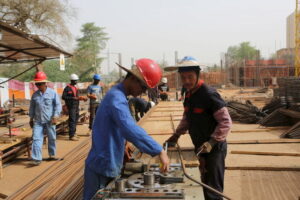
The law defines three main categories. Goods include objects of every kind – raw materials, products, equipment, even electricity . Works covers construction, reconstruction, demolition, repair or renovation of buildings or structures, including site preparation and installation . Services means the furnishing of labour, time or effort, including consulting, professional and technical services .
Procurement also covers the disposal of government stores, plant and equipment. When a ministry sells off old vehicles or decommissioned equipment, that sale is governed by the same legal framework.
The Act applies to all government agencies, institutions and establishments in which the government has a majority interest. There are exceptions for procurement tied to international obligations, such as loans or grants where the funding agreement specifies different procedures.
Who Regulates the System
The Public Procurement Authority sits at the centre. Established by Act 663, the PPA sets procurement policy, monitors compliance by procuring entities, issues standard tender documents, suspends delinquent suppliers, and manages the electronic procurement system.
The Authority is also responsible for training public officials involved in procurement, maintaining a database of suppliers and contractors, and advising government on procurement matters. It publishes a monthly bulletin containing tender notices and contract award information.
The Act requires the Authority to harmonise procurement across the public service to secure “judicious, economic and efficient use of state resources” and ensure procurement is “fair, transparent and non-discriminatory”.
The Structure: Who Buys What
Procurement decisions are not made by one central office. The system is decentralised, with different entities responsible for procurement at different value levels.
Every ministry, department, agency and district assembly is a procuring entity. Each entity is required to establish a procurement unit staffed with qualified personnel and an Entity Tender Committee (ETC) . The ETC works within method thresholds specified in the Fifth Schedule and approval limits in the Second and Third Schedules of the Act .
The head of each entity is responsible and accountable for compliance with the Act. Concurrent approval by a tender review committee does not absolve the head of entity from accountability if a contract was procured inconsistently with the law .
The 2016 amendment reorganised procuring entities into six categories based on function and spending levels: Special Constitutional Bodies (A); Central Management Agencies, Ministries, SOEs and Regional Coordinating Councils (B); Teaching Hospitals and Tertiary Institutions (C); Regional Hospitals and Colleges (D); District Hospitals and Second Cycle Schools (E); and Metropolitan, Municipal and District Assemblies (F). Each category has different thresholds for when procurement decisions must be escalated to higher approval authorities .
How Procurement Happens: The Methods
The Act sets out several procurement methods, and the choice depends on the nature and value of what is being bought.
Competitive Tendering is the default. This can be InterNational Competitive Tendering (ICT) for large or specialised contracts, or National Competitive Tendering (NCT) for contracts that can be handled by local suppliers. The goal is to attract multiple bidders and secure value for money through competition.
Restricted Tendering limits participation to pre-qualified or invited suppliers. It is used where the nature of the goods or works justifies a limited pool.
Single Source (Sole Source) procurement is the most restrictive method. It requires approval from the PPA Board and can only be justified under specific circumstances set out in the Act . These include situations where goods or services are only available from one supplier, where there is an urgent need due to unforeseeable circumstances, or where standardisation and compatibility with existing equipment require a specific supplier.
The PPA has expressed concern that some entities proceed with single-source procurement without prior approval and then seek ratification after the fact . The Authority considers this practice deeply worrying.
Framework Agreements allow entities to establish long-term arrangements with suppliers, with specific contracts (“call-offs”) awarded through mini-competitions or direct selection as specified in the agreement .
GHANEPS: Moving Procurement Online
Historically, public procurement in Ghana involved physical tender boxes, paper submissions and manual evaluation. That is changing.
The Ghana Electronic Procurement System, known as GHANEPS, is a web-based platform developed in accordance with the Public Procurement Act. It provides a secure, interactive environment for procurement of all categories and values. The system supports user registration, tender notification, tender preparation and submission, online evaluation, contract awarding, catalogue management, framework agreements, auctions and payments .
GHANEPS was launched in 2019 as part of Ghana’s broader public financial management reforms. The PPA states that the use of the system has increased competition and enhanced private sector confidence in participating in public procurement.
Suppliers can register on the platform to become eligible for tenders, receive email notifications of new opportunities, and submit bids online . The system is being rolled out progressively, and coverage is still expanding .
What the Rules Say About Fairness
The Act prohibits specifications or requirements that discriminate against suppliers based on nationality or other discriminatory criteria. Tender documents must be evaluated strictly on the criteria stated in the documents, and no new criteria can be introduced at any stage of evaluation .
Complaints and administrative review are built into the system. A complainant can seek administrative review at the PPA within 21 days of certain decisions, including dissatisfaction with a written decision of the head of entity, or where a complaint submitted at entity level was not resolved within 21 days .
However, not every decision is reviewable. The selection of a procurement method, the choice of selection procedure, and a decision by an entity to reject tenders are not subject to review .
The PPA has also inaugurated a Complaints Review Committee of its Board to adjudicate procurement-related grievances .
Where the System Struggles
The framework is comprehensive on paper. Implementation is where challenges emerge.
Non-compliance and audit findings. The Auditor-General’s reports regularly identify procurement irregularities. A recent audit of District Assemblies Common Fund management found instances where non-compliance with the appropriate procurement method “defeated the purpose of value for money and led to uncompetitive procurement” . The report recommended that the Coordinating Director and Procurement Officer be held liable for losses from non-compliance.
Single-source misuse. The PPA has raised concerns about entities proceeding with single-source procurement without prior approval and then applying for ratification . This practice undermines the intent of the approval requirement.
Capacity gaps. The PPA has invested in training procurement officers, suppliers and contractors across the country . But capacity constraints remain, particularly at the district level. The 2016 amendment addressed some of these issues by allowing Entity Tender Committee members to be drawn from within the organisation, making it easier to form quorums .
Slow digital adoption. While GHANEPS has been launched, its rollout is still in progress, and not all contracting processes are managed through the system .
Why This Matters for Ordinary Ghanaians
Public procurement is not an abstract bureaucratic exercise. It determines the quality of the roads you drive on, the medicines in your clinic, the desks in your child’s classroom, and the reliability of the electricity supply.
When procurement works well, the government gets the best value for money. When it fails, the consequences are tangible: inflated contract prices, substandard construction, delayed projects and public funds diverted from their intended use.
Understanding the system also helps citizens and businesses know their rights. If you are a supplier, you have the right to bid on public tenders and to complain if the process is unfair. If you are a citizen, you have an interest in ensuring that procurement is transparent and accountable.
Frequently Asked Questions
What is public procurement in Ghana?
It is the process by which government agencies buy goods, works and services using public funds. It is governed by the Public Procurement Act, 2003 (Act 663), as amended by Act 914 of 2016.
Who regulates public procurement in Ghana?
The Public Procurement Authority (PPA) regulates the system. It sets policy, monitors compliance, issues standard documents, trains officials, and manages the electronic procurement platform.
What is the difference between single-source and competitive tendering?
Competitive tendering invites multiple suppliers to bid, promoting competition and value for money. Single-source procurement involves negotiating with one supplier and requires PPA Board approval under specific conditions.
What is GHANEPS?
GHANEPS is the Ghana Electronic Procurement System, a web-based platform for conducting public procurement online, including tender publication, bid submission, evaluation and contract award.
Can a supplier challenge a procurement decision?
Yes. A complainant can seek administrative review at the PPA within 21 days of certain decisions. However, some decisions, such as the choice of procurement method, are not subject to review.
What happens if a government entity violates procurement rules?
The Act provides for penalties. A person who contravenes certain provisions can be fined up to 2,500 penalty units or imprisoned for up to five years, or both. The head of entity remains accountable even if a tender review committee approved the contract.
How can a business register to supply the government?
Suppliers can register on GHANEPS and on the PPA’s Supplier Database. Registration enables participation in tenders and access to tender documentation.
Does the procurement law address corruption?
The Act establishes procedures designed to prevent corruption, including transparency requirements, competitive bidding, complaint mechanisms and penalties for violations. However, enforcement remains a challenge identified in audit reports.
What to Remember
Public procurement is the machinery through which government turns budgets into tangible things: roads, buildings, equipment, services. It is governed by a detailed legal framework designed to ensure competition, transparency and value for money.
The system has evolved from a paper-based process to a digital one through GHANEPS, and the rules have been amended to address practical challenges. But implementation gaps persist, and audit findings continue to highlight non-compliance.
For ordinary Ghanaians, the practical takeaway is that procurement is not just a government problem. It is a public accountability issue. When procurement fails, the cost is paid by everyone who relies on public services or contributes taxes. Understanding the system – and demanding that it works – is part of the civic bargain.
Source: The Accra Daily Mail

Samuel Kwame Boadu is a Ghanaian media entrepreneur and storyteller with a passion for amplifying urban voices and uncovering everyday truths. He is the Editor-in-Chief and Founder of The Accra Daily Mail, a dynamic digital platform dedicated to capturing the pulse of Ghana’s capital—its people, culture, challenges, business, sports and innovations.