










Every vehicle on Ghana’s roads is required by law to have insurance. But not all motor insurance is the same. The two main types — third-party and comprehensive — offer very different levels of protection, and many drivers do not fully understand the difference until they are standing beside a damaged car, arguing with an insurance company.
The choice between third-party and comprehensive insurance is one of the most important financial decisions a vehicle owner can make. It affects what happens after an accident, how much you pay out of pocket, and how well you are protected against the many risks of the road.
This Accra Daily Mail article explains the difference between third-party and comprehensive motor insurance in plain language. It is written for the ordinary Ghanaian driver — the trotro operator, the private car owner, the business fleet manager — who wants to understand what they are buying and why it matters.
Quick Facts
-
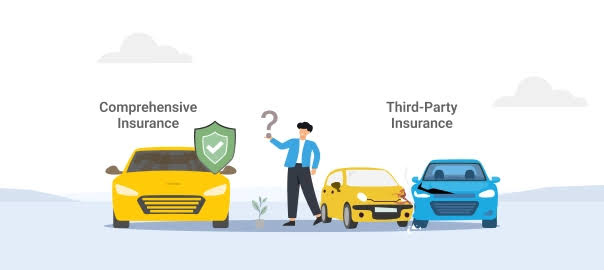
Third-party motor insurance is the minimum legal requirement in Ghana. It covers damage you cause to other people and their property.
-
Third-party insurance does not cover damage to your own vehicle or injuries to yourself.
-
Comprehensive insurance covers third-party liabilities plus damage to your own vehicle from accidents, theft, fire, and other perils.
-
Comprehensive insurance costs more than third-party, but offers far broader protection.
-
The law requires every vehicle on the road to have at least third-party insurance.
-
Driving without insurance is an offence and can lead to penalties.
-
The choice between the two depends on the value of your vehicle, your budget, and your risk tolerance.
What the Law Requires
Under Ghanaian law, every vehicle used on a public road must be insured against third-party liabilities. This is the minimum legal standard. The purpose is not to protect you — it is to protect other people.

If you cause an accident and injure someone or damage their property, third-party insurance covers the compensation. Without it, you could be personally liable for medical bills, repairs, and legal claims that could run into thousands of cedis.
Driving without insurance is an offence. It exposes you to penalties and, more importantly, to financial ruin if you cause an accident.
The law does not require you to insure your own vehicle. That is a choice. Comprehensive insurance is optional — but for many drivers, it is a wise one.

What Third-Party Insurance Covers
Third-party insurance covers your legal liability to other people. If you cause an accident, the insurer pays for:
-
Damage to another person’s vehicle or property
-
Injury to other people, including passengers and pedestrians
-
Legal costs associated with third-party claims
The key word is “third-party.” The third party is the other person — the person you hit, the property you damaged, the pedestrian you injured. Your insurer compensates them.
What third-party insurance does not cover:

-
Damage to your own vehicle
-
Your own injuries
-
Theft of your vehicle
-
Fire damage to your vehicle
-
Damage caused by flooding or other perils
If your car is stolen, or burns, or is badly damaged in an accident you caused, third-party insurance will not pay a cedi for your loss. You bear the full cost yourself.
What Comprehensive Insurance Covers
Comprehensive insurance includes everything third-party covers, plus protection for your own vehicle.
A comprehensive policy typically covers:
-
All third-party liabilities
-
Damage to your own vehicle from an accident, regardless of fault
-
Theft or attempted theft of your vehicle
-
Fire damage
-
Flood and storm damage
-
Vandalism or malicious damage
-
Some policies include windscreen cover, towing, and other benefits
The exact cover depends on the policy. Some comprehensive policies have exclusions or limits, so it is important to read the document carefully.
Comprehensive insurance costs more than third-party. The premium is higher because the insurer is taking on more risk. But the protection is far broader. For anyone whose vehicle is valuable — or whose livelihood depends on the vehicle — the extra cost is often justified.
A Simple Comparison
Imagine two drivers, Kofi and Ama.
Kofi has third-party insurance. He causes an accident and damages another car. His insurer pays for the other car’s repairs. But Kofi’s own car is badly damaged. He must pay for the repairs himself. The bill is GH₵15,000. Kofi does not have the money. His car sits unrepaired for months.
Ama has comprehensive insurance. She causes an accident and damages another car. Her insurer pays for the other car’s repairs. Ama’s own car is also badly damaged. Her insurer pays for those repairs too, minus any deductible. Ama is back on the road quickly.
The difference is clear. Third-party protects others. Comprehensive protects others and you.
What Determines the Cost
Insurance premiums are based on risk. The insurer considers:
-
The value of your vehicle
-
The type of vehicle
-
The age of the vehicle
-
Your driving history
-
Where the vehicle is kept
-
What the vehicle is used for
A brand-new SUV costs more to insure than an old saloon car because the potential payout is higher. A commercial vehicle costs more than a private car because it is on the road more often.
Comprehensive premiums are always higher than third-party premiums for the same vehicle, because the coverage is broader. The exact difference depends on the insurer and the vehicle.
When Third-Party Is Enough
Third-party insurance may be sufficient if:
-
Your vehicle is old and has little market value
-
You could afford to replace the vehicle yourself if it were destroyed
-
You are on a tight budget and cannot afford comprehensive cover
-
You are willing to accept the risk of losing your vehicle
For an old car worth a few thousand cedis, comprehensive insurance may not be cost-effective. The premium could be a significant fraction of the vehicle’s value, and the payout after a total loss might not justify the cost.
But third-party is never “enough” in the sense of full protection. It only satisfies the legal minimum. You remain exposed to the risk of losing your vehicle.
When Comprehensive Is Worth It
Comprehensive insurance is worth considering if:
-
Your vehicle is valuable
-
You rely on your vehicle for your income
-
You cannot afford to repair or replace the vehicle out of pocket
-
You want peace of mind
For a commercial driver, a taxi operator, or a business owner with a fleet, the vehicle is a source of income. Losing it means losing your livelihood. Comprehensive insurance protects that income.
For anyone who has taken a loan to buy a vehicle, the lender may require comprehensive insurance as a condition of the loan. This is because the lender’s collateral — the vehicle — must be protected.
The Claims Process
If you need to make a claim, the process is similar for both types of insurance, though the scope differs.
After an Accident
-
Report the incident to the police and obtain a police report.
-
Notify your insurer as soon as possible.
-
Document the damage with photographs.
-
Complete the claim forms.
-
Cooperate with the insurer’s assessor.
For Third-Party Claims
The insurer investigates the claim and determines liability. If you are at fault, the insurer pays the third party up to the policy limit. If the third party is at fault, their insurer should pay for your damage.
For Comprehensive Claims
The insurer pays for your damage as well, minus any deductible. The deductible is the amount you contribute before the insurer pays. The exact amount is stated in the policy.
Common Misconceptions
“Third-party insurance covers my car too”
No. Third-party insurance covers the other person. Your own vehicle is not covered. This is the most common misunderstanding.
“Comprehensive insurance covers everything”
Comprehensive insurance is broad, but it has exclusions. Read the policy to know what is excluded.
“I don’t need insurance if I’m a careful driver”
Accidents can be caused by other people. Your own care does not protect you from the recklessness of others. And accidents happen even to careful drivers.
“Insurance is a waste of money if I don’t claim”
Insurance is protection, not an investment. The years without a claim are years in which you had peace of mind. That has value.
“I can buy insurance only when I need it”
Insurance must be in place before the event. You cannot buy fire insurance after the fire. The same applies to motor insurance.
Frequently Asked Questions
Is motor insurance compulsory in Ghana?
Yes. At least third-party insurance is required by law for every vehicle on the road.
What is the penalty for driving without insurance?
Driving without insurance is an offence and can lead to fines, penalties, and in some cases, seizure of the vehicle. The legal consequences are serious.
Can I upgrade from third-party to comprehensive?
Yes. You can switch policies. Contact your insurer or broker to discuss the options.
What is a deductible?
A deductible, sometimes called an excess, is the amount you pay before the insurer pays. If your deductible is GH₵500 and the damage is GH₵3,000, you pay GH₵500 and the insurer pays GH₵2,500.
Does comprehensive insurance cover theft?
Most comprehensive policies cover theft, but the conditions apply. You may need to prove that the vehicle was properly secured and that you reported the theft to the police.
How is the premium calculated?
The premium is based on the value of the vehicle, the type of cover, the vehicle’s use, and other risk factors.
Where can I buy motor insurance?
From a licensed insurance company or through a licensed insurance broker. Check that the insurer is regulated by the National Insurance Commission.
What to Remember
The choice between third-party and comprehensive insurance is a choice about risk. Third-party satisfies the law and protects other people. Comprehensive protects other people and you.
For a driver with a valuable vehicle — or a vehicle that generates income — comprehensive insurance is usually the better choice, despite the higher cost. For a driver with an old, low-value vehicle, third-party may be sufficient.
The important thing is to understand what you are buying. Do not assume that having “insurance” means you are fully covered. Read the policy, know the limits, and make an informed decision.
The road is unpredictable. Insurance does not prevent accidents. But it prevents accidents from becoming financial catastrophes. That is what you are paying for.
This article is for general information only and does not constitute insurance advice. For advice specific to your situation, consult a licensed insurance professional.
Source: The Accra Daily Mail

Samuel Kwame Boadu is a Ghanaian media entrepreneur and storyteller with a passion for amplifying urban voices and uncovering everyday truths. He is the Editor-in-Chief and Founder of The Accra Daily Mail, a dynamic digital platform dedicated to capturing the pulse of Ghana’s capital—its people, culture, challenges, business, sports and innovations.