
Ghana’s democratic story is not a straight line. It is a story of a promising beginning, a long detour through military rule, and a return to constitutional governance that has now lasted more than three decades. Understanding that journey explains why Ghanaians hold their elections so seriously, why the military is no longer a political actor, and why the Fourth Republic, despite its flaws, has become one of Africa’s most durable democracies.
Quick Facts
-
Independence: 6 March 1957, the first sub-Saharan African nation to gain independence from colonial rule .
-
First Republic: Established in 1960 with Kwame Nkrumah as Executive President .
-
Military interruptions: Four successful coups between 1966 and 1992 disrupted constitutional rule .
-
Fourth Republic: The 1992 Constitution restored multi-party democracy and remains in force today .
-
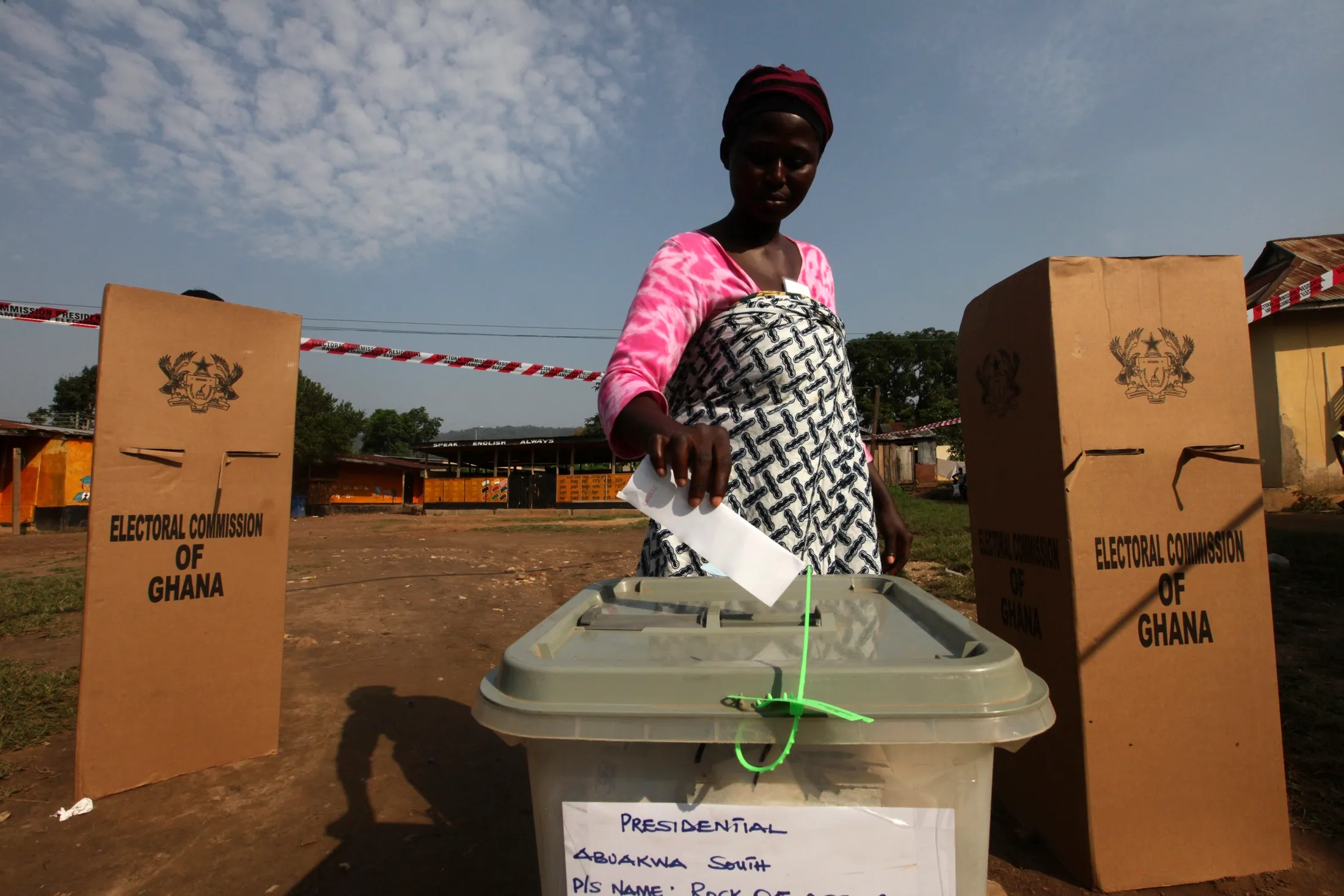
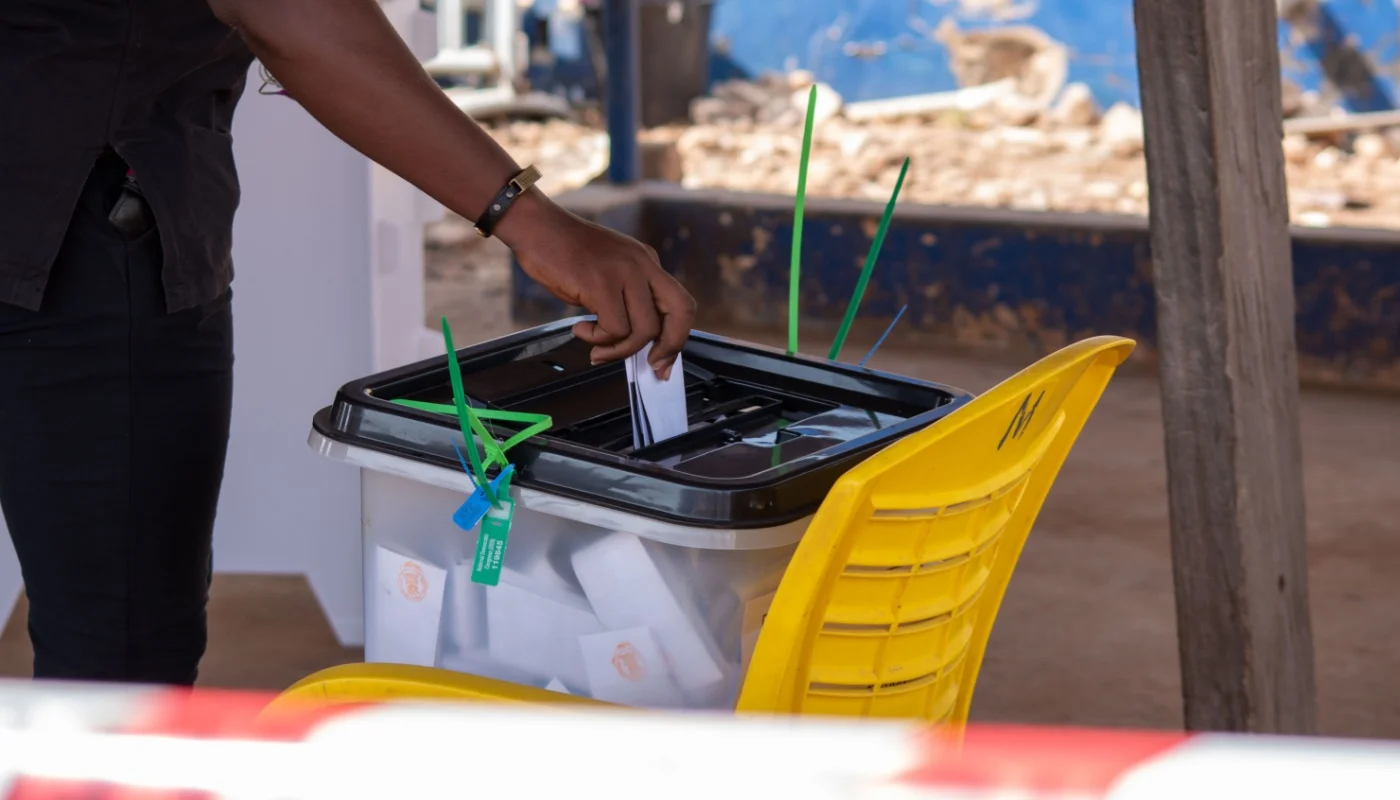
Elections held: Nine peaceful general elections since 1992, with four peaceful transfers of power between rival parties .
-
Democratic preference: 73% of Ghanaians prefer democracy over any other form of government, according to Afrobarometer .
The Promise of Independence
On 6 March 1957, Ghana became the first country in sub-Saharan Africa to shake off colonial rule. Kwame Nkrumah, the leader of the independence movement, framed the moment not just as political freedom but as the beginning of a larger project. “Seek ye first the political kingdom, and all else shall be added unto you,” he famously declared .
The early years were marked by genuine optimism. The 1957 Constitution established a Westminster-style parliamentary system. In 1960, Ghana became a republic, with Nkrumah as Executive President. The first Republican Constitution strengthened presidential authority, ending the role of the British monarch as Head of State.
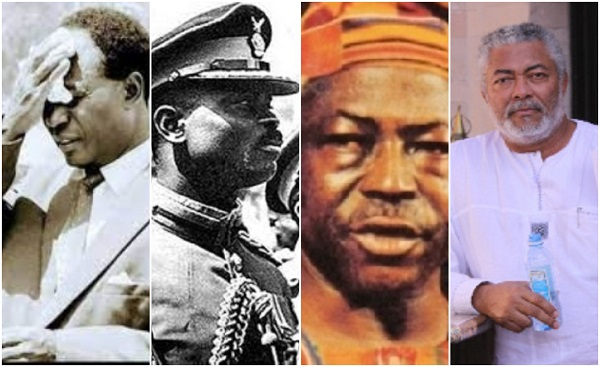
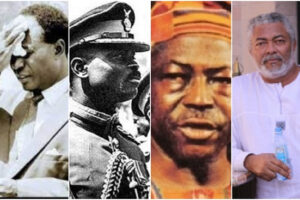
But the democratic promise was short-lived. In 1964, Ghana became a one-party state. Political opposition was suppressed, and the space for dissent narrowed. The drift toward authoritarianism culminated on 24 February 1966, when the military overthrew Nkrumah in a coup while he was abroad.

The Long Detour: Coups and Failed Republics
What followed was fifteen years of alternating military and civilian rule, marked by instability and dashed hopes .
The 1969 Constitution established the Second Republic under Kofi Busia, but it lasted only until January 1972, when Colonel Ignatius Acheampong seized power. A brief return to constitutional rule in 1979 under Hilla Limann ended in December 1981, when Flight Lieutenant Jerry John Rawlings staged his second coup.
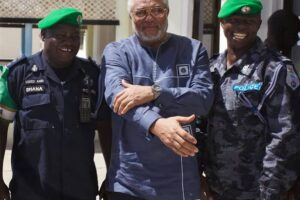
Rawlings’s Provisional National Defence Council (PNDC) ruled for nearly a decade. Initially espousing a left-wing populist vision, the regime later embraced free-market reforms under pressure from the World Bank and IMF. The PNDC era was marked by human rights abuses, including the killing of senior judges and military officers, and a “culture of silence” that stifled opposition.

The Return to Democracy
By the early 1990s, pressure for democratic reform was building from both inside and outside Ghana. The collapse of the Soviet Union removed the ideological cover for military rule. International financial institutions were increasingly attaching political conditions to economic support. Domestically, voices like Professor Adu Boahen’s public lectures challenged the culture of silence, while the Movement for Freedom and Justice and professional associations like the Ghana Bar Association pushed for a return to multi-party politics.
Rawlings, despite initial scepticism, ultimately steered the transition. A Consultative Assembly drafted a new constitution, which was approved by referendum in April 1992 . Multi-party elections followed later that year. Rawlings won the presidency, though the opposition boycotted the parliamentary vote, handing him a contested mandate .
The 1992 Constitution was designed to prevent the abuses of the past. It established a presidential system with stronger checks and balances, created independent institutions like the Electoral Commission, and guaranteed fundamental rights and freedoms. It sought to cure the ills of previous constitutions by abolishing the one-party state and entrenching a separation of powers .

The Fourth Republic: Three Decades of Stability
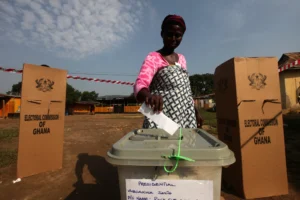
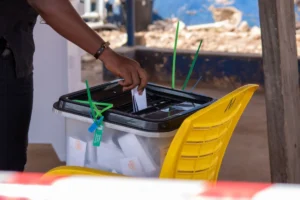
The Fourth Republic, now in its fourth decade, has proven remarkably durable . Since 1992, Ghana has held nine peaceful general elections, with only minor to moderate violence, and four peaceful transfers of power between rival political parties.
The first transfer came in 2000, when John Kufuor of the New Patriotic Party (NPP) defeated John Atta Mills of the National Democratic Congress (NDC). Rawlings, constitutionally barred from a third term, stepped down—an almost unprecedented act for an African leader at the time. Subsequent transfers occurred in 2008 (Mills), 2016 (Akufo-Addo), and 2024 (Mahama) .
The 2024 election was particularly significant. Despite economic hardship and citizen frustration, Ghanaians turned out to vote. The ruling NPP, which had hoped to break the eight-year cycle of power alternating between the two major parties, lost to the opposition NDC. The NPP conceded early, and power transferred smoothly . Jane Naana Opoku-Agyemang became the country’s first woman vice president.
Institutions have played a critical role in this stability. The Electoral Commission has conducted nine competitive elections. The judiciary has adjudicated tense post-election disputes, notably in 2012 and 2020, upholding the legitimacy of electoral outcomes. The media and civil society have remained vibrant, with 82% of Ghanaians agreeing that the media should constantly investigate and report on government mistakes and corruption.
What Sustains Ghana’s Democracy
Ghana’s democratic resilience rests on several pillars. The first is citizen commitment. Afrobarometer data shows that 73% of Ghanaians prefer democracy over any other form of government, with six to eight in ten rejecting authoritarian alternatives such as one-party rule, one-man rule, or military rule . Even during economic downturns, faith in democratic ideals has proven resilient.
The second is institutional repetition. As Brookings analysts put it, “Democratic resilience is built not on perfection, but on repetition” . The routine of elections, the peaceful transfer of power, and the acceptance of electoral outcomes have become embedded in Ghana’s political culture.
The third is international standing. Ghana is rated “Free” by Freedom House, with one of the highest scores in sub-Saharan Africa. Its 2023 V-Dem Electoral Democracy Index score of 0.67 is comfortably above the global average of 0.49 .
The Unfinished Business
Ghana’s democracy is not without challenges. Voter turnout has declined, from nearly 79% in 2020 to about 61% in 2024 . Trust in institutions like Parliament and political parties has weakened. Political patronage remains entrenched, and internal party democracy is weak.
The 2024 election evaluation report by the National Peace Council highlighted persistent concerns: vote buying, the monetisation of politics, misinformation and disinformation, and politically motivated violence. The “winner-takes-all” system, the report noted, has undermined multi-party politics and fostered exclusion .
There is also the unfinished work of decentralisation. Despite decades of reform, political authority remains heavily centralised. Local governments operate with limited autonomy and weak fiscal power. Metropolitan, Municipal and District Chief Executives are still appointed by the President rather than elected, a system that reinforces upward accountability to Accra rather than downward accountability to local citizens.
Constitutional reform remains a live debate. The 2010 Constitution Review Commission gathered thousands of submissions and made recommendations, but many remain unimplemented . Critics point to the excessive concentration of power in the executive presidency and the influence of political authority over independent institutions.
Frequently Asked Questions
When did democracy begin in Ghana?
Ghana became independent in 1957 as a constitutional monarchy, but the modern democratic era began with the Fourth Republic in 1992, following decades of military rule .
How many coups has Ghana had?
Ghana experienced four successful military coups between 1966 and 1992: in 1966, 1972, 1979, and 1981.
What is the Fourth Republic?
The Fourth Republic is Ghana’s current constitutional era, established by the 1992 Constitution. It restored multi-party democracy and has lasted over three decades .
How many peaceful transfers of power has Ghana had?
Ghana has experienced four peaceful transfers of power between rival political parties since 1992: in 2000, 2008, 2016, and 2024 .
Who was Ghana’s first democratically elected president in the Fourth Republic?
Jerry John Rawlings won the 1992 presidential election, the first under the Fourth Republic.
What makes Ghana’s democracy resilient?
Citizen commitment to democracy, repeated peaceful elections, independent institutions like the Electoral Commission, and a vibrant media and civil society have all contributed to democratic resilience .
What are the main challenges facing Ghana’s democracy?
Vote buying, political patronage, declining voter turnout, misinformation, and the concentration of power in the executive are among the key challenges .
Is Ghana a full democracy?
Ghana is rated “Free” by Freedom House and scores above the global average on V-Dem’s Electoral Democracy Index, but challenges remain in judicial independence, corruption, and institutional accountability.
What to Remember
Ghana’s democratic history is a story of a promising start, a painful detour, and a durable recovery. The First Republic’s promise was cut short by authoritarianism and military coups. The Fourth Republic, born in 1992, has broken that cycle, delivering three decades of peaceful elections and transfers of power.
The resilience of Ghana’s democracy rests on repetition and citizen commitment. Ghanaians consistently choose democracy over authoritarian alternatives, and institutions have largely held firm. But the system is not perfect. Vote buying, patronage, declining turnout, and centralised power remain unresolved challenges.
For ordinary Ghanaians, the practical takeaway is that democracy is not just about elections. It is about accountability, participation, and the belief that power can be transferred peacefully. Ghana has achieved the transfer part. The deeper work of making democracy deliver economically and socially for all citizens is the unfinished business of the Fourth Republic.
Source: The Accra Daily Mail

Samuel Kwame Boadu is a Ghanaian media entrepreneur and storyteller with a passion for amplifying urban voices and uncovering everyday truths. He is the Editor-in-Chief and Founder of The Accra Daily Mail, a dynamic digital platform dedicated to capturing the pulse of Ghana’s capital—its people, culture, challenges, business, sports and innovations.