

Introduction
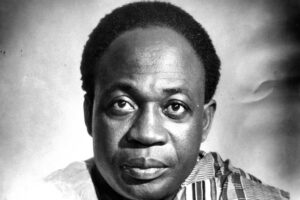
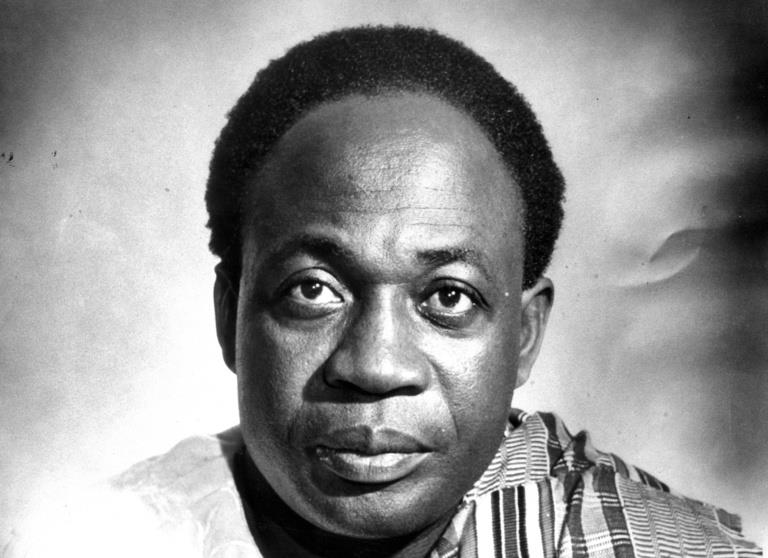
Kwame Nkrumah remains the central figure in Ghana’s modern political history and one of the most consequential African leaders of the twentieth century. As the architect of Ghana’s independence in 1957, he led the first sub-Saharan African nation to break free from colonial rule, a feat that fundamentally altered the political trajectory of the continent . Beyond his role as Ghana’s first Prime Minister and later President, Nkrumah was an uncompromising advocate for Pan-Africanism, a theorist of neo-colonialism, and a founding force behind the Organisation of African Unity. His career, marked by visionary ambition as well as significant controversy, continues to provoke debate over his economic policies, his turn toward authoritarian rule, and his enduring ideological legacy .
Quick Facts About Kwame Nkrumah
| Field | Information |
|---|---|
| Full name | Kwame Nkrumah |
| Date of birth | 21 September 1909 (some early records suggest 1912) |
| Place of birth | Nkroful, Gold Coast (now Western Region, Ghana) |
| Date of death | 27 April 1972 |
| Place of death | Bucharest, Romania |
| Nationality | Ghanaian |
| Profession | Politician, revolutionary, political theorist |
| Key positions | Prime Minister of the Gold Coast (1952–1957); Prime Minister of Ghana (1957–1960); President of Ghana (1960–1966) |
| Education | Achimota College; Lincoln University, Pennsylvania (BA, STB); University of Pennsylvania (MA); London School of Economics |
| Known for | Leading Ghana to independence; Pan-Africanism; theory of neo-colonialism; founding member of the OAU |
| Political party | Convention People’s Party (CPP) |
| Spouse | Fathia Rizk (m. 1957) |
| Children | Gamal, Samia, Sekou (with Fathia); Francis (with earlier partner) |
Who Is Kwame Nkrumah?
Kwame Nkrumah was a Ghanaian nationalist, political leader, and revolutionary thinker who guided the Gold Coast to independence from British colonial rule and served as the first head of state of modern Ghana. He is remembered primarily for two achievements: ending colonial rule in his country and elevating the cause of African unity to the centre of international politics. His political philosophy, encapsulated in ideas such as “Consciencism” and the critique of neo-colonialism, positioned him not merely as a national leader but as an intellectual force whose influence extended across the African continent and into the global anti-imperialist movement.
Early Life and Background
Kwame Nkrumah was born in Nkroful, a village in the Nzima area of the Western Region of the Gold Coast, now Ghana. His father was a goldsmith and his mother a market trader, placing the family within the modest but respectable artisan and trading class of the colonial Gold Coast. Details of his early childhood are limited, but he received his initial education at a Roman Catholic mission school before attending Achimota College, one of the colony’s most prestigious institutions for African students. His path from a rural village to national leadership followed an unusual route for his generation: an extended period of study and political organising in the United States and Britain, which exposed him to Pan-Africanist and Marxist ideas that would define his later career.
Education and Professional Training
Nkrumah’s intellectual formation took place largely outside West Africa. In 1935, with financial assistance from a relative, he travelled to the United States and enrolled at Lincoln University in Pennsylvania. He earned a Bachelor of Arts degree in 1939, followed by a Bachelor of Sacred Theology, and later pursued graduate studies at the University of Pennsylvania, where he obtained a Master of Arts in philosophy and also studied anthropology . During his years in America, he immersed himself in the works of Marx, Lenin, and Marcus Garvey, influences that shaped his political outlook. In 1945 he moved to London, where he studied at the London School of Economics and became actively involved in organising the Fifth Pan-African Congress in Manchester, a gathering that historians credit with laying the intellectual groundwork for the wave of African independence movements in the following decade .

Career Beginnings
Nkrumah returned to the Gold Coast in late 1947 to take up the position of general secretary of the United Gold Coast Convention (UGCC), a nationalist party dominated by lawyers and professionals who sought self-government through gradual constitutional reform. His radical approach—advocating immediate independence, mass organisation, and direct action—quickly put him at odds with the party’s conservative leadership. Following the disturbances of 1948, in which he and other UGCC leaders were briefly detained by the colonial authorities, Nkrumah’s popularity among ordinary Ghanaians grew substantially. In 1949 he broke with the UGCC and founded the Convention People’s Party (CPP), which would become the principal vehicle for Ghana’s independence struggle.
Career Development and Major Milestones
The CPP’s strategy of “Positive Action”—a combination of strikes, boycotts, and non-cooperation—led to Nkrumah’s imprisonment by the colonial government in 1950 on charges of sedition. His incarceration elevated him to the status of a national hero. In the 1951 legislative elections, the CPP won an overwhelming majority, and Nkrumah was released from prison to become Leader of Government Business, effectively the colony’s chief minister within the colonial administration. He held this role until 1957, when Ghana achieved independence on 6 March. Nkrumah became Prime Minister and, in 1960, when Ghana became a republic, he assumed the presidency.
His government pursued an ambitious programme of modernisation, including the construction of the Volta River hydroelectric dam, the expansion of education through the Accelerated Development Plan, and the promotion of industrialisation. On the international stage, Nkrumah was instrumental in convening the First Conference of Independent African States in 1958 and the All-African Peoples’ Conference later that year, and he played a central role in the founding of the Organisation of African Unity in 1963.

Major Achievements and Contributions
Nkrumah’s most significant achievement was undoubtedly the attainment of Ghana’s independence, which served as a catalyst for decolonisation across sub-Saharan Africa. His advocacy for Pan-African unity, articulated in works such as Africa Must Unite and Neo-Colonialism: The Last Stage of Imperialism, provided an intellectual framework for African leaders seeking to resist external economic and political domination after formal independence . He was also a founding member of the OAU, an institution that, despite its limitations, became the primary continental forum for African political cooperation. In 1963 he was awarded the Lenin Peace Prize, and in 2000 he was voted Africa’s Man of the Millennium by BBC World Service listeners.
Controversies and Public Record
Nkrumah’s later years in power were marked by increasing authoritarianism and economic difficulty. Critics accuse him of suppressing political opposition, curtailing press freedom, and imposing a one-party state through constitutional amendments. A 1972 assessment in The New York Times described how he “crushed free speech, arbitrarily jailed opponents, subverted the courts and imposed iron one-man rule” . His government’s economic management has also been criticised: a balance-of-payments surplus at independence was transformed into substantial foreign debt, partly as a result of prestige projects and inefficient state enterprises. The decline in cocoa prices in the mid-1960s further weakened his position. These factors, combined with regional tensions and allegations of interference in neighbouring countries, contributed to the military and police coup that overthrew him on 24 February 1966 while he was on a diplomatic mission abroad.
Legacy and Significance
Kwame Nkrumah’s legacy is contested but indisputably substantial. For supporters, he remains the father of Ghanaian independence and the foremost prophet of African unity, a leader who understood that formal sovereignty without economic independence was incomplete. For critics, his economic mismanagement and authoritarian tendencies tarnished what could have been an even more constructive legacy . What is beyond dispute is his historical role: he led the first sub-Saharan African colony to independence, inspired subsequent liberation movements across the continent, and placed the question of neo-colonialism at the centre of post-colonial political thought. His ideas continued to influence African political discourse long after his death in exile in Bucharest in 1972, and his image remains a potent symbol in Ghanaian public life.

Career Timeline
-
1909: Born in Nkroful, Gold Coast.
-
1935–1945: Studies in the United States; earns degrees from Lincoln University and the University of Pennsylvania.
-
1945: Participates in the Fifth Pan-African Congress in Manchester; begins studies at the London School of Economics.
-
1947: Returns to the Gold Coast; becomes general secretary of the UGCC.
-
1949: Founds the Convention People’s Party.
-
1950: Imprisoned for sedition following Positive Action campaign.
-
1951: Released; becomes Leader of Government Business after CPP election victory.
-
1957: Ghana achieves independence; Nkrumah becomes Prime Minister.
-
1960: Ghana becomes a republic; Nkrumah elected President.
-
1963: Helps found the Organisation of African Unity; awarded Lenin Peace Prize.
-
1966: Overthrown in a military coup while abroad.
-
1972: Dies in Bucharest, Romania.
Frequently Asked Questions About Kwame Nkrumah
Who is Kwame Nkrumah?
Kwame Nkrumah was the first Prime Minister and President of Ghana, and a leading figure in the African independence and Pan-African movements.
When was Kwame Nkrumah born?
He was born on 21 September 1909, though some early records give 1912 as his birth year.
Where is Kwame Nkrumah from?
He was born in Nkroful, in the Western Region of what is now Ghana.
What is Kwame Nkrumah known for?
He is best known for leading Ghana to independence in 1957 and for his advocacy of Pan-African unity and the critique of neo-colonialism.
What did Kwame Nkrumah study?
He studied theology, philosophy, and political science at Lincoln University and the University of Pennsylvania, and later attended the London School of Economics.
What positions did Kwame Nkrumah hold?
He served as general secretary of the UGCC, Leader of Government Business, Prime Minister of Ghana, and President of Ghana from 1960 until 1966.
What are Kwame Nkrumah’s major achievements?
His principal achievements include leading Ghana to independence, founding the Convention People’s Party, helping establish the Organisation of African Unity, and developing influential theories of neo-colonialism and Pan-Africanism.
Is Kwame Nkrumah married?
He married Fathia Rizk in 1957. They had three children: Gamal, Samia, and Sekou.
What is Kwame Nkrumah’s contribution to Ghana?
He led the country to independence, established its first post-colonial government, and initiated major infrastructure and education projects, though his later rule was marked by economic and political difficulties.
Source: The Accra Daily Mail

Samuel Kwame Boadu is a Ghanaian media entrepreneur and storyteller with a passion for amplifying urban voices and uncovering everyday truths. He is the Editor-in-Chief and Founder of The Accra Daily Mail, a dynamic digital platform dedicated to capturing the pulse of Ghana’s capital—its people, culture, challenges, business, sports and innovations.