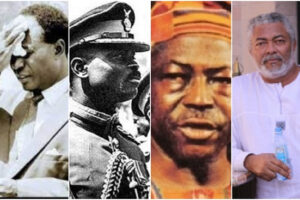

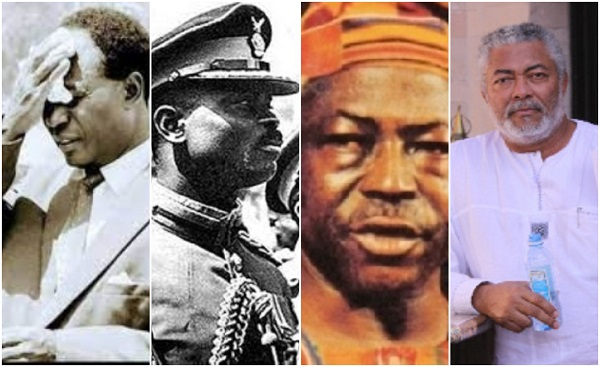

Ghana’s political story is not a smooth arc of progress. It is a story of extraordinary promise, sudden rupture, and hard-won recovery. Understanding the major turning points—from the euphoria of 1957 to the trauma of 1966, through the long years of military rule, to the democratic consolidation that began in 1992—explains why Ghanaians guard their Fourth Republic with such vigilance.
Quick Facts
-
1957: Ghana becomes the first sub-Saharan African nation to gain independence.
-
1960: Ghana becomes a republic with Kwame Nkrumah as Executive President.
-
1966: Nkrumah overthrown in a military coup while abroad.
-
1966–1992: Fifteen years of alternating military and civilian rule, marked by instability.
-
1992: New constitution approved; Jerry John Rawlings elected president in the transition to the Fourth Republic.
-
2000: First peaceful transfer of power between rival parties in Ghana’s history.
Turning Point One: Independence, 1957
On 6 March 1957, Ghana became the first country in sub-Saharan Africa to shake off colonial rule. Kwame Nkrumah, the leader of the Convention People’s Party, framed the moment not just as national liberation but as the opening of a larger struggle. “Seek ye first the political kingdom,” he declared, “and all else shall be added unto you”.
The early years were marked by genuine optimism. Ghana adopted a Westminster-style parliamentary system, and in 1960, it became a republic within the Commonwealth, with Nkrumah as Executive President. The world watched as a new African nation attempted to build a modern democracy.
Turning Point Two: The Drift to One-Party Rule
The democratic promise did not hold. In 1964, Ghana became a one-party state under the CPP, limiting political opposition and reducing parliamentary competition. Nkrumah’s vision of rapid development increasingly clashed with the constraints of democratic governance.

By 1966, the political space had narrowed dramatically. Dissent was suppressed. The military watched.
Turning Point Three: The 1966 Coup—The Break
On 24 February 1966, while Nkrumah was on a state visit to Asia, the military and police seized power. Parliament was dissolved. The First Republic was over.
The coup was a rupture from which Ghanaian politics never fully recovered. As LSE scholars put it, “the abrupt disruption of the country’s development trajectory after Nkrumah’s government was ousted from power” marked the beginning of a long detour. The coup was supported by Western intelligence, including the CIA, according to contemporary accounts.

Turning Point Four: Fifteen Years of Instability
What followed was fifteen years of alternating military and civilian governments, none of which lasted. The Second Republic under Kofi Busia (1969–1972) was cut short by another coup. The Third Republic under Hilla Limann (1979–1981) suffered the same fate.
The pattern was devastating. Successive governments—military and civilian alike—competed “in both incompetence and deception,” as one historical assessment put it. Each experiment in constitutional rule was brief, unstable, and ended by force.
Turning Point Five: Rawlings and the PNDC
In December 1981, Flight Lieutenant Jerry John Rawlings seized power for the second time, establishing the Provisional National Defence Council (PNDC). The regime was radical, populist, and authoritarian. Political parties were banned. Free expression was suppressed. The PNDC’s rule was marked by human rights abuses, including the killing of senior judges and military officers.

Yet Rawlings also presided over a period of significant economic reform. Facing a crumbling economy, his government embraced structural adjustment programs backed by the IMF and World Bank, making Ghana an early model for economic liberalization in Africa.
The PNDC era was a paradox: brutal in its suppression of political freedom, yet pragmatic in its economic management. By the late 1980s, pressure for democratic reform was building.
Turning Point Six: The 1992 Transition
The collapse of the Soviet Union, international pressure, and domestic agitation from professional associations and civil society forced the PNDC to change course. A new constitution was drafted and approved by referendum in April 1992.
Multi-party elections followed later that year. Rawlings won the presidency, though the opposition claimed the vote was rigged and boycotted the parliamentary elections. It was an imperfect beginning, but it was a beginning.
Rawlings’s decision to steer Ghana back toward constitutional rule remains one of the most consequential and surprising turns in the country’s political history. He had expressed disdain for “Western-style” multi-party democracy, yet when it became clear that most Ghanaians preferred it, he went with the flow.
Turning Point Seven: The 2000 Election—Power Changes Hands
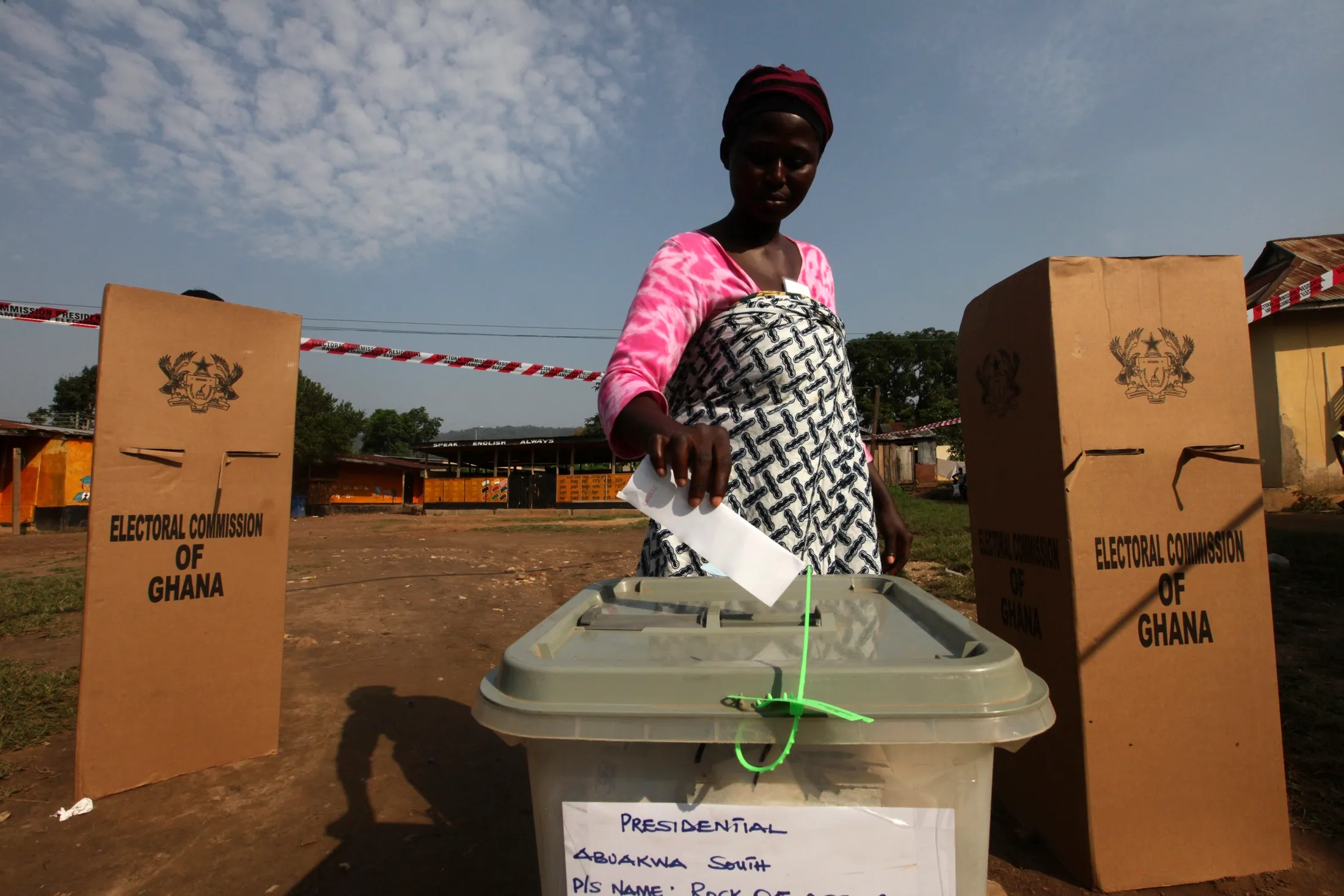
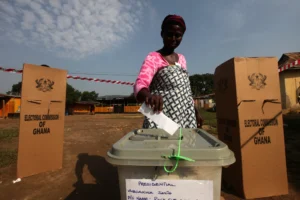
The true test of any democracy is whether power can be transferred peacefully. Ghana passed that test in 2000.
After two terms, Rawlings was constitutionally barred from running again. His vice president, John Atta Mills, ran but lost to John Kufuor of the New Patriotic Party. It was the first time in Ghana’s history that one democratically elected president had succeeded another.
The 2000 election was hailed as a successful test of Ghana’s democracy. Kufuor won 57 percent in the runoff, and the opposition also broke the NDC’s stranglehold on Parliament. The military stayed in the barracks. The courts were not asked to overturn the result.
This was the moment Ghana’s Fourth Republic proved it could work.
Turning Point Eight: The Fourth Republic Consolidates
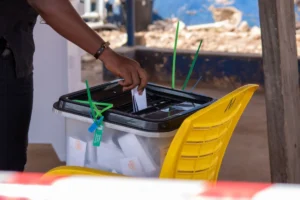
Subsequent elections reinforced the pattern. In 2008, power transferred again—this time from the NPP back to the NDC, with Atta Mills winning by a razor-thin margin. In 2016, an incumbent president, John Mahama, lost to opposition candidate Nana Akufo-Addo—the first time an incumbent had been defeated at the polls and handed over power smoothly.
The 2024 election continued this trajectory. Mahama returned to power, defeating the NPP’s candidate, and the transfer was peaceful.
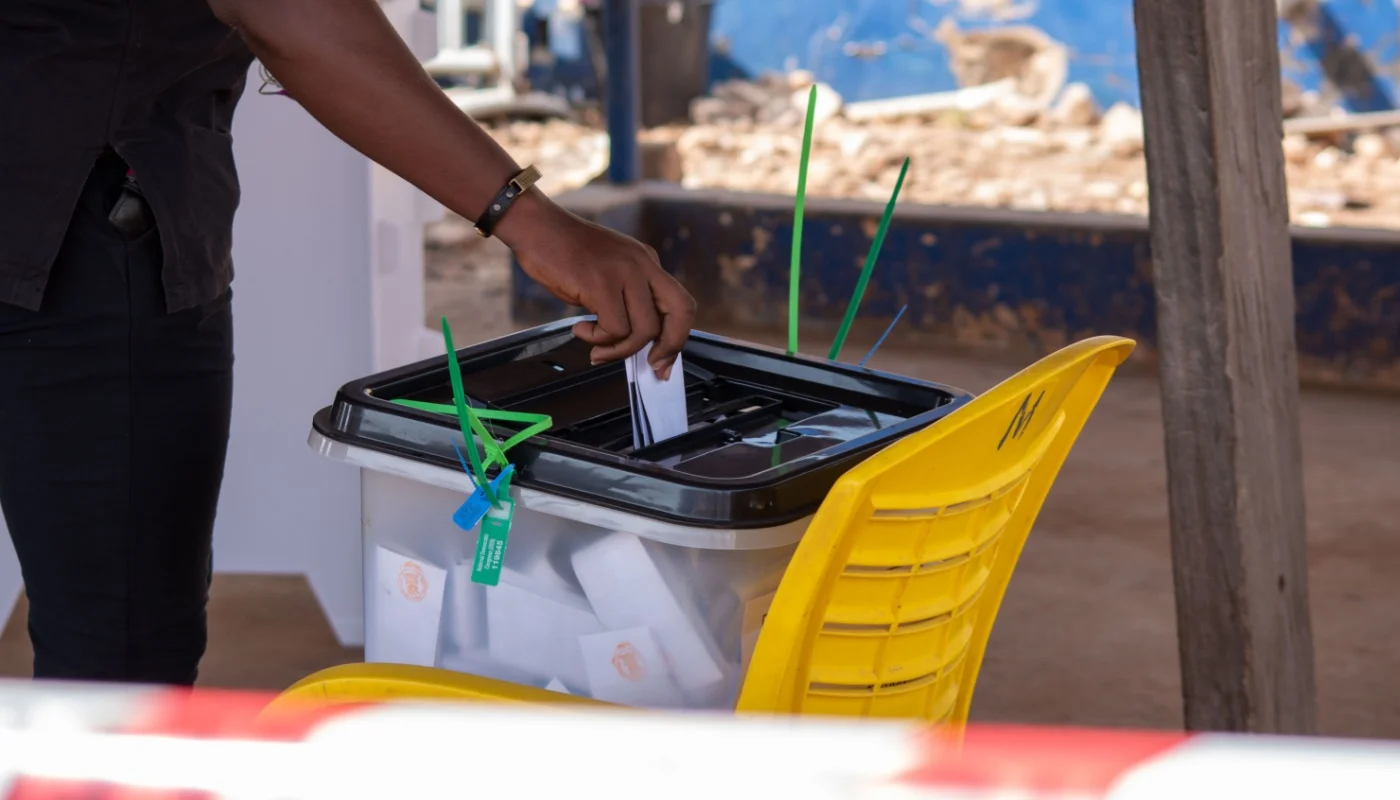
As Brookings scholars have noted, Ghana’s democratic resilience is built on repetition. The routine of elections, the acceptance of outcomes, and the peaceful transfer of power have become embedded in political culture.
Frequently Asked Questions
What was the most significant turning point in Ghana’s political history?
The 1966 coup that overthrew Kwame Nkrumah is widely seen as the most consequential rupture. It ended the First Republic and began fifteen years of instability.
How many coups has Ghana experienced?
Ghana experienced four successful military coups: in 1966, 1972, 1979, and 1981.
When did Ghana return to democracy?
Ghana returned to constitutional rule in 1992, with the approval of a new constitution and multi-party elections later that year.
What was the significance of the 2000 election?
It marked the first peaceful transfer of power from one democratically elected president to another in Ghana’s history.
Who was Ghana’s first president?
Kwame Nkrumah became Prime Minister at independence in 1957 and Executive President when Ghana became a republic in 1960.
How long did the Rawlings era last?
Rawlings first seized power briefly in 1979, then ruled from 1981 to 2000, first as head of the PNDC military regime, then as elected president under the Fourth Republic.
What is the Fourth Republic?
The Fourth Republic is Ghana’s current constitutional era, established by the 1992 Constitution. It has lasted over three decades, the longest period of democratic rule in Ghana’s history.
Why did Ghana experience so many coups?
Scholars point to a combination of factors: colonial legacies, economic mismanagement, regional and ethnic tensions, and the broader Cold War context that encouraged military intervention.
What to Remember
Ghana’s political history is defined by a dream, a rupture, and a recovery. Nkrumah’s vision of political freedom translating into economic prosperity was interrupted by the 1966 coup. What followed was fifteen years of instability—coups, failed republics, and military rule.
The 1992 transition marked a new beginning, but it was not until the 2000 election that Ghana’s democracy proved it could deliver what previous experiments could not: the peaceful transfer of power between rival parties. Since then, the Fourth Republic has held, surviving close elections, legal challenges, and economic crises.
The lesson is not that Ghana’s democracy is perfect. It is not. But it has endured. For Ghanaians, the turning points that matter most may be the ones still to come—whether the political freedom won in 1957 and restored in 1992 can finally deliver the economic prosperity that Nkrumah promised.
Source: The Accra Daily Mail

Samuel Kwame Boadu is a Ghanaian media entrepreneur and storyteller with a passion for amplifying urban voices and uncovering everyday truths. He is the Editor-in-Chief and Founder of The Accra Daily Mail, a dynamic digital platform dedicated to capturing the pulse of Ghana’s capital—its people, culture, challenges, business, sports and innovations.