









High blood pressure is everywhere in Ghana. Walk into any clinic, talk to any group of adults, and you will likely encounter someone living with it. It is one of the most common reasons for hospital visits and one of the leading contributors to stroke, heart disease, and kidney failure in the country.
Yet many people do not know what causes high blood pressure or why it has become so widespread. The condition is often discussed in vague terms, as if it simply appears with age or bad luck. The reality is more complicated — and more useful. Once you understand what drives blood pressure up, you can see why it is so common in modern Ghana and what can be done about it.
This article explains the causes of high blood pressure in plain language. It covers the difference between primary and secondary hypertension, the major risk factors, and the social and environmental reasons the condition has become so prevalent. It is written for ordinary readers who want clear, practical information.
Quick Facts
-
High blood pressure, or hypertension, means the pressure of blood against artery walls is consistently too high.
-
In most cases, there is no single cause. Hypertension usually results from a combination of genetic and lifestyle factors.
-
This common form is called primary or essential hypertension.
-
A smaller number of cases are caused by another medical condition, such as kidney disease or a hormonal disorder. This is called secondary hypertension.
-
Major risk factors include age, family history, excess weight, physical inactivity, high salt intake, heavy alcohol use, and smoking.
-
Urbanisation, changes in diet, and increasingly sedentary lifestyles help explain why hypertension is rising in Ghana.
-
Hypertension can be prevented or managed through lifestyle changes and, where needed, medication prescribed by a health professional.
-
This article is for information only and does not replace medical advice.
The Two Types of Hypertension
High blood pressure is divided into two broad categories: primary and secondary.
Primary Hypertension
Primary hypertension, also called essential hypertension, is the common form. It accounts for the vast majority of cases. There is no single identifiable cause. Instead, the condition develops over years as a result of multiple factors interacting: genetics, age, diet, weight, physical activity, alcohol, and stress.
Primary hypertension does not appear overnight. It is a gradual process. The blood vessels become stiffer, the kidneys handle salt differently, and the regulatory systems that control blood pressure become less effective. By the time the condition is diagnosed, it has usually been developing for years.
Secondary Hypertension
Secondary hypertension is caused by an identifiable underlying condition. It is less common but important to recognise because treating the underlying cause can sometimes cure the hypertension.
Conditions that can cause secondary hypertension include:
-
Chronic kidney disease
-
Narrowing of the arteries supplying the kidneys
-
Hormonal disorders, such as those affecting the adrenal or thyroid glands
-
Obstructive sleep apnoea
-
Certain medications
-
Pregnancy-related conditions such as pre-eclampsia
If hypertension develops suddenly, is severe, or does not respond to usual treatment, a doctor may investigate for secondary causes.
The Risk Factors That Matter Most
Age
Blood pressure tends to rise with age. The arteries become less elastic over time, and the body’s regulatory systems become less efficient. This does not mean hypertension is inevitable, but the risk increases as you get older.
Family History
Hypertension runs in families. If your parents or siblings have the condition, your risk is higher. This reflects a combination of shared genes and shared habits. You cannot change your family history, but you can be more alert to screening and prevention.
Excess Weight
Being overweight or obese is one of the strongest modifiable risk factors for hypertension. Excess weight increases the workload on the heart, alters kidney function, and changes the way the body regulates blood pressure. Weight loss, even modest, can lower blood pressure meaningfully.
Physical Inactivity
Regular physical activity keeps the heart and blood vessels healthy. A sedentary lifestyle has the opposite effect. Inactivity contributes to weight gain, stiffens the arteries, and worsens insulin resistance, all of which raise blood pressure.
High Salt Intake
Salt contains sodium, and sodium affects how the body handles fluid. When you eat too much salt, the body retains water. More fluid means more blood volume, and more blood volume means higher pressure.
Many Ghanaians consume more salt than recommended. The salt is not always obvious: it is hidden in stock cubes, processed foods, salted fish, bread, and restaurant meals. Reducing salt intake is one of the simplest and most effective ways to lower blood pressure.
Alcohol
Heavy alcohol consumption raises blood pressure. The relationship is not simple — small amounts may have limited effects — but regular heavy drinking is clearly harmful. Reducing alcohol intake helps lower blood pressure and improves overall health.
Smoking and Tobacco
Smoking damages blood vessels and raises blood pressure acutely. Over time, tobacco use accelerates the hardening of arteries and multiplies the damage caused by hypertension. Quitting smoking is one of the most important steps a person with hypertension can take.
Stress
The role of stress in hypertension is complex. Acute stress raises blood pressure temporarily. Chronic stress may contribute to long-term elevation, partly through its effects on behaviour: people under stress may eat poorly, drink more, exercise less, and sleep badly. Managing stress is a sensible part of hypertension prevention, even if the direct causal link is still debated.
Diabetes and Other Conditions
Diabetes, high cholesterol, and kidney disease all interact with hypertension. Having one of these conditions increases the risk of developing the others. This clustering of conditions is sometimes called metabolic syndrome.
Why Hypertension Is So Common in Ghana
The rise of hypertension in Ghana is not a mystery. It follows a pattern seen in many countries undergoing urbanisation and economic change.
Dietary Changes
Traditional Ghanaian diets were based on whole foods: root crops, grains, vegetables, legumes, fish, and limited amounts of meat. These diets were naturally lower in salt, refined carbohydrates, and processed fats.
Modern diets are different. Urban life has brought more processed food, more fried food, more sugary drinks, and more salt. Street food, restaurant meals, and packaged snacks are convenient but often high in sodium and unhealthy fats. As diets have changed, blood pressure has risen.
Reduced Physical Activity
Many Ghanaians are less physically active than previous generations. Work has become more sedentary. Transport has replaced walking in many areas. Leisure time is often spent in front of screens. The result is a population that burns fewer calories and carries more weight, increasing the burden of hypertension.
Rising Overweight and Obesity
Overweight and obesity have increased in Ghana, especially in urban areas. This is driven by diet, inactivity, and changes in lifestyle. Obesity is a major driver of hypertension, and its rise helps explain the rising prevalence of the condition.
Urbanisation
Urban living is associated with higher rates of hypertension. Cities offer convenience, but they also encourage sedentary behaviour and expose people to processed food, stress, and air pollution. Rural populations in Ghana have lower rates of hypertension, though the gap is narrowing.
Ageing Population
Ghanaians are living longer. As life expectancy rises, the proportion of older people in the population grows. Because hypertension becomes more common with age, an ageing population means more cases.
Better Detection
Part of the rise in reported hypertension is due to better detection. More people are being screened, and more cases are being identified. This is a good thing — it means the true burden of the disease is becoming visible, which is the first step to addressing it.
Genetics and Early-Life Factors
Some research suggests that early-life conditions, including maternal nutrition and birth weight, may influence the risk of hypertension later in life. These factors are not yet fully understood, but they may contribute to the burden in populations that experienced early-life disadvantage.
The Role of the Kidneys and Salt Sensitivity
The kidneys play a central role in blood pressure regulation. They control how much salt and water the body retains. When the kidneys retain too much, blood volume rises and pressure increases.
Some people are more salt-sensitive than others. In salt-sensitive individuals, blood pressure rises more sharply in response to salt intake. There is evidence that salt sensitivity is more common in people of African descent, which may partly explain the high prevalence of hypertension in African populations.
This does not mean salt is the only factor. It means that for many people, reducing salt is especially important.
The Vicious Cycle
Hypertension often coexists with other conditions, creating a vicious cycle.
High blood pressure damages the kidneys. Damaged kidneys are less able to regulate blood pressure, making hypertension worse. High blood pressure also contributes to the hardening of arteries, which further raises pressure. Diabetes compounds the damage. The result is a spiral in which each condition worsens the others.
Breaking the cycle requires addressing all the factors at once: blood pressure, blood sugar, cholesterol, weight, and lifestyle.
What Can Be Done
At the Individual Level
The most important steps are within your control.
-
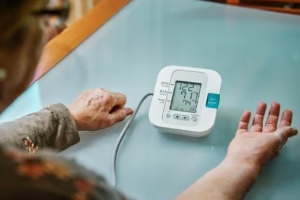
Check your blood pressure regularly, especially if you are over 40 or have risk factors.
-
Reduce salt in cooking and at the table. Use fewer stock cubes and salty seasonings.
-
Eat more fruits, vegetables, and whole foods.
-
Exercise regularly — aim for at least 30 minutes on most days.
-
Maintain a healthy weight.
-
Limit alcohol.
-
Stop smoking.
-
Manage stress through healthy means.
-
Take prescribed medication consistently if you have been diagnosed.
At the Community Level
Communities can support healthy living by creating environments that encourage physical activity and access to healthy food. Schools, workplaces, and religious institutions can promote screening and education. Markets and food vendors can offer lower-salt options. Community groups can organise walking clubs and health talks.
At the Policy Level
Governments can make a difference through public health campaigns, food labelling requirements, and policies that reduce salt in processed foods. Urban planning that encourages walking and cycling can increase physical activity. Strengthening primary health care makes screening and treatment more accessible.
Common Misconceptions
“High blood pressure is only caused by stress”
Stress is a factor, but it is not the only cause. Diet, weight, activity, genetics, and age all play roles. Blaming stress alone can lead people to overlook other important changes.
“If I don’t add salt to my food, I’m fine”
Most dietary salt is hidden in processed foods, stock cubes, and meals eaten outside the home. Simply removing the salt shaker is not enough. Awareness of hidden salt is essential.
“Thin people don’t get high blood pressure”
Thin people can have hypertension. Weight is a risk factor, but not the only one. Genetics, age, salt intake, and other factors matter.
“High blood pressure is an old person’s disease”
Hypertension can affect young people. Rising rates of obesity and inactivity mean that even young adults can develop the condition. Screening should not wait until old age.
“Herbal remedies can cure hypertension”
There is no cure for primary hypertension, and herbal products are not a substitute for proven treatment. Some herbs may interact with medication or cause harm. Discuss any herbal remedy with a qualified health professional.
“If my blood pressure goes down, I can stop my medication”
Blood pressure medication works only when taken consistently. Stopping without medical advice can cause blood pressure to rise again, increasing the risk of stroke or heart attack. Do not stop treatment on your own.
When to Seek Medical Care
Seek medical attention if:
-
You have never had your blood pressure checked and you are over 40, or you have risk factors
-
Your readings are consistently high
-
You have been diagnosed with hypertension and your readings remain high despite treatment
-
You experience sudden severe headache, chest pain, shortness of breath, weakness, vision changes, or difficulty speaking
-
You are pregnant and have high blood pressure
These can be signs of serious complications. Prompt care can save your life.
What to Remember
High blood pressure is common because the conditions that produce it are common. Modern diets, reduced physical activity, rising body weight, ageing populations, and better detection all contribute. The causes are multiple, and they reinforce each other.
But the story is not hopeless. Hypertension can be prevented and managed. The most important step is awareness — knowing your numbers and understanding what influences them. From there, small consistent changes can make a significant difference.
The rise of hypertension in Ghana is not inevitable. It is the result of specific, identifiable forces. And those forces can be countered, one healthy choice at a time.
This article is for general information only and is not a substitute for professional medical advice, diagnosis, or treatment. Always consult a qualified health professional about your individual health needs.
Source: The Accra Daily Mail

Samuel Kwame Boadu is a Ghanaian media entrepreneur and storyteller with a passion for amplifying urban voices and uncovering everyday truths. He is the Editor-in-Chief and Founder of The Accra Daily Mail, a dynamic digital platform dedicated to capturing the pulse of Ghana’s capital—its people, culture, challenges, business, sports and innovations.